Job Interview Questions About Your Attributes
Master answering interview questions about your personal attributes and character traits.

When you walk into a job interview, hiring managers are not just evaluating your technical skills and work experience. They want to understand who you are as a person and how your personal attributes will contribute to their team. Questions about your attributes, character traits, and personal qualities are designed to reveal whether you possess the soft skills and interpersonal qualities needed for success in the role. Understanding how to answer these questions effectively can significantly improve your chances of landing the job.
Understanding Attribute-Based Interview Questions
Attribute-based interview questions focus on understanding your personality, work style, and the qualities that define how you operate in a professional environment. These questions go beyond “What technical skills do you have?” and dive deeper into “What kind of person are you?” and “How will you fit within our organizational culture?” Hiring managers use these questions to assess whether you’ll work well with their team, handle challenges appropriately, and align with company values.
The key to answering these questions successfully is to be honest while strategically highlighting attributes that are relevant to the position. Whether you’re describing your work style, personality traits, or how you handle pressure, your answers should demonstrate self-awareness and connect your attributes to job performance.
Common Personal Attribute Interview Questions
Tell Me About Yourself
This seemingly simple question is often the opening to an interview, and it sets the tone for everything that follows. When answering this question, focus on your personality traits and professional interests that are relevant to the role. Rather than reciting your resume, use this as an opportunity to paint a picture of who you are as a professional.
Example Answer: “I have a background in project management with five years of experience coordinating cross-functional teams. I’m someone who thrives in collaborative environments and enjoys solving complex problems under pressure. Outside of work, I’m passionate about learning new technologies and have recently completed certifications in agile methodology. I’m excited about this opportunity because it combines my analytical mindset with my passion for team leadership.”
Describe Yourself in Five Words
This question requires you to be concise while being descriptive. Choose five words that authentically represent you and that are relevant to the job. Be prepared to explain why you chose each word and how each quality has served you professionally.
Example Answer: “I would describe myself as dedicated, collaborative, organized, innovative, and patient. Dedication drives me to produce quality work consistently. Collaboration matters to me because I believe the best results come from diverse teams working together. I’m organized because I understand that efficiency saves time and resources. I’m innovative because I’m always looking for better ways to solve problems, and I’m patient because meaningful progress often takes time and persistence.”
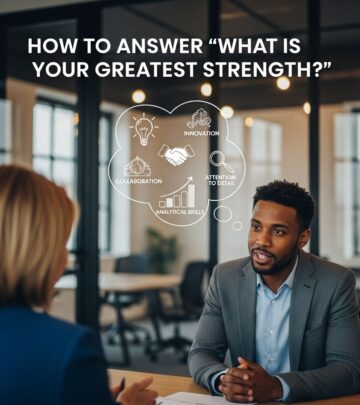
What Are Your Greatest Strengths?
This is your chance to highlight attributes that make you an excellent fit for the role. Rather than listing multiple strengths, focus on one or two that are directly applicable to the position and support them with concrete examples.
Example Answer: “My greatest strengths are my ability to manage time effectively and my expertise in data analysis. Time management allows me to prioritize assignments and consistently meet project deadlines, even under tight constraints. In my previous role as a business analyst, this strength allowed me to juggle multiple client projects simultaneously while maintaining high-quality deliverables. My data analysis skills have been developed over six years and have proven invaluable in making informed business decisions.”
What Are Your Greatest Weaknesses?
This question can feel tricky, but it’s your opportunity to demonstrate self-awareness and a commitment to growth. The key is to mention a genuine weakness while showing how you’re actively working to improve it. Choose a weakness that isn’t fundamental to the job and explain the steps you’re taking to address it.
Example Answer: “I tend to be self-critical, which initially made delegating tasks difficult for me. I wanted to ensure everything met my high standards. However, I’ve recognized that this approach limits team growth and efficiency. I’ve been working on trusting my team members’ capabilities and providing constructive feedback rather than micromanaging. Through this process, I’ve discovered that delegation not only improves team morale but also frees me up to focus on strategic initiatives.”
Key Attributes Employers Value
Understanding which attributes employers prioritize can help you tailor your responses to highlight the most relevant qualities. According to hiring professionals, certain characteristics consistently stand out:
Team Player
The ability to collaborate effectively and contribute to team success is highly valued. Demonstrate how you support colleagues, share knowledge, and work toward collective goals rather than just individual achievements.
Detail-Oriented
Attention to detail shows that you care about quality and precision in your work. Mention times when your meticulousness prevented errors or improved outcomes.
Organized
Being organized means you can manage your time, prioritize tasks, and avoid missing deadlines. Describe systems or methods you use to stay on top of responsibilities.
Leadership Skills
Leadership doesn’t always mean having a management title. It can mean taking initiative, motivating others, and bringing out the best in people. Share examples of times you’ve led by example or inspired team members.
Problem-Solving Ability
The capacity to work well under pressure and find solutions to challenges is invaluable. Describe a specific problem you faced, the approach you took, and the results you achieved.
Creativity and Innovation
Employers appreciate individuals who bring new and innovative ideas to the table. Share examples of times you’ve suggested improvements or implemented new processes.
Flexibility and Adaptability
In today’s fast-changing work environment, being able to adapt quickly to new situations is crucial. Demonstrate how you’ve successfully navigated change or learned new skills when circumstances required it.
Patience and Emotional Intelligence
The ability to remain calm under pressure and maintain positive relationships with colleagues is important for workplace harmony. Share examples of how you’ve handled challenging situations with grace and understanding.
Techniques for Answering Attribute Questions
Use the STAR Method
When answering behavioral questions about your attributes, structure your response using the STAR method: Situation, Task, Action, and Result. This framework helps you provide concrete examples that demonstrate your qualities in action.
Connect Attributes to Job Requirements
Research the job description and identify which attributes are most important for success in that role. Prioritize mentioning attributes that directly align with what the employer is seeking.
Be Authentic
Employers can often tell when candidates are being inauthentic. Choose attributes that genuinely describe you and are supported by real examples from your professional experience.
Use Positive Language
Frame your attributes in positive terms and explain how they benefit your work and your team. Even when discussing weaknesses, focus on what you’ve learned and how you’re improving.
Provide Specific Examples
Rather than simply stating you’re a strong leader, provide a specific example of a time you led a project, the challenges you faced, and how your leadership resulted in successful outcomes.
Attributes to Highlight Based on Industry
| Industry | Key Attributes to Emphasize |
|---|---|
| Technology | Innovation, Problem-solving, Adaptability, Technical expertise |
| Finance | Attention to detail, Analytical thinking, Integrity, Precision |
| Healthcare | Empathy, Patience, Reliability, Attention to detail, Compassion |
| Sales | Persuasiveness, Relationship-building, Resilience, Confidence |
| Education | Patience, Empathy, Communication, Creativity, Mentoring ability |
| Management | Leadership, Decision-making, Strategic thinking, Emotional intelligence |
Real-Life Examples of Attribute Responses
Demonstrating a Positive Attitude
“My positive attitude is something I intentionally cultivate every day. Working in a team can sometimes present challenges, and I’ve learned that people’s willingness to stay open to others is crucial. I believe that staying optimistic and encouraging my coworkers creates a better work environment for everyone. If I were chosen for this position, I would continue to bring that positive energy to the team and help motivate colleagues through challenging projects.”
Showing Collaborative Capability
“I am very collaborative. I’ve always enjoyed working on teams, and it’s one of my strongest attributes. In my previous role as a marketing analyst, I led a complex project involving diverse stakeholders and extensive field research. This experience taught me about my ability to inspire and unite people, even in stressful situations. The insights our team produced led to the development of a sustainable product that the client successfully brought to market.”
Highlighting Organizational Skills
“I’m extremely organized and diligent in my work. I consistently complete my projects on time because I use project management tools to track deliverables, set clear milestones, and prioritize tasks based on urgency and impact. I’m confident that any assignment given to me will be completed by the deadline or even ahead of schedule. My organizational approach has reduced project delays by an average of 20 percent in my previous positions.”
How to Prepare Your Attribute Responses
Step 1: Self-Assessment — Reflect on your genuine strengths and weaknesses. Ask colleagues, managers, or mentors how they would describe you professionally.
Step 2: Research the Role — Carefully review the job description and identify which attributes are most important for the position.
Step 3: Prepare Examples — For each key attribute, prepare a specific example from your professional experience that demonstrates that quality in action.
Step 4: Practice Your Delivery — Rehearse your responses out loud so they sound natural and confident rather than scripted.
Step 5: Get Feedback — Have someone conduct a mock interview with you and provide feedback on your responses and delivery.
Frequently Asked Questions
Q: How many strengths should I mention in an interview?
A: Focus on quality over quantity. Mention one to three strengths that are most relevant to the position, and support each with a specific example. This approach is more memorable and impactful than listing multiple attributes without context.
Q: Should I mention the same attributes multiple times during an interview?
A: Yes, it’s perfectly acceptable and often effective to reinforce your key attributes throughout the interview. However, try to demonstrate them through different examples and contexts to avoid sounding repetitive.
Q: How do I handle an attribute question if I’m not sure how to answer?
A: Take a moment to think before responding. It’s better to pause for a few seconds and provide a thoughtful answer than to rush into something incoherent. You can also ask the interviewer for clarification if needed.
Q: Can I mention personal hobbies or interests when answering attribute questions?
A: Yes, if they’re relevant. Personal interests can demonstrate attributes like creativity, dedication, or continuous learning. For example, mentioning that you organize community volunteer projects shows leadership and initiative.
Q: What should I do if an attribute I mention doesn’t match what the interviewer is looking for?
A: Pay attention to the interviewer’s reaction and adjust your follow-up responses accordingly. Focus your subsequent answers on attributes that seem to resonate more with the interviewer’s priorities.
Q: Is it a red flag to mention weaknesses in an interview?
A: Not if you handle it correctly. Discussing a genuine weakness and demonstrating how you’re actively working to improve it shows self-awareness and a growth mindset, which employers value. Avoid mentioning weaknesses that are central to the job requirements.
Conclusion
Successfully answering interview questions about your attributes requires honest self-reflection, thorough preparation, and strategic communication. By understanding which attributes employers value, preparing specific examples that demonstrate those qualities, and practicing your responses, you can confidently answer attribute-based questions in a way that sets you apart from other candidates. Remember that the goal isn’t to present a perfect version of yourself, but rather to authentically demonstrate how your personal qualities and professional attributes make you an excellent fit for the role and the organization.
References
- 19 strengths and weaknesses for job interviews — Société Générale Careers. 2024. https://careers.societegenerale.com/en/tips-candidates/during-job-interview/qualities-weakness-interview
- 20 Nearly Perfect Interview Answers — Indeed Career Advice. 2024. https://www.indeed.com/career-advice/interviewing/perfect-interview-answers
- 50 Interview Questions to Assess Candidate Personality Fit — Equalture. 2024. https://www.equalture.com/blog/interview-questions-to-assess-personality-fit/
- The 20 qualities to give in a job interview — Meet My Job. 2024. https://www.meet-my-job.com/en/en/articles/the-20-qualities-to-give-in-a-job-interview-1
- 10 Examples of Strengths and Weaknesses for Job Interviews — Coursera. 2024. https://www.coursera.org/articles/strengths-and-weaknesses-interview
- 60+ Most Common Interview Questions and Answers — The Muse. 2024. https://www.themuse.com/advice/interview-questions-and-answers
Similar Articles








Read full bio of medha deb