Job Application Typo: Correct It or Let It Go?
Learn how to respond professionally when you discover a typo in your job application email.
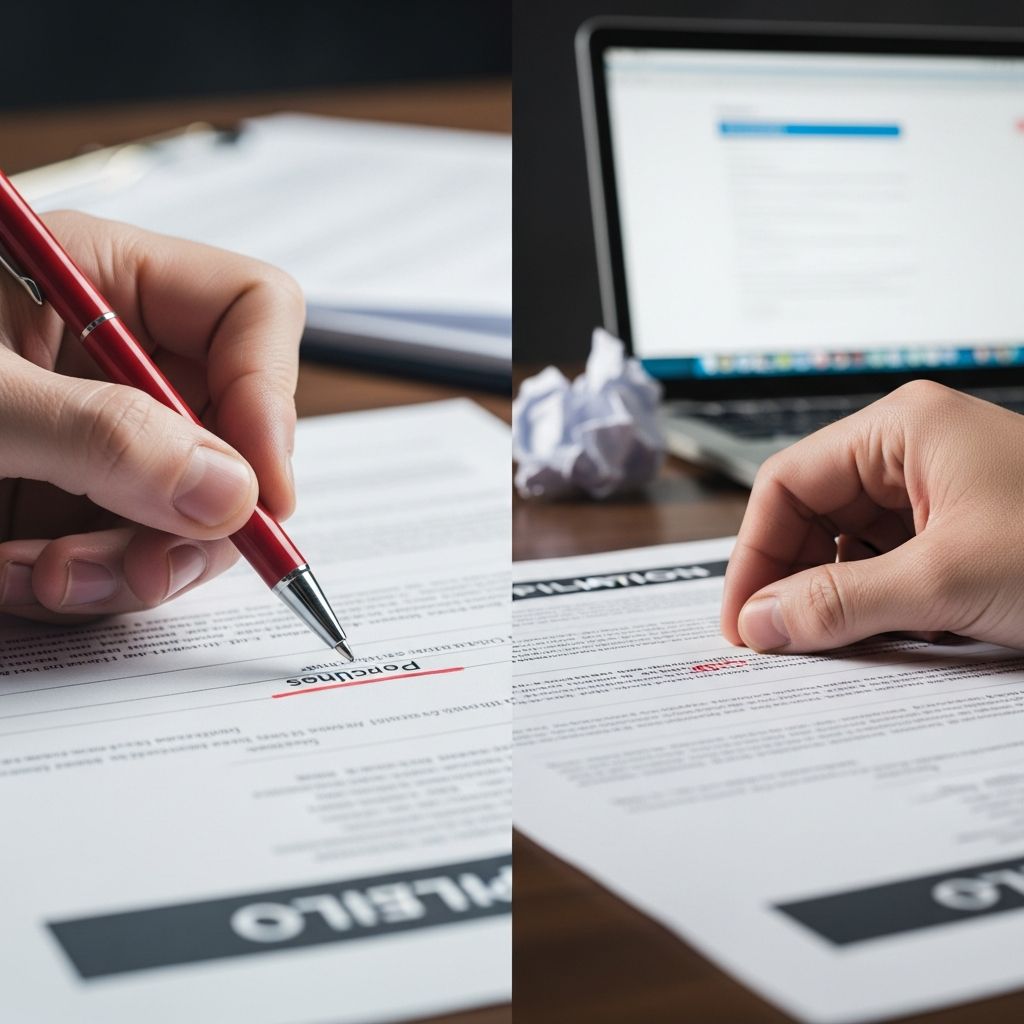
Making a Typo in a Job Application Could Ruin Your Chances of Getting Hired — Unless You Respond With This Quick Fix
Imagine this: You’re in the middle of the application process for your dream job. You spend hours meticulously scouring your resume and cover letter, scrubbing away any errors or grammatical missteps. Your hard work appears to be paying off as you correspond with hiring managers over email to discuss your next steps. Then you see it—that glaring, imposing typo that makes your stomach sink.
Should you send a quick, follow-up email correcting the error? Or ignore it with the hopes that the hiring manager will do the same? Don’t panic. Career experts agree that this is a common concern, and the steps you take after discovering a major typo in a job application email could be the difference between getting the job and having hiring managers move forward with a different candidate.
When to Address the Mistake
Not all typos are created equal. The first step is determining whether your error warrants immediate correction or if bringing it up will only draw more unnecessary attention to it.
Critical Errors That Demand Correction
Glaring typos that involve key details absolutely deserve a correction. This includes misspelling the hiring manager’s name, the company you’re applying to, or the specific position you’re vying for. These types of errors send a clear message that you weren’t paying attention to detail—a crucial quality for almost any role.
According to career experts, correcting these significant mistakes shows accountability. Vicki Salemi, a career expert at Monster and corporate recruiter, emphasizes that while it’s embarrassing to make such a major error, sending a follow-up email quickly with the proper correction demonstrates that you’re willing to own up to your mistakes and take action to remedy them.
Blair Decembrele, a career expert at LinkedIn, adds that sending a correction email can “show that you are accountable and are able to recognize — and fix — mistakes as they occur.” This demonstrates a valuable professional quality that hiring managers appreciate seeing.
Minor Typos: A Different Story
When it comes to smaller typos—such as a single letter misspelled in a non-critical word or a minor grammar issue—the situation becomes more nuanced. Sarah Stoddard, community expert at job recruiting site Glassdoor, advises candidates to ask themselves whether sending a follow-up note would actually draw more attention to the error than simply leaving it alone.
Stoddard also cautions: “You don’t want to be the candidate that floods a hiring manager’s inbox with emails.” Each follow-up communication takes up space in their inbox and could create a negative impression if you’re sending multiple correction emails. Consider the severity and visibility of the error before deciding to send that follow-up.
Context Matters: The Interview Thank-You Note Scenario
The stakes can be particularly high when it comes to thank-you notes sent after interviews. Salemi shares that as a corporate recruiter, she has witnessed situations where a prospective applicant made an error in their post-interview thank-you note. While we can speculate about whether correcting the mistake would have secured the job, the reality is that such errors can significantly impact hiring decisions during the critical final stages of the recruitment process.
A Graceful Way to Respond
If you’ve decided that your typo warrants a correction email, the way you craft that message is absolutely critical. Your follow-up should demonstrate professionalism, brevity, and genuine acknowledgment of the mistake without making it a bigger issue than it already is.
Key Elements of an Effective Correction Email
According to Salemi, an appropriate follow-up email should be concise, sweet, and to the point. “Keep it short,” she advises. “Don’t belabor it.” The goal is to quickly acknowledge the error, provide the correction, and move forward. Long-winded explanations or excessive apologies can actually make the situation worse by drawing even more attention to the mistake.
Your correction email should include these essential components:
- A brief acknowledgment of the specific error you made
- The corrected information presented clearly
- A simple apology without over-explaining
- A professional closing that allows the conversation to move forward
Sample Correction Email Template
Here’s an example of how you might structure your correction email:
“Hi [Hiring Manager’s Name],
I wanted to quickly follow up on my previous email. I noticed I misspelled [what you corrected] and wanted to send the accurate information.
The correct [detail] is [corrected information].
Thank you for your understanding, and I’m looking forward to discussing this opportunity further.
Best regards,
[Your Name]”
As Salemi explains, the key is to “acknowledge the error and move on.” Don’t dwell on it or provide unnecessary context. The hiring manager likely didn’t even notice, and the shorter your correction email, the less likely they are to fixate on the original mistake.
Learn from Your Mistake
While knowing how to respond to a typo is important, the real goal should be preventing these situations from happening in the first place. These kinds of errors—and having to correct them—shouldn’t become a regular habit in your job search.
Develop a More Attentive Editing Process
Career experts emphasize that the rush of applying for jobs shouldn’t override the need for careful proofreading. “Don’t let it get to that point,” Salemi says. “Pause. We’re in such a rush when we’re applying to jobs, but that doesn’t mean you need to hit send right away.”
Instead of firing off your application and follow-up emails immediately, build extra time into your process for thorough review. The difference between hitting send right now and taking ten more minutes to review your content could be the difference between a perfect email and one riddled with errors.
Effective Proofreading Techniques
Career experts recommend several proven strategies to catch errors before sending:
- Read your emails aloud: Decembrele recommends reading your emails out loud to yourself, as this “encourages you to slow down so you can better proof your content.” Hearing the words often makes mistakes more obvious than simply reading silently.
- Get a second set of eyes: Ask a friend or family member to proofread your application materials. Fresh eyes can catch errors you’ve become blind to after multiple readings.
- Take a break: Step away from your application for a few hours or overnight. When you return with fresh perspective, you’re more likely to notice mistakes.
- Use spelling and grammar tools: Take advantage of built-in spelling and grammar checkers, though don’t rely on them exclusively as they sometimes miss context-specific errors.
The Cumulative Impact of Careful Review
Stoddard reminds candidates that “whether you hit send on that email now or 10 minutes from now could be the difference from a perfect email versus one with a couple of errors.” This seemingly small time investment can have massive implications for your job search success. Every application is an opportunity to make a strong impression, and typos can undermine your otherwise impressive qualifications and achievements.
Frequently Asked Questions
Q: Is it always necessary to correct a typo in a job application email?
A: No, not always. Major typos in the hiring manager’s name, company name, or position title should definitely be corrected. However, minor spelling errors or small grammatical mistakes might be better left alone unless they’re in critical information. Consider whether your correction will draw more attention to the error than simply leaving it.
Q: How long should I wait after sending an email before sending a correction?
A: Send your correction as soon as you notice the error, ideally within 24 hours of the original email. This shows you’re paying attention and demonstrates quick action to remedy the mistake.
Q: What should I include in a correction email?
A: Keep it brief. Include a quick acknowledgment of the error, the corrected information, and a simple apology. Avoid over-explaining or making excuses. The entire email should be just a few sentences.
Q: Can a typo in a job application cause me to lose the job?
A: While a single typo won’t automatically disqualify you, multiple errors or critical mistakes in key information (like the company name or position) could significantly damage your chances. Your best bet is to prevent them through careful proofreading.
Q: Should I correct a typo in a thank-you email after an interview?
A: Yes, absolutely. Thank-you emails after interviews are crucial touchpoints in the hiring process. Any errors in these communications should be corrected promptly, as they demonstrate your attention to detail and professionalism during the final stages of consideration.
Q: How can I prevent typos in job application emails?
A: Implement a multi-step proofreading process: read your email aloud, have someone else review it, use spelling and grammar checking tools, and take breaks between writing and sending. Don’t rush the process, even when you’re excited about an opportunity.
Key Takeaways
Making a typo in a job application email is stressful, but it’s not necessarily a career-ending mistake. The key is understanding when and how to correct it:
- Always correct typos involving the hiring manager’s name, company name, or position title
- Use your judgment for minor errors—sometimes ignoring them draws less attention than correction
- Craft brief, professional correction emails that acknowledge the error without dwelling on it
- Implement a thorough proofreading process to prevent these situations in the first place
- Remember that taking an extra ten minutes to review your materials can make a significant difference
By following these expert recommendations and developing better habits around proofreading, you can minimize the anxiety around typos and present yourself as the careful, detail-oriented candidate that hiring managers want to hire.
References
- Job Application Email: Best Way to Respond If You Send a Typo — Money.com. 2024. https://money.com/typo-job-application-email-correction/
- What You Should Realistically Do When You Make a Mistake on Your Job Application — The Muse. https://www.themuse.com/advice/what-can-you-do-typo-on-job-application
- How to Write a Correction Email — Maestro Labs. https://www.maestrolabs.com/how-to/correction-email
Similar Articles








Read full bio of Sneha Tete