Protecting Your Valuables: A Guide to Jewelry Insurance
Learn whether insuring your jewelry collection is right for you
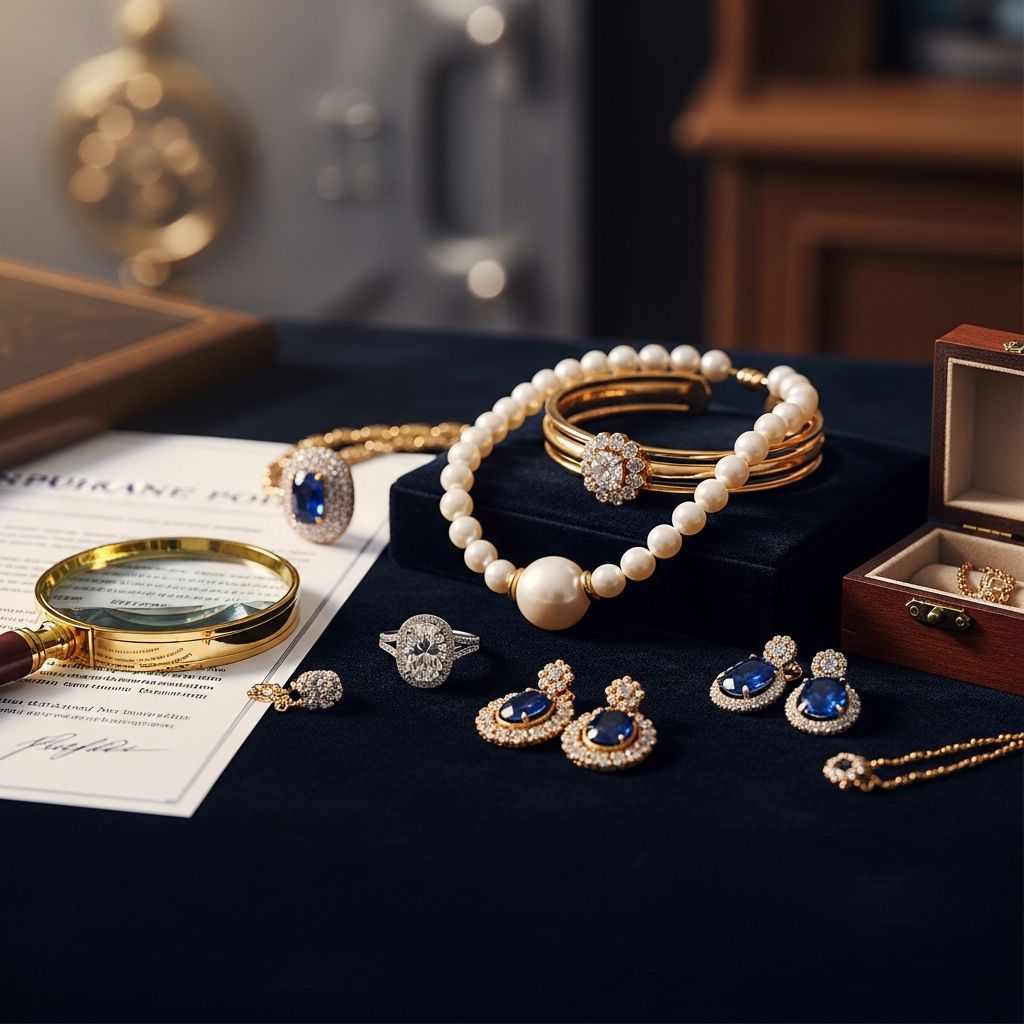
Jewelry holds more than monetary value for most people. A family heirloom passed down through generations, an engagement ring marking a life milestone, or a luxury timepiece representing years of saving—these treasures carry emotional significance alongside their financial worth. Yet many jewelry owners remain uncertain about whether protecting these items through insurance is a necessary investment or an unnecessary expense. Understanding your options can help you make an informed decision about safeguarding your collection.
Understanding Your Coverage Options
When considering jewelry protection, you have multiple pathways available. The three primary approaches each offer distinct advantages and limitations, and your choice depends on your collection’s value, your lifestyle, and your priorities.
Homeowners Insurance Coverage
Your existing homeowners policy likely provides some baseline protection for jewelry. Standard homeowners insurance covers jewelry that suffers loss or damage from specific perils including fire, theft, and vandalism. This coverage comes automatically with your policy and requires no additional action to activate. However, homeowners insurance imposes significant restrictions on jewelry protection. Most policies include a predetermined limit—typically around $1,500 for all jewelry combined—which many insurers justify by noting that jewelry can be easily stolen and therefore represents higher risk. While you may request an increase to this limit, the maximum adjustment typically caps at $2,500 per individual piece and $5,000 overall. For anyone with high-value pieces, these thresholds prove inadequate.
An additional limitation of relying on homeowners insurance for jewelry protection involves the impact on your broader policy. When you file a claim for lost or stolen jewelry, your entire homeowners insurance policy may face consequences. Your premiums could increase, or your eligibility for renewal coverage might be affected. This interconnection means a single jewelry claim creates ripple effects across your complete insurance situation.
Endorsements and Riders to Homeowners Policies
Many homeowners choose to enhance their jewelry coverage by adding endorsements or riders to their existing policies. This approach provides more comprehensive protection than standard coverage while maintaining the convenience of a single insurance policy. Through an endorsement, you can typically increase your jewelry coverage limit above the standard caps, though maximum limits still apply. The cost for this enhanced coverage typically ranges from $1 to $2 per $100 of insured value annually, making it an economical option for moderately valuable collections.
These endorsements still fall short for collectors with particularly valuable pieces, and they retain the same disadvantage as standard coverage: a claim can influence your homeowners policy rates and renewal status. Additionally, homeowners endorsements often maintain the same exclusions as standard coverage, meaning loss scenarios like accidentally misplacing a ring typically remain uncovered.
Specialized Standalone Jewelry Insurance
Specialty insurers offering dedicated jewelry policies represent a fundamentally different approach to protection. These companies have designed their policies specifically around jewelry ownership, removing many restrictions found in homeowners insurance. Standalone policies typically cover loss, theft, mysterious disappearance, and damage. Some insurers even extend coverage to damage from floods and earthquakes—scenarios excluded from standard homeowners policies.
A key advantage of specialty jewelry insurance involves the independence from your homeowners coverage. Filing a claim under a standalone jewelry policy has no impact on your homeowners insurance rates or renewal status. This separation allows you to pursue claims without worrying about broader consequences to your overall insurance situation.
Specialized jewelry policies often feature additional benefits rarely found in homeowners endorsements. Many offer “all-risk” coverage, meaning you receive protection for virtually any event unless specifically excluded. Some policies include preventive maintenance coverage, reimbursing you for stone tightening or clasp replacement. Others provide “repair and replace” options, allowing your insurer to pay your jeweler directly after a claim rather than requiring you to handle replacement independently.
Coverage Scope and Exclusions
Understanding what jewelry insurance covers—and equally important, what it excludes—proves essential when evaluating your protection options.
What Jewelry Insurance Typically Covers
- Theft and burglary: Coverage if your jewelry is stolen from your home or your person
- Accidental loss: Protection if you misplace or accidentally discard a piece
- Mysterious disappearance: Reimbursement when jewelry vanishes without clear explanation
- Damage: Coverage for repairs needed due to accidental damage or accidents
- Fire and natural disasters: Protection if jewelry is damaged or destroyed by fire, floods, earthquakes, or other covered events
- Vandalism: Coverage if jewelry is intentionally damaged by others
Common Exclusions from Jewelry Coverage
- Wear and tear: Gradual deterioration from normal use remains the owner’s responsibility
- Manufacturer defects: Problems with the original craftsmanship or materials fall outside coverage
- War and nuclear hazards: Damage from wartime events or nuclear incidents is excluded
- Intentional loss or damage: You cannot claim reimbursement for jewelry you deliberately damage or dispose of
- Damage from vermin or rodents: Deterioration caused by pests is not covered
Evaluating the Financial Arithmetic
Determining whether jewelry insurance makes financial sense requires honest assessment of both the coverage costs and the potential financial impact of loss.
Understanding Premium Costs
Specialty jewelry insurance typically costs between 1% and 2% of your jewelry’s insured value annually. This calculation translates to meaningful numbers for valuable pieces. A $5,000 engagement ring would cost $50 to $100 per year to insure through a specialty company. A $30,000 luxury watch collection might require $300 to $600 annually. Over a decade, you would pay $500 to $1,000 in premiums for that engagement ring or $3,000 to $6,000 for the watch collection.
Homeowners endorsements often cost less on a percentage basis, typically ranging from $1 to $2 per $100 of value annually. However, this apparent savings can be misleading given the limitations these endorsements impose.
The Deductible Factor
When evaluating actual claim payout amounts, the deductible deserves careful consideration. If you have a $1,000 deductible on your homeowners policy and file a claim for a stolen $1,500 bracelet, your actual reimbursement would be only $500. Many specialty jewelry insurers offer zero-deductible options, removing this reduction from your claim payout. This difference can prove substantial for smaller claims.
Replacement Value Versus Actual Cash Value
Insurance policies handle valuation differently depending on their structure. Some policies pay your jewelry’s agreed-upon value as established through appraisal, while others pay actual cash value considering depreciation. Policies that pay agreed value provide more predictable reimbursement, particularly important for heirloom pieces that may appreciate over time. Understanding your specific policy’s valuation method prevents unpleasant surprises after a loss.
Determining Your Personal Insurance Needs
Whether jewelry insurance makes sense for your situation depends on multiple personal factors extending beyond pure cost analysis.
Evaluating Your Collection’s Financial Significance
Consider the actual financial impact if you lost your jewelry today. If you have a single engagement ring valued at $8,000, losing it would represent a significant financial setback requiring expensive replacement or forcing you to accept permanent loss of a treasured piece. Conversely, if your entire jewelry collection totals $1,200 and you have emergency savings of $25,000, the financial impact would be manageable without insurance.
Assessing Your Lifestyle and Risk Factors
Your daily activities and habits significantly influence jewelry loss risk. Active individuals who hike, exercise, or participate in sports face higher damage and loss risks. Frequent travelers encounter increased theft exposure and packing mishaps. People living in or regularly visiting high-crime urban areas face elevated theft risk. If your lifestyle exposes your jewelry to frequent risk, insurance becomes more valuable. Someone who removes jewelry before exercise and activities, stores it carefully, and rarely travels has lower risk exposure.
Considering Emotional Value Alongside Financial Worth
Some jewelry pieces possess irreplaceable emotional significance. A grandmother’s diamond brooch cannot truly be replaced even if insurance reimburses your monetary loss. For such treasured pieces, insurance may represent the best protection available—ensuring that if the worst occurs, you at least recover the financial value and can choose whether to seek a replacement piece. If jewelry loss wouldn’t substantially impact you emotionally or financially, insurance may represent unnecessary expense.
Practical Steps for Jewelry Protection
Whether or not you choose insurance, implementing protection strategies reduces your risk and strengthens any insurance claim.
Documentation and Appraisal
Maintain detailed records of your jewelry including professional appraisals, purchase receipts, and high-quality photographs. Documentation proves invaluable when filing insurance claims and establishes the value insurers use for reimbursement calculations. Update appraisals every three to five years, as jewelry values can fluctuate based on precious metal prices and gemstone market conditions.
Security Measures
Implement security practices that reduce theft and loss risk. Use a secure safe for valuable pieces when not wearing them. Install a home security system with surveillance capabilities. Avoid displaying expensive jewelry in public spaces or on social media. Store jewelry in a safety deposit box for pieces you rarely wear. These practices often reduce insurance premiums while providing protection independent of insurance coverage.
Responsible Wearing Habits
Establish routines that minimize accidental damage and loss. Remove jewelry before swimming, exercising, or sleeping. Take off rings before doing dishes or yard work. Be mindful of jewelry placement to avoid accidentally discarding pieces. When traveling, keep track of your jewelry and be aware of coverage geographic limits. Responsible habits reduce damage risk and can positively influence insurance premium calculations.
Making Your Decision
The jewelry insurance decision ultimately reflects your personal circumstances, risk tolerance, and priorities. Individuals with high-value collections, active lifestyles, frequent travel, or deep emotional attachment to specific pieces generally benefit from specialized jewelry insurance. Those with modest collections, low-risk lifestyles, and adequate emergency savings may find standard homeowners coverage sufficient or opt to self-insure entirely.
Consider requesting quotes from specialty insurers to understand the actual cost for your specific collection. Compare this cost against the financial impact of potential loss. Evaluate how peace of mind factors into your decision—some people sleep better knowing comprehensive coverage exists, while others accept risk to avoid premium costs.
Whatever approach you choose, implement documentation and security practices that protect your valuables. These steps reduce risk regardless of insurance decisions and provide essential documentation if you ever need to file a claim.
Common Questions About Jewelry Insurance
Does renters insurance cover jewelry?
Basic renters insurance provides limited jewelry coverage for theft or fire, typically capped at $1,000 or $1,500 total. Like homeowners insurance, renters policies rarely cover loss or mysterious disappearance. You can add endorsements to increase coverage, but rental-specific jewelry insurance or specialty policies provide more comprehensive protection.
How do I file a jewelry insurance claim?
Contact your insurance provider immediately after discovering a loss. Provide documentation including appraisals, receipts, photographs, and detailed descriptions of missing or damaged pieces. Your insurer will guide you through their specific claims process and timeline for reimbursement.
Can insurance cover inherited or antique jewelry?
Yes, but specialized appraisals become essential. Antique and inherited pieces often appreciate over time, making original purchase value inaccurate for insurance purposes. Have pieces professionally appraised to establish current market value before securing insurance coverage.
What happens if I lose a piece of jewelry with insurance?
Your insurance company will reimburse you based on your policy terms—either the appraised value, agreed value, or replacement cost depending on your specific coverage. Some policies offer repair-and-replace options where the insurer directly pays your jeweler. Others provide cash payouts for you to use as needed.
References
- Is Jewelry Insurance Worth Having? — Insurance Business Magazine. https://www.insurancebusinessmag.com/us/news/breaking-news/is-jewelry-insurance-worth-having-406154.aspx
- Jewelry Insurance: How It Works, What It Covers — NerdWallet. https://www.nerdwallet.com/insurance/homeowners/learn/jewelry-insurance
- Everything You Need to Know About Jewelry Insurance — Rate.com. https://www.rate.com/insurance/resources/everything-you-need-to-know-about-jewelry-insurance/
- Jewelry Insurance: Do I Need to Insure My Ring? — White Coat Investor. https://www.whitecoatinvestor.com/jewelry-insurance/
- Everything You Thought About Insuring Your Jewelry Is Wrong — Adkisson Insurance. https://www.adkissoninsurance.com/blog/everything-you-thought-about-insuring-your-jewelry-is-wrong-the-case-for-a-standalone-jewelry-policy/
Similar Articles








Read full bio of medha deb