Debt Consolidation: Is It A Good Idea? Expert Guide
Learn when debt consolidation helps, when it hurts, and how to use it wisely to get out of debt faster and protect your finances.

Juggling multiple debt payments every month can feel overwhelming, especially when interest rates are high and due dates are scattered throughout the month. Debt consolidation is a strategy many people consider to make repayment easier and potentially cheaper—but is it always a smart idea?
This guide walks you through exactly what debt consolidation is, how it works, the different types available, the pros and cons, and how to decide whether it fits your financial situation.
What Is Debt Consolidation?
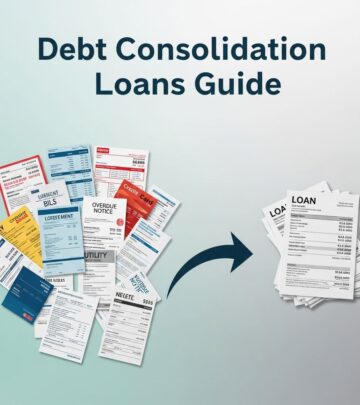
Debt consolidation is the process of combining multiple debts into a single new debt, ideally with a lower interest rate, a more manageable payment, or a clearer payoff timeline. Instead of paying several lenders each month, you make one payment to the new lender.
People commonly use debt consolidation for:
- Credit card balances
- Personal loans
- Medical bills
- Store cards and lines of credit
- In some cases, student loans (through specialized programs)
It is important to recognize that debt consolidation does not erase your debt. You still owe the money—you are simply restructuring it into a different form.
Debt Consolidation vs Debt Settlement
Debt consolidation is often confused with debt settlement, but they are very different strategies with very different consequences.
| Feature | Debt Consolidation | Debt Settlement |
|---|---|---|
| Main idea | Combine debts into a new loan or account | Negotiate to pay less than the full amount owed |
| Debt payoff | Debt is fully repaid over time | Part of the debt is forgiven, part is repaid |
| Credit impact | May cause a temporary dip; can improve over time with on-time payments | Often severely damages credit; late or missed payments are common |
| Tax implications | Generally no taxable forgiven amount | Forgiven debt may be taxable income in many cases |
| Main goal | Simplify and reduce cost of repayment | Settle for less because full payoff is not affordable |
Debt consolidation keeps you on track to repay what you borrowed, while debt settlement is usually a last-resort option when you are already in or near default.
How Does Debt Consolidation Work?
The basic process of consolidating debt follows a few key steps:
- 1. Review your current debts
List each debt, including balance, interest rate, minimum payment, and remaining term. This gives you a clear baseline to compare against consolidation offers.
- 2. Choose a consolidation method
Common options include a balance transfer credit card, a personal loan, a home equity product, or a formal debt management plan through a nonprofit credit counseling agency.
- 3. Apply and get approved
Your credit score, income, and overall financial profile will determine whether you qualify and what interest rate you receive. Lenders will typically run a hard credit inquiry, which can temporarily lower your credit score slightly.
- 4. Use the new account to pay off old debts
The new lender may directly pay your creditors, or you may receive funds to pay them yourself. Once that happens, your old accounts either show a zero balance or are closed.
- 5. Repay the new consolidated debt
You then make one payment each month on the new account, following the agreed schedule until the consolidated balance is fully paid off.
During and after consolidation, it is critical not to run up new balances on your now-freed credit lines—otherwise you risk ending up with more debt than you started with.
Common Types of Debt Consolidation
There is no one-size-fits-all consolidation method. The best approach depends on your credit score, income, assets, and how disciplined you can be with repayment.
Balance Transfer Credit Cards
A balance transfer card allows you to move existing credit card balances to a new card, often with an introductory 0% or low interest rate for a set period, such as 12–18 months.
Key points:
- Often charge a transfer fee, commonly 3–5% of the amount transferred
- Introductory rate is temporary; the rate resets to a much higher APR after the promo period
- Best suited if you can pay off the entire balance before the promotional rate ends
- Usually requires a good to excellent credit score for approval
Debt Consolidation Personal Loans
A debt consolidation loan is an unsecured personal loan used to pay off multiple debts. You receive a lump sum and then repay that loan in fixed monthly installments over a set term (for example, 3–5 years).
Key points:
- Interest rate is typically fixed, so your payment is predictable
- May offer a lower interest rate than high-rate credit cards, especially with strong credit
- No collateral is required, but approval depends heavily on creditworthiness
- You must resist using the newly freed credit card limits for new spending
Home Equity Loans and HELOCs
Homeowners sometimes use a home equity loan or a home equity line of credit (HELOC) to consolidate higher-interest debts, because these are secured by the home and can carry lower interest rates than unsecured credit.
Key points:
- Interest rates are often lower than credit cards or personal loans because the loan is backed by your home
- You risk foreclosure if you cannot repay, because your home is collateral
- Closing costs and fees can be significant
- Generally better suited for people with substantial equity, steady income, and very strong repayment discipline
Debt Management Plans (Through Nonprofit Credit Counselors)
A debt management plan (DMP) is a program offered by nonprofit credit counseling agencies. The counselor works with your creditors to potentially reduce interest rates or waive certain fees, and you make one monthly payment to the agency, which distributes it to your creditors.
Key points:
- You do not take out a new loan; your existing accounts remain, but on modified terms
- Creditors may reduce interest and fees, lowering your total cost of repayment
- You usually must close or stop using your credit cards while on the plan
- DMPs are typically designed to help you pay off debts within 3–5 years
Does Debt Consolidation Hurt Your Credit Score?
Debt consolidation can affect your credit score in several ways, both positive and negative.
- Short-term impact
Applying for a new credit card, loan, or line of credit usually triggers a hard inquiry, which can temporarily lower your credit score by a small amount. Opening a new account may also reduce your average account age, another minor negative factor.
- Medium- to long-term impact
If consolidation lowers your credit utilization (the percentage of available credit you are using) or helps you make consistent on-time payments, your credit score can improve over time. Payment history and utilization are two of the largest components of most credit scoring models.
- Risk of additional damage
If you miss payments on the new consolidated loan or run up new balances on old cards, your credit could end up worse than before.
Pros of Debt Consolidation
Used strategically, debt consolidation can offer several benefits.
- Simplified payments
One payment is easier to manage than several, which can reduce stress and cut down the chance of missing a due date.
- Potentially lower interest costs
If you qualify for a lower interest rate than your existing debts, more of each payment goes toward principal instead of interest, helping you pay off your debt faster and at a lower total cost.
- Predictable payoff schedule
With a fixed-rate personal loan or structured debt management plan, you know exactly when your debt will be paid off, assuming you stay on track.
- Possible credit score improvement over time
Lower credit utilization and on-time payments can gradually strengthen your credit profile.
Cons and Risks of Debt Consolidation
Despite the potential advantages, there are meaningful risks and trade-offs to consider.
- Fees and costs
Balance transfer fees, loan origination fees, closing costs, or counseling program fees can reduce or eliminate the financial benefit of consolidating if you are not careful.
- Lower payments but longer payoff
Consolidation may reduce your monthly payment by stretching your debt over a longer term, which can mean paying more total interest even with a lower rate.
- Secured debt puts assets at risk
Using your home as collateral for a consolidation loan means that falling behind could lead to foreclosure. Transferring unsecured credit card debt into secured debt increases the stakes significantly.
- Temptation to overspend
After consolidation, your old credit lines may be open with a zero balance. If you see that as “free money” and start spending again, you could end up with your original consolidated balance plus new debt.
- Does not solve underlying habits
Consolidation makes debt more manageable, but it does not address overspending, lack of a budget, or insufficient savings. Without behavior changes, debt can quickly return.
When Debt Consolidation Can Be a Good Idea
Debt consolidation is more likely to help you when several conditions are true:
- You can qualify for a significantly lower interest rate than you are currently paying.
- You have a steady, reliable income to make the new payment consistently every month.
- You are confident you will not continue using credit cards or lines of credit to accumulate new debt.
- You have a clear payoff plan, especially for promotional-rate products like balance transfer cards.
- You have done the math and will save money overall after factoring in any fees.
For example, the Consumer Financial Protection Bureau (CFPB) notes that consolidating high-interest credit card debt with a lower-rate product can be helpful, but only if you avoid new debt and understand the terms fully.
When Debt Consolidation May Not Be a Good Idea
Consolidation might not serve you well if:
- You cannot qualify for a better interest rate than your current debts.
- The fees are high enough that they cancel out the interest savings.
- You are close to paying off your current debts within a short timeframe.
- You are struggling with income instability and may not be able to keep up with the new payment.
- You have a pattern of overspending and have not yet addressed the behaviors that created the debt.
In these cases, building a structured payoff plan with your existing accounts—such as the debt snowball or debt avalanche method—may be more effective and less risky.
Alternatives to Debt Consolidation
If you decide consolidation is not right for you, or you do not qualify, there are other ways to make progress on your debt.
- Debt snowball method
You pay minimums on all debts, then focus extra money on the smallest balance first. Once that is paid off, you roll that payment amount onto the next smallest debt, and so on. This method can provide strong psychological motivation as you see quick wins.
- Debt avalanche method
You pay minimums on all debts, then direct extra funds to the debt with the highest interest rate first. Over time, this usually saves the most in interest.
- Negotiating directly with creditors
Some creditors may be willing to adjust due dates, reduce interest rates, or offer hardship programs if you contact them early and explain your situation.
- Working with a nonprofit credit counselor
Accredited nonprofit credit counseling agencies can help you review your full financial picture and create a personalized repayment strategy. They may also offer debt management plans, as discussed earlier.
How to Decide if Debt Consolidation Is Right for You
Before you apply for any consolidation product, walk through these steps:
- Gather all your current debt information
List balances, interest rates, minimum payments, and payoff timelines.
- Calculate your current total cost
Use an online calculator or spreadsheet to estimate how much interest you will pay if you keep your debts as they are.
- Compare realistic consolidation offers
Look at the interest rate, term, payment amount, fees, and whether the loan is secured or unsecured.
- Check your behavior and habits
Be honest about whether you are ready to budget, cut back on nonessential spending, and stop using credit for everyday expenses.
- Stress-test your budget
Ask yourself whether you can comfortably make the consolidated payment every month, even if your income fluctuates or unexpected expenses pop up.
- Consider speaking with a certified credit counselor
A neutral professional can help you evaluate your options and avoid predatory products.
Frequently Asked Questions (FAQs)
Q: Does debt consolidation really save money?
Debt consolidation can save money if the new interest rate is lower, fees are reasonable, and you pay the loan according to schedule without adding new debt. If the rate is not much lower or the term is much longer, your total interest paid could increase.
Q: Is it better to consolidate or just pay off my debt as is?
If you can pay off your debts within a short period and your rates are not extremely high, a structured payoff approach (like the snowball or avalanche method) may be simpler and cheaper than consolidating. Consolidation makes more sense when it clearly reduces your cost or simplifies a complex situation.
Q: Will consolidating my debt ruin my credit?
Consolidation usually does not ruin your credit by itself. You may see a small temporary drop from the credit inquiry and new account, but consistent, on-time payments and lower credit utilization can strengthen your credit over time.
Q: Should I close my old credit cards after consolidating?
Closing old cards can slightly increase your credit utilization and reduce your average account age, which may lower your score. However, leaving them open but unused requires strong self-control. Many people choose to keep cards open but physically put them away to avoid temptation.
Q: Are debt consolidation companies safe to work with?
Some lenders and nonprofit credit counseling agencies are reputable, but there are also predatory companies that charge high fees or make unrealistic promises. Check credentials, read contracts carefully, avoid companies that guarantee results, and be cautious of pressure to act quickly.
References
- Understand how credit scores work — FICO. 2024-01-15. https://www.fico.com/education/credit-scores
- Consumer Credit Card Market Report — Consumer Financial Protection Bureau (CFPB). 2023-10-01. https://www.consumerfinance.gov/data-research/research-reports/consumer-credit-card-market-report/
- Options for getting out of debt — Consumer Financial Protection Bureau (CFPB). 2023-06-30. https://www.consumerfinance.gov/consumer-tools/debt-collection/options-for-getting-out-of-debt/
- Is debt consolidation a good idea? — Clever Girl Finance. 2024-05-01. https://www.clevergirlfinance.com/is-debt-consolidation-a-good-idea/
Similar Articles








Read full bio of Sneha Tete