IRS Inquiry on Credit Report Explained
Discover why the IRS appears on your credit report, whether it affects your score, and steps to verify and respond effectively.

Seeing an inquiry from the Internal Revenue Service (IRS) on your credit report can spark immediate concern, but understanding its nature is key to maintaining financial confidence. These inquiries typically arise during tax-related processes and are classified as soft inquiries, which do not influence your credit score.
Understanding Credit Inquiries Basics
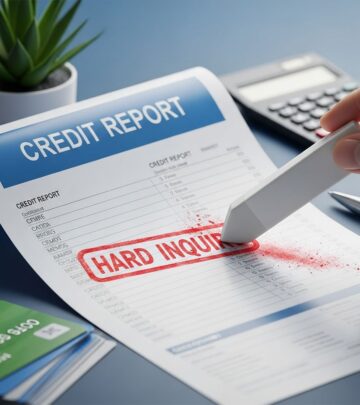
Credit inquiries record instances when your credit report is accessed, divided into hard and soft types. Hard inquiries occur when you apply for credit, potentially lowering your score temporarily, while soft inquiries happen for non-lending purposes like account reviews or self-checks and carry no score impact.
The IRS entry falls under soft inquiries because it supports tax compliance verification rather than credit decisions. Credit bureaus like Equifax, Experian, and TransUnion maintain these records for up to two years, though only recent ones matter for scoring models.
Why Does the IRS Access Your Credit Report?
The IRS reviews credit reports during audits or collection efforts to align reported income with spending patterns. This helps detect discrepancies, such as lifestyle not matching declared earnings, signaling potential underreporting.
- Audit Investigations: During tax audits, agents examine credit data to verify financial consistency across years.
- Collection Activities: Revenue officers check for assets when pursuing unpaid taxes.
- Criminal Probes: In rare cases, the Criminal Investigation Division uses credit info for deeper lifestyle analysis.
These accesses require permissible purposes under the Fair Credit Reporting Act (FCRA), ensuring legality without your direct consent in government matters.
Soft vs. Hard Inquiries: Key Differences
Distinguishing inquiry types prevents unnecessary worry. Here’s a comparison:
| Aspect | Hard Inquiry | Soft Inquiry |
|---|---|---|
| Purpose | Credit applications (loans, cards) | Account reviews, employment checks, self-access, government verification |
| Score Impact | Can lower score by 5-10 points, lasts 12 months | No impact |
| Visibility | Seen by all viewing your report | Visible only to you |
| Duration on Report | Up to 2 years | Up to 2 years |
IRS inquiries are soft, visible only when you pull your report, preserving your score.
Does an IRS Inquiry Hurt Your Credit Score?
No, IRS inquiries do not affect credit scores as they are soft pulls. Unlike hard inquiries from lenders, which signal credit-seeking behavior, government checks for tax purposes are neutral in scoring algorithms. Multiple soft inquiries, even from the IRS across years, remain harmless.
Hard inquiries might drop scores slightly, but rate-shopping for mortgages or autos groups them, minimizing damage. Focus on overall credit health like payment history over isolated inquiries.
Common Scenarios Triggering IRS Credit Checks
Several tax situations prompt IRS inquiries:
- Ongoing Audits: Extended reviews pull credit to track habits.
- Sequential Year Reviews: One audited year leads to others if patterns emerge.
- Debt Collection: Locating assets for unpaid balances.
- No-Change Letters: Confirming audit closure, though additional pulls may occur.
COVID-19 expanded free weekly reports, aiding self-monitoring without score hits.
Steps to Take When Spotting an IRS Inquiry
Stay proactive without panic:
- Verify Your Report: Access free weekly reports from AnnualCreditReport.com.
- Review IRS Correspondence: Check for audit or collection notices.
- Contact IRS: Call 1-800-829-1040 or check IRS.gov account for status.
- Consult Professionals: Tax attorneys or CPAs interpret implications.
- Dispute Errors: If unauthorized, file with bureaus under FCRA.
Document everything; most cases resolve as routine tax verification.
Protecting Your Credit During Tax Scrutiny
Maintain strong credit amid IRS activity:
- Avoid new credit applications to prevent hard inquiries.
- Monitor reports regularly for anomalies.
- Ensure timely tax filings to minimize audit risks.
- Build emergency funds to handle potential liabilities.
Understanding permissible purposes under FCRA shields against improper accesses.
Frequently Asked Questions (FAQs)
Is an IRS credit inquiry a hard pull?
No, it’s a soft inquiry with zero score impact.
How long does an IRS inquiry stay on my report?
Up to two years, but it doesn’t affect scores after one year for hard types; softs never do.
Can I remove an IRS inquiry?
Only if inaccurate; dispute via credit bureaus.
Why would IRS check my credit without notice?
Government permissible purpose allows it during audits or collections.
Should I worry about multiple IRS inquiries?
Not for scores, but review tax compliance.
Long-Term Financial Strategies Post-Inquiry
Turn concern into opportunity by optimizing credit:
Payment history (35% of FICO) trumps inquiries. Pay debts promptly, keep utilization under 30%. Diversify credit mix wisely.
For audits, accurate records prevent escalations. Use IRS transcripts for verification.
Freeze credit if identity theft suspected, though IRS pulls are legitimate.
Educate on FCRA rights: consent for most pulls, dispute inaccuracies within 30 days.
References
- What is a credit inquiry? — Consumer Financial Protection Bureau. 2023-10-01. https://www.consumerfinance.gov/ask-cfpb/what-is-a-credit-inquiry-en-1317/
- What Are Credit Inquiries and How Do They Impact Your Credit? — CareCredit. 2024-05-15. https://www.carecredit.com/well-u/financial-health/what-is-credit-inquiry/
- I was taking a look at my credit report. I noticed an inquiry from the IRS — Avvo. 2015-07-20. https://www.avvo.com/legal-answers/i-was-taking-a-look-at-my-credit-report-i-noticed–1877168.html
- Understanding Hard Inquiries on Your Credit Report — Equifax. 2024-02-10. https://www.equifax.com/personal/education/credit/report/articles/-/learn/understanding-hard-inquiries-on-your-credit-report/
- Credit inquiries: what you should know about hard and soft pulls — U.S. Small Business Administration. 2023-11-05. https://www.sba.gov/blog/credit-inquiries-what-you-should-know-about-hard-soft-pulls
- A beginner’s guide to credit inquiries — Chase. 2024-01-22. https://www.chase.com/personal/mortgage/education/financing-a-home/guide-to-credit-inquiries
Similar Articles








Read full bio of Sneha Tete