IRA Rollovers Explained
Master the process of transferring retirement savings seamlessly with our detailed guide to IRA rollovers and smart strategies.
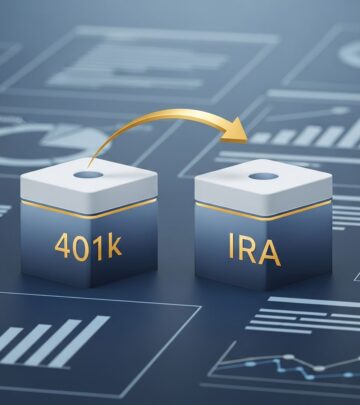
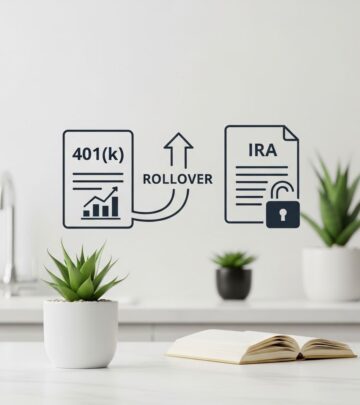
Transferring retirement funds between accounts is a key strategy for maintaining long-term financial health. An IRA rollover allows individuals to move savings from employer-sponsored plans like 401(k)s into Individual Retirement Accounts (IRAs) without immediate tax consequences. This process preserves the tax-advantaged status of the funds while often providing greater investment flexibility.
Understanding the Fundamentals of Retirement Account Transfers
Retirement accounts such as 401(k)s, 403(b)s, and IRAs serve as vehicles for tax-deferred or tax-free growth. When changing jobs or retiring, savers face decisions about these assets. Leaving funds in a former employer’s plan is one option, but rolling over to an IRA frequently offers expanded choices in investments, potentially lower fees, and consolidated management.
The core principle is preserving the retirement-qualified status. Funds must transfer to another eligible plan or IRA to avoid being treated as taxable distributions. This mechanism supports portability, enabling seamless transitions across career stages.
Types of IRA Rollovers: Direct vs. Indirect
Two primary methods exist for executing rollovers: direct and indirect. Each carries distinct procedures and risks.
Direct Rollover Process
In a direct rollover, the current plan administrator sends funds straight to the receiving IRA custodian. No taxes are withheld, and the individual never takes possession, eliminating mishandling risks. Plan administrators often issue checks payable to the new custodian ‘for the benefit of’ the account holder.
This method is recommended for its simplicity and security. Contact the old plan provider to initiate, providing details of the new IRA account. Processing typically spans 2-4 weeks, depending on providers.
Indirect Rollover Mechanics
An indirect rollover delivers funds directly to the individual, who then has 60 days to deposit them into an eligible IRA. Retirement plans withhold 20% for federal taxes on such distributions. To complete the rollover tax-free, the recipient must replace this amount from other sources within the deadline.
Failure to comply triggers taxes on the full amount plus a 10% early withdrawal penalty if under age 59½. Additionally, IRS rules limit individuals to one IRA-to-IRA rollover per 12-month period across all IRAs.
| Aspect | Direct Rollover | Indirect Rollover |
|---|---|---|
| Tax Withholding | None | 20% mandatory |
| Possession of Funds | No | Yes, for 60 days |
| Deadline | Provider-dependent | Strict 60 days |
| Penalty Risk | Low | High if missed |
| Frequency Limit | No limit | One per 12 months for IRAs |
Step-by-Step Guide to Completing an IRA Rollover
Executing a rollover requires preparation and coordination. Follow these structured steps for success.
- Assess Your Current Account: Review statements to identify the plan provider, balance, and contribution types (pre-tax, Roth, after-tax). Note any employer stock or unique assets.
- Select and Open a Receiving IRA: Choose between Traditional IRA for pre-tax funds or Roth IRA for after-tax. Open the account with a reputable custodian offering low fees and diverse investments.
- Initiate the Transfer: Contact the old provider. Request a direct rollover, supplying the new IRA details including account number and custodian address. Obtain a Letter of Acceptance if required.
- Monitor Progress: Track the transfer, which may take weeks. For indirect, deposit promptly and document everything.
- Verify Deposit: Confirm funds appear in the new IRA correctly allocated.
Tax Implications and Strategies to Minimize Liability
Rollover taxes hinge on execution method and account types. Direct transfers avoid withholding entirely. Indirect demands covering the 20% gap personally, reclaimable via tax refund if rolled over timely.
Mixing pre-tax and after-tax funds complicates matters. Pro-rata rules apply to distributions, taxing proportional shares. Roth conversions during rollover trigger immediate taxes on pre-tax amounts but enable future tax-free growth.
Consult IRS guidelines for waivers on 60-day deadlines in hardship cases. Employer plans to IRAs generally qualify, but verify eligibility for non-spousal beneficiaries or certain plans.
Pros and Cons of Moving to a Rollover IRA
- Advantages:
- Investment Diversity: Access thousands of options beyond plan menus.
- Cost Savings: Often lower expense ratios.
- Control: No employer restrictions on withdrawals or loans.
- Consolidation: Simplify tracking multiple accounts.
- Disadvantages:
- Creditor Protection: ERISA shields 401(k)s more robustly than IRAs.
- Age 55 Rule Loss: Penalty-free withdrawals at 55 from 401(k)s unavailable in IRAs.
- Administrative Effort: Requires proactive management.
Special Scenarios in IRA Rollovers
Handling Roth Accounts and Conversions
Roth 401(k)s roll directly to Roth IRAs tax-free. Converting Traditional to Roth incurs taxes on converted amounts, ideal if expecting higher future brackets. After-tax contributions transfer separately, potentially basis for Roth ladders.
What Happens with Employer Stock?
Net Unrealized Appreciation (NUA) strategy may apply: Distribute stock in-kind to taxable account for favorable capital gains on appreciation, rather than rolling over.
Inherited Accounts and Beneficiary Rollovers
Spouses can treat inherited IRAs as own; non-spouses use inherited IRAs with 10-year depletion under SECURE Act.
Frequently Asked Questions About IRA Rollovers
Can I roll over my 401(k) while still employed?
Some plans permit in-service withdrawals after age 59½; check plan documents.
How long does a rollover take?
Typically 2-4 weeks for direct transfers, varying by providers.
Is there a fee for rollovers?
Many custodians waive incoming transfer fees; outgoing may apply.
What if I miss the 60-day window?
IRS may grant waivers for errors, disasters, or financial institution faults via self-certification or private letter ruling.
Can I roll over multiple 401(k)s?
Yes, each qualifies independently; consolidate for efficiency.
Choosing the Right Custodian for Your Rollover IRA
Evaluate custodians on fees, investment selections, tools, and support. Robo-advisors suit passive investors; full-service for complex needs. Ensure FDIC/SIPC protection and robust security.
Popular options include brokerage firms with zero-commission trades and extensive ETFs/mutual funds. Compare via tables or tools before deciding.
Long-Term Planning: Integrating Rollovers into Retirement Strategy
Rollovers fit broader goals like asset allocation, RMD planning (IRAs require at 73), and legacy strategies. Periodic reviews ensure alignment with life changes.
Combine with contributions, HSAs, or taxable accounts for diversified security. Professional advice tailors to personal circumstances.
References
- Rollovers of retirement plan and IRA distributions — Internal Revenue Service. 2023-10-01. https://www.irs.gov/retirement-plans/plan-participant-employee/rollovers-of-retirement-plan-and-ira-distributions
- Rollover Your IRA | 401k Rollover Steps — Fidelity Investments. 2025-01-15. https://www.fidelity.com/retirement-ira/401k-rollover-ira-steps
- Understanding 401(k) to IRA Rollover Rules — Vanguard. 2024-08-20. https://investor.vanguard.com/investor-resources-education/education/401k-to-ira-rollover-rules
- 401(k) Rollover | How it Works — ADP. 2024-03-12. https://www.adp.com/resources/articles-and-insights/articles/4/401k-rollover.aspx
- Rollover IRA: How to Roll Over Your 401(k) to an IRA — Merrill Edge. 2025-02-10. https://www.merrilledge.com/retirement/rollover-ira
Similar Articles








Read full bio of medha deb