Invoice Vs Receipt: 5 Key Differences For Businesses
Discover the essential distinctions between invoices and receipts to streamline your business finances and ensure compliance.
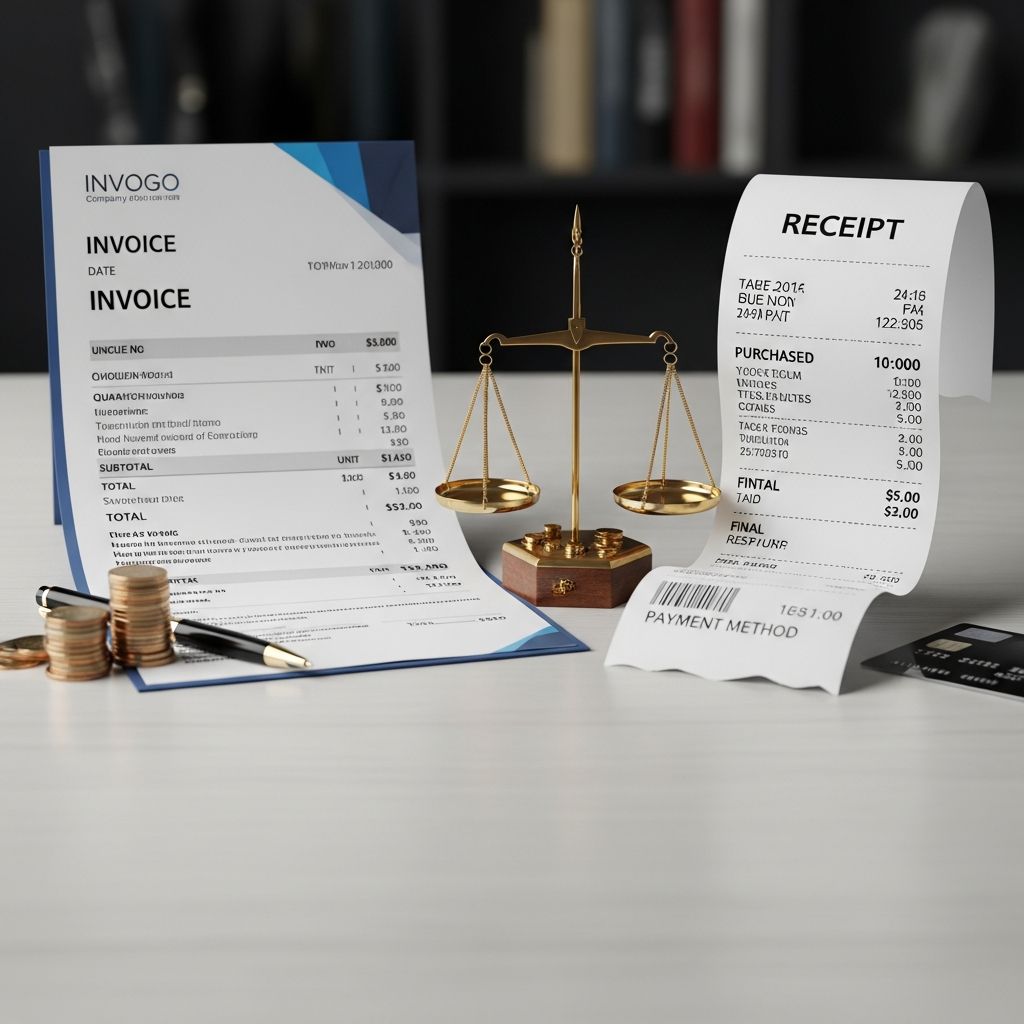
Invoices and receipts are fundamental documents in business transactions, but they serve distinct roles in the payment process. An invoice requests payment for goods or services provided, typically issued before payment is received, whereas a receipt confirms that payment has been made and the transaction is complete.
Defining Invoices: The Payment Request Document
An invoice acts as a formal bill sent to a customer detailing the amount owed for products or services delivered. It outlines the obligation to pay and includes specifics like item descriptions, quantities, prices, taxes, and due dates. Businesses use invoices for both one-time and recurring transactions, especially when allowing credit terms.
Key elements commonly found on an invoice include:
- Vendor and customer contact information
- Unique invoice number and issue date
- Detailed line items with unit prices and subtotals
- Applicable taxes, discounts, or shipping fees
- Total amount due and payment terms, such as net 30 days
- Accepted payment methods
Invoices contribute to accounts receivable tracking, helping businesses monitor outstanding payments and forecast cash flow. They establish a legal debt obligation until settled.
Understanding Receipts: Proof of Transaction Completion
A receipt is issued post-payment to verify that funds have been received, serving as evidence of a finalized sale. It provides buyers with proof of purchase for warranties, returns, or expense reimbursements, and sellers with income confirmation for accounting.
Typical components of a receipt are:
- Seller’s business name, address, and logo
- Transaction date and time
- Summary of items or services purchased
- Total amount paid, including taxes
- Payment method used (e.g., cash, card, bank transfer)
- Reference or transaction ID
Unlike invoices, receipts focus less on granular details and more on confirming the payment amount and method. They are essential for tax deductions, as they substantiate expenses.
Core Distinctions: A Side-by-Side Comparison
The primary divergence lies in timing and purpose: invoices precede payment to solicit it, while receipts follow to acknowledge it. This table summarizes the key contrasts:
| Aspect | Invoice | Receipt |
|---|---|---|
| Purpose | Requests payment for delivered goods/services | Confirms payment received and transaction complete |
| Timing | Issued before or upon delivery, prior to payment | Issued immediately after payment |
| Details | Itemized breakdown, quantities, rates, due date | Total paid, method, basic description |
| Accounting Role | Tracks receivables and pending debts | Records income and supports expense claims |
| Legal Weight | Creates payment obligation | Proof of purchase for returns/taxes |
When and Why to Issue an Invoice
Issue an invoice after fulfilling your end of the deal but before receiving funds, particularly for B2B dealings or credit sales. It professionalizes transactions, sets clear expectations, and aids in follow-ups for overdue amounts. For installment payments, multiple invoices may be sent.
Best practices include sending promptly, using clear numbering for tracking, and specifying penalties for late payments. Digital invoicing tools automate reminders, reducing administrative burden.
Ideal Scenarios for Issuing Receipts
Provide a receipt right after payment to build customer trust and comply with record-keeping needs. This is standard for retail, online sales, or any cash-immediate transaction. Receipts enable easy returns and are crucial for buyers claiming business expenses.
Even in invoiced sales, follow up with a receipt upon clearance to close the loop. Electronic receipts via email or apps enhance convenience and reduce paper use.
Legal and Tax Implications of Each Document
Invoices imply a contractual duty to pay, potentially enforceable in court if unpaid. They support sales tax collection but do not prove revenue until paid. Receipts, conversely, validate income for tax reporting and expenses for deductions. The IRS generally requires receipts for claims over certain thresholds, though bank statements may suffice in exceptions.
Maintaining both ensures audit readiness. Invoices track sales origins; receipts confirm realizations. Accurate records prevent disputes and support financial planning.
Can an Invoice Substitute as a Receipt?
No, an invoice does not serve as a receipt. It signals an outstanding balance, not fulfillment. Using one as proof of payment risks rejection for returns or reimbursements. Always issue a separate receipt post-payment.
Practical Examples in Business Contexts
Consider a freelance designer delivering a project: they send an invoice with hourly breakdowns and a 15-day due date. Upon bank transfer, a receipt confirms $1,500 received on a specific date.
In retail, a customer buys electronics for cash; no invoice precedes, but a printed receipt details the $800 purchase for warranty purposes.
For subscription services, monthly invoices bill ahead, with receipts emailed upon auto-charge success.
Tools and Best Practices for Management
Leverage software like QuickBooks or Stripe for automated generation and tracking. Customize templates to include branding and comply with local laws. Store digitally for easy access and backups.
Train staff on distinctions to avoid errors. Regularly reconcile invoices against receipts to monitor cash flow.
Frequently Asked Questions
What if a customer pays an invoice partially?
Issue an updated invoice or statement showing the balance, and a receipt for the partial amount paid.
Do small cash transactions need formal invoices?
No, a simple receipt suffices if payment is immediate.
How long to retain these documents?
Typically 3-7 years for tax purposes, per jurisdiction.
Are digital versions legally valid?
Yes, if they contain required details and are verifiable.
What happens if no receipt is issued?
Customers may face issues with returns or taxes; businesses risk incomplete income records.
Streamlining Your Financial Workflow
Mastering invoice-receipt dynamics optimizes operations, minimizes disputes, and bolsters compliance. Integrate them into your accounting cycle: invoice to bill, receipt to record. This clarity enhances professionalism and efficiency across scales.
References
- Understanding the Key Difference Between Invoice vs Receipt — Taxfyle. 2023. https://www.taxfyle.com/blog/difference-between-invoice-vs-receipt
- Difference Between Invoice vs Receipt — IBN Technologies. 2023. https://www.ibntech.com/blog/difference-between-invoice-vs-receipt/
- Invoice & Receipt: What’s the Difference? A Full Comparison Guide — PandaDoc. 2023. https://www.pandadoc.com/blog/invoice-vs-receipt/
- Invoice vs Receipt: Key Differences Explained — Happay. 2023. https://happay.com/blog/invoice-vs-receipt/
- What’s the difference between a receipt and an invoice? — SumUp. 2023. https://www.sumup.com/en-us/invoices/invoicing-essentials/difference-between-receipt-and-invoice/
- Invoice vs. Receipt? Why the Difference Matters — Billdu. 2023. https://www.billdu.com/blog/invoice-or-receipt-whats-the-difference/
- Invoice vs. Receipt: Key differences and examples 2026 — QuickBooks (Intuit). 2026. https://quickbooks.intuit.com/r/invoicing/invoice-vs-receipt/
Similar Articles








Read full bio of medha deb