Investments Available via Brokers
Unlock a world of financial opportunities by exploring the diverse investments brokers offer, from stocks to funds for building wealth.

Brokers provide access to a wide array of investment options that enable individuals to participate in financial markets and pursue growth objectives. These platforms facilitate purchases of equities, fixed-income securities, pooled funds, and tax-advantaged accounts, allowing for tailored portfolio construction based on personal risk profiles and goals.
Understanding Brokerage Platforms
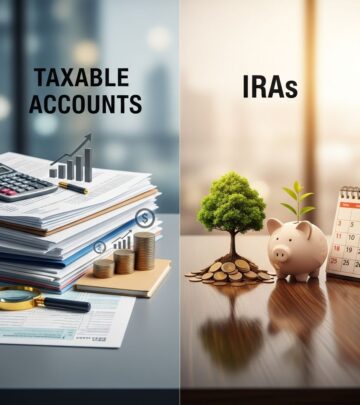
A brokerage account serves as the gateway to diverse markets, functioning as a taxable or retirement-oriented vehicle where investors deposit funds to acquire assets. Standard accounts, often called taxable brokerage accounts, permit trading in numerous securities without tax deferral benefits, subjecting gains, dividends, and interest to annual taxation. In contrast, specialized accounts like IRAs offer tax advantages for long-term savings. Brokers may charge commissions, though many now provide commission-free trades, sometimes offset by practices like payment for order flow.
Cash accounts limit purchases to deposited funds, suiting conservative investors, while margin accounts allow borrowing to amplify positions, increasing both potential returns and risks—ideal for experienced traders only. This flexibility empowers users to align investments with their financial strategies.
Equity Investments: Stocks
Stocks represent partial ownership in publicly traded companies, listed on exchanges such as the New York Stock Exchange or Nasdaq. Purchasing shares grants voting rights in some cases and entitles holders to dividends when profitable. Investors aim for capital appreciation by selling at higher prices, though volatility poses risks of principal loss.
Historical performance underscores stocks’ growth potential; for instance, the S&P 500 delivered approximately 9% annualized total returns from 1996 to 2022. Common stocks dominate, but preferred stocks offer fixed dividends with priority claims on assets. Diversifying across sectors mitigates company-specific risks.
- Pros: High return potential, liquidity, dividend income.
- Cons: Market volatility, no guaranteed returns.
Fixed-Income Securities: Bonds
Bonds are debt instruments issued by governments, municipalities, or corporations, where buyers lend money in exchange for periodic interest payments and principal repayment at maturity. U.S. Treasuries provide safety backed by the federal government, while corporate bonds yield higher rates reflecting credit risk.
These assets stabilize portfolios amid stock market fluctuations, with average annualized returns around 5.3% from 1926 to 2019. Bond prices inversely correlate with interest rates, affecting yields. A common allocation strategy suggests 40% bonds paired with 60% stocks for balanced risk.
| Bond Type | Issuer | Risk Level | Typical Yield |
|---|---|---|---|
| Treasury Bonds | U.S. Government | Low | 2-4% |
| Municipal Bonds | Local Governments | Low-Medium | 2-5% (tax-exempt) |
| Corporate Bonds | Companies | Medium-High | 4-7% |
Pooled Investment Vehicles
Exchange-Traded Funds (ETFs)
ETFs are baskets of securities tracking indices, sectors, or commodities, traded like stocks throughout the day. They offer instant diversification at low costs, often under 0.2% expense ratios, outperforming individual stock picking for many. Examples include S&P 500 trackers or sector-specific funds.
With over 3,000 options available through major brokers, ETFs suit passive investors seeking broad exposure. Their liquidity and transparency make them versatile for both short-term trading and long-term holding.
Mutual Funds
Mutual funds aggregate investor capital for professional management, aiming to beat benchmarks through active selection of stocks, bonds, or hybrids. Priced once daily at net asset value (NAV), they provide diversification but incur higher fees, typically 0.5-1.5% annually, compared to ETFs.
Index mutual funds mimic passively, reducing costs, while actively managed ones pursue alpha generation, though most underperform indices over time. Suitable for hands-off investors valuing expertise.
Retirement-Focused Accounts
Individual Retirement Accounts (IRAs) within brokerages enable tax-efficient investing. Traditional IRAs offer deductible contributions with taxed withdrawals, ideal for high earners. Roth IRAs feature after-tax contributions and tax-free qualified distributions after age 59½ and five-year holding.
2023 limits were $6,500 ($7,500 for 50+), adjustable for inflation. Brokers hold diverse assets inside IRAs, from stocks to funds. Self-employed options like SEP IRAs or Solo 401(k)s expand access.
- Traditional IRA: Tax deduction now, tax later.
- Roth IRA: Tax now, tax-free growth.
Alternative and Specialized Options
Beyond basics, brokers offer certificates of deposit (CDs) for FDIC-insured fixed returns, money market funds for liquidity, and options for advanced hedging. Real Estate Investment Trusts (REITs), traded like stocks, provide property exposure without ownership hassles, distributing 90% of income as dividends. Commodities via ETFs or futures add inflation hedges.
Custodial accounts (UGMA/UTMA) facilitate gifting to minors, holding stocks, bonds, or even real estate in UTMAs. These broaden brokerage utility across life stages.
Building a Diversified Portfolio
Diversification spreads risk across asset classes, reducing volatility impacts. A balanced mix might allocate 50-70% equities for growth, 20-40% bonds for stability, and 10% alternatives. Age-based rules like “110 minus age” in stocks guide adjustments.
Brokers’ tools, research, and robo-advisors simplify rebalancing. Consider fees, minimums, and platform usability when selecting.
| Asset Class | Risk | Return Potential | Role in Portfolio |
|---|---|---|---|
| Stocks | High | High | Growth |
| Bonds | Low | Moderate | Stability/Income |
| ETFs/Mutual Funds | Varies | Varies | Diversification |
Risks and Considerations
All investments carry risks: market downturns, interest rate shifts, inflation erosion. No guarantees exist; past performance doesn’t predict future results. Assess risk tolerance via questionnaires, factoring goals, timeline, and liquidity needs.
Tax implications vary—long-term capital gains rates apply to held assets. Brokers provide 1099 forms for reporting. Education is key; leverage free resources from platforms like Vanguard or Fidelity.
Getting Started with a Broker
Choose brokers by investment range, fees, tools, and support. Open an account online with ID verification, fund via transfer or deposit, and begin trading. Many offer fractional shares for accessibility.
Hybrid approaches blend self-directed trades with advisory services for personalized guidance.
Frequently Asked Questions
What is the minimum to start investing through a broker?
Many brokers have no minimums, especially for ETFs or fractional shares, allowing starts with $5-100.
Are brokerage investments FDIC-insured?
No, except SIPC covers up to $500,000 against broker failure, not market losses. CDs within accounts may be FDIC-insured.
Can I invest in international markets via brokers?
Yes, through ADRs, global ETFs, or direct foreign stocks on U.S. exchanges.
How do fees impact returns?
Even 1% fees compound to significant drags; prioritize low-cost index funds.
Is active trading better than buy-and-hold?
Studies favor passive, long-term strategies for most investors due to lower costs and behavioral pitfalls.
References
- What Investments Can I Buy Through a Broker? — Experian. 2023. https://www.experian.com/blogs/ask-experian/what-investments-can-you-buy-through-broker/
- Exploring Different Types of Investments: Pros and Cons — SoFi. 2024. https://www.sofi.com/learn/content/different-types-of-investments/
- What Is an Investment Account? 5 Types to Know — NerdWallet. 2024. https://www.nerdwallet.com/investing/learn/types-investment-accounts-know
- Investment Products: Mutual funds, ETFs and More — Vanguard. 2026. https://investor.vanguard.com/investment-products
- 12 Investment Types & How They Work — Acorns. 2024. https://www.acorns.com/learn/investing/investment-types/
Similar Articles








Read full bio of medha deb