Investment: Definition, Types, and Strategy Guide
Understanding investments: Build wealth through strategic capital allocation and diversified portfolios.

Understanding Investment: A Comprehensive Guide
An investment is the commitment of money or capital to purchase financial instruments or assets with the expectation of generating returns or income over time. When you invest, you’re essentially putting your money to work, allowing it to grow beyond its initial value through various mechanisms such as capital appreciation, dividends, interest payments, or rental income. The fundamental principle of investing is to deploy your resources in assets that have the potential to increase in value or produce regular income, thereby building wealth and achieving long-term financial goals.
What Is Investment?
At its core, investment refers to the allocation of resources—primarily financial capital—into different assets or ventures with the objective of earning a return. Unlike saving, which typically involves setting money aside in low-risk, liquid accounts, investing involves taking on some degree of risk in pursuit of higher potential returns. The relationship between risk and return is fundamental to investing: generally, investments with higher potential returns carry greater risk, while safer investments typically offer more modest returns.
The investment process requires careful consideration of several factors, including your financial goals, time horizon, risk tolerance, and current financial situation. Whether you’re investing for retirement, education, a home purchase, or general wealth accumulation, understanding the principles and mechanics of investing is essential for making informed decisions that align with your objectives.
Types of Investments
The investment landscape encompasses numerous asset classes, each with distinct characteristics, risk profiles, and return potential. Understanding these different types helps investors build diversified portfolios tailored to their specific needs.
Stocks (Equities)
Stocks represent ownership shares in publicly traded companies. When you purchase stock, you become a partial owner of that company and gain the right to share in its profits through dividends and capital appreciation. Stocks are typically categorized by company size (large-cap, mid-cap, small-cap), industry sector, and growth potential. Stock investments offer the potential for significant returns but involve higher volatility and market risk compared to more conservative investments.
Bonds (Fixed Income Securities)
Bonds are debt securities issued by corporations, governments, or other entities to raise capital. When you purchase a bond, you’re essentially lending money to the issuer in exchange for periodic interest payments and the return of principal at maturity. Bonds are generally considered less risky than stocks but typically offer lower returns. They serve as a stabilizing force in investment portfolios and provide predictable income streams.
Mutual Funds and Exchange-Traded Funds (ETFs)
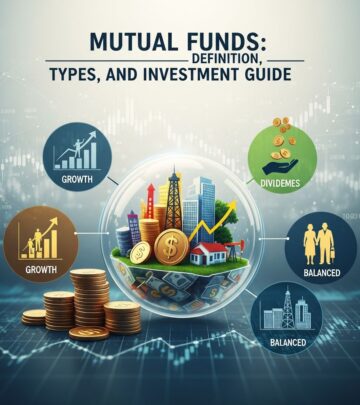
Mutual funds and ETFs are investment vehicles that pool money from multiple investors to purchase diversified portfolios of stocks, bonds, or other securities. These funds are managed by professional managers (in the case of actively managed funds) or designed to track specific indexes (in the case of passive funds). They provide instant diversification and are ideal for investors seeking professional management or broad market exposure without requiring extensive research.
Real Estate
Real estate investments involve purchasing property—residential, commercial, or industrial—with the intention of generating income through rent or selling for capital appreciation. Real estate investments can be made directly by purchasing property or indirectly through real estate investment trusts (REITs). This asset class provides tangible value, potential tax benefits, and inflation hedging, though it requires significant capital and active management.
Commodities
Commodities include physical goods such as precious metals (gold, silver), agricultural products (wheat, corn), and energy products (oil, natural gas). Commodity investments can provide portfolio diversification and serve as inflation hedges. Investors typically gain commodity exposure through futures contracts, exchange-traded funds, or commodity-focused mutual funds.
Derivatives and Options
Derivatives are financial instruments whose value derives from underlying assets. Common types include options, futures, and forward contracts. These complex instruments are primarily used by experienced investors for hedging or speculative purposes. They offer leverage but involve substantial risk and require deep understanding of market mechanics.
Investment Strategies
Successful investing requires adopting strategies aligned with your financial objectives, time horizon, and risk tolerance. Various approaches exist to guide investment decisions.
Buy and Hold Strategy
This long-term strategy involves purchasing quality investments and holding them for extended periods, typically years or decades. Buy and hold investors resist the temptation to trade frequently based on short-term market fluctuations. This approach reduces transaction costs and tax liability while allowing the power of compound growth to work. It’s particularly suitable for retirement investing and building long-term wealth.
Dollar-Cost Averaging
Dollar-cost averaging involves investing a fixed amount of money at regular intervals regardless of market conditions. By purchasing more shares when prices are low and fewer when prices are high, this strategy helps reduce the impact of market volatility and removes the pressure of timing the market perfectly. It’s an excellent approach for beginning investors and those contributing to retirement accounts systematically.
Value Investing
Value investors seek stocks trading below their intrinsic value, believing the market has underestimated their true worth. This strategy involves thorough fundamental analysis, comparing a company’s financial metrics to its stock price. Value investors are patient, looking for bargains and holding investments until the market recognizes their true value, potentially generating significant returns.
Growth Investing
Growth investors focus on companies expected to grow revenue and earnings faster than market averages. These stocks typically reinvest profits into business expansion rather than paying dividends. Growth investing involves higher risk and volatility but offers substantial return potential for investors with longer time horizons and higher risk tolerance.
Dividend Investing
This strategy focuses on purchasing stocks that pay regular dividends, providing steady income while maintaining potential for capital appreciation. Dividend investors seek companies with strong track records of consistent, growing dividend payments. This approach appeals to income-focused investors and those seeking to build passive income streams.
Key Investment Principles
Understanding fundamental principles enhances investment success:
- Diversification: Spreading investments across different asset classes, sectors, and geographies reduces risk. A well-diversified portfolio can weather market downturns more effectively than concentrated positions.
- Risk Management: Assessing risk tolerance and aligning investments accordingly is crucial. Younger investors can typically afford higher risk, while those nearing retirement may prioritize stability.
- Time Horizon: Longer investment periods allow recovery from market downturns and enable compound growth. Short-term needs require more conservative approaches.
- Cost Awareness: Investment fees, expense ratios, and trading costs significantly impact long-term returns. Minimizing costs through low-cost index funds and reducing trading frequency improves outcomes.
- Emotional Discipline: Avoiding panic selling during downturns and resisting FOMO (fear of missing out) during bull markets is essential for investment success.
Getting Started with Investments
Beginning your investment journey requires several foundational steps:
Assess Your Financial Situation
Before investing, ensure you have an emergency fund covering three to six months of expenses, manageable debt levels, and stable income. These financial fundamentals provide a secure foundation for investing.
Define Your Goals
Clearly identify what you’re investing for—retirement, education, home purchase, or wealth accumulation—and establish realistic timelines. Specific goals help determine appropriate investment vehicles and strategies.
Determine Risk Tolerance
Honestly assess your ability and willingness to handle market fluctuations. Factors including age, income stability, and psychological comfort with volatility influence appropriate risk levels.
Choose Investment Vehicles
Select appropriate investment accounts such as employer-sponsored 401(k) plans, Individual Retirement Accounts (IRAs), brokerage accounts, or education savings plans. Each offers distinct tax advantages and features.
Build a Diversified Portfolio
Construct a portfolio reflecting your goals, timeline, and risk tolerance, typically using asset allocation models that balance stocks, bonds, and other investments. Rebalance periodically to maintain target allocations.
Investment Risks and Considerations
All investments carry risks that investors must understand:
- Market Risk: Price fluctuations of securities based on economic conditions and investor sentiment affect investment values.
- Inflation Risk: Rising inflation erodes purchasing power of investment returns, particularly concerning for fixed-income investments.
- Liquidity Risk: Some investments cannot be quickly converted to cash without significant losses.
- Concentration Risk: Overweighting specific securities or sectors exposes portfolios to significant losses if those investments perform poorly.
- Interest Rate Risk: Bond values decline when interest rates rise, as new bonds offer higher yields.
Common Investment Mistakes
Avoiding typical errors significantly improves investment outcomes:
- Attempting to time the market perfectly rather than maintaining consistent investing discipline
- Allowing emotions to drive investment decisions during market volatility
- Failing to diversify adequately, creating unnecessary concentration risk
- Underestimating the power of compound growth by trading excessively
- Ignoring fees and costs that accumulate significantly over time
- Investing without clear goals or investment plan
- Pursuing “hot tips” or speculation rather than fundamental analysis
Frequently Asked Questions
Q: What is the minimum amount needed to start investing?
A: You can start investing with as little as $1 with many brokerages, fractional shares, and robo-advisors. However, having at least $500-$1,000 allows for meaningful portfolio diversification.
Q: How much should I allocate to stocks versus bonds?
A: A common rule is to subtract your age from 110 or 120 for your stock allocation percentage. However, optimal allocation depends on your specific goals, risk tolerance, and timeline. Many financial advisors recommend consulting a professional to determine appropriate allocations.
Q: What’s the difference between investing and trading?
A: Investing involves purchasing assets for long-term growth, while trading focuses on short-term price movements. Investors typically hold positions for years; traders may hold for days or weeks.
Q: Should I invest in individual stocks or funds?
A: Individual stocks offer potential for higher returns but require research and involve concentration risk. Funds provide instant diversification and professional management. Most investors benefit from a combination or funds for core holdings with some individual stock positions.
Q: How often should I rebalance my portfolio?
A: Rebalancing annually or semi-annually is typical. Some investors rebalance when allocations drift more than 5% from targets. Frequent rebalancing increases costs, while infrequent rebalancing allows drift from desired allocations.
Q: What’s the impact of investment fees on long-term returns?
A: Investment fees compound significantly over time. A 2% annual fee versus 0.2% can result in substantially lower retirement savings over decades. Prioritizing low-cost investments maximizes long-term returns.
Q: Is it ever too late to start investing?
A: It’s never too late to start investing, though time horizon affects strategy. Older investors should emphasize stability and income, while having some growth potential to combat inflation and extend portfolio longevity.
References
- Securities and Exchange Commission (SEC) Investor Education — U.S. Securities and Exchange Commission. 2024. https://www.sec.gov/investor
- Federal Reserve Financial Education Resources — Board of Governors of the Federal Reserve System. 2024. https://www.federalreserve.gov/consumerscommunities/consumerinformation.htm
- Investment Risk and Return Analysis — CFA Institute. 2023. https://www.cfainstitute.org
- Asset Allocation and Portfolio Diversification — FINRA Financial Industry Regulatory Authority. 2024. https://www.finra.org/investors
- Understanding Mutual Funds and ETFs — Investment Company Institute. 2023. https://www.ici.org
Similar Articles








Read full bio of medha deb