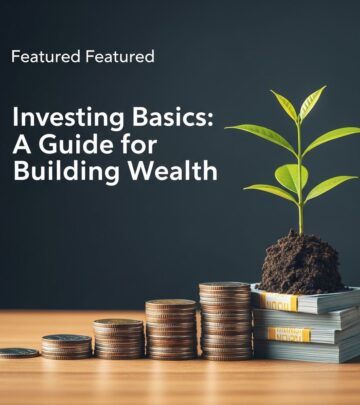
9 Investing Tips for 2024 That Rich People Know
Discover the 9 essential investing tips that wealthy individuals use to build and protect their fortunes in 2024 and beyond.

Successful investing isn’t about luck—it’s about following time-tested principles that the wealthy have mastered. In a world of market volatility and economic uncertainty, these 9 investing tips can help anyone build and preserve wealth. Drawing from expert insights and historical data, this guide covers everything from combating inflation to leveraging compound interest, ensuring you make informed decisions for long-term financial success.
Why Should You Invest?
Investing is essential for growing your money and maintaining its purchasing power over time. Even the safest options carry some risk, but the alternative—letting cash sit idle—is far riskier due to inflation. Historically, inflation averages 4-5% annually, eroding savings significantly over 20-30 years. For instance, without investment returns exceeding inflation, $10,000 today could buy far less in the future. As financial expert Lee notes, to keep your money’s value intact, you need the stock market’s power.
Beyond preservation, investing generates passive income. Reinvesting dividends in a broad index like the S&P 500 offers a 94% chance of positive returns over 10 years and 99% over 20 years. This long-game approach rewards patience amid market fluctuations.
Tip 1: Choose the Right Investment Vehicle
The foundation of smart investing starts with selecting an appropriate account type tailored to your goals. For retirement savers, tax-advantaged options like 401(k)s or traditional IRAs allow deferred contributions, reducing current tax burdens while building a nest egg. Roth IRAs are ideal for tax-free growth, especially for younger investors.
- 401(k): Employer-sponsored with potential matching contributions—free money!
- IRA (Traditional or Roth): Flexible for self-employed or supplemental savings.
- Taxable Brokerage: For non-retirement goals like buying a home, with no withdrawal restrictions.
Match your vehicle to objectives: short-term needs favor conservative accounts, while long-term growth suits stock-heavy ones.
Tip 2: Research Your Investment Options Thoroughly
Opening an account is step one; deploying capital wisely is next. Diversify beyond stocks into bonds, mutual funds, and ETFs to mitigate risk. Avoid headline-chasing—by the time a stock surges in news, much growth is already priced in.
Key research steps:
- Review company quarterly reports and annual filings (e.g., Amazon’s public disclosures).
- Track industry trends, like legalization impacts on sectors such as medical marijuana.
- Assess fundamentals: revenue growth, debt levels, and competitive positioning.
The golden rule: diversify across industries and asset classes to weather downturns.
Tip 3: Contribute Regularly to Harness Compound Interest
Consistency beats timing. Regular contributions amplify compound interest, where earnings generate further gains. Automate deposits—your 401(k) does this via payroll, while brokerages allow scheduled transfers.
Example: $10 weekly at 6% over 10 years grows to $7,200, with $2,000 from interest alone. Use online calculators to model scenarios and commit to dollar-cost averaging, investing fixed amounts regardless of market prices.
Tip 4: Monitor Performance Without Panic Selling
Buy-and-hold works, but periodic reviews prevent stagnation. Track underperformers and rebalance annually, consulting financial advisors for allocation advice. Ignore short-term headlines; even pros can’t predict markets perfectly.
Tools like stop orders protect gains (e.g., sell if shares drop 25%) or lock profits, but use sparingly to avoid emotional trades.
Tip 5: Start with ETFs for Easy Diversification
For beginners, exchange-traded funds (ETFs) offer broad exposure with low fees. Unlike actively managed mutual funds, most ETFs passively track indexes like the S&P 500, outperforming managers long-term due to minimal costs.
Benefits:
- Instant diversification across hundreds of stocks.
- Lower expense ratios (often under 0.1%).
- Liquidity like stocks, tradable anytime.
Rich investors favor ETFs for core holdings, allocating 70-90% of portfolios here.
Tip 6: Embrace Micro-Investing for Small Budgets
You don’t need thousands to start—micro-investing apps allow $1 entry points, funneling spare change into ETFs. Ideal for intimidation-free onboarding, they promote habitual saving.
Pro tip: Round up purchases (e.g., $3.75 coffee invests $0.25) for seamless accumulation.
Tip 7: Prioritize Retirement Accounts Like Roth IRAs
Wealthy individuals max tax-advantaged accounts first. Roth IRAs shine for tax-free withdrawals in retirement. Pair with robo-advisors for automated, age-based allocation: heavy stocks young, shifting to bonds later.
| Account Type | Best For | Tax Benefit | Min. Investment |
|---|---|---|---|
| Roth IRA | Retirement | Tax-free growth/withdrawals | $0 (many brokers) |
| 401(k) | Employer plans | Pre-tax contributions | Paycheck deductions |
| Brokerage | General goals | None (capital gains tax) | $0-$500 |
Tip 8: Avoid Common Pitfalls Like Overconcentration
Rich people diversify religiously—never exceed 5% in one stock. Shun emotional decisions: don’t buy high on hype or sell low in fear. Kevin O’Leary advises limiting high-risk assets like commodities to 10%.
Tip 9: Play the Long Game and Stay Disciplined
Markets reward patience. Historical data shows positive outcomes for holders over decades. Automate, diversify, and review quarterly without overtrading—wealth compounds through discipline.
Frequently Asked Questions (FAQs)
Q: How much should I invest as a beginner?
A: Start small—$50-100 monthly via micro-apps or automated transfers. Consistency trumps amount.
Q: Are stocks safe for retirement?
A: Yes, via diversified ETFs in IRAs; bonds balance risk as you age.
Q: What if the market crashes?
A: Hold long-term—recoveries follow downturns. Avoid panic selling.
Q: Do I need a financial advisor?
A: Not initially; robo-advisors suffice. Consult pros for complex needs.
Q: Can I invest without much money?
A: Absolutely—micro-investing and commission-free brokers make it accessible.
These 9 investing tips encapsulate strategies the affluent use daily. Implement them step-by-step for sustainable wealth growth in 2024 and beyond.
References
- How to Invest Even if You Have No Idea Where to Start — The Penny Hoarder. 2023. https://www.thepennyhoarder.com/investing/how-to-invest/
- How to Invest in Stocks, Even if You Don’t Have Much Money to Spare — The Penny Hoarder. 2023. https://www.thepennyhoarder.com/investing/how-to-invest-in-stocks/
- 5 Tips for Retiring a Millionaire From ‘Shark Tank’ Star Kevin O’Leary — Beanstox via The Penny Hoarder. 2023. https://beanstox.com/news/5-tips-for-retiring-a-millionaire-from-shark-tank-star-kevin-oleary
- 9 Investing Tips for 2024 That Rich People Know by Heart — The Penny Hoarder. 2024. https://www.thepennyhoarder.com/investing/investing-tips/
Similar Articles








Read full bio of Sneha Tete