Investing 101 Quiz: Test Your Money Knowledge
Challenge your knowledge of savings, investing, risk and retirement basics with this practical, beginner-friendly Investing 101 quiz.

How confident are you about your basic investing knowledge? This Investing 101 quiz is designed to help you check your understanding of core concepts like savings, compound growth, risk and return, diversification, and retirement planning. As you go through the questions and explanations, you can spot gaps in your knowledge and learn practical ideas you can start using right away.
How to Use This Investing Quiz
This quiz is educational only and does not provide personal investment advice. Use it to:
- Gauge your familiarity with key investing terms and ideas
- Identify topics where you may want to learn more
- Understand how small decisions today can affect long-term results
Answer each question, then read the explanation carefully. Even if you get an answer right, the explanation may give you new insights.
Quiz Questions: Test Your Investing Basics
1. Saving vs. Investing
Question 1: Which statement best describes the difference between saving and investing?
- A. Saving always earns more than investing.
- B. Saving generally prioritizes safety and liquidity, while investing aims for higher returns with higher risk.
- C. Investing is only for wealthy people.
- D. Saving and investing are exactly the same.
Correct answer: B
Explanation: Saving usually means putting money into relatively low-risk, easily accessible accounts such as savings accounts or certificates of deposit, where your main goal is preserving your principal and maintaining liquidity. Investing generally involves putting money into assets such as stocks, bonds, or funds that may fluctuate in value but offer higher potential returns over the long term. Investing carries more risk, including the possibility of losing money, but it also offers a better chance to outpace inflation.
2. Understanding Compound Interest
Question 2: What does compound interest mean?
- A. Interest calculated only on your original deposit
- B. Interest calculated on your original deposit plus previously earned interest
- C. A fee you pay for investing
- D. Interest that never changes
Correct answer: B
Explanation: With compound interest, your interest earns interest, which can lead to exponential growth over time. For example, if you invest a lump sum and reinvest all earnings, the longer you leave your money invested, the faster it can grow. This is why starting early is so powerful for long-term goals such as retirement.
3. Risk and Return
Question 3: In general, how are risk and return related when investing?
- A. Higher potential returns usually come with higher risk.
- B. Higher potential returns always come with no risk.
- C. Lower risk always leads to higher returns.
- D. There is no relationship between risk and return.
Correct answer: A
Explanation: Investments that offer the possibility of higher returns, such as stocks, generally involve higher volatility and a greater chance of loss. This is known as the risk–return trade-off. Lower-risk choices, like short-term government bonds or insured savings accounts, tend to offer lower but more stable returns. Understanding your own willingness and ability to tolerate risk is a key step in choosing investments.
4. Stocks vs. Bonds
Question 4: When you buy stock in a company, you:
- A. Lend money to the company and are guaranteed interest.
- B. Become a partial owner of the company.
- C. Are promised that your original investment will be returned with interest.
- D. Become personally responsible for the company’s debts.
Correct answer: B
Explanation: Stock represents an ownership stake in a company. As a shareholder, you may benefit from price increases and possibly dividends, but you also share in the risk that the company’s value can decline. Bonds, by contrast, are a form of debt where you lend money to a government or corporation in exchange for interest payments and the promise to return your principal at maturity.
5. Inflation and Investing
Question 5: Why is inflation important to consider when deciding how to save or invest?
- A. Inflation makes all investments risk-free.
- B. Inflation increases the purchasing power of cash kept in a checking account.
- C. If your money grows more slowly than inflation, your purchasing power declines over time.
- D. Inflation has no impact on long-term savings.
Correct answer: C
Explanation: Inflation measures how prices for goods and services rise over time. If your savings earn less than the inflation rate, your money loses purchasing power even if the dollar balance is rising. This is one reason many long-term investors include assets like stocks or diversified funds that have historically offered returns above inflation over long periods, though with short-term risk.
6. Diversification
Question 6: What is the main goal of diversification in a portfolio?
- A. To guarantee a profit every year
- B. To spread your investments across different assets to reduce the impact of any single loss
- C. To put all your money into the one investment you know best
- D. To eliminate all risk
Correct answer: B
Explanation: Diversification means not putting all your money in one investment. By holding a mix of assets—such as stocks, bonds, and cash, and by diversifying within each category—you can help reduce the impact of poor performance in any single investment or sector. Diversification does not guarantee profits or protect against overall market declines, but it is a widely recommended risk management strategy.
7. Time Horizon and Goals
Question 7: Why does your time horizon (how long until you need the money) matter when choosing investments?
- A. It doesn’t; all goals can use the same investments.
- B. A longer time horizon generally allows you to take more investment risk for potentially higher returns.
- C. A shorter time horizon always requires investing only in stocks.
- D. Time horizon only matters for emergency savings.
Correct answer: B
Explanation: If you have many years before you need the money (for example, retirement decades away), you may be able to tolerate short-term market swings in exchange for higher long-term growth potential. For short-term goals (such as a down payment in a couple of years), many people prioritize capital preservation and liquidity instead, using lower-risk vehicles so that a market downturn does not derail their plans.
8. Retirement Accounts (401(k), IRA and More)
Question 8: Which of the following is generally an advantage of using a tax-advantaged retirement account such as a 401(k) or IRA?
- A. Unlimited contributions with no rules
- B. Tax benefits that can help your savings grow more efficiently over time
- C. Guaranteed returns above inflation
- D. No need to choose investments within the account
Correct answer: B
Explanation: Accounts like employer-sponsored 401(k) plans and individual retirement accounts (IRAs) often offer tax advantages, such as tax-deferred growth or tax-free qualified withdrawals, depending on the account type and applicable law. Over decades, these tax benefits can significantly enhance growth compared with investing in a taxable account, though rules and contribution limits apply.
9. Fees and Costs
Question 9: Why is it important to pay attention to investment fees and expenses?
- A. Fees do not matter if your investments earn a high return.
- B. Even small ongoing fees can reduce your long-term returns significantly.
- C. Higher fees always mean higher returns.
- D. There are never any fees for investing.
Correct answer: B
Explanation: Many funds and products charge ongoing fees (often expressed as an expense ratio) as well as potential transaction costs. Over time, these fees reduce your net returns, and the effect compounds; a seemingly small annual fee can substantially lower the amount you accumulate over decades. Comparing costs is an important part of selecting investments.
10. Past Performance
Question 10: Which statement about past performance is most accurate?
- A. Past performance is a guarantee of future results.
- B. Strong past performance always continues indefinitely.
- C. Past performance is not a guarantee of future results and should be only one factor among many.
- D. Past performance is irrelevant; you should never look at it.
Correct answer: C
Explanation: Financial regulators consistently warn that past performance does not guarantee future results. Historical returns can provide context about an investment’s volatility and behavior, but future performance depends on many uncertain factors. Decisions are best made using a combination of research, diversification, and alignment with your goals and risk tolerance, not by chasing last year’s winners.
Scoring Your Investing 101 Quiz
Count how many questions you answered correctly and use the table below as a rough guide to your current understanding of investing fundamentals.
| Score (out of 10) | What It May Indicate |
|---|---|
| 0–3 correct | You are just getting started with investing concepts. Consider learning more about basic terms such as stocks, bonds, compound interest, and risk. |
| 4–6 correct | You have some familiarity with the basics but may benefit from strengthening your understanding of risk, diversification, and retirement accounts. |
| 7–8 correct | You show a solid grasp of core ideas. Keep refining your knowledge on fees, tax-advantaged accounts, and aligning investments with goals. |
| 9–10 correct | You have a strong command of these foundational topics. Consider exploring more advanced subjects or reviewing your own portfolio for alignment with your objectives. |
Key Investing Concepts Explained
Whether you answered many or only a few questions correctly, reviewing the core topics behind the quiz can help you make more informed decisions.
Savings Vehicles vs. Investment Assets
Common savings vehicles include:
- Traditional and high-yield savings accounts
- Money market accounts
- Certificates of deposit (CDs)
These typically offer lower risk and relatively modest returns, and are often used for emergency funds and short-term goals.
Common investment assets include:
- Individual stocks and stock funds
- Bonds and bond funds
- Broad-market index funds and exchange-traded funds (ETFs)
These carry varying degrees of market risk but can offer higher potential growth over longer time periods.
Building a Diversified Portfolio
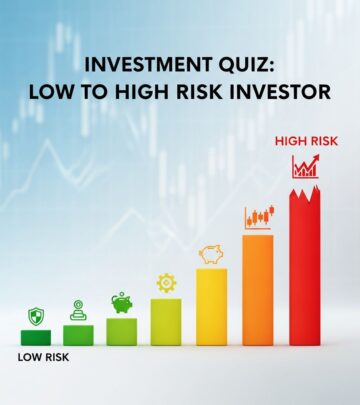
Many investors use a mix of asset types to balance growth potential and stability, often described as an asset allocation strategy. For example:
- A more conservative allocation may emphasize bonds and cash-like holdings.
- A more aggressive allocation may focus heavily on stocks, including broad-market index funds.
Over time, you may adjust your allocation as your time horizon, income, and risk tolerance change.
Retirement Planning Basics
For long-term goals like retirement, tax-advantaged accounts can be especially powerful because:
- They encourage regular, automatic contributions.
- They may offer tax-deferred or tax-free growth, depending on the account type.
- Some employer plans may include matching contributions, which can significantly boost savings.
Understanding the rules, contribution limits, and potential penalties for early withdrawals is an important part of using these accounts effectively.
Frequently Asked Questions (FAQs)
Q1: How much should I have in savings before I start investing?
Many financial educators suggest building an emergency fund first—often three to six months of essential expenses—before taking on significant investment risk. The exact amount depends on your income stability, job security, and personal comfort level.
Q2: Is it better to pay off debt or invest?
The decision depends on the kind of debt and interest rate. High-interest debt (such as many credit cards) can grow faster than typical investment returns, so paying it down is often a priority. For lower-rate debt, some people choose a blended approach: making steady progress on debt while also contributing to long-term investments, especially if they receive valuable employer retirement plan matches.
Q3: Are index funds a good choice for beginners?
Many experts and regulators highlight low-cost diversified index funds as a simple way to gain broad market exposure while keeping fees relatively low. They are not risk-free, and their value will rise and fall with the market, but they can be an efficient building block for a diversified portfolio.
Q4: How often should I check my investments?
For long-term goals, frequent monitoring can lead to emotional reactions to short-term market swings. Some investors prefer to review their portfolios on a set schedule (for example, once or twice a year) to rebalance and confirm that their investments still match their goals and risk tolerance, rather than reacting to daily price movements.
Q5: Do I need a professional advisor to start investing?
You can begin with self-directed accounts, educational resources, and simple diversified funds, especially if your situation is straightforward. However, if your finances are complex or you want personalized guidance on tax issues, estate planning, or retirement income strategies, a qualified financial professional can help you create a tailored plan.
References
- Investing 101: A Beginner’s Guide to Investing — Bankrate. 2024-01-10. https://www.bankrate.com/investing/investing-101/
- Investing Quiz – January 2026 — Investor.gov (U.S. Securities and Exchange Commission). 2026-01-01. https://www.investor.gov/additional-resources/spotlight/investing-quizzes/january-2026-quiz
- Investing Knowledge Quiz — FINRA. 2023-09-01. https://www.finra.org/sites/default/files/2023-09/FINRA-Investing-Knowledge-Quiz.pdf
- Investing 101: Answers to 10 Essential Questions — UBS. 2022-06-01. https://www.ubs.com/us/en/wealth-management/insights/market-news/article.2515947.html
- Investing Quiz & Tools — Investor.gov (U.S. Securities and Exchange Commission). 2025-12-15. https://www.investor.gov/
Similar Articles








Read full bio of medha deb