Inverted Yield Curve: Definition, Causes, and Economic Implications
Understanding inverted yield curves and their role as recession indicators.
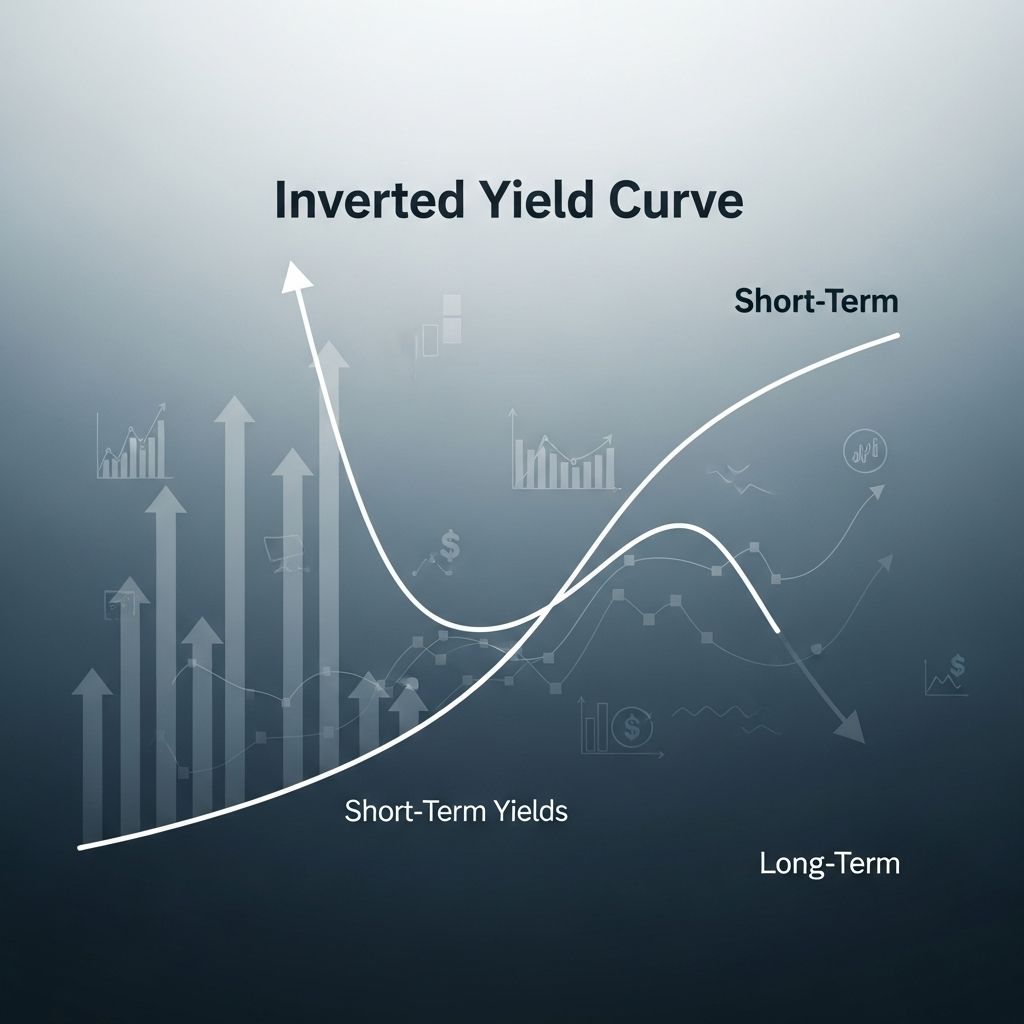
An inverted yield curve represents one of the most closely watched indicators in financial markets and economic analysis. It occurs when longer-term debt instruments yield lower returns than shorter-term debt instruments of the same credit quality. This unusual market condition has historically served as a powerful predictor of economic recessions, making it a critical metric for investors, policymakers, and economists worldwide. Understanding the mechanics, causes, and implications of an inverted yield curve is essential for anyone seeking to comprehend market dynamics and anticipate economic downturns.
What Is an Inverted Yield Curve?
The yield curve typically illustrates the relationship between bond yields and their maturity dates, with longer-term bonds generally offering higher yields to compensate investors for the increased risk and time commitment. However, an inverted yield curve disrupts this normal pattern. When the yield curve inverts, it signals that investors expect slower economic growth or deflation in the future, prompting them to accept lower returns on long-term investments in exchange for perceived safety.
In practical terms, this means that a two-year Treasury bond might offer a higher yield than a 10-year Treasury bond, defying conventional investment wisdom. This inversion typically occurs when investors rush to purchase long-term securities, driving their prices up and yields down, while simultaneously selling shorter-term bonds, pushing their yields higher.
How the Yield Curve Works
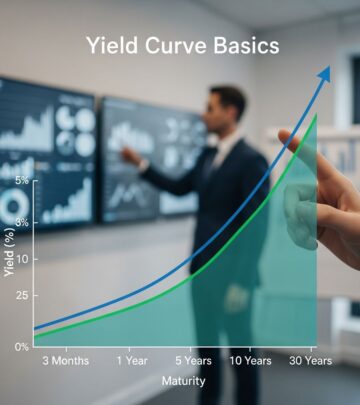
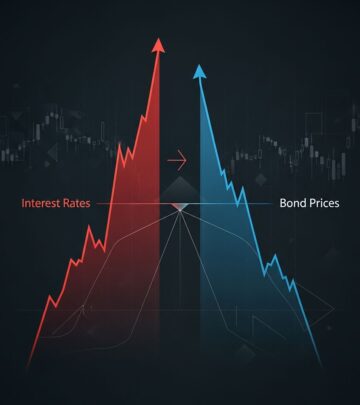
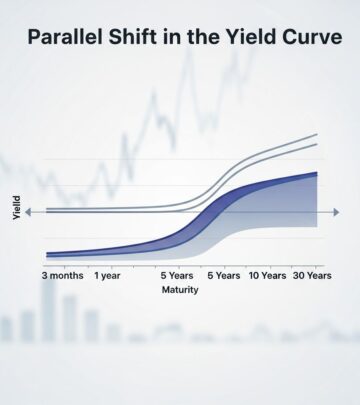
To fully comprehend an inverted yield curve, one must first understand how the normal yield curve functions. Bond prices and yields move inversely: when bond prices rise, yields fall, and vice versa. The yield curve maps these yields across various maturities, typically ranging from three months to 30 years.
Under normal economic conditions, investors demand higher yields for longer-term bonds because they face greater risks, including inflation and interest rate changes. This creates an upward-sloping yield curve, with short-term rates lower than long-term rates. However, when economic uncertainty increases or recession fears mount, investors shift their portfolios toward longer-term securities, driving prices up and yields down. Simultaneously, they reduce exposure to shorter-term bonds, causing their yields to rise relatively. This flight-to-quality movement creates the inverted curve.
Key Components of the Yield Curve
- Short-term rates: Influenced primarily by the Federal Reserve’s policy decisions and current economic conditions
- Long-term rates: Determined by market expectations for future inflation, growth, and credit conditions
- Spread: The difference between short-term and long-term yields; inversion occurs when this spread becomes negative
- Market expectations: Investor sentiment and forecasts about future economic performance heavily influence curve shape
Types of Yield Curve Inversions
Not all inversions are identical, and understanding the different types helps investors contextualize market conditions more accurately.
Full Inversion
A full inversion occurs when the entire yield curve inverts across all maturities. This represents the most severe market signal and typically indicates strong consensus among investors about impending economic weakness. Full inversions are relatively rare but have historically preceded significant recessions.
Partial Inversion
In a partial inversion, only certain segments of the yield curve invert while others remain normal. For example, the two-year to five-year portion might invert while longer-term rates remain higher than shorter-term rates. Partial inversions are more common and may indicate specific sector concerns rather than broad economic pessimism.
Flat Yield Curve
When short-term and long-term rates converge to similar levels, the yield curve flattens. While technically not inverted, a flattening curve often precedes an inversion and signals transitional economic conditions. Many analysts view curve flattening as an early warning sign of potential future inversions.
Historical Examples of Inverted Yield Curves
The inverted yield curve has proven remarkably accurate as a recession predictor throughout modern economic history. Nearly every recession since 1960 has been preceded by an inverted yield curve, though not every inversion has been followed by recession, making it a reliable but imperfect indicator.
Notable Inversions
- 2007-2008 Financial Crisis: The yield curve inverted in 2006, preceding the Great Recession by approximately 12-18 months
- 2001 Recession: Inversion in 2000 correctly signaled the dot-com bubble recession
- 1990-1991 Recession: Preceded by yield curve inversion in 1989
- Early 1980s Recession: Inverted curve in 1981 forecasted economic contraction
- 2019-2020 Period: Inversion in mid-2019 preceded the COVID-19 recession in 2020
What Causes a Yield Curve Inversion?
Understanding the underlying causes of yield curve inversions provides insight into the economic mechanisms driving these market movements. Several factors can contribute to inversion, often working in combination.
Federal Reserve Policy
Central bank monetary policy significantly influences short-term interest rates. When the Federal Reserve raises rates aggressively to combat inflation, short-term yields rise faster than long-term yields. If the Fed maintains higher short-term rates while market participants expect future rate cuts, long-term rates may remain lower, creating inversion. The Fed’s hawkish stance in 2022 contributed to yield curve inversion as markets priced in future economic slowdown and rate cuts.
Inflation Expectations
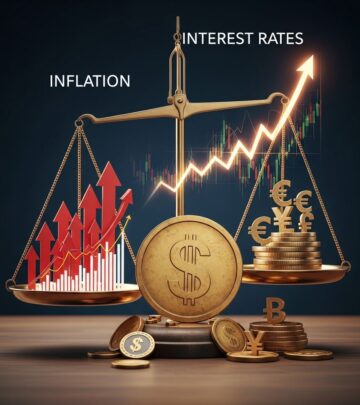
Changes in inflation expectations directly impact both short-term and long-term rates, though often asymmetrically. When current inflation is high but expected to decline, investors may accept lower long-term yields, anticipating reduced inflation premiums in the future. Meanwhile, short-term rates may remain elevated to address present inflationary pressures.
Economic Uncertainty and Recession Fears
During periods of heightened economic uncertainty, investors exhibit flight-to-quality behavior, purchasing longer-term Treasury securities perceived as safer investments. This increased demand for long-term bonds drives their prices up and yields down, contributing to inversion. Economic data suggesting weakness, geopolitical tensions, or financial market stress can all trigger this protective repositioning.
Flight to Safety
During market turbulence or credit concerns, investors reduce exposure to riskier assets and securities, redirecting funds toward risk-free Treasury bonds. Long-term Treasuries, viewed as the safest investments available, attract particularly strong demand during crises. This demand-driven buying pushes long-term yields significantly lower, facilitating inversion.
Market Expectations for Future Rate Cuts
If markets anticipate that the Federal Reserve will reduce short-term rates in the coming months or years, long-term rates may remain higher than short-term rates initially, but the expectation of rate cuts can depress long-term rates relative to current short-term rates. Sophisticated investors price in these anticipated policy changes, causing yield curve movements that may result in inversion.
Why Does an Inverted Yield Curve Matter?
The significance of the inverted yield curve extends far beyond academic interest in financial markets. Its implications touch the real economy, affecting lending decisions, consumer behavior, and overall economic performance.
Recession Prediction
The most prominent reason investors monitor the yield curve involves its recession prediction capability. Historically, yield curve inversion has preceded nearly every U.S. recession, often by 12-18 months. This leading indicator property makes it invaluable for economic forecasting, allowing policymakers and investors to prepare for potential downturns.
Impact on Banking and Lending
Banks profit from the spread between the rates they pay on deposits and the rates they charge on loans. When the yield curve inverts, this spread compresses or becomes negative, reducing bank profitability and incentive to lend. Tightened credit conditions that result from reduced bank lending can further slow economic growth, creating a self-reinforcing cycle of economic weakness.
Stock Market Implications
Stock market performance typically deteriorates following yield curve inversion, as economic recession expectations translate into reduced corporate earnings forecasts. Equity investors respond by selling stocks and reducing exposure to cyclical sectors most vulnerable to economic downturns.
Investment Strategy Adjustments
Institutional investors use yield curve inversion as a signal to rebalance portfolios, shifting away from growth-oriented equities toward defensive stocks and bonds. Many investment professionals implement predetermined strategies triggered by yield curve events, magnifying market movements and creating self-fulfilling prophecies.
Limitations and Criticisms
Despite its impressive historical track record, the yield curve does not function as a perfect recession predictor. Several limitations and criticisms merit consideration when relying on this indicator.
False Signals
Not every yield curve inversion precedes recession. Some inversions resolve without significant economic deterioration, providing false positive signals that can mislead investors into defensive positions that miss subsequent market rallies.
Timing Variability
The lag between yield curve inversion and actual recession varies considerably, ranging from several months to nearly two years. This uncertainty makes precise recession timing predictions impossible, complicating investment decision-making.
Structural Market Changes
Modern monetary policy tools, quantitative easing, and central bank communication strategies have altered traditional yield curve relationships. The effectiveness of the yield curve as a recession indicator may have diminished in periods of unconventional monetary policy, making historical relationships less reliable.
Global Factors
In an increasingly interconnected global financial system, foreign central bank policies and international capital flows significantly influence U.S. Treasury yields. These external factors sometimes distort yield curve signals from underlying U.S. economic conditions.
Current Yield Curve Conditions
Monitoring current yield curve conditions provides practical insight into contemporary market sentiment regarding economic prospects. The 2-10 Treasury spread, comparing two-year and 10-year Treasury yields, serves as the most commonly referenced metric. When this spread turns negative, the yield curve has inverted, signaling recession concerns among market participants.
Frequently Asked Questions (FAQs)
Q: What does an inverted yield curve mean for my investments?
A: An inverted yield curve historically precedes recessions and often signals that equity markets may decline in the coming months. Consider reducing exposure to cyclical stocks and increasing holdings in defensive sectors, bonds, and cash equivalents. However, avoid panic selling, as inversions do not guarantee immediate market downturns.
Q: How long does a yield curve inversion typically last before recession occurs?
A: Historical data shows recession typically follows yield curve inversion within 12-18 months, though this timeline varies. Some recessions have begun within six months of inversion, while others took nearly two years to materialize. This variability makes precise timing predictions challenging.
Q: Can yield curve inversion be prevented?
A: Yield curve inversion results from market expectations and cannot be directly prevented by policymakers. However, appropriate monetary policy that manages inflation and maintains economic growth can reduce conditions that trigger inversion. Central banks cannot force investors to accept lower long-term yields if genuine economic concerns exist.
Q: Is every inverted yield curve followed by recession?
A: No, not every inversion precedes recession. While inversions are reliable indicators historically, false signals do occur. Additional economic data should complement yield curve analysis when making investment decisions.
Q: How does the Fed’s monetary policy relate to yield curve inversion?
A: Federal Reserve rate increases directly raise short-term Treasury yields. If the Fed raises rates aggressively while markets anticipate slower growth or future rate cuts, long-term yields may decline, creating inversion. The Fed cannot directly control long-term yields, which respond to market expectations.
Q: What’s the difference between yield curve inversion and flattening?
A: A flattening yield curve occurs when the spread between short-term and long-term rates narrows but remains positive. Inversion occurs when this spread becomes negative, with short-term rates exceeding long-term rates. Flattening often precedes inversion and serves as an early warning signal.
References
- Treasury Yield Curve Rates — U.S. Department of the Treasury. 2025. https://www.treasury.gov/resource-center/data-chart-center/interest-rates/pages/TextView.aspx?data=yieldAll
- Recession Prediction and the Yield Curve — Federal Reserve Bank of St. Louis. 2024. https://www.stlouisfed.org
- The Yield Curve as a Predictor of U.S. Recessions — Estrella, A., & Mishkin, F. S. Federal Reserve Bank of New York. 1998. https://www.newyorkfed.org
- Understanding Treasury Securities — Investor.gov, U.S. Securities and Exchange Commission. 2024. https://www.investor.gov/introduction-investing/basics/investment-products/bonds
- Monetary Policy and the Yield Curve — Federal Reserve Board of Governors. 2024. https://www.federalreserve.gov/monetarypolicy.htm
Similar Articles








Read full bio of medha deb