Inverse Head And Shoulders Pattern: Complete 2025 Trading Guide
Master the inverse head and shoulders pattern for identifying bullish trend reversals and profitable trading opportunities.
What Is the Inverse Head and Shoulders Pattern?
The inverse head and shoulders pattern is a technical analysis chart formation that signals a potential shift from a bearish trend to a bullish one. Also known as an inverted head and shoulders pattern, this distinctive formation resembles an upside-down version of the traditional head and shoulders pattern. It is one of the most recognizable and reliable reversal patterns used by traders across all asset classes, including equities, foreign exchange, and commodities.
This pattern represents a critical turning point in the market where the prevailing downtrend shows signs of exhaustion, and buying interest begins to resurface. The formation occurs after an extended period of price decline, making it a valuable signal for traders looking to anticipate potential trend reversals and enter new long positions.
Understanding the Pattern Components
The inverse head and shoulders pattern consists of several distinct structural elements that work together to create a recognizable formation:
Left Shoulder
The pattern begins with a significant downtrend that creates the left shoulder. During this phase, the price declines to a new low and then bounces back up, creating a lower high. This initial bounce is perceived as a temporary correction within the broader downtrend, as selling pressure temporarily eases but the market sentiment remains bearish.
The Head
Following the left shoulder, the price dips further to create the head, which forms the lowest point of the entire pattern. This deeper trough represents a new low that penetrates below the left shoulder’s trough. Despite reaching this new low, the selling pressure begins to wane during this phase. Technical indicators such as the Relative Strength Index (RSI) or stochastic oscillators often display divergence at this point, suggesting that bearish momentum is weakening even as prices reach their lowest level.
Right Shoulder
The third and final component is the right shoulder, which forms when the price declines again but only reaches a level approximately equal to the left shoulder, remaining higher than the head. This higher low indicates a significant shift in market dynamics—the selling pressure is diminishing, and buyers are stepping in sooner at higher price levels. This phase demonstrates a fundamental change in market psychology from bearish to more neutral or cautiously optimistic sentiment.
The Neckline
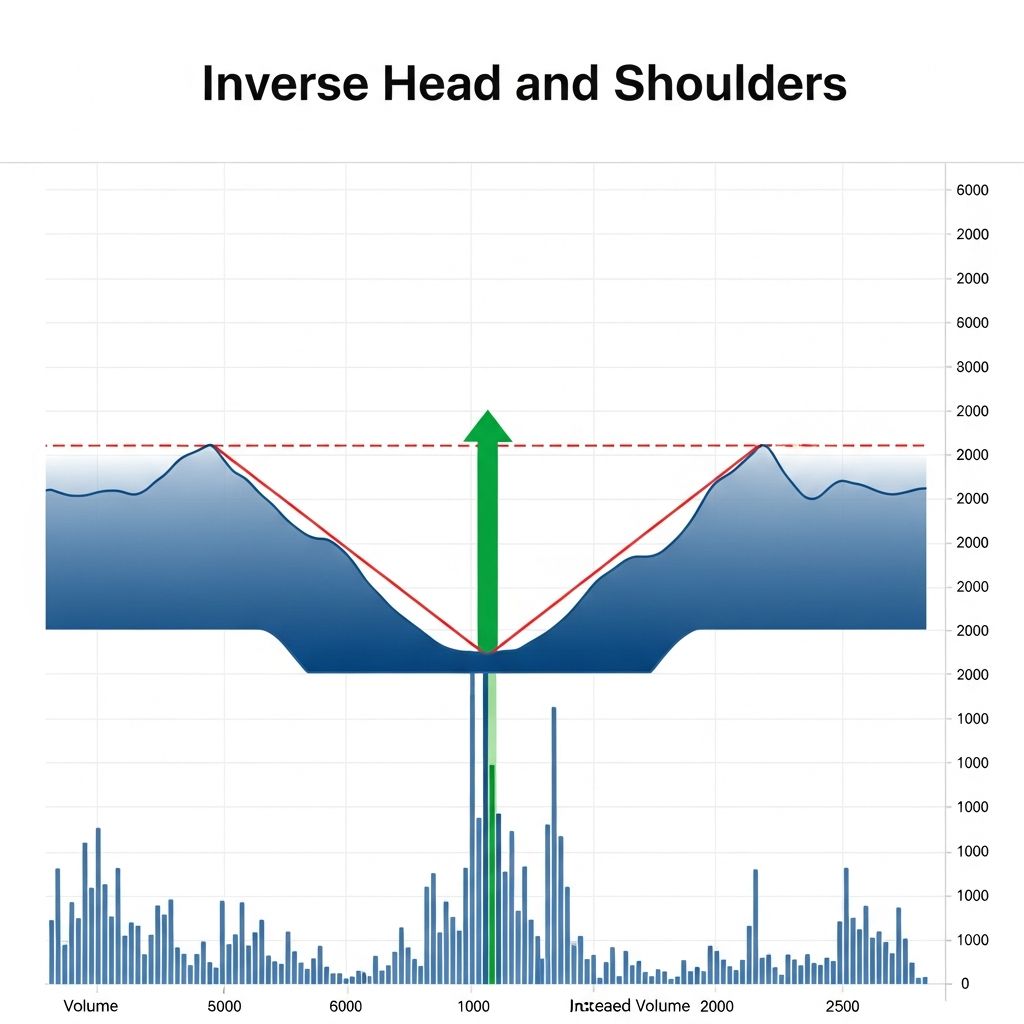
The neckline is a crucial element of the inverse head and shoulders pattern. It is a resistance trendline drawn across the two peaks that occur between the shoulders and the head—essentially connecting the “armpits” of the pattern. The neckline can be either level or slope slightly upward. This line represents the critical level that price must overcome to confirm the pattern and signal a bullish reversal. The neckline serves as both a resistance level during formation and a support level once broken.
Formation Process and Timeline
Understanding how the inverse head and shoulders pattern develops over time is essential for traders seeking to identify this formation early:
Phase 1: Downtrend Initiation
The pattern begins with an established downtrend that has been declining for a significant period. This extended bearish movement sets the stage for the formation and is typically characterized by consistent lower lows and lower highs.
Phase 2: Left Shoulder and First Pullback
The market reaches a trough, which becomes the left shoulder. A temporary rally then brings the price back up to the neckline level, creating the first resistance line. This pullback represents initial profit-taking and a brief respite in the selling pressure.
Phase 3: Head Formation
The price declines again, this time reaching a deeper trough that becomes the head. This new low is the lowest point of the entire pattern, indicating one final capitulation by sellers before market sentiment begins to shift.
Phase 4: Second Pullback
Another rally brings the price back up to approximately the neckline level again, creating the peak that connects the head to the right shoulder.
Phase 5: Right Shoulder Development
A final decline creates the right shoulder, which is characterized by a higher low compared to the head. This higher low is crucial as it confirms that the downtrend is losing momentum and strength.
Phase 6: Breakout and Confirmation
The price rallies above the neckline with increased volume, signaling the completion of the pattern and the beginning of a potential new uptrend.
Key Characteristics of a Valid Pattern
Not every formation that resembles an inverse head and shoulders pattern is a reliable trading signal. Several characteristics distinguish a valid, high-probability pattern:
Volume Trends
Volume typically declines during the formation of the pattern as selling pressure eases. However, volume should increase significantly during the right shoulder formation and especially during the final breakout above the neckline. This increase in volume confirms strong buying interest and adds credibility to the reversal signal.
Impulsive Price Action
The price movement from the left shoulder to the head and from the head to the right shoulder should be impulsive and trending, characterized by strong movements rather than choppy, corrective price action. This indicates a genuine shift in market sentiment and increases the reliability of the pattern.
Breakout Strength
The breakout above the neckline should be strong and decisive. Weak or choppy breakouts are more prone to failure and should generally be avoided. A robust breakout with a decisive candle close outside the pattern signals strong conviction behind the price movement and a higher likelihood of a sustained upward move.
Symmetry of Shoulders
While the pattern is strengthened when both shoulders reach approximately the same height, they do not need to be perfectly identical. Slight variations in shoulder height are acceptable as long as the right shoulder remains higher than the head and the overall pattern remains recognizable.
What the Inverse Head and Shoulders Pattern Tells Traders
This pattern conveys several important messages to market participants:
Signal of Trend Reversal: The inverse head and shoulders pattern signals that a downtrend is nearing its end and a bullish reversal may be imminent. The formation indicates that the prevailing bearish trend has exhausted itself through the creation of lower lows and the subsequent inability to maintain momentum.
Formation of New Support: The pattern establishes a new support level at the neckline. Once this key support is confirmed through a break above the neckline, traders have validated evidence that the trend has reversed from bearish to bullish.
Psychological Shift: The pattern reflects a fundamental change in market psychology. The fact that the right shoulder forms a higher low demonstrates that buyers are gaining control from sellers, and market sentiment is shifting from capitulation to hope and eventually conviction.
Trading Strategies Using the Inverse Head and Shoulders Pattern
Traders employ several approaches when trading this pattern:
Long Entry Strategy
The primary entry signal occurs when the price breaks above the neckline with increased volume. This decisive break confirms the pattern and signals the beginning of the new uptrend. Traders typically establish a long position once the price closes decisively above the neckline with conviction.
Neckline Retest Entry
After the initial breakout, prices pull back to retest the neckline as a support level. Studies show that prices pullback to retest the neckline approximately 68% of the time. This retest provides an alternative entry opportunity with potentially better risk-reward ratios for traders who missed the initial breakout.
Stop-Loss Placement
Proper risk management is essential when trading this pattern. A common strategy is to place a stop-loss order below the right shoulder or below the head, depending on the trader’s risk tolerance. This placement ensures that if the pattern fails and the market continues to retrace downward, losses are limited.
Profit Target Setting
Traders use the measured move technique to establish profit targets. The measurement is taken from the bottom of the head to the neckline. This distance is then projected upward from the breakout point to determine a logical price level where the trade might be closed for profit. For example, if the head is 30 points below the neckline, the price might be expected to rise approximately 30 points above the neckline once it breaks out.
Partial Profit-Taking
Some traders employ a strategy of taking partial profits at predetermined levels, locking in gains while allowing the remaining position to capture additional upside. A trailing stop order can be placed after the price moves above the initial target zone to secure profits if the trend continues to advance.
Inverse Head and Shoulders vs. Head and Shoulders
Understanding the difference between these two patterns is crucial for proper trade execution:
| Pattern Characteristic | Inverse Head and Shoulders | Head and Shoulders |
|---|---|---|
| Reversal Type | Bullish Reversal | Bearish Reversal |
| Preceding Trend | Downtrend | Uptrend |
| Neckline Break Direction | Upside Break | Downside Break |
| Trade Direction | Enter Long Positions | Enter Short Positions |
| Pattern Orientation | Inverted (Upside Down) | Standard (Right Side Up) |
Using Inverse Head and Shoulders on Different Timeframes
The reliability and implications of this pattern vary depending on the timeframe in which it forms:
Intraday Charts: When identified on minute charts (5-minute, 15-minute), this pattern can signal short-term reversals useful for day traders seeking quick profit opportunities within a single trading session.
Daily Charts: Patterns on daily timeframes are generally more reliable and signal more significant price moves, attracting swing traders and position traders looking for moves lasting several days to weeks.
Weekly Charts: Position traders and investors often use weekly chart inverse head and shoulders patterns to indicate that a major reversal may occur, potentially leading to significant long-term uptrends lasting months or years.
Common Mistakes to Avoid
Traders often make preventable errors when trading this pattern:
Premature Entry: Entering before the neckline is decisively broken often results in false signals and unnecessary losses. Always wait for confirmation.
Ignoring Volume: Failing to confirm the breakout with increased volume is a frequent mistake. Volume confirmation significantly improves the odds of a successful trade.
Poor Risk Management: Trading without a stop-loss or placing it too far away unnecessarily exposes trading capital to excessive risk.
Misidentifying the Pattern: Confusing other chart formations with the inverse head and shoulders pattern leads to false signals. Ensure all components are clearly present before trading.
Frequently Asked Questions
Q: How reliable is the inverse head and shoulders pattern?
A: The inverse head and shoulders pattern is considered one of the most reliable reversal patterns in technical analysis. However, reliability increases significantly when confirmed with strong volume, clear component structure, and appropriate market context. No pattern is 100% accurate, so proper risk management remains essential.
Q: What is the minimum time for pattern formation?
A: The timeframe for pattern formation depends on the chart being analyzed. On intraday charts, patterns can form within hours. On daily charts, formation typically takes weeks. On weekly charts, formation may span several months.
Q: Can I trade the inverse head and shoulders pattern in any market?
A: Yes, this pattern appears consistently across all liquid markets including stocks, foreign exchange, commodities, cryptocurrencies, and indices. The pattern works because it reflects universal market psychology applicable to all liquid markets.
Q: Should shoulders be exactly equal in height?
A: While perfectly equal shoulders strengthen the pattern, they do not need to be identical. Slight variations are acceptable as long as the right shoulder is clearly higher than the head and the overall structure remains recognizable.
Q: What is the success rate of breakouts from this pattern?
A: When properly identified with volume confirmation and formed in appropriate market context, breakouts from inverse head and shoulders patterns typically show success rates above 60-70%, making them among the more reliable patterns in technical analysis.
References
- Inverse Head And Shoulders Pattern — Margex. 2024. https://margex.com/en/blog/inverse-head-and-shoulders-pattern/
- Head and Shoulders Chart Pattern for Traders — IG Markets. 2024. https://www.ig.com/en/trading-strategies/head-and-shoulders-chart-pattern-for-traders-241003
- Inverse Head and Shoulders Pattern Trading Guide — Alchemy Markets. 2024. https://alchemymarkets.com/education/strategies/inverse-head-and-shoulders-pattern/
- Trading the Inverse Head and Shoulders Pattern — HighStrike. 2025. https://highstrike.com/inverse-head-and-shoulders-pattern/
- Chart Pattern Inverse Head and Shoulders — TradingView Support. 2024. https://www.tradingview.com/support/solutions/43000690666-chart-pattern-inverse-head-and-shoulders/
Similar Articles








Read full bio of medha deb