Inventory Turnover: Definition, Formula & Calculation
Master inventory turnover metrics to optimize sales, reduce costs, and improve business efficiency.
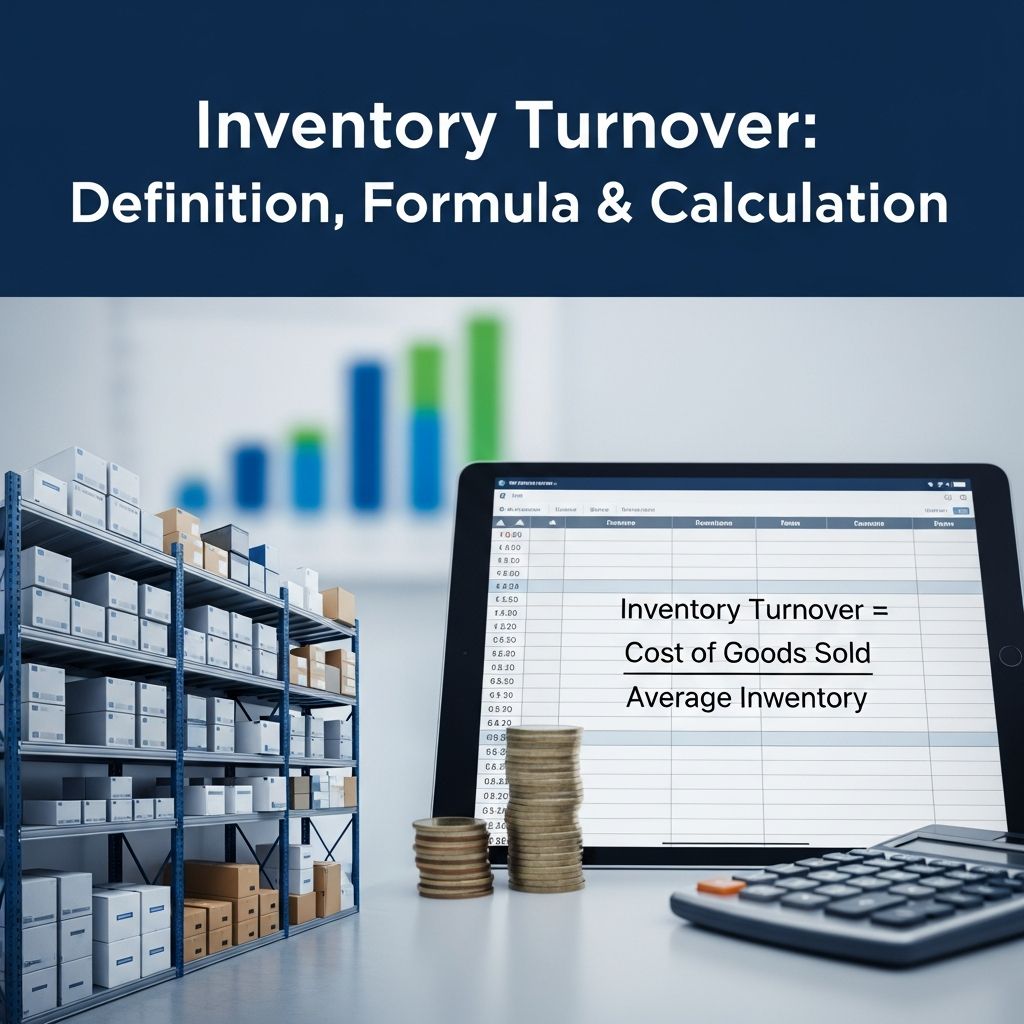
Inventory turnover is a critical financial metric that measures how efficiently a company manages and sells its inventory. Understanding this metric helps businesses optimize pricing strategies, manage supplier relationships, and make informed decisions about product lifecycle management. Whether you’re a small retailer or a large corporation, grasping inventory turnover concepts is essential for evaluating operational performance and identifying growth opportunities.
What Is Inventory Turnover?
Inventory turnover refers to the number of times a company sells and replaces its entire inventory over a specific period, typically one year. It represents the rate at which goods move through a business—from purchase to sale. One complete inventory turnover means the company has sold all the stock it purchased, excluding items lost to damage or shrinkage.
This metric is fundamental to understanding business operations because it reveals insights into company forecasting, inventory management capabilities, and sales and marketing effectiveness. A high turnover ratio suggests strong sales performance or potentially insufficient inventory to meet demand. Conversely, a low ratio may indicate weak sales, poor market demand, or excessive inventory levels that tie up capital and storage resources.
Understanding the Inventory Turnover Ratio
The inventory turnover ratio is a quantitative measure expressed as a whole number that indicates how many times inventory is sold and replaced during a defined period. This efficiency ratio is calculated using financial data from a company’s income statement and balance sheet.
For example, an inventory turnover ratio of 5 means the company has sold and replenished its entire inventory five times during the measurement period. This metric varies significantly across industries. Consumer packaged goods (CPG) typically experience high turnover rates due to rapid product movement and high consumer demand. In contrast, luxury goods retailers may see only a handful of sales annually and longer production cycles, resulting in much lower turnover ratios.
How to Calculate Inventory Turnover Ratio
The calculation of inventory turnover requires two primary pieces of financial information: cost of goods sold and average inventory. Here’s the standard formula:
Inventory Turnover Ratio = Cost of Goods Sold / Average Inventory
Cost of goods sold (COGS) represents all direct costs associated with manufacturing products, including raw materials, labor, and manufacturing overhead. This figure is found on the company’s income statement and reflects the true cost of inventory sold during the period.
Average inventory smooths out fluctuations in inventory levels that may occur due to seasonality, promotional activities, or supply chain variations. To calculate average inventory:
Average Inventory = (Beginning Inventory + Ending Inventory) / 2
For businesses with significant seasonal variations or monthly fluctuations, a more sophisticated approach uses multiple data points. Divide the sum of each month’s inventory by 12 to generate a more accurate annual average. This method accounts for seasonal peaks and valleys that characterize certain industries.
The Role of Average Inventory
Average inventory is crucial for obtaining meaningful results because it provides a normalized view of inventory levels across time. Consider a seasonal business like a garden center. Inventory levels spike dramatically before spring and summer seasons, then plummet afterward. Using only ending inventory could misrepresent the company’s true inventory management. Average inventory smooths these variations, providing a more realistic picture of typical inventory levels throughout the year.
Some businesses without seasonal fluctuations may use ending inventory instead of average inventory. However, using multiple data points and calculating average inventory remains the preferred approach for accuracy and reliability.
Interpreting Inventory Turnover Results
The interpretation of inventory turnover ratios depends heavily on industry context. What constitutes a healthy ratio in one industry may be problematic in another. For most industries, an ideal inventory turnover ratio falls between 5 and 10, suggesting that companies sell and restock inventory approximately every one to two months.
Industries dealing with perishable goods, such as florists, grocery stores, and farmers markets, typically require higher inventory turnover ratios. These businesses must move inventory quickly to prevent spoilage, obsolescence, and waste. Conversely, industries selling durable goods or luxury items typically operate with lower turnover ratios because customers purchase these items less frequently and businesses maintain higher inventory levels to support customer selection.
Ideal Inventory Turnover Ratios by Industry
Understanding industry benchmarks is essential for proper evaluation:
| Industry Type | Typical Turnover Range | Characteristics |
|---|---|---|
| Fast-Moving Consumer Goods (FMCG) | 8-12+ | High demand, rapid sales cycles, perishable products |
| Grocery & Food Retail | 10-15+ | Perishable inventory, frequent replenishment, spoilage concerns |
| General Retail | 4-8 | Seasonal fluctuations, diverse product mix, variable demand |
| Specialty Retail | 2-5 | Limited customer base, niche products, slower sales cycles |
| Luxury Goods | 1-3 | High price points, exclusive items, long production times |
What Does a High Inventory Turnover Ratio Indicate?
A high inventory turnover ratio generally signals positive business performance. It suggests that products are in demand and selling quickly. Companies with high turnover ratios benefit from reduced storage costs, lower insurance expenses, decreased risk of obsolescence, and minimized waste from spoilage or damage. These savings directly impact profitability and cash flow.
However, a very high ratio might indicate insufficient inventory levels to meet customer demand. If customers frequently encounter out-of-stock situations, the company may be leaving sales opportunities on the table. Balancing high turnover with adequate inventory availability is crucial for maximizing revenue.
What Does a Low Inventory Turnover Ratio Indicate?
A low inventory turnover ratio may signal several challenges. Weak sales performance, poor market demand for products, or inefficient inventory management can all contribute to low ratios. Additionally, a low ratio might indicate excess inventory accumulation that ties up valuable capital without generating corresponding revenue.
Low turnover also increases the risk of inventory obsolescence, particularly in industries where products have limited shelf lives or quickly become outdated. Technology products, fashion items, and seasonal goods are especially vulnerable. Companies holding excessive inventory face higher carrying costs, including warehouse rent, utilities, insurance, security, and potential shrinkage from theft or damage.
Factors Affecting Inventory Turnover
Several factors influence inventory turnover ratios and require consideration when analyzing this metric:
Product Type and Lifecycle: Fast-moving consumer products naturally turn over more quickly than durable goods. Products in growth phases turn over faster than those in decline.
Seasonality: Seasonal businesses experience significant inventory fluctuations, requiring careful analysis using multiple periods of data.
Market Demand: Strong consumer demand accelerates inventory movement, while weak demand causes inventory to accumulate.
Pricing Strategy: Overly high prices may slow sales and reduce turnover, while competitive pricing can accelerate movement.
Supply Chain Efficiency: Efficient procurement and logistics reduce holding periods and improve turnover rates.
Inventory Management Systems: Modern inventory management technology helps companies optimize stock levels and improve turnover.
Advantages of Tracking Inventory Turnover
Monitoring inventory turnover provides numerous operational and financial benefits:
Financial Performance Evaluation: Inventory turnover serves as a key performance indicator for assessing how well the company generates sales from available inventory stock. This metric directly impacts profitability and return on assets.
Operational Efficiency Assessment: Comparing actual turnover to historical performance and industry benchmarks reveals operational strengths and weaknesses. Declining turnover may signal the need for operational improvements.
Cash Flow Management: Faster-moving inventory means money invested in stock returns to the company more quickly, improving cash flow and reducing financing needs.
Cost Reduction: Higher turnover reduces carrying costs, storage space requirements, and the risk of inventory shrinkage.
Product Strategy Refinement: Analyzing turnover across product categories helps identify which products to promote, which to discount, and which to discontinue.
Pricing and Promotion Optimization: Turnover analysis informs pricing strategies, promotional activities, and inventory allocation decisions.
Practical Example of Inventory Turnover Calculation
Consider a retail company with the following financial information for the fiscal year:
Beginning Inventory: $200,000
Ending Inventory: $250,000
Cost of Goods Sold: $1,500,000
First, calculate average inventory:
Average Inventory = ($200,000 + $250,000) / 2 = $225,000
Then, apply the inventory turnover formula:
Inventory Turnover Ratio = $1,500,000 / $225,000 = 6.67
This result means the company sold and replaced its inventory 6.67 times during the year, or approximately once every 55 days. Comparing this ratio to industry benchmarks would determine whether this performance is strong or requires improvement.
Inventory Turnover vs. Days Inventory Outstanding
While inventory turnover shows how many times inventory is replaced annually, Days Inventory Outstanding (DIO) provides an alternative perspective by calculating how many days inventory typically sits before selling. The relationship between these metrics is inverse:
Days Inventory Outstanding = 365 / Inventory Turnover Ratio
Using the previous example: DIO = 365 / 6.67 = approximately 54.7 days. This means the company holds inventory for an average of 55 days before selling it. DIO can sometimes be easier to interpret intuitively than turnover ratios.
Comparing Inventory Turnover Across Companies
When benchmarking inventory turnover performance, comparisons should only be made between companies within the same industry. Different industries have fundamentally different business models, product types, and customer purchasing patterns that make cross-industry comparisons meaningless.
Within the same industry, companies can compare their turnover ratios to identify competitive positioning and operational efficiency. Companies with higher turnover than competitors may have advantages in demand forecasting, supply chain management, or product popularity. However, extremely high ratios might also indicate competitive disadvantages through insufficient inventory.
Frequently Asked Questions
Q: Is a higher inventory turnover ratio always better?
A: Generally yes, a higher ratio indicates efficient inventory management and strong sales. However, an extremely high ratio might suggest inadequate inventory levels to meet customer demand. The optimal ratio depends on industry standards and business strategy.
Q: How often should companies calculate inventory turnover?
A: Most companies calculate this metric quarterly and annually as part of financial reporting. However, businesses with rapid inventory changes or seasonal patterns may benefit from monthly or even weekly analysis for better operational control.
Q: Can inventory turnover vary significantly within a company?
A: Yes, different product categories or business segments often have different turnover ratios. Analyzing turnover by product category helps identify which lines are performing well and which require attention.
Q: How does inventory turnover affect cash flow?
A: Higher turnover means capital invested in inventory converts to cash more quickly, improving cash flow. Companies with low turnover may struggle with cash availability because money remains tied up in unsold inventory.
Q: What are the risks of maintaining too little inventory?
A: While low inventory reduces carrying costs, insufficient stock levels can result in lost sales, customer dissatisfaction, and reduced market share if competitors maintain better product availability.
References
- Inventory Turnover Ratio Defined: Formula, Tips, & Examples — NetSuite. 2025. https://www.netsuite.com/portal/resource/articles/inventory-management/inventory-turnover-ratio.shtml
- Inventory Turnover — Corporate Finance Institute. 2025. https://corporatefinanceinstitute.com/resources/accounting/inventory-turnover/
- Inventory Turnover Ratio | Your Online Finance Dictionary — Finance Strategists. 2021. https://www.youtube.com/watch?v=GSQBbdFNv8s
Similar Articles








Read full bio of Sneha Tete