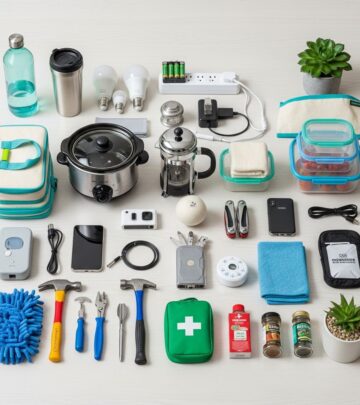
Going Broke on Household Items? Try This Inventory System
Ditch impulse buying for a smart household inventory system that plans purchases quarterly and slashes spending on everyday essentials.

The convenience of one-click shopping has revolutionized how we buy household essentials, but it often leads to overspending. This family ditched their just-in-time Amazon habit—ordering 162 items in one year—for a structured inventory system that emphasizes planning and saved them $430 annually.
Modern life makes instant gratification easy: Uber for rides, Instacart for groceries, OpenTable for dinners. For household items like shampoo and dish soap, Amazon’s mobile app enabled a just-in-time inventory strategy, where products arrived exactly when needed. As working parents with two young kids, this seemed ideal. But with over $800 spent on Amazon alone in 2016 (averaging more than three items weekly), it was time for change.
To regain control, treat your home like a business. Over a long weekend, create a master inventory spreadsheet. This system relies on data-driven planning over impulse buys, tracking purchases, usage rates, and best deals. Results? First-quarter spending dropped to $236 (75% at Costco bulk buys, only $44 on Amazon), beating the prior year’s budget by $64. Projections show under $770 yearly—nearly $430 in savings.
This Family Used to Buy Everything on Amazon… Until They Did the Math
Shopping has accelerated dramatically. Apps deliver everything instantly, shifting habits toward convenience. This family ordered 162 Amazon items in 2016, mostly via mobile for running-low notices on toiletries and cleaners.
In business, just-in-time inventory minimizes storage by ordering as needed. Households adopted this seamlessly, but costs mounted without oversight. Amazon dominated at $800+, but stores like Target and Walmart added untracked spends.
Audit revealed the truth: unplanned buys eroded budgets. Switching to quarterly planning stocked the pantry efficiently, emptied the Amazon cart, and freed cash. Key insight: data from order histories jumpstarts the process.
Here Are the Six Steps to Create Your Household Inventory System
Building this system took a weekend but yields ongoing savings. Use a Google Sheet (make a copy of a template if available) to log everything. Follow these steps precisely for maximum impact.
1. Review Past Purchases
Start with your biggest spenders. Amazon’s order history provided details: item, date, cost for 162 purchases. This built a master list of 60+ household staples like paper towels, detergent, and snacks.
Missing non-Amazon buys? No problem—proceed to auditing. Pro tip: Export data for easy import into spreadsheets. This step gives historical usage patterns, essential for forecasting.
2. Audit Current Inventory
Physically check every cabinet: kitchen, bathroom, laundry. Note each item’s brand, size, quantity left, and estimated source. Add to your spreadsheet.
This fills gaps from impulse store buys. Example: Found half-used bottles of lotion from Walmart. Tracking remaining amounts enables precise reordering—avoid duplicates and waste.
- Kitchen: Spices, oils, canned goods.
- Bathroom: Shampoo, toothpaste, TP.
- Laundry: Detergent, softener, dryer sheets.
Audit quarterly to refine accuracy.
3. Compare Prices and Quantities
With your list complete, shop smart. Compare 60+ items across Amazon, Target, Walmart, Aldi, Costco via websites and in-store.
Focus on unit price (cost per ounce/load). Bulk often wins at Costco, but check perishables at Aldi. Table example:
| Item | Amazon | Costco | Walmart | Best Buy |
|---|---|---|---|---|
| Dish Soap (64 oz) | $4.99 | $3.49 (bulk) | $3.97 | Costco |
| Shampoo (32 oz) | $6.29 | $5.99 | $5.47 | Walmart |
| Paper Towels (12 pk) | $22.99 | $16.99 | $19.97 | Costco |
Update prices seasonally—deals fluctuate.
4. Estimate How Long Products Will Last
Calculate turnover: For repeat Amazon buys, subtract dates between orders. Example: Dish soap every 45 days.
New items? Track first uses. By year-end, you’ll have estimates for all. Formula: Days lasted = Purchase date to reorder date; Usage rate = Quantity / days.
- High-turnover: Toilet paper (weekly).
- Low-turnover: Spices (yearly).
This predicts needs accurately.
5. Plan Purchases Quarterly and Record Everything
Using stock and turnover data, forecast Q1 needs. Price-check best sources, buy, and log: date, quantity, size, cost, store.
Q1 example: $236 total, mostly bulk. Only $44 Amazon—huge shift. Record builds data for future quarters.
Stick to plan but allow minor ad-hoc buys, logging them too.
6. Revisit the Inventory Plan Every Quarter
End of Q1: Review spends, adjust estimates. Q2 projection: <$150. Annualize to $770 vs. prior $1,200+.
Pantry stocked, budget intact. Refine perpetually—add categories like pantry staples or kid snacks.
Why This Beats Just-in-Time Shopping
Just-in-time suits factories but inflates household costs via premiums and impulses. Planned bulk buys leverage discounts, reduce trips, minimize waste.
Savings compound: Q1 $64 under budget; full year $430. Pantry security adds peace of mind.
Potential Challenges and Fixes
Not perfect—unplanned needs arise (e.g., kid’s new favorite snack). Solution: Buffer stock 20% extra.
Time investment upfront pays off. Families with varied tastes? Segment by user.
- Challenge: Forgetting audits.
Fix: Set calendar reminders. - Challenge: Price changes.
Fix: Quick weekly scans. - Challenge: Family buy-in.
Fix: Share savings visibly.
Frequently Asked Questions (FAQs)
What items should I include in my household inventory?
Focus on consumables: cleaners, toiletries, paper goods, laundry, pantry basics. Skip perishables unless bulk-buying.
How much time does setup take?
4-6 hours initially; 30-60 minutes quarterly thereafter.
Does this work for big families?
Yes—scale quantities up; bulk savings amplify.
What if I don’t use spreadsheets?
Apps like Home Inventory or Excel alternatives work; key is tracking.
Can I include non-household items?
Expand to office supplies or pet food for broader savings.
Expand Your System: Tips for Long-Term Success
Integrate with budgeting apps. Track waste to refine estimates. Involve family in audits for buy-in.
Seasonal tweaks: Stock sunscreen pre-summer. Monitor inflation—adjust budgets yearly.
Result: More money, less stress, fuller pantry. Dave Parro, PR exec in e-commerce, knows Amazon’s pull but proves planning wins.
References
- Inventory Management and Tracking: Periodic vs. Perpetual Systems — U.S. Small Business Administration. 2024-03-15. https://www.sba.gov/business-guide/manage-your-business/inventory-management
- Consumer Expenditure Survey: Household Supplies Spending — U.S. Bureau of Labor Statistics. 2025-09-10. https://www.bls.gov/cex/
- Best Practices for Home Inventory Management — Federal Trade Commission (Consumer Advice). 2023-11-20. https://consumer.ftc.gov/articles/how-create-home-inventory
- Effects of Bulk Purchasing on Household Budgets — USDA Economic Research Service. 2024-07-05. https://www.ers.usda.gov/topics/food-markets-prices/
- Perpetual Inventory Systems in Small Operations — Harvard Business Review. 2022-05-12. https://hbr.org/2022/05/managing-inventory-in-the-home
Similar Articles








Read full bio of medha deb