Inventory: Definition, Types, and Management
Master inventory management: Balance supply and demand to optimize costs and efficiency.
What Is Inventory?
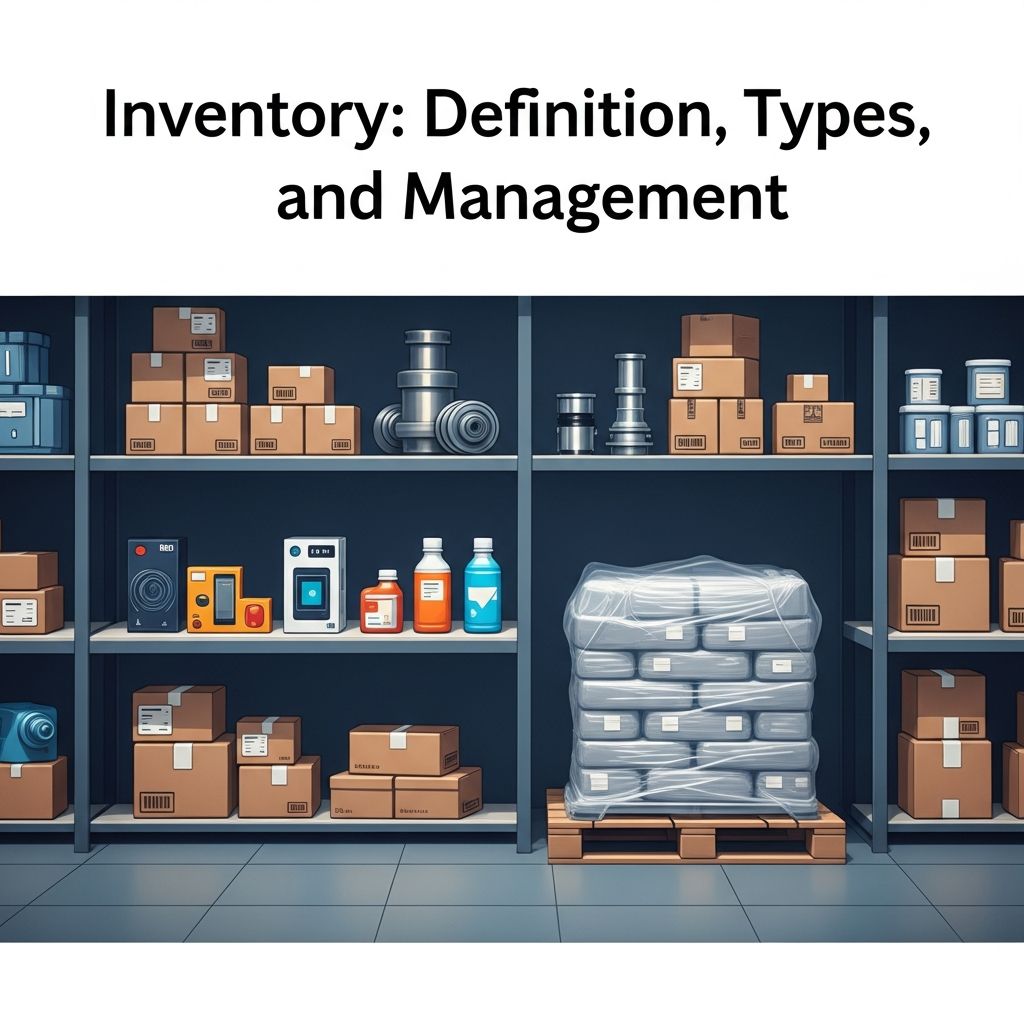
Inventory represents the goods and materials that a business holds for the purpose of resale or production. It is one of the most significant current assets on a company’s balance sheet and serves as a critical bridge between procurement, production, and customer fulfillment. Inventory includes raw materials awaiting production, works-in-progress items currently being manufactured, and finished goods ready for sale to customers. Understanding inventory and how to manage it effectively is essential for maintaining operational efficiency and profitability.
From a financial perspective, inventory can be both a valuable asset and a potential liability. While inventory generates revenue through sales, it also ties up capital that could be used elsewhere in the business. Poorly managed inventory can lead to significant financial challenges, including cash flow problems from overstocking or lost revenue from stockouts.
Understanding Inventory Management
Inventory management is the process of overseeing and controlling supply levels to ensure the right products are available at the right time and in the right quantities. It encompasses all activities involved in ordering, receiving, storing, tracking, and fulfilling customer requests for goods. Done well, effective inventory management cuts costs, prevents stockouts, and boosts overall business efficiency.
The primary objective of inventory management is to find the optimal balance between supply and demand. This balance requires coordinating multiple departments—procurement teams seeking favorable supplier terms, production teams needing consistent material flow, and sales departments promising quick customer delivery. Inventory management bridges these competing priorities by maintaining visibility across the entire supply chain.
The Core Goal of Inventory Management
The fundamental goal of inventory management is to overcome supply chain variability, meet desired customer service levels at the lowest reasonable cost, and keep just the right amount of inventory on hand. Businesses must navigate the competing challenges of having too much inventory, which ties up capital and increases carrying costs, versus having too little, which results in lost sales and customer dissatisfaction.
Why Is Inventory Management Important?
Effective inventory management is critical for several reasons. First, it directly impacts cash flow. Capital tied up in excess inventory cannot be deployed toward other business opportunities or growth initiatives. Second, poor inventory management can result in significant operational costs through waste, obsolescence, and storage expenses. Third, inventory accuracy affects customer satisfaction—insufficient stock leads to unfulfilled orders, while excessive inventory may result in quality degradation over time.
Inventory serves as a valuable current asset that companies plan to convert into revenue within one year. However, without proper oversight, inventory can become a major liability. Businesses must regularly measure and count inventory to maintain accurate financial records and make informed decisions about purchasing and allocation.
Types of Inventory
Understanding different inventory types helps businesses manage each category appropriately according to its specific characteristics and role in operations.
Raw Materials
Raw materials are the basic inputs used in manufacturing. They represent inventory in its most preliminary stage, before any production processes begin. Managing raw materials inventory requires forecasting production needs accurately and maintaining reliable supplier relationships to ensure timely delivery without excessive storage costs.
Work-in-Progress (WIP)
Work-in-progress inventory consists of goods currently being manufactured or assembled. WIP represents a significant investment since it includes labor, materials, and overhead costs. Managing WIP requires coordinating production schedules to minimize delays while preventing bottlenecks that tie up capital.
Finished Goods
Finished goods are completed products ready for sale to customers. This inventory type directly impacts customer satisfaction and revenue generation. Businesses must maintain sufficient finished goods inventory to meet demand while avoiding overproduction that leads to storage costs and potential obsolescence.
Common Inventory Management Methods
Businesses employ various strategies to optimize inventory levels and operations. Here are the most widely used approaches:
ABC Analysis (Segmentation)
ABC analysis prioritizes inventory management efforts based on the value and criticality of items. This segmentation method categorizes inventory into three tiers:
A Items: High-value, low-quantity products that contribute significantly to revenue. These items require rigorous control, frequent monitoring, and careful demand forecasting.
B Items: Moderate-value products with moderate control needs. These items receive standard inventory management attention.
C Items: Low-value, high-quantity items requiring minimal control effort. These represent the bulk of inventory count but contribute less to overall revenue.
Just-in-Time (JIT) Inventory
Just-in-time inventory management orders goods only when they’re needed for immediate use or sale. This method minimizes storage costs and capital tied up in inventory. However, JIT requires precise demand forecasting, reliable supplier relationships, and efficient logistics to safeguard timely delivery. Companies using JIT operate with minimal inventory buffers, making them vulnerable to supply chain disruptions.
Safety Stock Strategy
Safety stock maintains backup quantities of items on hand for emergencies, supply chain disruptions, or unexpected surges in demand. While safety stock increases carrying costs, it provides a crucial buffer against forecast errors and supplier delays. This “just-in-case” approach contrasts with JIT and is essential for businesses operating in unpredictable markets or with unreliable suppliers.
Vendor-Managed Inventory (VMI)
In vendor-managed inventory arrangements, suppliers monitor inventory levels at customer locations and make restocking decisions based on agreed-upon criteria. This collaborative approach improves inventory accuracy, reduces stockouts, and enhances supply chain efficiency. VMI works best when suppliers have visibility into customer demand and can adjust delivery schedules accordingly.
Material Requirements Planning (MRP)
Material Requirements Planning is a process utilized by manufacturers to control inventory by planning the order of goods based on sales forecasts. The system uses data collection to determine what materials are needed, when they’re needed, and in what quantities. MRP helps manufacturers align production schedules with demand forecasts and optimize raw materials ordering.
VED Analysis
VED analysis categorizes inventory based on criticality rather than value alone. Items are classified as Vital (essential for operations), Essential (important but with alternatives), or Desirable (nice to have but not critical). This technique helps organizations determine appropriate inventory levels for spare parts and components, justifying higher inventory for vital items while minimizing stock for desirable items.
Inventory Management vs. Related Concepts
Inventory Management vs. Inventory Optimization
While inventory management encompasses the broader strategic oversight and optimization of inventory to meet customer demand and minimize costs, inventory optimization is a subset focused specifically on profit margins and minimizing loss. Optimization involves strategically managing item levels to maximize efficiency, reduce carrying costs, and prevent stockouts or overstock conditions.
Inventory Management vs. Inventory Control
Inventory management represents the broader strategic approach to overseeing inventory across the supply chain. Inventory control, by contrast, deals with the precise tracking and accuracy of inventory levels to prevent discrepancies, loss, and theft. Inventory control is an essential component of inventory management but focuses on tactical execution rather than strategic planning.
How Inventory Management Works
Effective inventory management requires clear guidelines for every stage of procuring, receiving, storing, and fulfilling orders. The process typically follows these key steps:
Demand Planning
Demand planning analyzes historical sales data, market conditions, seasonal fluctuations, and other factors to estimate future sales accurately. This forecasting helps businesses avoid overstocks and stockouts by establishing a reasonable baseline for inventory needs.
Inventory Tracking and Counting
Inventory management begins with knowing what’s in stock through physical counts or automated tracking systems. Cycle counting involves periodically counting selected stock items and comparing results with documented records to verify accuracy and identify discrepancies.
Reordering Process
When inventory dips to predetermined minimum stock levels, new orders are automatically placed with suppliers. Upon delivery, items are received, inspected, recorded, and stored in designated locations for production use or customer sales.
Fulfillment Operations
When customers place orders, inventory levels are checked to confirm availability. Approved orders result in products being pulled from storage, packaged, and prepared for shipment. Inventory levels are updated again after fulfillment to maintain accuracy.
Inventory Management Systems and Technology
Modern inventory management systems use technology to oversee the movement of goods across multiple supply chain touchpoints. These systems provide real-time visibility into stock levels, item locations, and replenishment needs. Key features include:
Tracking and Traceability: Systems track serial numbers and product batches so businesses know exactly where goods are located at all times. This traceability proves valuable for quality issues, allowing businesses to isolate affected purchases for repair rather than issuing costly broad recalls.
Real-time Inventory Visibility: Comprehensive systems provide visibility across all warehouse locations, enabling data-driven demand forecasting and informed purchasing decisions.
Automated Reordering: Systems automatically generate purchase orders when stock levels fall below predetermined thresholds, reducing manual effort and preventing stockouts.
Advanced Analytics: Data analytics capabilities help businesses identify trends, optimize stock allocation, and make strategic decisions about inventory investment.
Technologies including RFID tags, predictive analytics, and Enterprise Resource Planning (ERP) software enhance tracking accuracy, automate operations, and provide data-driven insights for inventory decisions.
Key Benefits of Effective Inventory Management
- Improved Cash Flow: Optimized inventory reduces capital tied up in stock, freeing resources for other business investments
- Reduced Carrying Costs: Minimizing excess inventory decreases storage, insurance, and obsolescence expenses
- Enhanced Customer Satisfaction: Maintaining appropriate inventory levels ensures products are available when customers need them
- Prevention of Theft and Loss: Accurate tracking and security measures protect inventory assets
- Better Resource Allocation: Identifying slow-moving items allows businesses to focus efforts on high-value inventory
- Informed Decision-Making: Real-time data enables strategic purchasing and fulfillment planning
Frequently Asked Questions
Q: What is the difference between inventory management and supply chain management?
A: Inventory management focuses specifically on controlling stock levels and optimizing the flow of goods through storage and fulfillment. Supply chain management is broader, encompassing the entire network of procurement, production, distribution, and logistics operations.
Q: How often should businesses conduct physical inventory counts?
A: The frequency depends on business size and inventory complexity. Most businesses conduct annual physical counts for financial reporting, while using cycle counting throughout the year to maintain accuracy and identify discrepancies quickly.
Q: What is inventory turnover and why does it matter?
A: Inventory turnover measures how quickly a business sells and replaces inventory. Higher turnover indicates efficient inventory management and strong sales, while lower turnover may suggest overstocking or declining demand.
Q: How can small businesses implement effective inventory management?
A: Small businesses can start with basic inventory management systems, establish clear reordering procedures, conduct regular counts, and use ABC analysis to prioritize management efforts on high-value items.
Q: What technology is best for inventory management?
A: The best technology depends on business size and complexity. Options range from simple spreadsheet-based systems for small businesses to comprehensive ERP software for larger enterprises, with many cloud-based solutions offering scalable options.
References
- What Is Inventory Management? — SAP. Accessed November 2025. https://www.sap.com/resources/inventory-management
- What Is Inventory Management? Benefits, Types, & Techniques — NetSuite. Accessed November 2025. https://www.netsuite.com/portal/resource/articles/inventory-management/inventory-management.shtml
- Inventory Management: Definition, Benefits & Techniques — Wrike. Accessed November 2025. https://www.wrike.com/blog/what-is-inventory-management/
Similar Articles








Read full bio of medha deb