International Trade: Pros, Cons & Economic Effects
Explore how international trade shapes economies, benefits consumers, and creates challenges for workers and businesses.
International Trade: Pros, Cons & Effects on the Economy
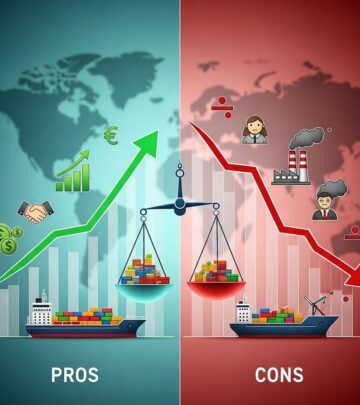
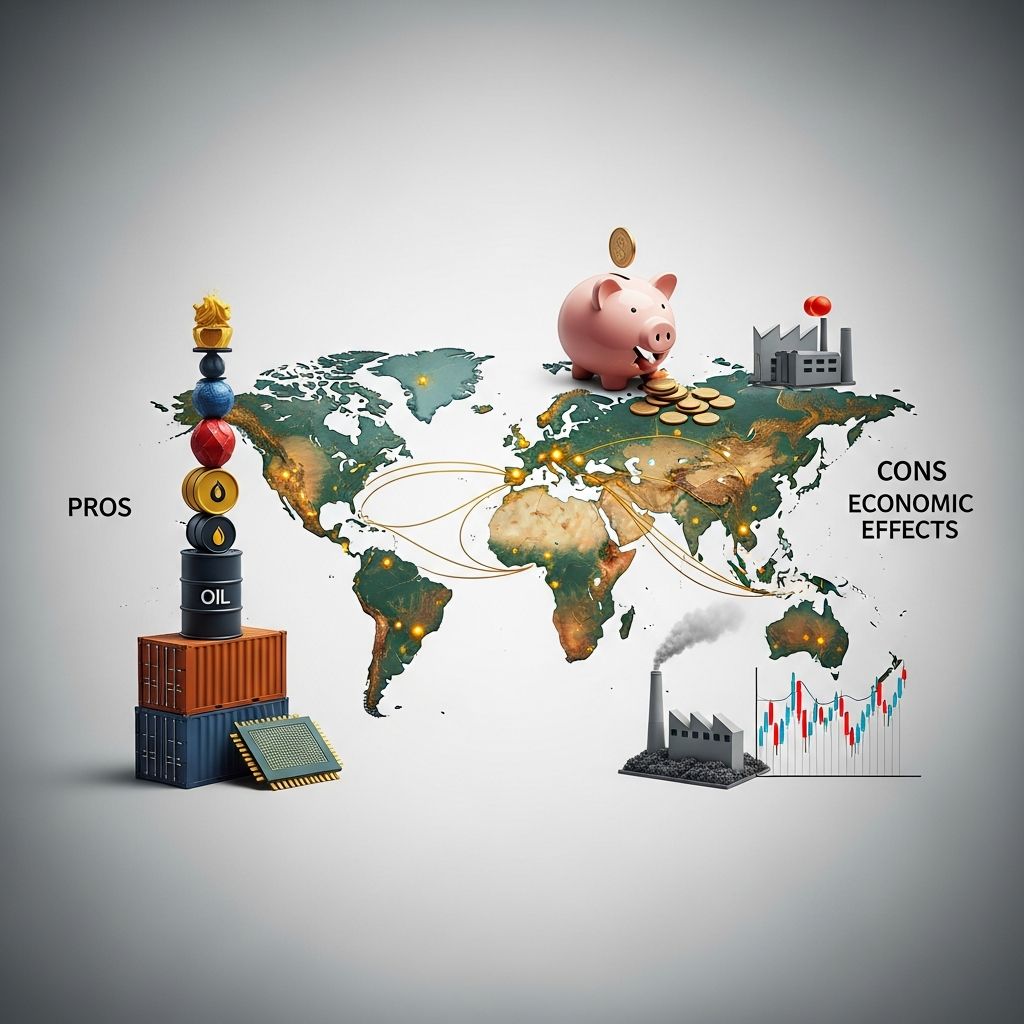
International trade represents the exchange of goods and services between countries, forming the backbone of the modern global economy. When nations engage in international commerce, they unlock opportunities for growth, innovation, and increased prosperity. However, trade also presents challenges—from job displacement to currency fluctuations—that affect different groups within society in varying ways. Understanding both the benefits and drawbacks of international trade is essential for policymakers, business leaders, and consumers alike.
What Is International Trade?
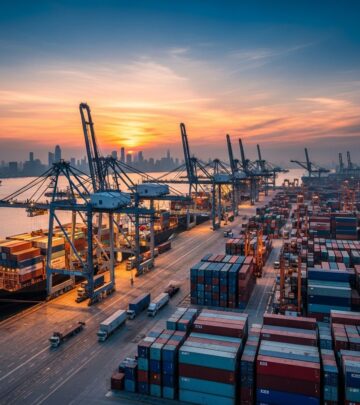
International trade occurs when businesses and governments exchange products, services, and capital across national borders. This practice dates back centuries but has accelerated dramatically since World War II, transforming how nations and corporations operate. Today, international trade encompasses everything from raw materials and manufactured goods to digital services and intellectual property. The volume and complexity of global commerce have grown exponentially, with supply chains now spanning multiple continents and involving hundreds of intermediaries.
The fundamental principle underlying international trade is comparative advantage—the idea that countries benefit when they specialize in producing goods and services where they have a relative efficiency advantage. This specialization allows nations to allocate their land, labor, and capital more effectively, resulting in greater overall productivity and wealth creation across the global economy.
The Advantages of International Trade
Economic Growth and Increased GDP
One of the most significant benefits of international trade is its ability to drive economic growth. When countries engage in international commerce, they can produce more gross domestic product (GDP) from their existing resources because they focus on activities where they maintain a competitive advantage. By avoiding wasteful production of goods that other nations can manufacture more efficiently, countries free up resources for more productive uses.
Research demonstrates that trade has substantially contributed to rising living standards. Since World War Two, global trade has helped build US household wealth significantly, with annual US GDP per household increasing by over $18,000 because of international trade. This growth extends beyond large corporations; small and medium-sized enterprises have been primary beneficiaries, with nearly 98% of US exporting companies employing fewer than 500 workers.
Consumer Benefits and Product Variety
International trade dramatically expands consumer choice and reduces prices. When households can purchase goods from global markets, their real purchasing power rises because they can obtain products at lower costs than domestic alternatives would provide. The variety of available products has increased substantially—for example, the United States imports four times as many varieties of goods as it did in the 1970s, while the number of countries supplying each product has doubled.
Competition between domestic and foreign companies drives innovation and quality improvements. Businesses must differentiate their offerings and enhance product quality to compete effectively in global markets, ultimately benefiting consumers through better choices at competitive prices. This competitive pressure forces companies to streamline operations and improve efficiency, creating downstream benefits that extend throughout the economy.
Business Growth and Revenue Opportunities
For businesses, international trade opens access to larger customer bases and new revenue streams. Companies can expand beyond domestic market limitations and achieve growth levels impossible through local sales alone. Exporting and importing businesses tend to pay higher wages than those focused exclusively on domestic markets, suggesting these enterprises capture significant value from trade participation.
International commerce also provides access to lower-cost inputs and more resilient supply chains. Firms benefit from a wider variety and quality of intermediate and capital goods, enabling more efficient investment spending and facilitating technological innovation. This access to better materials and components allows businesses to produce higher-quality products more cost-effectively.
Employment Generation
Despite concerns about job losses, international trade has generated substantial employment gains. Approximately 39 million US jobs rely on international trade, representing about 20% of total employment. Research indicates that every US state has seen net employment gains from trade with other countries, and companies engaged in importing or exporting tend to create better-paying jobs than their domestic-only counterparts.
While certain industries experience contraction due to import competition, others expand significantly through export opportunities. Sectors producing aircraft, optical and medical instruments, and agricultural products have benefited from export growth, while firms with exporting opportunities experience revenue and job growth. The net effect on employment appears positive when export growth is compared against import-related job losses.
Enhanced Investment and Innovation
Trade facilitates greater innovation by allowing firms to access superior technology, materials, and production methods from around the world. By enhancing overall investment opportunities and facilitating knowledge transfer, international trade can bring sustained higher economic growth. Companies competing in global markets have stronger incentives to innovate and improve their products and processes, driving technological advancement that benefits entire economies.
The Disadvantages of International Trade
Job Displacement and Labor Market Disruption
One of the most visible costs of international trade is job displacement in industries facing competition from lower-cost imports. Analysis suggests that the US experiences approximately 100,000 net manufacturing job losses per year because of international trade, representing about 39% of all manufacturing job losses. Workers in industries such as furniture, toys, sporting equipment, and plastics manufacturing have experienced significant employment challenges.
The impact on displaced workers can be severe and long-lasting. Workers who lose jobs due to trade can experience reduced earnings for extended periods, and the positive effects of lower consumer prices are often insufficient to compensate for their income reduction. This creates genuine hardship for individuals and communities, even though the aggregate economic benefits of trade remain positive. Some workers never fully recover their previous wage levels, representing a significant personal cost despite broader economic gains.
Exchange Rate Risk and Currency Volatility
Businesses engaged in international trade face exposure to foreign exchange risk. Currency fluctuations can affect the value of assets and liabilities denominated in foreign currencies, potentially making a business less competitive overnight and resulting in unexpected losses of sales and revenue. This unpredictability complicates financial planning and can create substantial losses for companies without proper hedging strategies.
Uneven Distribution of Trade Benefits
Although international trade produces positive net benefits for economies overall, these benefits are not distributed evenly across all individuals and groups. The effects of trade on labor markets and the effects on consumer prices go in opposite directions and are of similar magnitude. Some households experience net positive effects when consumer price benefits outweigh any employment challenges, while others—particularly displaced workers—experience net negative effects.
Lower-income households and workers in import-competing industries bear disproportionate costs, while consumers and businesses in export-oriented sectors capture the primary benefits. This unequal distribution creates political pressure for protectionist policies, even though such measures ultimately harm the broader economy.
Supply Chain Vulnerability and Geopolitical Risk
Dependence on international trade for critical goods creates economic vulnerability. Geopolitical risks such as war, reliance on risky trade partners, and disruptions to trade institutions can severely limit access to essential imported goods. Shipping disruptions and other logistical challenges can interrupt supply chains, affecting production and economic activity. Some goods critical to economic activity and welfare account for small portions of aggregate output and consumption, making dependence on them particularly risky.
Political and Cultural Barriers
Beyond economic factors, businesses face political and cultural risks when operating internationally. Regulatory differences, trade restrictions, and political instability in partner countries can disrupt operations and reduce profitability. Cultural misunderstandings and differences in business practices can complicate negotiations and partnerships.
The Cost of Protectionism
When governments erect barriers to imports from lower-cost suppliers through tariffs, quotas, and other protectionist measures, all consumers of those products are effectively forced to pay higher prices. These policies function as hidden taxes on consumption, requiring citizens to accept lower per capita gross national product by forcing inefficient allocation of national resources.
The costs of protectionism are particularly insidious because they are diffused across all consumers while benefits accrue to a small group of protected industries and workers. Individual job “protections” can cost consumers hundreds of thousands of dollars per year. When protection expands across many industries, citizens lose twice—their incomes decline because the country foregoes potential GDP through inefficient resource allocation, and their purchasing power shrinks because they must pay more for protected goods that could be obtained cheaper internationally.
Effects on Different Economic Groups
Impact on Consumers
Consumers represent perhaps the largest beneficiary group from international trade. Access to imported goods at competitive prices increases purchasing power and provides vastly more product choice. Competition between domestic and foreign companies drives down prices and encourages quality improvements, directly benefiting households through lower costs and better products.
Impact on Workers
Workers experience mixed effects depending on their industry and skill level. Those employed in export-oriented sectors often benefit from expanded opportunities and higher wages. However, workers in import-competing industries face job losses, wage pressure, and potential unemployment. Research on distributional effects shows that for some groups, trade has negative effects on wages and employment opportunities, while having large positive effects through lower consumer prices and increased product availability.
Impact on Businesses
Small and medium-sized enterprises have proven particularly successful in international trade, with over 97% of importing companies classified as small businesses. Export-oriented firms tend to grow faster and pay higher wages than domestic-only competitors. However, firms facing import competition must improve efficiency, quality, and innovation or risk market exit. The competitive pressure, while sometimes painful in the short term, ultimately drives business excellence.
International Trade and Economic Growth
Numerous economic studies confirm that trade significantly contributes to long-term economic growth. Trade is indeed one of the factors driving national average incomes (GDP per capita) and macroeconomic productivity (GDP per worker) over extended periods. By allowing countries to specialize based on comparative advantage and allocate resources efficiently, trade creates conditions for sustained prosperity and development.
The relationship between trade and growth becomes particularly important for developing nations. When developing countries engage in international trade, wages and income levels gradually rise as these economies develop. This process generates purchasing power that creates better markets for goods produced efficiently by wealthier nations, creating employment growth in export-oriented sectors and facilitating broad-based economic development globally.
Key Considerations for Trade Policy
Effective trade policy must balance the aggregate benefits of open commerce against the legitimate concerns of affected workers and communities. While the overall economic benefit of trade remains positive, policymakers should consider policies that:
- Support displaced workers through retraining, education, and income assistance programs
- Maintain strategic reserves of critical goods to ensure supply chain resilience
- Address currency and financial risks through regulation and market mechanisms
- Resist protectionist impulses that ultimately harm consumers and reduce overall prosperity
- Encourage diversification of trade partners to reduce geopolitical vulnerability
The Bottom Line
International trade produces substantial net benefits for participating economies through increased growth, consumer choice, business opportunities, and employment. These benefits are widely distributed across consumer populations, though concentrated among export-oriented businesses and workers. However, trade also creates genuine costs for workers and communities in import-competing industries, and these costs deserve serious policy attention even as trade’s overall benefits remain clear.
When trade is open, consumers and businesses benefit from access to more goods and services than their domestic economy can provide, often at lower costs. The historical evidence since World War II demonstrates that nations engaging in international commerce have experienced rising living standards and greater prosperity than those pursuing isolationist policies. Moving forward, the challenge lies in maintaining the benefits of open trade while implementing policies that support affected workers and manage systemic risks.
Frequently Asked Questions
Q: How does international trade affect prices for consumers?
A: International trade typically lowers prices for consumers by introducing competition from foreign producers and allowing access to cheaper goods. Consumers gain increased purchasing power and can buy more with the same income.
Q: Why do some people oppose international trade if it benefits the economy overall?
A: While trade produces net positive benefits, these benefits are unevenly distributed. Workers in import-competing industries face job losses and wage pressure, and the positive effects from lower prices often don’t compensate them for lost earnings. The costs are concentrated while benefits are diffuse.
Q: Can protectionism help workers in declining industries?
A: Protectionist policies like tariffs can temporarily preserve jobs in protected industries, but they force all consumers to pay higher prices for those products. Research shows that the cost to consumers per job protected often amounts to hundreds of thousands of dollars annually, ultimately reducing overall economic growth.
Q: What percentage of jobs in the US depend on international trade?
A: Approximately 39 million US jobs rely on international trade, representing about 20% of total employment. Companies engaged in importing or exporting tend to pay higher wages than purely domestic businesses.
Q: How has international trade affected US household wealth?
A: Since World War Two, international trade has increased annual US GDP per household by over $18,000. This demonstrates the substantial cumulative benefit of global commerce to American living standards over several decades.
Q: What are the main risks of international trade?
A: Key risks include job displacement in import-competing industries, exchange rate volatility, supply chain disruptions, geopolitical tensions affecting trade partners, and dependence on other nations for critical goods necessary for economic activity.
References
- Globalization and the Benefits of Trade — Federal Reserve Bank of Chicago. 2007-03. https://www.chicagofed.org/publications/chicago-fed-letter/2007/march-236
- The Pros and Cons of International Trade — Fisher Investments. 2024. https://www.fisherinvestments.com/en-us/insights/personal-wealth-management/pros-cons-of-international-trade
- The Pros and Cons of International Trade — European CEO. 2024. https://www.europeanceo.com/business-and-management/the-pros-and-cons-of-international-trade/
- International Trade: Commerce among Nations — International Monetary Fund. 2024. https://www.imf.org/en/publications/fandd/issues/series/back-to-basics/trade
- Trade and Globalization — Our World in Data. 2024. https://ourworldindata.org/trade-and-globalization
- Why Countries Trade: A Look at Benefits and Risks — Federal Reserve Bank of St. Louis. 2024-03. https://www.stlouisfed.org/open-vault/2024/mar/international-trade-benefits-risks
- The Winners and Losers from Trade — Federal Reserve Bank of Cleveland. 2019-12. https://www.clevelandfed.org/publications/economic-commentary/2019/ec-201915-winners-and-losers-from-trade
Similar Articles








Read full bio of medha deb