Financial Foundation for International Students in America
Navigate US banking essentials to build credit and manage money abroad
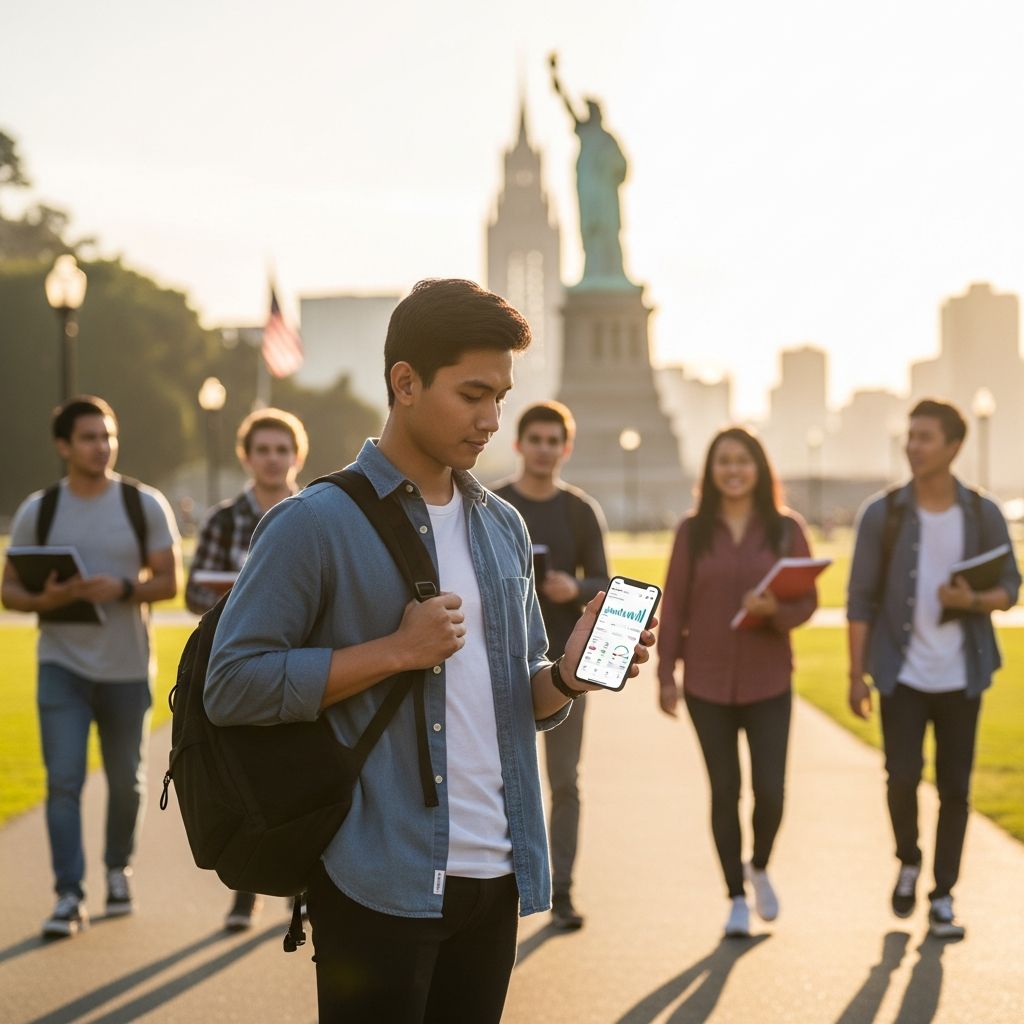
Transitioning to life as an international student in the United States involves countless adjustments, and managing your finances ranks among the most critical decisions you’ll make. Establishing a robust banking relationship early in your academic journey sets the stage for financial stability, enables you to build a credit history that may follow you throughout your life, and simplifies the everyday transactions that keep your student life running smoothly. Understanding the US banking system may seem daunting at first, but with the right information and preparation, you can navigate this landscape confidently and establish habits that benefit you both during and after your studies.
Why Establishing US Banking Should Be Your Priority
When you arrive in the United States, opening a bank account should rank near the top of your to-do list, ideally within your first few days on campus. The reasons extend far beyond simple convenience. A US bank account provides you with a secure place to store your money, eliminates the need to carry large amounts of cash, and protects you from the excessive fees that come with repeatedly converting currency or withdrawing funds from foreign accounts. Additionally, maintaining an active checking account demonstrates financial responsibility to future creditors and employers, which becomes increasingly important as you progress through your academic career and contemplate post-graduation opportunities.
Beyond immediate practicality, establishing banking relationships in the United States allows you to begin building a credit history from the moment you arrive. This credit foundation proves invaluable when you later apply for student loans, rental agreements, credit cards, or even employment opportunities. Many international students underestimate the importance of this early financial record, only to discover years later that their lack of US credit history complicates major life decisions. Starting your banking journey purposefully and strategically maximizes the long-term benefits of your US education.
Understanding Your Banking Options
The United States banking system offers two primary account types that international students typically encounter: checking accounts and savings accounts. Each serves distinct purposes within a comprehensive financial strategy, and most students benefit from opening both.
Checking Accounts: Your Primary Financial Tool
A checking account represents the foundational banking product for international students. This account type permits unlimited deposits and frequent withdrawals, making it ideal for managing daily expenses such as groceries, textbooks, rent, and utilities. When you open a checking account, you typically receive a debit card that functions at ATMs and retail establishments, along with online and mobile banking access that allows 24-hour account management. Most checking accounts include a checkbook, though check usage has declined significantly among younger account holders who rely primarily on digital transactions.
What makes checking accounts particularly valuable for international students is the prevalence of fee-free options. Many major banks recognize the student market and actively compete for your business by offering accounts with zero monthly maintenance fees, no minimum balance requirements, and no transaction limits. This student-friendly approach means you can build your banking relationship without financial barriers.
Savings Accounts: Building Your Safety Net
Alongside a checking account, establishing a savings account creates a designated space for money you intend to preserve rather than spend immediately. Savings accounts typically offer interest on your balance, meaning your money literally grows over time. While international students often prioritize meeting immediate expenses, opening a savings account demonstrates financial maturity and discipline, particularly valuable characteristics when you later apply for credit or seek employment.
Selecting the Right Bank for Your Needs
The US banking landscape includes thousands of institutions, but international students benefit most from choosing national banks rather than regional or state-specific institutions. National banks like Bank of America, Chase, Wells Fargo, and US Bank maintain extensive branch networks and ATM presence throughout the country, ensuring you can access your money regardless of where classes or internships take you.
Major Banks and Student-Focused Offerings
| Bank | Student Account Name | Monthly Fee | Key Features |
|---|---|---|---|
| Bank of America | Student Banking | $0 for students under 24 | National ATM network, mobile app, foreign exchange tools, international wire transfers |
| Chase | Student Checking | $0 for qualifying students | Extensive ATM access, mobile banking, fraud protection, campus partnerships[10] |
| Wells Fargo | Student Checking | $0 for ages 17-24 | Thousands of ATMs, 24/7 fraud monitoring, campus card programs |
| HSBC USA | Premier US Account | $0 for six years | International account connections, global money transfers, relocation support |
| US Bank | Student Checking | $0 | Free personal checks, mobile banking, ATM access, campus banking |
Beyond traditional banks, credit unions represent an alternative banking model worth considering. These nonprofit institutions often provide superior interest rates and lower fees than traditional banks, and many universities maintain direct partnerships with credit unions that offer specialized student services. However, credit unions typically restrict membership to specific groups or sectors, so investigate whether your university has an affiliated credit union.
Key Factors When Choosing Your Bank
- Fee structure: Prioritize accounts with zero monthly maintenance fees, zero minimum balance requirements, and no transaction limits
- ATM accessibility: Choose a bank with abundant ATM locations near your campus and living area to avoid out-of-network fees
- Student-specific accounts: Take advantage of accounts designed specifically for students, which typically offer superior terms
- Mobile banking capability: Ensure the bank offers a robust mobile app for managing your account from your smartphone
- International services: If you anticipate needing to transfer funds to or from your home country, confirm the bank offers competitive international wire transfer rates
- Campus presence: Investigate whether the bank maintains a branch or ATM on your campus for convenient access
Documentation Requirements for Account Opening
Opening a bank account as an international student requires more documentation than a US citizen would provide, but the process remains straightforward. Banks implement these additional requirements to verify your identity, confirm your enrollment status, and establish your US address for regulatory purposes.
Essential Documents You’ll Need
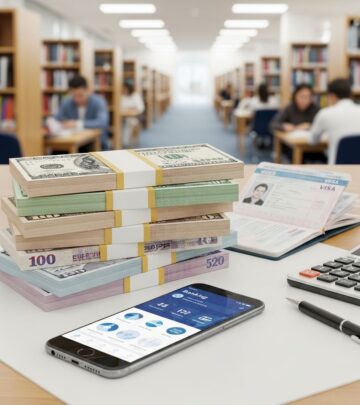
The fundamental documents required include your unexpired passport for primary identification, your student visa (typically an F-1 visa), and your I-20 form or DS-2019 document, which your school issues to confirm your enrollment status. Additionally, you’ll need to provide proof of your US address, which can take the form of a utility bill, lease agreement, university housing letter, or apartment contract. Some banks may request your student ID card as secondary identification, though a birth certificate or driver’s license also satisfies this requirement in most cases.
Regarding Social Security Numbers (SSN), the situation is more nuanced than many students assume. While not absolutely mandatory for opening a basic checking account, having an SSN or Individual Taxpayer Identification Number (ITIN) significantly simplifies the process and becomes necessary if you wish to earn interest on savings accounts or apply for credit products. If you don’t have an SSN, consult with your international student office or the bank directly, as policies vary by institution.
Additional Documents That Strengthen Your Application
- Enrollment verification letter from your university registrar
- Letter of acceptance from your university
- Copy of your I-94 arrival record (obtainable at https://i94.cbp.dhs.gov/I94/)
- Valid passport number and visa information
- Your college address and phone number
- An initial deposit amount (varies by bank but typically $25-$100)
The Account Opening Process: In-Person vs. Remote
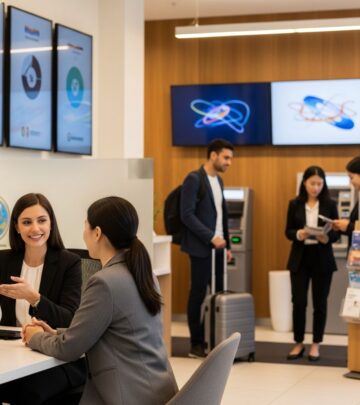
While many banks permit account opening over the phone or online, international students benefit from visiting a branch in person. In-person account opening allows you to ask clarifying questions about specific requirements, receive immediate assistance if documentation issues arise, and establish a face-to-face relationship with bank staff who may assist you throughout your banking journey. Having staff understand your situation as an international student can prove invaluable when you later need services like international wire transfers or credit products.
Before visiting a bank branch, contact them directly to confirm their specific documentation requirements and current policies, as these details vary slightly among institutions and evolve over time. This simple step prevents frustration and ensures you bring everything necessary to complete your account opening in one visit.
Building Your US Credit History: A Long-Term Investment
One of the most valuable outcomes of your US banking activity is the establishment of a credit history. In the United States, credit scores influence loan interest rates, apartment rental approvals, employment opportunities, and even insurance premiums. Beginning this process during your student years provides years of history-building before you need credit for major life decisions.
How Banking Contributes to Credit Building
Maintaining a checking account in good standing demonstrates financial responsibility, though checking accounts alone don’t directly build credit scores. To actively build credit, you’ll need credit products like credit cards or loans that report to credit bureaus. Many banks offer student credit cards with reasonable credit limits and student-friendly terms. Using a credit card responsibly—charging modest amounts and paying your full balance each month—establishes a positive credit record that lenders view favorably for years to come.
Alternatively, some banks offer credit-builder loans designed specifically for customers establishing credit histories. These loans work counterintuitively: you borrow a small amount that the bank holds in an account while you make monthly payments. Successfully completing the loan demonstrates creditworthiness without requiring existing credit, making it an excellent option for international students.
Managing Deposits and Transfers
Once your account is open, you’ll need to fund it with money from your home country. Banks accept deposits through multiple methods, each with different costs and timelines. Direct deposit via traveler’s checks typically occurs with no fees, making this an economical initial deposit method if you’ve brought traveler’s checks. For ongoing transfers from your home country, wire transfers represent the standard method, though they typically cost approximately $35 per transfer. International wire transfers also involve currency conversion, so understanding the exchange rates your bank applies helps you make informed decisions about when and how much to transfer.
Within the US banking system, you can freely deposit cash at your bank’s ATMs and branches, mail checks to your bank for deposit (though never mail cash), or arrange automatic transfers from other US accounts. Each method has advantages depending on your circumstances.
Maximizing Your Banking Experience
Essential Practices for Student Account Holders
- Maintain adequate funds: Prevent overdraft fees and fraud by keeping sufficient money in your account before writing checks or using your debit card
- Monitor your account regularly: Use mobile banking to track transactions, spot unauthorized activity early, and identify fraudulent charges
- Use in-network ATMs: Avoid out-of-network ATM fees by using ATMs operated by your bank
- Enable account notifications: Set up alerts for large transactions or low balances to maintain account awareness
- Protect your information: Treat your debit card, PIN, and online banking credentials with the same security as physical cash
- Explore digital payment apps: Familiarize yourself with mobile payment applications like Venmo, Apple Pay, or Google Pay for peer-to-peer transfers and retail payments
Addressing Common Concerns
Do I Need a Social Security Number?
While a Social Security Number (SSN) simplifies the account opening process, it’s not an absolute requirement to open a basic checking account[10]. International students without SSNs can often open accounts using their passport and visa documentation. However, having an SSN or ITIN makes eligibility for credit products easier and becomes necessary for interest-bearing accounts.
What If I Need to Transfer Money Home?
Banks in the US offer international wire transfer services, though fees typically run $35-$50 per transfer. Some banks, particularly HSBC, specialize in international banking and may offer better rates for transfers to specific countries. Additionally, online money transfer services like Wise or OFX often provide more competitive exchange rates than traditional banks, though you’ll need to research options available in your home country.
How Can I Access My Money if My Campus Bank Closes?
Choosing a national bank with extensive ATM networks ensures you can access your money even if your campus branch closes. National banks maintain thousands of ATMs across the country, and many participate in ATM-sharing networks that extend your access even further.
References
- The International Student’s Guide to Stress-Free Banking in the US — MyHomeBase. https://myhomebase.org/the-international-students-guide-to-stress-free-banking-in-the-us/
- Choosing an international student bank account in the US — Times Higher Education. https://www.timeshighereducation.com/student/advice/guide-international-student-bank-accounts-us
- Guide to Opening a Bank Account in the U.S. for International Students — Lasell University. https://www.lasell.edu/documents/International%20Student%20Services/Opening%20a%20Bank%20Account%20in%20the%20US.pdf
- International Student Guide to Money in the US — International Student. https://www.internationalstudent.com/study_usa/way-of-life/money-matters/
- Banking in the USA for international students Part 1: the basics — Rice University Graduate. https://graduate.rice.edu/news/current-news/banking-usa-international-students-part-1-basics
- How to Open a Bank Account as an International Student — Bank of America. https://info.bankofamerica.com/en/international/student-bank-account
- Opening a Bank Account as an International Student — Chase. https://www.chase.com/personal/banking/education/basics/bank-accounts-for-international-students
Similar Articles








Read full bio of medha deb