Navigating Vehicle Coverage for International Operators
Complete roadmap for obtaining and maintaining auto coverage as a foreign national in America

Operating a motor vehicle on American roads as a foreign national presents unique challenges, but obtaining the necessary insurance coverage is entirely feasible. The fundamental requirement remains the same across the nation: all drivers must maintain liability insurance to legally operate vehicles. Understanding how this applies to individuals from abroad—whether visiting temporarily or establishing permanent residence—is essential for staying compliant with state regulations and protecting yourself financially.
Understanding the Universal Insurance Mandate
The United States maintains a robust insurance requirement framework that applies equally to both citizens and non-citizens. With the exception of New Hampshire and Virginia, every state mandates that vehicle operators carry minimum liability coverage. Even in these two exception states, drivers remain financially accountable for damages or injuries they cause, making insurance a practical necessity despite the absence of legal requirements.
The liability insurance requirement covers two critical areas: bodily injury compensation and property damage restitution. These minimum coverage amounts vary significantly by jurisdiction, ranging from state to state. Additionally, twelve states operate under no-fault insurance systems, requiring operators to carry Personal Injury Protection (PIP) coverage alongside standard liability provisions. This additional layer ensures that your own medical expenses are covered regardless of fault determination in an accident.
Documentation and Eligibility Pathways for Foreign Operators
The primary obstacle for foreign drivers seeking insurance isn’t rejection based on citizenship status—it’s assembling the correct documentation. Most major insurers have developed sophisticated systems for evaluating risk profiles of international operators and will work with applicants presenting valid foreign credentials.
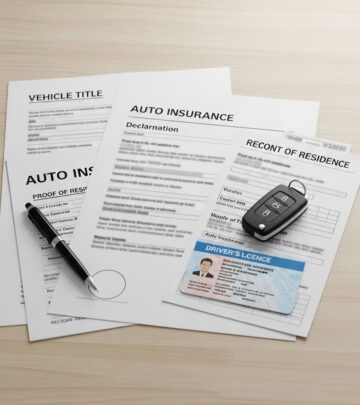
Essential documents typically include:
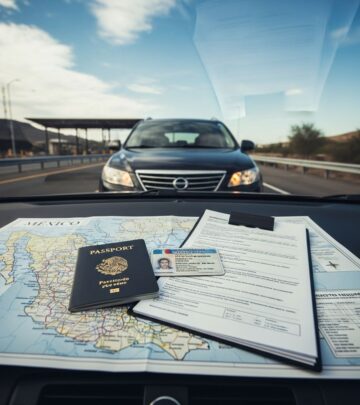
- Valid passport demonstrating your identity and visa status
- Current driver’s license from your country of origin
- Vehicle registration documentation (if you own or lease the vehicle)
- Proof of residence in the state where you intend to drive
- Valid International Driving Permit if required by your particular state
Several states recognize International Driving Permits (IDPs) as valid documentation for extended driving privileges. An IDP typically allows driving privileges for up to twelve months, providing a practical solution for individuals in transition. Conversely, many states recognize foreign licenses directly for shorter periods—often three months—before requiring formal conversion to a state-issued license.
Individual Taxpayer Identification Numbers (ITIN) serve as alternatives for those without Social Security numbers, allowing undocumented individuals and recent arrivals without SSNs to secure policies from forward-thinking insurers.
Distinguishing Coverage Scenarios: Temporary Visitors Versus Relocating Nationals
The insurance requirements and available options diverge substantially depending on your specific circumstances and duration of stay.
Short-Term Visitor Coverage Solutions
Individuals visiting the United States for tourism, business, or education typically have straightforward coverage options. The simplest approach for rental vehicle situations involves purchasing temporary insurance directly through the rental company, which provides comprehensive protection for the rental duration without requiring extensive paperwork or policy underwriting.
For those operating non-rental vehicles during brief visits, several insurers offer specialized short-term policies ranging from a few weeks to six months. These temporary arrangements eliminate unnecessary expenses while maintaining legal compliance with state requirements.
Long-Term Relocation and Permanent Settlement
Individuals planning to establish residence in the United States face different requirements. Most states permit foreign license usage for ninety days following residency establishment, while IDPs extend this to twelve months. However, beyond these transition periods, state driver’s license conversion becomes mandatory.
Standard auto insurance policies—covering twelve-month terms—become necessary for long-term residents. These conventional policies provide stable, comprehensive coverage and are typically more economical than repeatedly renewing short-term arrangements.
Coverage Categories Explained
Understanding the distinct coverage categories helps in selecting appropriate protection levels for your circumstances.
Liability Protection: The Foundation
Liability coverage forms the mandatory base of every vehicle insurance policy. This protection covers costs associated with injuries you cause to other individuals and damages you cause to other people’s property. Liability limits are expressed as three numbers—for example, 25/50/25—representing bodily injury per person, bodily injury per accident, and property damage limits respectively.
Collision and Comprehensive Coverage
Beyond minimum liability requirements, collision coverage addresses damages resulting from vehicular collisions, while comprehensive coverage protects against non-collision incidents including theft, weather damage, vandalism, and other specified perils. These coverages often include deductible options that allow policyholders to reduce premiums by accepting higher out-of-pocket expenses when claims occur.
Uninsured and Underinsured Motorist Protection
This coverage category protects you when involved in accidents with drivers carrying insufficient or no insurance. Some states mandate this protection, particularly for bodily injury scenarios. States like Illinois specifically require Uninsured Motorist Bodily Injury (UMBI) coverage, making it a legal necessity rather than optional protection.
State-Specific Variations and Regional Considerations
Insurance regulations demonstrate remarkable variation across jurisdictions, creating a complex landscape for foreign operators.
California permits foreign license usage but requires state license application after ten days of established residency. This relatively permissive approach differs markedly from states with stricter residency and licensing requirements. Similarly, some states mandate IDP acquisition before permitting foreign license operation, while others recognize foreign credentials without supplementary documentation.
No-fault insurance states implement fundamentally different claims processes compared to traditional fault-based systems. These jurisdictions require Personal Injury Protection coverage, affecting both policy requirements and claims procedures. Understanding your specific state’s classification—whether it operates under fault-based or no-fault systems—proves essential for appropriate coverage selection.
Insurance Provider Accessibility and Comparison
Not all insurers maintain equal willingness to work with foreign operators. However, several major carriers have invested substantially in international driver accommodation:
- State Farm has developed comprehensive systems for foreign driver underwriting and maintains active programs for non-citizens
- Progressive offers specific policies designed for international drivers, visitors, and students
- Farmers Insurance maintains specialized underwriting departments for foreign applicant evaluation
- Liberty Mutual provides guidance on minimum state requirements and foreign credential recognition
- Infinity Auto partners with carriers specifically accepting foreign documentation
Comparing quotes across multiple providers becomes especially important for international operators, as premium calculations may vary based on how insurers assess foreign driving history and perceived risk profiles.
Establishing Driving History and Risk Assessment
A significant challenge for foreign operators involves establishing credibility within American insurance underwriting systems. Insurance companies typically rely on domestic driving records to assess risk, and foreign nationals naturally lack this domestic history. However, many insurers will consider driving records from your country of origin, potentially resulting in premium reductions if your international history demonstrates safe operating practices.
When applying for coverage, provide detailed information about driving experience abroad, accident history, violation records, and prior insurance coverage. This documentation helps insurers make informed underwriting decisions and may result in more favorable rates than standard international operator pricing.
Special Circumstances: Undocumented Operators
Certain states have implemented progressive licensing policies facilitating access for undocumented immigrants. Nineteen states plus Washington, D.C., currently allow undocumented individuals to apply for valid driver’s licenses through their Department of Motor Vehicles. States offering such programs typically require proof of identity and residency, which can be satisfied through various documentation types including tax identification numbers and consular identification documents.
Once a valid state driver’s license is obtained through these programs, insurance acquisition becomes substantially easier, as most insurers require an active driver’s license as a precondition for policy issuance.
Practical Steps for Securing Coverage
Obtaining appropriate vehicle insurance as a foreign operator requires methodical planning:
- Verify your state’s specific insurance requirements through the Department of Insurance website
- Determine your foreign license’s validity period in your state
- Assess whether you need an International Driving Permit
- Compile required documentation including passport, visa, and proof of residence
- Contact multiple insurers directly to confirm foreign credential acceptance
- Obtain quotes comparing liability limits, coverage types, and premium costs
- Review policy exclusions and confirm coverage applies in your state
- Maintain proof of insurance in your vehicle at all times
Frequently Asked Questions
Can I maintain my home country insurance coverage in the United States?
Coverage from your country of origin typically provides insufficient protection for American operations. While some policies may extend limited coverage during travel, they usually don’t meet state minimum requirements and lack the specific protections required by U.S. regulations. Establishing a policy with an American insurer is essential for legal compliance and adequate protection.
What happens if I drive without required insurance?
Penalties for driving uninsured vary by state but typically include fines, license suspension, registration revocation, and potentially vehicle impoundment. Additional liability for accidents becomes your personal responsibility. Law enforcement may conduct traffic stops specifically to verify insurance compliance.
How do I transition from temporary to permanent insurance?
As you move from temporary visitor status to long-term residency, coordinate your insurance transition with your driver’s license conversion. Contact your insurer about converting temporary policies to standard annual policies. You may need to provide updated documentation reflecting your state residency.
Are there insurance companies specializing in foreign driver coverage?
While no insurers exclusively serve foreign operators, several maintain dedicated international driver programs with experienced underwriters familiar with foreign documentation and risk assessment. Requesting companies with international driver specialists often yields better service and faster processing.
Can I use my driving record from my home country?
Yes, many insurers will review driving history from your country of origin. Requesting an International Driving Record or obtaining documentation from your home insurance company can support applications. Clean driving records may qualify you for discounted rates compared to standard international operator pricing.
References
- Car Insurance for Foreign Drivers in the US (2026 Guide) — MoneyGeek. 2026. https://www.moneygeek.com/insurance/auto/car-insurance-for-foreign-drivers-in-the-usa/
- How to Get Auto Insurance for Foreign Drivers in the USA — Infinity Auto. https://www.infinityauto.com/knowledge-center/understanding-insurance/auto-insurance-for-foreign-drivers
- Car Insurance for International Drivers in U.S. — Progressive. https://www.progressive.com/answers/international-drivers-license-car-insurance/
- Understanding Car Insurance for non-U.S. Citizens — Liberty Mutual. https://www.libertymutual.com/insurance-resources/auto/car-insurance-for-non-us-citizens
- Car Insurance for Foreign Drivers in the U.S. — The Zebra. https://www.thezebra.com/auto-insurance/driver/other-factors/car-insurance-foreign-drivers/
- Auto Insurance for Foreign Drivers — State Farm. https://www.statefarm.com/simple-insights/auto-and-vehicles/auto-insurance-foreign-drivers
Similar Articles








Read full bio of medha deb