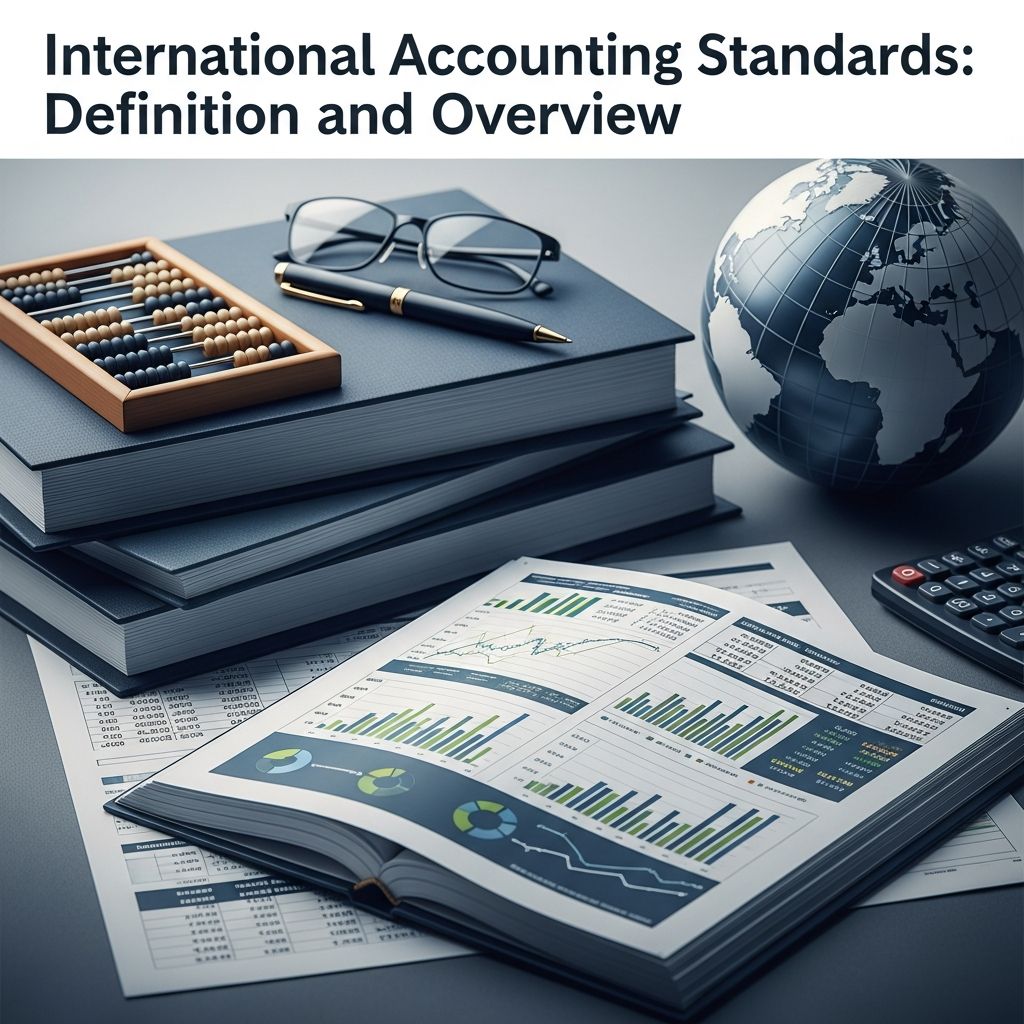
International Accounting Standards: Definition and Overview
Understanding IAS: Global accounting standards for transparent financial reporting worldwide.
What Are International Accounting Standards?
International Accounting Standards (IAS) represent a set of accounting principles and guidelines established to create consistency, transparency, and comparability in financial reporting across different countries and organizations worldwide. These standards were developed by the International Accounting Standards Board (IASB) and serve as the foundation for International Financial Reporting Standards (IFRS), which are widely adopted by companies, governments, and financial institutions across the globe.
The primary objective of IAS is to ensure that financial statements prepared by organizations using these standards are comparable, reliable, and understandable to investors, creditors, regulators, and other stakeholders. By establishing uniform accounting practices, IAS helps reduce discrepancies in how financial information is reported and interpreted internationally.
History and Development of International Accounting Standards
The journey of International Accounting Standards began in 1973 with the formation of the International Accounting Standards Committee (IASC) by accounting professional bodies from nine countries. The primary mission was to develop and promote worldwide acceptance of uniform accounting standards to improve the quality and consistency of financial reporting globally.
In 2001, the IASC was reorganized and renamed the International Accounting Standards Board (IASB). This restructuring marked a significant evolution in the standard-setting process, introducing greater independence and technical expertise. Since then, IASB has continued to refine and update IAS standards to reflect changing business environments and economic realities.
The evolution of IAS demonstrates a commitment to creating a unified language for financial reporting that transcends national boundaries and accounting traditions. Today, over 140 countries either require or permit the use of IFRS/IAS in their financial reporting requirements.
Key Objectives of International Accounting Standards
- Comparability: Ensure financial statements from different entities and countries can be compared on a consistent basis
- Transparency: Provide clear and comprehensive disclosure of financial information to all stakeholders
- Reliability: Establish trustworthy accounting practices that reduce the risk of financial misstatement
- Standardization: Eliminate variations in accounting treatments across different jurisdictions
- Market Confidence: Enhance investor confidence through uniform and understandable financial reporting
- Economic Efficiency: Reduce compliance costs for multinational enterprises operating across different countries
Core Principles of IAS
International Accounting Standards are built upon several fundamental principles that guide the preparation and presentation of financial statements:
Accrual Basis of Accounting
IAS requires entities to record financial transactions when they occur, rather than when cash is exchanged. This approach provides a more accurate representation of an organization’s financial position and performance during a specific period.
Going Concern
The going concern principle assumes that an entity will continue its operations in the foreseeable future. Financial statements are prepared on this assumption unless there is evidence to the contrary, such as bankruptcy or liquidation proceedings.
Prudence and Conservatism
IAS emphasizes caution when recording transactions, particularly when dealing with uncertainties. This principle encourages entities to avoid overstating assets or income while ensuring liabilities and expenses are not understated.
Consistency
Organizations must apply the same accounting methods and policies consistently from one period to another. Any changes in accounting policies must be disclosed and explained in the financial statements.
Materiality
Information is considered material if its omission or misstatement could influence economic decisions of users. IAS emphasizes that only material information needs to be disclosed.
Major IAS Standards and Their Applications
Several key International Accounting Standards have been established to address different aspects of financial reporting. Here are some of the most important ones:
IAS 1: Presentation of Financial Statements
This standard establishes guidelines for the overall structure and content of financial statements, including the balance sheet, income statement, cash flow statement, and statement of changes in equity. IAS 1 ensures that financial statements are presented in a consistent and understandable format.
IAS 2: Inventories
IAS 2 provides guidance on how organizations should measure and account for inventory. It addresses valuation methods such as FIFO (First-In-First-Out) and weighted average cost, ensuring consistent treatment of inventory across different entities.
IAS 16: Property, Plant, and Equipment
This standard addresses the accounting treatment of tangible fixed assets. It covers recognition, measurement, depreciation, and derecognition of property, plant, and equipment used in business operations.
IAS 38: Intangible Assets
IAS 38 governs the accounting for intangible assets such as patents, trademarks, goodwill, and software. It establishes criteria for recognition and provides guidance on measurement and amortization of intangible assets.
IAS 39: Financial Instruments
This standard (now largely superseded by IFRS 9) addresses the recognition, measurement, and presentation of financial instruments, including loans, investments, and derivatives. It helps ensure transparent reporting of financial risk.
International Financial Reporting Standards (IFRS) vs. IAS
While the terms IAS and IFRS are often used interchangeably, there is a technical distinction. IAS refers to the original standards issued by the IASC before 2001, while IFRS encompasses both the original IAS standards and the new standards issued by the IASB after 2001. In practice, the International Accounting Standards Board continues to use the designation IAS for some standards while issuing new standards under the IFRS label.
Benefits of International Accounting Standards
For Investors and Stakeholders
- Enhanced ability to compare financial performance across companies in different countries
- Increased transparency and reliability of financial information
- Reduced information risk and improved investment decision-making
- Greater access to investment opportunities in global markets
For Businesses and Organizations
- Simplified compliance for multinational enterprises operating in multiple jurisdictions
- Reduced costs associated with maintaining multiple accounting systems
- Improved access to global capital markets and investors
- Enhanced credibility and reputation through standardized financial reporting
- Streamlined audit processes and reduced compliance burden
For Regulators and Governments
- Enhanced ability to monitor and regulate financial markets effectively
- Improved transparency in corporate financial reporting
- Reduced financial fraud and accounting manipulation
- Consistency in financial reporting across different sectors and industries
Global Adoption of International Accounting Standards
The adoption of IFRS/IAS has grown significantly over the past two decades. The European Union mandated the use of IFRS for listed companies starting in 2005, setting a precedent for other regions. Today, more than 140 countries either require or permit the use of IFRS in their financial reporting requirements.
However, some major economies, including the United States, have maintained their own Generally Accepted Accounting Principles (GAAP). The U.S. Securities and Exchange Commission (SEC) permits foreign private issuers to file financial statements prepared in accordance with IFRS without reconciliation to U.S. GAAP, demonstrating growing acceptance of international standards.
Challenges and Criticisms of IAS
Despite their widespread adoption, International Accounting Standards face several criticisms and challenges:
Complexity
IAS standards can be complex and difficult to implement, particularly for smaller organizations with limited accounting resources. The standards require significant professional judgment and interpretation.
Implementation Costs
Converting from local accounting standards to IFRS/IAS requires substantial investment in training, systems, and processes, particularly for large organizations with complex operations.
Different Interpretations
Despite the standardization efforts, different countries and regulators may interpret IAS differently, leading to variations in application and comparability.
Cultural and Legal Differences
National accounting traditions and legal frameworks can influence how IAS are applied, reducing the uniformity intended by the standards.
Frequently Asked Questions
Q: Who enforces International Accounting Standards?
A: The International Accounting Standards Board (IASB) develops and publishes IAS, while national regulators and securities commissions enforce their adoption and compliance. The IASB is an independent, private sector organization based in London.
Q: Are IAS mandatory for all companies?
A: IAS requirements vary by country and jurisdiction. While many countries mandate IFRS for listed companies, smaller entities and private companies may have the option to use simplified accounting standards or local GAAP.
Q: What is the difference between IAS and IFRS?
A: IAS refers to the original standards issued by the International Accounting Standards Committee before 2001. IFRS encompasses both the original IAS standards and new standards issued by the IASB after 2001. The terms are often used interchangeably in modern practice.
Q: Does the United States use International Accounting Standards?
A: The United States primarily uses Generally Accepted Accounting Principles (GAAP) for domestic companies. However, foreign private issuers filing with the SEC can use IFRS without reconciliation to U.S. GAAP.
Q: How frequently are IAS standards updated?
A: The IASB continuously reviews and updates IAS/IFRS standards to reflect changes in business environments and stakeholder needs. Major updates and amendments are issued periodically, with effective dates typically announced in advance to allow organizations time for implementation.
Q: What training is required to implement International Accounting Standards?
A: Organizations implementing IAS typically need to provide comprehensive training to finance and accounting personnel. This includes understanding the principles of IAS, specific standards applicable to the organization’s operations, and proper documentation and disclosure requirements.
Conclusion
International Accounting Standards represent a critical framework for ensuring global financial transparency and comparability. By establishing uniform principles and guidelines for financial reporting, IAS has significantly enhanced the reliability and understandability of financial statements across borders. While challenges remain in terms of implementation complexity and regional variations, the continued adoption of IFRS/IAS demonstrates the market’s recognition of their value. As global business continues to evolve, International Accounting Standards will remain essential in promoting confidence in financial markets and facilitating informed decision-making by investors, creditors, and other stakeholders worldwide.
References
- About the IASB — International Accounting Standards Board. 2025. https://www.ifrs.org/about-us/
- International Financial Reporting Standards (IFRS) — IFRS Foundation. 2025. https://www.ifrs.org/
- The Conceptual Framework for Financial Reporting — International Accounting Standards Board. 2024. https://www.ifrs.org/issued-standards/list-of-standards/conceptual-framework/
- Global IFRS Adoption Status — IFRS Foundation. 2024. https://www.ifrs.org/about-us/where-are-ifrs-standards-required/
- IAS 1 Presentation of Financial Statements — International Accounting Standards Board. 2024. https://www.ifrs.org/issued-standards/list-of-standards/ias-1-presentation-of-financial-statements/
Similar Articles








Read full bio of medha deb