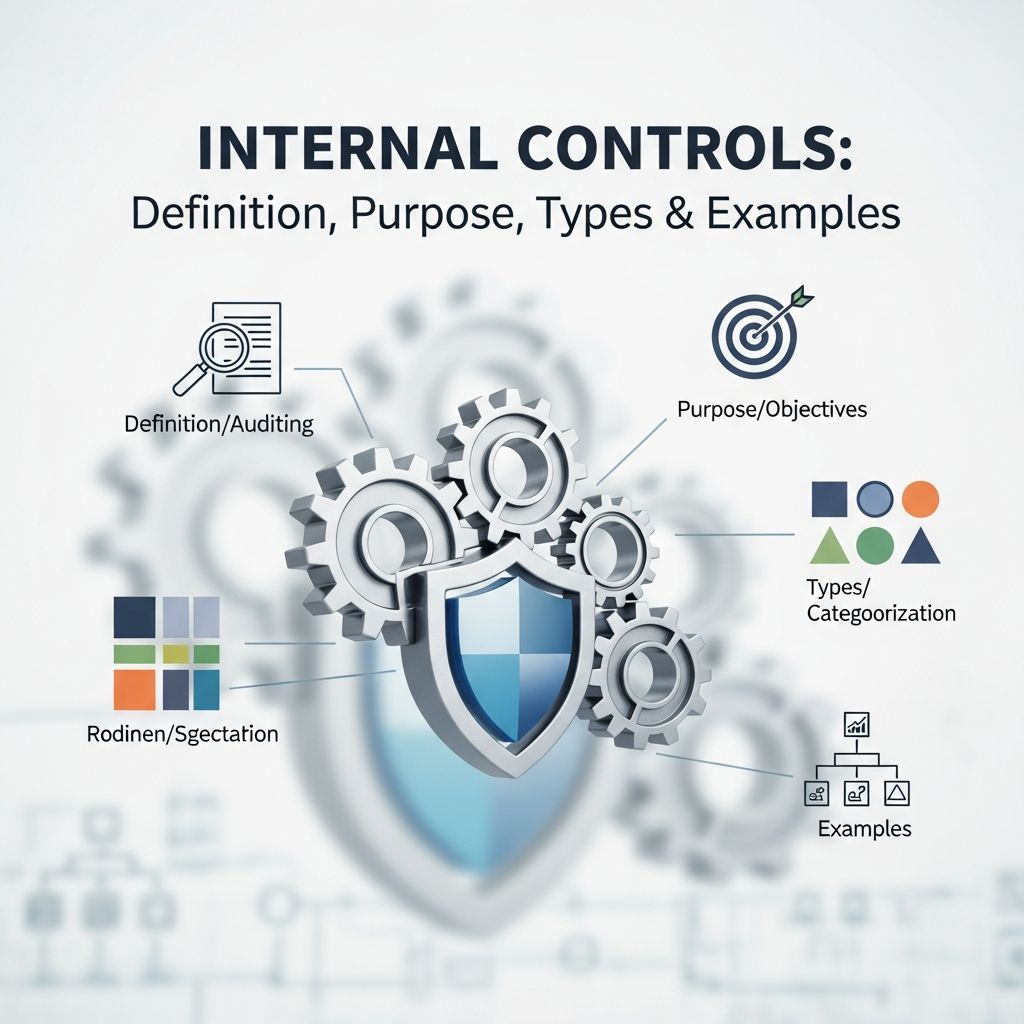
Internal Controls: Definition, Purpose, Types & Examples
Master internal controls: Safeguard assets, ensure compliance, and prevent fraud with effective control systems.
What Are Internal Controls?
Internal controls are the accounting and auditing processes that companies use to ensure the integrity of financial reporting and regulatory compliance. These are the rules and procedures your company implements to keep accounting information accurate, safe, and reliable. Internal controls form a comprehensive system designed to protect a company’s assets, ensure operational efficiency, and maintain the credibility of financial statements.
In essence, internal controls represent the backbone of financial management, providing organizations with a framework to operate securely while meeting their business objectives. They encompass policies, procedures, and practices that work together to create a control environment where financial transactions are properly authorized, recorded, and safeguarded.
The Purpose and Importance of Internal Controls
The primary purpose of internal controls is to secure a business’s information and assets while minimizing risk and promoting compliance. Organizations implement internal controls to achieve several critical objectives:
- Ensure the company’s financial information is reliable and credible
- Verify that the organization complies with relevant laws and regulations
- Protect the company’s assets from fraud, breach, or unauthorized use
- Demonstrate that company resources are deployed efficiently and effectively
- Confirm that operations and programs are functioning as intended
- Establish accountability and transparency across the organization
Internal controls serve as critical documentation to assure the board of directors and other key stakeholders that the organization operates with integrity and manages risk appropriately. For publicly traded companies subject to stringent regulatory oversight, robust internal controls are not merely advisable—they are mandatory. Strong internal control systems help maintain investor confidence, avoid regulatory penalties, and demonstrate management’s commitment to ethical business practices.
Types of Internal Controls
Organizations typically categorize internal controls into two primary types, each serving distinct but complementary functions in the overall control environment:
Preventive Controls
Preventive controls are proactive measures designed to stop improper transactions and errors before they occur. These controls work to reduce the likelihood of errors, fraud, and misconduct from happening in the first place. Common examples of preventive controls include:
- Separation or segregation of duties—ensuring no single individual controls all aspects of a financial transaction
- Pre-approval of actions and transactions by authorized personnel
- Access controls that limit system access based on role or responsibility
- Physical controls over assets to prevent unauthorized access or loss
- Employee screening, training, and development programs
- Authorization requirements for key transactions and expenditures
Detective Controls
Detective controls are designed to identify errors and fraudulent activities after transactions have occurred. While these controls cannot prevent issues, they serve the critical function of discovering problems so they can be corrected promptly. Examples of detective controls include:
- Monthly and quarterly reconciliations of accounts
- Physical inventories and asset counts
- Variance analyses and trend reviews
- Audits conducted by internal and external audit teams
- Continuous monitoring through data analytics
- Review of organizational performance metrics
- Analytical reviews of ledger transactions
Key Internal Control Activities and Mechanisms
Effective internal control systems incorporate various specific activities and mechanisms that work together to create a comprehensive control environment. Understanding these components helps organizations design controls that are both effective and efficient.
Segregation of Duties
The segregation of duties, also called separation of duties, is a foundational principle of internal controls. This control mechanism ensures that no single individual has complete control over all aspects of a financial transaction from initiation through completion. By dividing responsibilities among multiple employees, each person’s work serves as a check on another’s work. For example, in accounts payable, one employee might approve vendor invoices, another might process payments, and a third might reconcile the bank account. This structure significantly reduces the risk of errors, fraud, and asset misappropriation.
Authorization and Approval Controls
Authorization controls require that transactions receive appropriate approval from personnel with delegated authority before they are executed. These controls ensure that only legitimate, properly authorized transactions proceed through the system. Manager approval requirements for key transactions create an additional layer of oversight and accountability. In modern systems, technology can enforce authorization requirements by restricting user permissions and requiring digital approvals before transactions are processed.
Access Controls
Access controls limit system access based on individual role and responsibility, ensuring that employees can only access the information and systems necessary for their job functions. These controls prevent unauthorized individuals from accessing sensitive financial data, modifying records, or executing unauthorized transactions. Access controls can be implemented through user authentication requirements, role-based permissions, and monitoring of system access logs.
Reconciliation and Verification
Account reconciliation involves routinely comparing transactions and activity to supporting documentation to ensure accuracy and detect discrepancies. Regular reconciliations—such as comparing book balances to bank statements, verifying inventory counts to accounting records, and analyzing ledger transactions—provide reasonable assurance that charges and credits are valid and complete. These procedures help identify errors, unauthorized transactions, or missing documentation that might otherwise go undetected.
Physical Controls and Asset Safeguarding
Physical controls ensure that equipment, inventories, cash, and other organizational property are safeguarded from loss or unauthorized use. These controls include measures such as inventory and asset tracking systems, warehouse access restrictions, RFID tags and barcode systems for tracking, and physical security measures like locks and surveillance. Regular physical counts and cycle counts help identify discrepancies between recorded and actual asset quantities.
Implementing Internal Controls in Your Organization
Successful implementation of internal controls requires a strategic, systematic approach. Organizations should consider the following best practices when designing and implementing their control systems:
Establish a Risk-Based Control Framework
Not all risks are equal, and organizations should prioritize their control efforts accordingly. A risk assessment process should identify the organization’s most critical vulnerabilities, whether related to financial misstatements, fraud, cybersecurity threats, or compliance failures. Frameworks such as COSO (Committee of Sponsoring Organizations) and NIST (National Institute of Standards and Technology) provide guidance for establishing risk-based control frameworks. By aligning controls to the most significant risks, organizations can maximize the effectiveness of their control investments.
Define Clear Roles and Responsibilities
Effective internal controls depend on clarity regarding who owns each process and who is responsible for specific control activities. Organizations should document roles and responsibilities explicitly, ensuring that all employees understand their part in the control environment. Clear communication about expectations, procedures, and accountability helps strengthen employee compliance and engagement with internal control processes.
Implement Streamlined Documentation and Workflows
Centralizing control activities and documenting them consistently creates transparency and facilitates monitoring. Organizations should establish centralized platforms where control activities are assigned, tracked, and escalated systematically. This approach ensures that nothing falls through the cracks and provides an audit trail demonstrating that controls are operating as designed.
Leverage Technology and Automation
Technology can make internal control implementation easier and more scalable, particularly for small and mid-sized businesses. Automating manual steps in control testing, reporting, and approval processes frees up time for more strategic compliance and audit activities. Task automation also reduces human error and ensures consistent application of controls. Governance, Risk, and Compliance (GRC) tools tailored for specific organizational needs can provide cost-effective solutions.
Maintain Regulatory Compliance Support
Organizations should ensure their controls align with key frameworks and regulatory requirements such as COSO, SOX (Sarbanes-Oxley), and UK SOX. Built-in features for attestations, ownership documentation, and audit trails support compliance efforts and provide evidence of control effectiveness during regulatory reviews or external audits.
Internal Controls in Specific Functions
Internal Controls in Accounting
Internal controls in accounting are specifically designed to protect financial information, ensure accuracy of accounting records, and comply with applicable laws and regulations. Examples include reconciling bank accounts, counting cash, restricting access to accounting systems, and requiring multiple approvals for large payments. By implementing strong accounting controls, companies reduce the risk of misstatements, financial loss, and non-compliance with standards such as Generally Accepted Accounting Principles (GAAP) or International Financial Reporting Standards (IFRS).
Internal Controls for Inventory
Internal controls for inventory ensure that stock is accurately recorded, safeguarded against theft or damage, and managed efficiently. Common examples include performing regular cycle counts or annual physical inventories to reconcile with accounting records, segregating duties among ordering, receiving, and recording personnel, using barcodes and RFID tags for real-time tracking, limiting warehouse access to authorized personnel, and setting automated reorder thresholds to prevent stockouts or overstocking.
Responsibility and Accountability for Internal Controls
The board of directors holds ultimate responsibility for ensuring effective internal controls, but operational responsibility is shared with senior management. The CEO and CFO are responsible for designing, implementing, and monitoring the system of controls. The board, often through its audit committee, provides oversight to ensure compliance with laws, regulations, and ethical standards.
External auditors and internal audit teams play a supporting role by evaluating the controls’ effectiveness and identifying areas for improvement. However, accountability ultimately rests with leadership. This tiered responsibility structure ensures that internal controls receive appropriate attention at all organizational levels.
Challenges in Internal Control Implementation
While the benefits of internal controls are clear, organizations often face challenges in implementation. Poor or excessive internal controls can reduce productivity, increase the complexity of processing transactions, and extend the time required to process transactions. Organizations must strike a balance between implementing sufficiently robust controls and maintaining operational efficiency. Additionally, the risk of management override—where those in authority circumvent controls—remains a concern that requires strong governance and ethical culture.
Frequently Asked Questions
What are internal controls in accounting?
Internal controls in accounting are processes, policies, and procedures designed to protect a company’s financial information, ensure the accuracy of accounting records, and comply with laws and regulations. These controls help prevent fraud, detect errors, and maintain the integrity of financial statements. Examples include reconciling bank accounts, counting cash, restricting access to accounting systems, and requiring multiple approvals for large payments.
What are some internal controls for inventory?
Internal controls for inventory are measures that ensure stock is accurately recorded, safeguarded against theft or damage, and managed efficiently. Common examples include physical counts, segregation of duties among ordering and receiving personnel, inventory management systems using barcodes and RFID tags, access restrictions to warehouse areas, and automated reorder thresholds to prevent stockouts or overstocking.
Who has final responsibility for internal controls?
The board of directors has ultimate responsibility for ensuring effective internal controls, but operational responsibility is shared with senior management. The CEO and CFO are responsible for designing, implementing, and monitoring controls, while the board provides oversight. External auditors and internal audit teams evaluate effectiveness but accountability ultimately rests with leadership.
What is the concept behind the separation of duties in establishing internal controls?
Separation of duties is the internal control principle that no single individual should control all aspects of a financial transaction. Responsibilities are divided so that one person’s work serves as a check on another’s. For example, in accounts payable, one employee approves invoices, another processes payments, and a third reconciles accounts. This reduces the risk of errors, fraud, and asset misappropriation.
References
- Understanding Internal Controls: Definition, Types and Examples — Diligent. 2024. https://www.diligent.com/resources/blog/internal-controls
- Importance Of A Strong Internal Control System In Financial Management — Payhawk. 2024. https://payhawk.com/blog/internal-control-systems-of-financial-management
- Internal Controls Glossary of Terms — University of California Davis Finance & Business. 2024. https://financeandbusiness.ucdavis.edu/training/corecourses/internal-controls/glossary
Similar Articles








Read full bio of Sneha Tete