Interest Rates: Taming Inflation’s Wild Ride
Discover how central banks wield interest rates to combat runaway inflation and stabilize economies for everyday savers and borrowers.
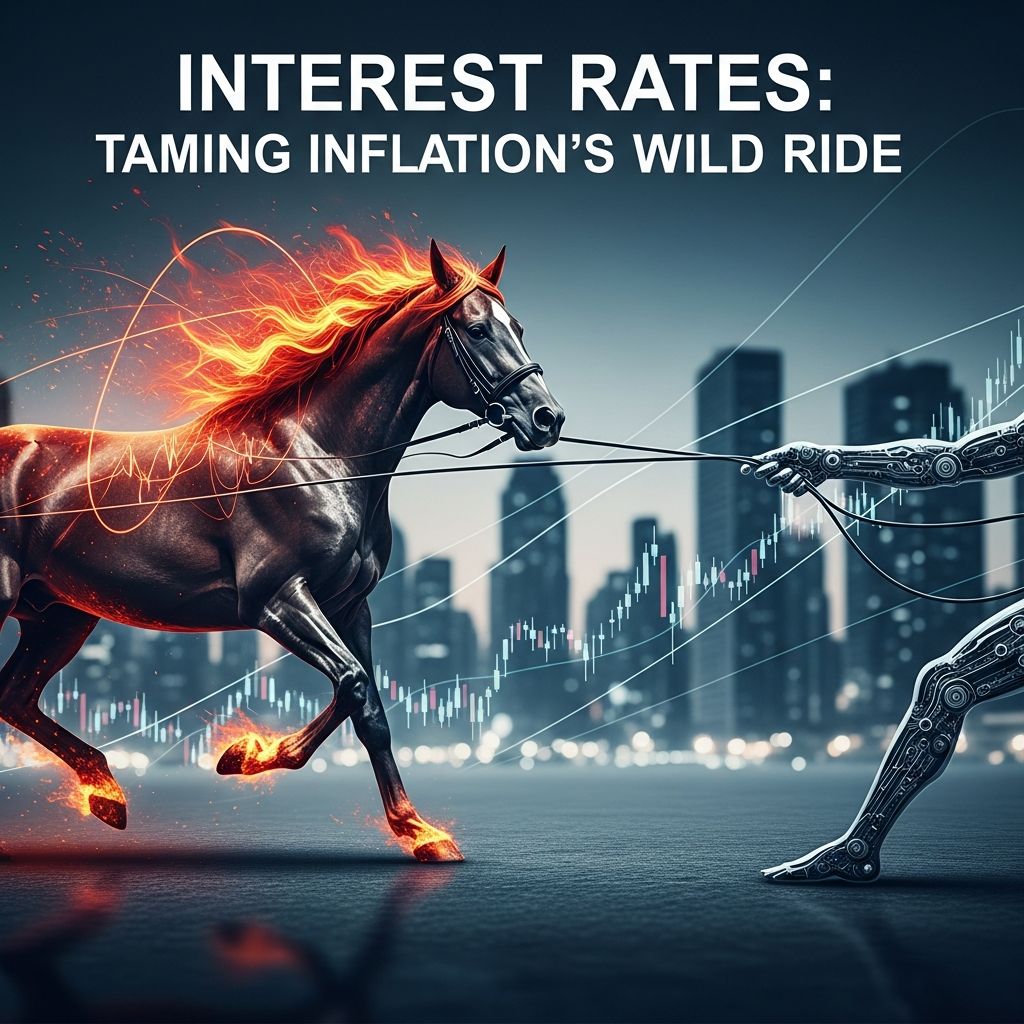
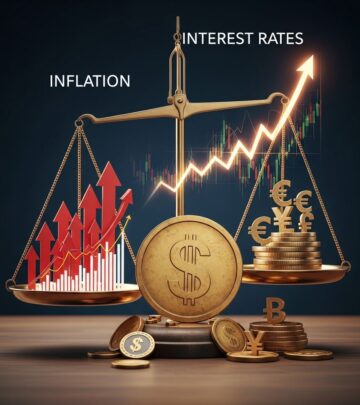
Central banks around the world turn to higher interest rates as a primary weapon against surging inflation. By making borrowing costlier, these institutions aim to dampen consumer and business spending, thereby easing price pressures across the economy.
Understanding Inflation’s Grip on the Economy
Inflation represents the sustained increase in the general price level of goods and services over time. When it accelerates unchecked, it erodes purchasing power, making everyday items more expensive and straining household budgets. Central banks target a moderate inflation rate, often around 2%, as a hallmark of economic health, signaling steady growth without overheating.
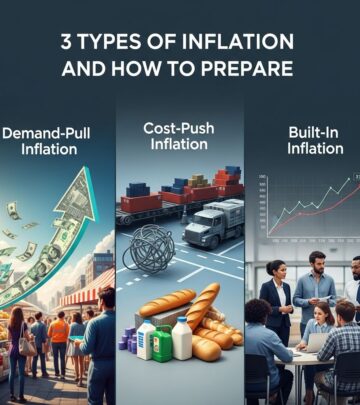
The roots of inflation can stem from various sources: excessive demand chasing limited supply (demand-pull), rising production costs (cost-push), or built-up expectations where people anticipate and thus drive higher prices. In recent years, supply chain disruptions and fiscal stimuli have amplified these forces, prompting aggressive policy responses.
The Mechanics of Interest Rate Hikes
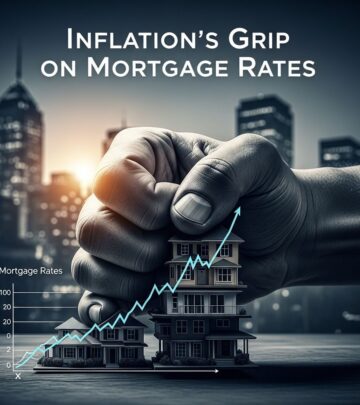
Raising interest rates directly impacts borrowing costs. The central bank’s benchmark rate influences everything from mortgage loans to credit card APRs. Higher rates mean consumers pay more to finance homes, cars, or education, prompting many to delay big-ticket purchases.
- Consumer Behavior Shift: With loans pricier, households cut back on discretionary spending, reducing demand for goods like electronics and travel.
- Business Investment Slowdown: Companies face elevated costs for expansion loans, leading to fewer hires and scaled-back projects.
- Savings Incentive: Yields on savings accounts and certificates of deposit rise, drawing money out of circulation and into banks.
This chain reaction lowers aggregate demand, allowing supply to catch up and prices to stabilize. Empirical evidence supports this: exogenous shocks raising rates have historically lowered inflation rates.
The Federal Reserve’s Strategic Toolkit
The U.S. Federal Reserve, or Fed, holds the reins on monetary policy through its Federal Open Market Committee (FOMC). Its dual mandate—maximum employment and price stability—guides rate decisions. To implement policy, the Fed adjusts the federal funds rate, the overnight lending rate between banks.
Key tools include:
- Interest on reserve balances (IORB): Pays banks to hold excess reserves, setting a floor for market rates.
- Overnight reverse repurchase agreement (ON RRP) facility: Offers a safe haven for cash, influencing short-term rates.
- Discount rate: Acts as a ceiling for borrowing from the Fed’s discount window.
By aligning these administered rates, the Fed ensures the federal funds rate stays within its target range, transmitting policy to broader financial conditions.
Global Perspectives on Inflation Targeting
Inflation targeting has become a cornerstone of modern central banking. Banks publicly announce a target rate, forecast deviations, and adjust policy accordingly. This transparency anchors public expectations, reducing the need for drastic measures.
For instance, responding to inflation more than one-to-one—the Taylor principle—helps stabilize prices. If inflation rises by 1%, rates might increase by 1.5% or more, signaling commitment. Countries with symmetrical targets around 2% or upper limits enhance predictability.
| Country/Region | Inflation Target | Key Tool |
|---|---|---|
| United States | 2% average | Federal funds rate |
| United Kingdom | 2% | Bank rate |
| Eurozone | 2% medium-term | Main refinancing rate |
| Japan | 2% | Short-term policy rate |
This framework promotes stability, as lower rates historically correlate with higher inflation and vice versa.
Real-World Impacts on Everyday Finances
Higher rates ripple through personal finances. Variable-rate mortgages adjust upward swiftly, squeezing monthly budgets. Credit card balances accrue interest faster, discouraging debt reliance. On the positive side, savers earn more on high-yield accounts, rewarding prudence.
Businesses pass on costs via higher prices initially, but sustained high rates curb this. Housing markets cool as affordability wanes, potentially stabilizing rents long-term. Stock markets may dip amid slower growth, but bonds gain appeal.
Risks and the Delicate Balance
Rate hikes are a blunt instrument. Overly aggressive moves risk recession, spiking unemployment. The Fed must gauge if inflation is transitory or persistent, balancing cooling without crashing the economy—like finding the ‘just right’ porridge temperature.
Credibility matters: consistent action shapes expectations, sometimes averting severe hikes. Fiscal policy support, like controlled spending, complements monetary efforts.
Historical Lessons from Rate Cycles
Reviewing past episodes illuminates effectiveness. In the early 1980s, Fed Chair Paul Volcker’s steep hikes tamed double-digit inflation but induced recession. Post-2008, near-zero rates spurred recovery. Recent 2022-2023 cycles saw rapid hikes combat pandemic-fueled inflation, with early signs of moderation.
These cases underscore timing and communication’s role. Transparent forward guidance helps markets anticipate moves, smoothing transitions.
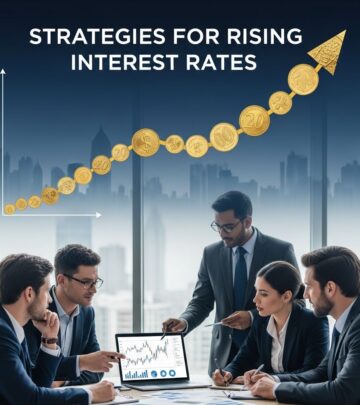
Preparing Your Finances for Rate Changes
Individuals can adapt:
- Lock in fixed-rate loans before hikes.
- Build emergency funds in high-yield savings.
- Diversify investments beyond stocks.
- Pay down variable-rate debt aggressively.
Monitoring Fed announcements equips you to pivot strategies.
FAQs: Interest Rates and Inflation
How quickly do rate hikes affect inflation?
Lags vary from 6-18 months, as behaviors adjust gradually through lending and spending channels.
Can rates be too high?
Yes, excessive hikes slow growth excessively, risking unemployment spikes.
What if inflation ignores rate hikes?
Persistent cases may need supply-side fixes or fiscal restraint alongside policy.
Do lower rates always boost inflation?
Typically, by encouraging borrowing, but supply constraints can mute effects.
How does the Fed decide rate changes?
Based on data like CPI, employment, and forecasts, via FOMC meetings.
This comprehensive view equips you to navigate monetary policy’s twists, safeguarding wealth amid economic shifts.
References
- How the Fed Implements Monetary Policy with Its Tools — Federal Reserve Bank of St. Louis. 2024-10-15. https://www.stlouisfed.org/in-plain-english/the-fed-implements-monetary-policy
- How does the Federal Reserve affect inflation and employment? — Board of Governors of the Federal Reserve System. 2023-05-12. https://www.federalreserve.gov/faqs/money_12856.htm
- Inflation Targeting: Holding the Line — International Monetary Fund. 2023-01-01. https://www.imf.org/external/pubs/ft/fandd/basics/72-inflation-targeting.htm
- How do central banks control inflation? A guide for the perplexed — London School of Economics, Centre for Macroeconomics. 2024-11-20. https://www.lse.ac.uk/CFM/assets/pdf/CFM-Discussion-Papers-2024/CFMDP2024-33-Paper.pdf
- How Does Raising Interest Rates Control Inflation? — Bank of England (YouTube transcript). 2023-07-10. https://www.youtube.com/watch?v=R8VBRCs2jTU
Similar Articles








Read full bio of Sneha Tete