Why Interest Rates Have an Inverse Relationship with Bond Prices
Understanding the fundamental bond market dynamics and inverse interest rate relationship.
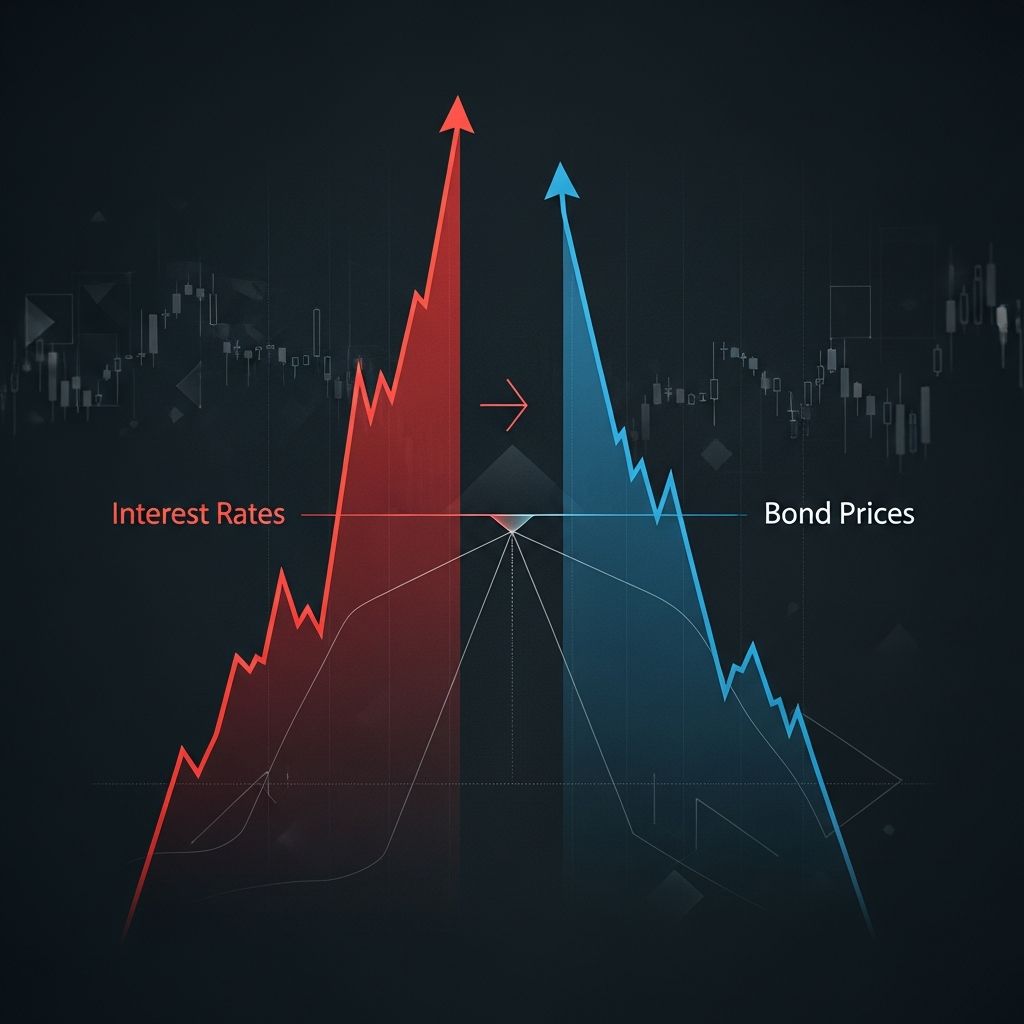
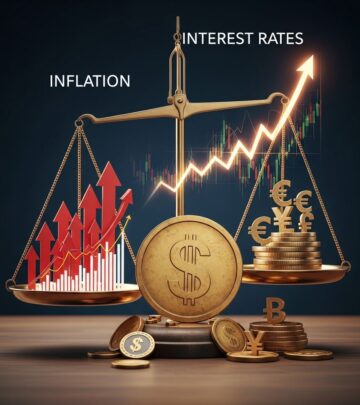
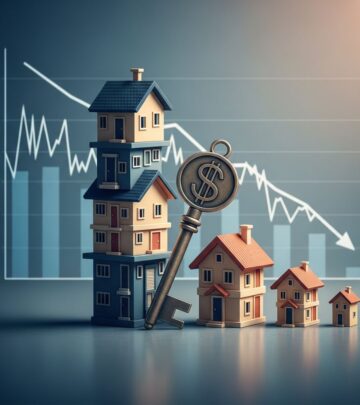
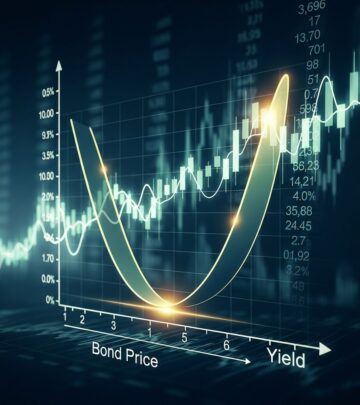
The relationship between interest rates and bond prices is one of the most fundamental concepts in fixed income investing. When interest rates rise, bond prices typically fall, and when interest rates decline, bond prices tend to increase. This inverse relationship is not arbitrary; it stems from basic economic principles and the mechanics of how bonds function in the market. Understanding this dynamic is essential for investors who want to make informed decisions about their fixed income portfolios and navigate changing economic conditions.
Understanding Bond Basics
Before exploring the inverse relationship between interest rates and bond prices, it is important to understand what bonds are and how they function. A bond is a fixed income security that represents a loan made by an investor to a borrower, typically a corporation or government entity. When an investor purchases a bond, they are lending money to the issuer in exchange for periodic interest payments, known as coupon payments, and the return of the principal amount at maturity.
Bonds are characterized by several key features:
- Face Value (Par Value): The amount the bondholder will receive at maturity
- Coupon Rate: The fixed interest rate paid to the bondholder, usually semiannually
- Maturity Date: The date when the principal is repaid
- Yield to Maturity: The total return an investor can expect if the bond is held until maturity
The coupon rate of a bond is fixed at issuance and does not change throughout the bond’s life. This fixed nature of bond payments is crucial to understanding why prices fluctuate when market interest rates change.
The Core Mechanism: Fixed Payments in a Changing Rate Environment
The inverse relationship between interest rates and bond prices exists because bond coupon payments are fixed. Once a bond is issued with a specific coupon rate, that rate remains constant regardless of how market interest rates move. This creates a fundamental market dynamic that drives price adjustments.
Consider a practical example. Suppose an investor purchases a bond with a 3% coupon rate and a face value of $1,000, receiving $30 in annual coupon payments. If market interest rates subsequently rise to 5%, newly issued bonds would offer 5% coupon rates. An investor comparing the existing 3% bond to new 5% bonds would naturally prefer the new bonds since they provide higher income. To make the 3% bond competitive with newly issued 5% bonds, its price must decrease below par value. When the bond’s price falls, the yield it offers to new buyers increases, making it more attractive. This is how the inverse relationship manifests in the market.
Conversely, if interest rates fall to 1%, the existing 3% bond becomes more attractive than newly issued 1% bonds. Investors would be willing to pay a premium for the higher-yielding existing bond, driving its price above par value.
How Duration Affects Bond Price Movements
While all bonds exhibit the inverse relationship between prices and interest rates, the magnitude of price changes varies depending on several factors. Duration is one of the most important factors determining how sensitive a bond’s price is to interest rate changes.
Duration measures the weighted average time it takes to receive the bond’s cash flows and serves as a metric for interest rate sensitivity. Bonds with longer durations are more sensitive to interest rate changes and experience larger price movements than bonds with shorter durations when rates change by the same amount.
Key duration-related principles include:
- Long-Term Bonds: Have higher duration and greater price volatility from interest rate changes
- Short-Term Bonds: Have lower duration and experience smaller price movements
- Zero-Coupon Bonds: Have the highest duration relative to maturity since all cash is received at maturity
- High-Coupon Bonds: Have lower duration since investors receive cash flows throughout the bond’s life
For example, a 30-year bond might have a duration of 15 years, meaning that for every 1% change in interest rates, the bond’s price changes approximately 15% in the opposite direction. A 2-year bond might have a duration of 1.8 years, resulting in a price change of approximately 1.8% for every 1% change in interest rates.
Practical Impact on Bond Investors
The inverse relationship between interest rates and bond prices has significant implications for investors. Understanding these dynamics helps investors make strategic decisions about their fixed income allocations and manage portfolio risk effectively.
Rising Interest Rate Environment: When the Federal Reserve raises interest rates, existing bond prices decline. Investors who hold bonds to maturity are unaffected by these price declines since they will receive the full face value at maturity. However, investors who need to sell bonds before maturity may face losses. Additionally, rising rates make future bond purchases more attractive, as newly issued bonds offer higher yields.
Falling Interest Rate Environment: When interest rates decline, existing bond prices increase. This benefits current bondholders who can sell at a premium if needed. However, newly issued bonds will offer lower yields, making them less attractive for income-seeking investors.
Investment Strategy Implications: Investors can strategically use the inverse relationship to their advantage. For instance, when investors anticipate declining interest rates, they might increase exposure to long-duration bonds to benefit from price appreciation. Conversely, when expecting rising rates, they might shift toward shorter-duration bonds or floating-rate bonds that reset their coupon rates periodically.
Why This Relationship Matters for Yield-to-Maturity
The concept of yield-to-maturity (YTM) is central to understanding how bond prices adjust in response to interest rate changes. Yield-to-maturity represents the annualized return an investor will receive if they purchase the bond at its current market price and hold it until maturity, assuming all coupon payments and principal are received as promised.
When a bond’s price falls below par value, its yield-to-maturity increases above its coupon rate. This means that investors purchasing the discounted bond are effectively earning a return that exceeds the stated coupon rate, compensating them for the lower purchase price.
When a bond’s price rises above par value, its yield-to-maturity falls below its coupon rate. Investors purchasing the premium bond accept a lower yield-to-maturity than the coupon rate because they are paying more for the bond.
This self-correcting mechanism ensures that bonds trading in the secondary market offer yields aligned with current market interest rate conditions, maintaining equilibrium between the bond market and broader interest rate environment.
Other Factors Influencing Bond Prices
While interest rates are the primary driver of bond price changes, other factors can also influence bond valuations:
- Credit Risk: Changes in the issuer’s creditworthiness affect bond prices independent of interest rates
- Inflation Expectations: Expected inflation influences real interest rates and bond prices
- Liquidity Conditions: Market liquidity affects the spread between bid and ask prices
- Supply and Demand Dynamics: Shifts in investor preferences can impact bond prices
- Time to Maturity: Bonds approaching maturity converge toward par value
- Call Features: Callable bonds have different price dynamics than traditional bonds
Practical Examples of the Inverse Relationship
Let’s examine several scenarios to illustrate how the inverse relationship works in practice:
Scenario 1: Rising Interest Rates
An investor owns a 10-year corporate bond with a 4% coupon rate and $1,000 face value, currently trading at par. The Federal Reserve then raises the federal funds rate, and market interest rates rise to 5%. New 10-year corporate bonds now offer 5% coupons. The investor’s 4% bond becomes less desirable and its price falls to approximately $926, representing a discount from par. The new yield-to-maturity is now 5%, making the bond competitive with newly issued bonds.
Scenario 2: Falling Interest Rates
A Treasury bond with a 3% coupon rate and $1,000 face value is trading at par when the Fed begins cutting rates. Market interest rates fall to 2%, and new Treasury bonds offer 2% coupons. The investor’s 3% bond becomes more attractive and its price rises to approximately $1,049, representing a premium. The new yield-to-maturity is now 2%, aligning with current market rates.
Frequently Asked Questions
Q: Why do bond prices fall when interest rates rise?
A: Bond prices fall when interest rates rise because existing bonds with fixed coupon rates become less attractive compared to newly issued bonds offering higher rates. Bond prices must decline to adjust the yield-to-maturity upward, making existing bonds competitive with new offerings.
Q: What is duration and why does it matter?
A: Duration measures a bond’s interest rate sensitivity. Bonds with longer durations experience larger price movements when interest rates change. Understanding duration helps investors assess how much a bond’s price may fluctuate based on interest rate movements.
Q: How can investors protect themselves from interest rate risk?
A: Investors can reduce interest rate risk by holding bonds to maturity, investing in shorter-duration bonds, using bond funds with active management, or employing interest rate hedging strategies through derivatives.
Q: Do all bonds respond equally to interest rate changes?
A: No. Bonds with longer maturities and lower coupon rates experience larger price changes than shorter-term bonds and higher-coupon bonds when rates change. Duration is the primary measure of this sensitivity difference.
Q: What is the difference between coupon rate and yield-to-maturity?
A: The coupon rate is the fixed interest rate paid by the bond issuer based on the face value. Yield-to-maturity is the total annualized return an investor receives if holding the bond to maturity, which changes based on the bond’s market price.
Q: Can understanding this relationship help my investment strategy?
A: Yes. By understanding the inverse relationship, investors can strategically allocate between long-duration and short-duration bonds based on interest rate expectations, potentially enhancing returns and managing portfolio risk more effectively.
Key Takeaways
The inverse relationship between interest rates and bond prices is a fundamental market dynamic rooted in basic economics. When interest rates rise, bond prices fall because existing bonds with fixed coupon payments become less attractive. When interest rates fall, bond prices rise as existing bonds become more valuable. Duration plays a critical role in determining the magnitude of price movements, with longer-duration bonds experiencing larger price swings. Understanding this relationship is essential for bond investors seeking to make informed decisions and manage interest rate risk effectively. By recognizing how interest rate changes affect bond valuations and strategically positioning portfolios accordingly, investors can optimize their fixed income investments and navigate changing economic conditions more successfully.
References
- Fixed Income Securities: Tools and Techniques for Absolute Return Strategies — Jaffe, Jeffrey F. & Westerfield, Randolph W. & Ross, Stephen A. 2024. https://www.investopedia.com/
- Understanding Bond Prices and Yields — U.S. Securities and Exchange Commission. 2024. https://www.sec.gov/
- How Interest Rates Affect Bond Valuations — Federal Reserve Board of Governors. 2024. https://www.federalreserve.gov/
- Bond Pricing and Duration: A Comprehensive Guide — CFA Institute. 2024. https://www.cfainstitute.org/
- Duration and Convexity in Bond Markets — International Capital Market Association. 2024. https://www.icmagroup.org/
Similar Articles








Read full bio of medha deb