Interest Rates in Recessions
Discover how central banks adjust interest rates during economic downturns to spur recovery and what it means for your finances.
Central banks like the Federal Reserve play a pivotal role in managing economic cycles by adjusting interest rates, particularly during recessions when growth stalls. Typically, rates decline sharply to encourage borrowing and spending, helping to shorten downturns and foster recovery.
The Mechanics of Interest Rates and Economic Downturns
Interest rates serve as a primary tool for central banks to influence economic activity. When a recession hits—defined by two consecutive quarters of negative GDP growth—the Fed lowers its target federal funds rate. This reduces borrowing costs across the economy, from consumer loans to business investments, stimulating demand.
Lower rates make credit more accessible, prompting businesses to expand operations and hire workers, while consumers increase spending on homes, cars, and durable goods. Historical analysis shows that a 1% rate cut can boost GDP growth by 0.5% to 0.8% within a year, underscoring the potency of this policy.
Historical Overview of Rate Adjustments in U.S. Recessions
U.S. recession history reveals a consistent pattern: proactive rate hikes often precede downturns to curb inflation, followed by aggressive cuts once contraction begins.
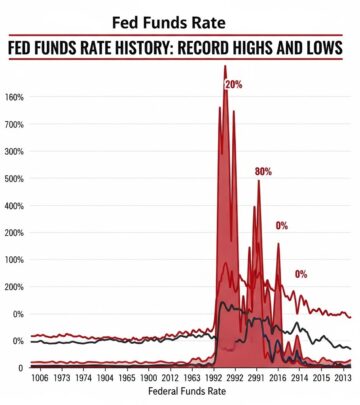
- 1969-1970 Recession: The Fed funds rate dropped from 9.19% to under 5%, aiding a quick recovery despite lingering inflation.
- 1973-1975 Recession: Rates halved to 5.54% by March 1975, responding to the oil crisis and economic stagnation.
- 1979-1982 Double-Dip: After peaking near 10%, rates fell to 8.95% by late 1982, moderating the severe downturn.
- 1990-1991 Recession: Fifteen cuts reduced rates from 8.25% to 3% by 1992, supporting prolonged easing.
- 2001 Recession: Eleven cuts in 2001 brought rates to 1.75%, combined with tax rebates to boost spending.
These examples illustrate the Fed’s rapid response, often implementing multiple cuts to navigate crises effectively.
The Great Recession: Unprecedented Measures
The 2007-2009 Great Recession marked a turning point. As conditions worsened in 2008, the FOMC slashed the federal funds rate from 4.5% to a 0-0.25% range by year-end. Beyond rate cuts, the Fed introduced quantitative easing (QE), purchasing securities to inject liquidity and further depress long-term rates.
QE expanded the money supply, encouraging lending and investment. This dual approach helped stabilize markets and laid the groundwork for recovery, though the downturn’s depth required sustained intervention.
COVID-19 Pandemic Recession: Swift and Decisive Action
In 2020, the Fed acted preemptively amid the pandemic. After three cuts in 2019, emergency reductions on March 3 and 15 brought rates to near zero. This fueled a surge in refinancing, home purchases, and consumer spending, cushioning the economic shock.
Low rates particularly benefited housing and retail sectors, as households leveraged cheap credit for upgrades and investments postponed during uncertainty.
Why Does the Fed Cut Rates During Recessions?
The rationale is straightforward: recessions feature reduced demand, high unemployment, and deflationary pressures. Cutting rates counters these by:
- Lowering costs for mortgages, auto loans, and credit cards, spurring consumer activity.
- Encouraging corporate borrowing for expansion and hiring.
- Boosting asset prices, including stocks, via cheaper capital.
- Weakening the currency to support exports.
However, prolonged low rates can fuel asset bubbles or inequality, as savers earn less on deposits.
Effects on Consumers: Borrowing, Saving, and Spending
Rate cuts reshape personal finances profoundly. Mortgages become affordable, driving homeownership; vehicle financing surges; and credit card usage rises with lower APRs.
| Financial Product | Recession Impact (Low Rates) | Pre-Recession (High Rates) |
|---|---|---|
| Mortgages | Refinancing boom, lower payments | Higher costs, reduced buying |
| Auto Loans | Increased purchases | Deferred spending |
| Savings Accounts | Lower yields | Higher returns |
| Credit Cards | Cheaper revolving debt | Costlier balances |
Savers face challenges, with diminished returns on CDs and bonds, prompting shifts to riskier assets.
Business and Investment Implications
Corporations benefit from reduced capital costs, enabling capex and R&D. Stock markets often rally on rate cut expectations, as discounted cash flows improve valuations.
Bonds gain inversely: falling yields raise prices. Sectors like real estate, utilities, and consumer discretionary thrive, while rate-sensitive industries lead recoveries.
Potential Downsides and Trade-Offs
Not all effects are positive. Zero rates punish savers, exacerbate wealth gaps, and risk inflation if overdone. Post-recession hikes can trigger renewed slowdowns if mistimed.
Recent outlooks suggest modest 2026 cuts, broadening market leadership beyond tech to energy and industrials.
Strategies for Navigating Rate Changes in Downturns
- Lock in Fixed Rates: Refinance mortgages or loans before hikes.
- Build Emergency Funds: Prioritize liquidity despite low yields.
- Diversify Investments: Balance bonds, stocks, and alternatives.
- Monitor Fed Signals: Anticipate policy shifts via FOMC meetings.
- Adjust Debt: Pay down variable-rate obligations early.
Future Outlook: Rates in a Slowing Economy
With U.S. growth moderating due to depleted savings and fading stimuli, further rate reductions are likely to support expansion without overheating. Policymakers balance growth, inflation, and stability, making bonds and equities appealing amid falling rates.
Frequently Asked Questions (FAQs)
Do interest rates always fall during recessions?
Yes, historically the Fed cuts rates aggressively to stimulate activity, as seen in every U.S. recession since 1970.
How quickly does the Fed respond to a recession?
Often preemptively or within months, with multiple cuts; e.g., 11 in 2001 and rapid zeroing in 2020.
What happens to savings during low-rate periods?
Yields drop, reducing returns; savers may seek higher-risk options like stocks.
Can low rates cause inflation?
Potentially, if prolonged, as cheap money boosts demand; the Fed monitors closely.
Should I buy a home during a recession?
Low rates make it attractive if stable employment exists, but assess job market risks.
References
- Interest Rates and Recession History in the United States (1970 – Present) — American Deposits. 2023. https://americandeposits.com/insights/interest-rates-recession-history-united-states/
- The Great Recession and Its Aftermath — Federal Reserve History. 2023-10-22. https://www.federalreservehistory.org/essays/great-recession-and-its-aftermath
- The Impact of Interest Rates on the Economy — Rosenberg Research. 2025-05-23. https://www.rosenbergresearch.com/2025/05/23/the-impact-of-interest-rates-on-the-economy/
- Recession, Inflation, and Interest Rates Cuts: What Does It All Mean for Markets? — Columbia Threadneedle Investments. 2024-09-10. https://www.columbiathreadneedle.com/en/gb/intermediary/umap-posts/recession-inflation-and-interest-rates-cuts-what-does-it-all-mean-for-markets/
- What Is a Recession (And How Could One Affect Your Finances)? — Wintrust. 2023-03. https://www.wintrust.com/articles/2023/03/what-is-a-recession-and-how-could-one-affect-your-finances.html
- How Do Changing Interest Rates Affect the Stock Market? — U.S. Bank. 2026. https://www.usbank.com/investing/financial-perspectives/market-news/how-do-rising-interest-rates-affect-the-stock-market.html
Similar Articles








Read full bio of Sneha Tete