Interest Rate vs. APR: Key Differences Explained
Understand the critical differences between interest rates and APR to make informed borrowing decisions.
Interest Rate vs. APR: Understanding the Key Differences
When you’re considering taking out a loan or opening a credit card, you’ll encounter two terms that often get confused: interest rate and annual percentage rate (APR). While these terms are frequently used interchangeably in casual conversation, they represent distinctly different aspects of your borrowing costs. Understanding the differences between interest rates and APR is crucial for making informed financial decisions and comparing loan offers effectively.
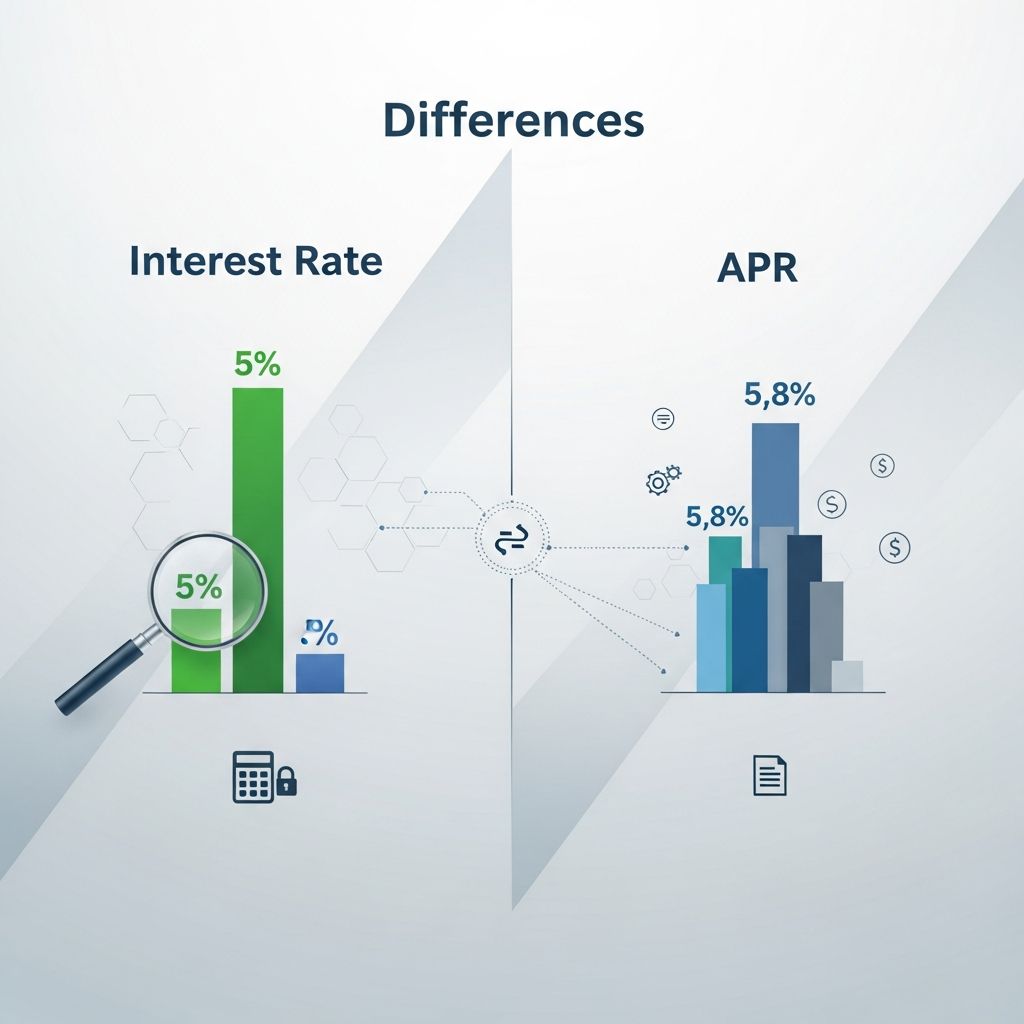
The fundamental distinction lies in what each term encompasses. An interest rate represents the pure cost of borrowing money, expressed as a percentage. In contrast, APR provides a more comprehensive view of your total borrowing costs by including both the interest rate and any additional fees or charges associated with obtaining the loan. This distinction can significantly impact how much you ultimately pay when borrowing money.
What is an Interest Rate?
An interest rate is the percentage-based cost you pay to a lender for borrowing money. It represents the annual cost of using borrowed funds, calculated as a percentage of the principal amount you’ve borrowed. This rate determines how much you’ll pay each year in interest charges on top of the money you borrowed.
Interest rates can be expressed in different ways depending on the type of loan or credit product. They may be simple interest rates, which are calculated only on the original principal amount, or compound interest rates, which take into account accumulated interest from previous periods. The interest rate you receive depends on several factors, including your credit score, the type of loan, current market conditions, and the federal funds rate set by the Federal Reserve.
Types of Interest Calculations
There are two primary methods for calculating interest charges on borrowed money:
Simple Interest: This is calculated only on the initial principal amount over a specific time period. Using the simple interest formula, you multiply the principal by the interest rate and the loan term in years. For example, if you borrow $10,000 at a 5% simple interest rate for 3 years, you would pay $1,500 in interest charges. This type of interest calculation is less common in modern lending but still applies to some loans and financial products.
Compound Interest: This more complex calculation takes into account both the original principal and any accumulated interest from previous periods. Compound interest essentially means you pay interest on your interest, which can significantly increase the total cost of borrowing over time. Most credit cards, mortgages, and personal loans use compound interest calculations, making them more expensive than simple interest loans for the same rate.
What is APR?
The Annual Percentage Rate (APR) represents the total annual cost of borrowing money, expressed as a percentage. Unlike the interest rate alone, APR includes the interest rate plus any additional fees or charges associated with obtaining the loan. This comprehensive measure provides borrowers with a clearer picture of what they’ll actually pay when they take out a loan.
APR can include various types of fees depending on the loan product. For personal loans, APR might include origination fees or application fees. For mortgages, it typically encompasses broker fees, discount points, and other charges incurred during the loan process. However, APR typically does not include certain fees like late payment penalties or fees charged for specific loan modifications.
How APR is Calculated
Lenders determine your APR using a specific formula that accounts for multiple components of your borrowing costs. The standard APR calculation formula is:
APR = ((Interest charges + fees) / Principal / n × 365) × 100
To calculate APR using this formula, you add the loan fees to the interest charges, divide the sum by the principal amount, then divide by the number of days in the repayment term. Finally, multiply the result by 365 and then by 100 to express it as a percentage. This formula ensures that all costs associated with borrowing are captured in a single, standardized rate that allows for accurate comparisons between different loan products.
Key Differences Between Interest Rate and APR
Definition and Scope
The most fundamental difference between interest rates and APR lies in their scope. An interest rate represents only the cost of using borrowed money, without accounting for any additional charges. APR, by contrast, encompasses the interest rate plus all fees and charges associated with obtaining the loan. This means that APR always equals or exceeds the interest rate—it can never be lower.
Fees and Charges
Interest rates focus solely on the percentage cost of the borrowed principal. APR incorporates various fees that might be charged by lenders, such as origination fees, application fees, discount points, broker fees, or agency fees. These additional costs, when annualized and expressed as a percentage, are added to the interest rate to produce the APR. A loan with a low interest rate but high fees might still have a relatively high APR, making it a more expensive option than a loan with a higher interest rate but fewer fees.
Monthly Payment vs. Total Cost
Another crucial distinction is what each metric tells you about the cost of your loan. The interest rate is primarily used to calculate your actual monthly payment. A loan with a 4% interest rate will have a lower monthly payment than an identical loan with a 5% interest rate. APR, on the other hand, is more useful for understanding the total cost of the loan over its entire life. While both interest rate and APR move in the same direction (higher rates mean higher costs), they measure different aspects of your borrowing expense.
Flexibility and Changes
Interest rates are less flexible and primarily determined by your creditworthiness. If you have a lower credit score, lenders are unlikely to offer you a lower interest rate unless your credit improves significantly. However, lenders have more flexibility with APR. They can lower your APR by waiving or reducing certain fees, such as origination fees or application fees, even if the interest rate remains the same. This means you have more opportunity to negotiate APR than to negotiate the interest rate itself.
Comparison Table: Interest Rate vs. APR
| Feature | Interest Rate | APR |
|---|---|---|
| Definition | Cost of borrowing without fees | Total cost including fees and charges |
| Includes Fees | No | Yes |
| Used For | Calculating monthly payments | Comparing loan affordability |
| Flexibility | Limited; mainly based on credit | More flexible; fees can be negotiated |
| Comparison Tool | Not ideal for comparing loans | Best for comparing different loans |
Why APR is Often Higher Than Interest Rate
In most cases, you’ll notice that a loan’s APR is higher than its interest rate. This difference exists because APR includes additional costs beyond just the interest charges. When lenders add origination fees, application fees, discount points, broker fees, or other charges to the interest cost and express it all as a percentage, the resulting APR is higher than the interest rate alone.
For example, suppose you’re taking out a personal loan with a 6% interest rate and $500 in origination fees on a $10,000 principal over a 3-year term. The APR would be higher than 6% because the $500 fee is incorporated into the annual percentage rate calculation. This is why APR provides a more accurate representation of your true cost of borrowing.
It’s important to note that APR can occasionally equal the stated interest rate if there are no additional fees or charges involved, but it can never be lower than the interest rate. This mathematical relationship means that comparing APRs across different loan offers gives you a more accurate picture of which loan will actually cost you the least money.
How to Use Interest Rates and APR When Shopping for Loans
When you’re evaluating different loan options, understanding how to use both interest rates and APR is essential for making the best financial decision. Here are some practical strategies for using these metrics effectively:
Use APR to Compare Different Loans
When comparing loan offers from different lenders, always focus on APR rather than interest rate alone. APR gives you a true apples-to-apples comparison because it includes all the costs associated with each loan. Make sure you’re comparing loans with similar repayment periods, as APR calculations can vary significantly based on loan term. A longer repayment period will result in a lower APR because the fees are spread over more years, while a shorter repayment period will result in a higher APR.
Understand Your Monthly Payment
While APR is useful for overall cost comparison, the interest rate is what determines your monthly payment amount. Use the interest rate to calculate what your actual monthly payment will be and ensure it fits within your budget. Two loans with significantly different APRs might have similar monthly payments depending on their terms, so it’s important to evaluate both metrics.
Consider Negotiating Fees
Since APR includes fees and lenders have flexibility in what fees they charge, you may be able to negotiate your APR by asking the lender to waive or reduce certain fees. Even if the lender won’t lower the interest rate, they might be willing to eliminate origination fees or discount points, which would lower your APR and overall borrowing costs.
APR vs. APY: Don’t Confuse These Terms
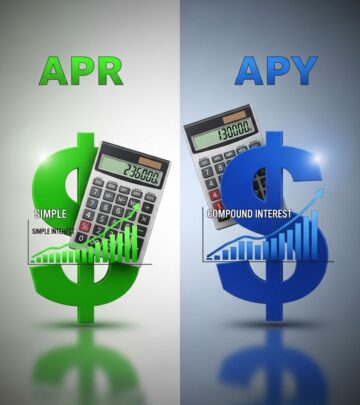
Another term that often causes confusion is APY, or Annual Percentage Yield. While APR and APY sound similar, they serve different purposes and apply to different types of financial products. APR is used for borrowing products like loans and credit cards, while APY is used for savings products like savings accounts and certificates of deposit.
The key difference is that APY takes into account compound interest, which means you earn interest on your interest in savings accounts. APR, by contrast, does not account for compounding. This distinction is important because it affects how much you’ll actually earn from savings or pay on debt over time. When comparing investment or savings products, you should focus on APY to understand your true potential earnings.
Frequently Asked Questions
Q: Can APR ever be lower than the interest rate?
A: No, APR can never be lower than the interest rate. In the best-case scenario where a lender charges no additional fees, APR will equal the interest rate. In all other cases, APR will be higher because it includes fees and other charges on top of the base interest rate.
Q: Why should I care about the difference between interest rate and APR?
A: Understanding the difference helps you make better financial decisions. The interest rate determines your monthly payment, while APR helps you compare the true total cost of different loans. Focusing on APR when comparing loan offers ensures you’re making apples-to-apples comparisons and choosing the most affordable option.
Q: How can I lower my APR?
A: You can potentially lower your APR by negotiating with the lender to waive or reduce fees. You can also improve your credit score over time, which may help you qualify for better interest rates on future loans. Additionally, comparing offers from multiple lenders can help you find the lowest APR available to you.
Q: Is APR the same for all types of loans?
A: No, APR can vary significantly depending on the type of loan. Mortgages, personal loans, and credit cards all have different fee structures and may calculate APR slightly differently. When comparing loans, make sure you understand what fees are included in each APR calculation.
Q: What fees are typically included in APR?
A: Common fees included in APR are origination fees, application fees, discount points, and broker fees. However, not all fees are included in APR. Late payment fees, prepayment penalties, and annual fees on credit cards are typically not included in the APR calculation.
Q: How does loan term affect APR?
A: APR is inversely related to loan term. Longer loan terms result in lower APRs because the same fees are spread out over more years. Shorter loan terms result in higher APRs because fees are concentrated into a shorter time period. This is important to remember when comparing loans with different repayment periods.
References
- What is the Difference Between a Loan Interest Rate and the APR? — Consumer Finance Protection Bureau. Accessed November 2025. https://www.consumerfinance.gov/ask-cfpb/what-is-the-difference-between-a-loan-interest-rate-and-the-apr-en-733/
- APR vs. Interest Rate: What’s the Difference? — FNBO. Accessed November 2025. https://www.fnbo.com/insights/mortgage/interest-rate-vs-apr-whats-the-difference
- APR vs. Interest Rate: What’s the Difference? — Oportun Financial Education. Accessed November 2025. https://oportun.com/financial-education/apr-vs-interest-rate-whats-the-difference/
- APR vs. APY: What’s the Difference? — Investopedia. June 22, 2023. https://www.investopedia.com/ask/answers/100314/what-difference-between-interest-rate-and-annual-percentage-rate-apr.asp
Similar Articles








Read full bio of medha deb