Interest-Only Vs Traditional Mortgages: 5 Smart Strategies
Discover the key differences between interest-only and traditional mortgages to make an informed home financing decision.

Choosing the right mortgage is a pivotal decision for homebuyers, balancing affordability, long-term costs, and financial goals. Interest-only mortgages offer lower initial payments by covering just the interest, while traditional mortgages include principal repayment from day one, fostering equity buildup. This guide breaks down their mechanics, pros, cons, and suitability to empower your choice.
Understanding Mortgage Fundamentals
Mortgages fund home purchases through borrowed capital repaid over decades.
Principal
is the borrowed sum, andinterest
is the lender’s fee. Traditional mortgages amortize both monthly, reducing the balance steadily. Interest-only variants defer principal, extending the loan timeline post-initial phase.Mechanics of Interest-Only Mortgages
During the introductory period—typically 5-10 years—borrowers pay solely interest, slashing monthly outlays. For a $300,000 loan at 5% interest, payments hit about $1,250 versus $1,600+ for traditional amortizing loans. Post-period, payments surge as principal repayment begins, often on a shortened term, potentially doubling obligations.
- Initial low payments free cash for investments or upgrades.
- Optional principal prepayments accelerate equity.
- Often paired with adjustable rates, adding rate fluctuation risk.
How Traditional Mortgages Operate
These loans, dominating U.S. home financing, mandate principal and interest payments throughout. Fixed-rate versions lock payments (e.g., 6% on $300,000 yields ~$1,800 monthly for 30 years); adjustable-rate mortgages (ARMs) start lower but vary. Equity accumulates immediately, shielding against market dips.
| Aspect | Interest-Only | Traditional |
|---|---|---|
| Monthly Payment (Initial) | Lower (Interest Only) | Higher (P+I) |
| Equity Build | Deferred | Immediate |
| Term Length | Extends Post-IO | Fixed (15-30 yrs) |
| Total Interest | Higher Overall | Lower Long-Term |
Financial Implications: Payments and Costs
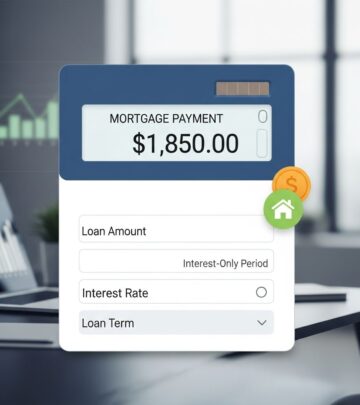
Interest-only appeals for short-term affordability but inflates lifetime interest. One analysis shows $30,000+ extra interest on interest-only versus fixed-rate over 30 years. Traditional paths yield predictable budgeting and faster ownership stake growth. Calculators reveal post-IO payment jumps from $1,375 to $2,227 on sample loans.
Qualification Criteria Compared
Lenders view interest-only as riskier, demanding superior credit (often 700+ FICO) and debt-to-income ratios under 36%. Traditional loans accommodate broader profiles, with conventional options needing 620+ scores and 43-50% DTI max. Government-backed like FHA ease entry further, unlike niche interest-only products.
Advantages of Interest-Only Mortgages
Ideal for specific profiles:
- Variable Incomes: Sales pros or seasonal workers manage cash flow peaks.
- Short Horizons: Relocators or flippers leverage low payments sans equity needs.
- Affordability Boost: Qualify for pricier homes initially.
- Investment Leverage: Redirect savings to higher-yield assets.
Tax deductions on interest amplify appeal during the phase.
Benefits of Traditional Mortgages
Stability defines them:
- Consistent payments simplify planning.
- Rapid equity cushions downturns.
- Broad eligibility suits families, first-timers.
- Fixed rates insulate from hikes.
Risks and Drawbacks Exposed
Interest-only pitfalls loom large. No principal reduction means zero equity gain beyond down payment, risking negative equity if values stagnate. Payment shocks post-period strain budgets; negative amortization in option ARMs balloons balances. Overbuying temptation exacerbates defaults.
Traditional mortgages carry fewer surprises but higher upfront costs may deter stretched buyers. Rate locks mitigate ARM risks.
Real-World Scenarios: Who Wins?
Short-Term Owner: Interest-only shines; sell before reset, pocket appreciation.
Long-Haul Family: Traditional builds wealth steadily.
Investor: Interest-only maximizes leverage if rents cover payments.
Market volatility favors traditional equity buffers.
Strategies for Smart Borrowing
- Run projections with calculators.
- Stress-test post-IO payments.
- Build emergency funds for jumps.
- Consult advisors on tax/equity impacts.
- Consider hybrids blending features.
Frequently Asked Questions (FAQs)
Are interest-only mortgages still available?
Yes, though less common post-2008 reforms; offered by select lenders to qualified borrowers.
Can I pay principal early on interest-only?
Typically yes, without penalty, accelerating payoff.
Which has lower total cost?
Traditional mortgages save on interest long-term.
Do interest-only loans build equity?
Not during the initial period unless extra payments made.
How do rates differ?
Interest-only often starts lower but adjusts higher.
Navigating Your Mortgage Journey
Align choices with timeline, income stability, and risk tolerance. Simulate scenarios, review qualifications, and seek lender quotes. Informed decisions pave paths to sustainable homeownership.
References
- Interest-only vs. traditional mortgages — myFICO. Accessed 2026. https://www.myfico.com/credit-education/financial-calculators/interest-only-vs-traditional-mortgages
- Interest-Only Mortgages & Option Adjustable-Rate Mortgages — Massachusetts Government (mass.gov). Accessed 2026. https://www.mass.gov/info-details/interest-only-mortgages-option-adjustable-rate-mortgages
- Interest-only vs Traditional Mortgage — Chase. Accessed 2026. https://www.chase.com/personal/mortgage/education/financing-a-home/interest-only-vs-traditional-mortgage
- Comparison of Interest-Only and Conventional Fixed-Rate Mortgage — Military Benefit. Accessed 2026. https://www.militarybenefit.org/membership-benefits/financial-resources/life-events/buying-home/5afe82d3aea77804a39c7a2f/
- Compare an interest-only vs. traditional mortgage — CalcXML. Accessed 2026. https://www.calcxml.com/do/hom13?skn=73
Similar Articles








Read full bio of Sneha Tete