Interest-Only HELOC: What You Need To Know Before Applying
Discover how interest-only HELOCs provide flexible home equity access with low initial payments, but weigh the long-term risks carefully.

An
interest-only HELOC
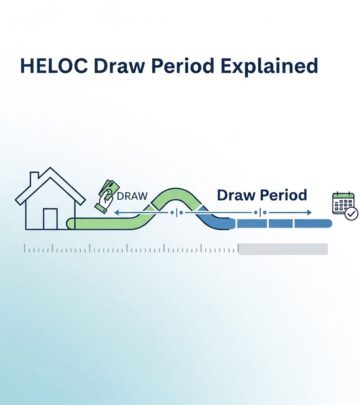
allows homeowners to borrow against their property’s equity by paying only the interest on drawn amounts during an initial draw period, typically lasting 5 to 15 years. This structure keeps early monthly obligations low while providing access to funds as needed, though it shifts principal repayment to a later phase where payments rise significantly.Core Mechanics of Interest-Only HELOCs
These products function like a revolving credit line secured by your home. During the draw period, borrowers can withdraw funds up to an approved limit, paying interest solely on the used portion. For instance, drawing $50,000 at an 8% annual rate results in about $333 monthly payments, covering interest without reducing the principal.
Once the draw period ends, the repayment phase begins, often 10 years, requiring full amortization of principal plus interest. This transition can dramatically increase payments; the same $50,000 balance might demand over $600 monthly at similar rates, depending on the term. Unlike standard HELOCs, where principal payments may start earlier, interest-only options defer this entirely during the access window.
Key Phases in the Loan Lifecycle
- Draw Period: Access funds flexibly; minimum payments cover interest only, preserving cash flow.
- Repayment Period: No new draws; payments include principal, leading to higher obligations.
- Interest Calculation: Variable rates tied to benchmarks like the prime rate adjust periodically, affecting costs.
This phased approach suits those anticipating future income growth or short-term projects but demands disciplined planning.
Financial Advantages for Borrowers
Interest-only HELOCs offer distinct upsides, particularly for liquidity management.
- Reduced Initial Payments: By excluding principal, monthly outlays stay manageable, freeing funds for investments or renovations.
- Competitive Rates: Secured by home equity, rates are lower than unsecured alternatives like credit cards, often 7-9% versus 20%+.
- Borrowing Flexibility: Draw only what’s needed, paying interest accordingly, unlike lump-sum loans.
- Potential Tax Deductions: Interest on funds used for home improvements may qualify for deductions, per IRS rules.
These features make them appealing for scenarios like funding education or bridging income gaps.
Potential Drawbacks and Risks
Despite benefits, significant risks accompany interest-only structures.
| Aspect | Interest-Only HELOC | Standard HELOC |
|---|---|---|
| Early Payments | Interest only (lower) | Interest + some principal |
| Rate Type | Variable (fluctuates) | Variable |
| Repayment Shock | High risk post-draw | Moderate |
| Total Interest | Potentially higher long-term | Lower if principal paid early |
Variable rates can spike with market changes, amplifying later payments. Delaying principal builds debt, increasing overall interest. Home liens risk foreclosure on default, and closing costs—appraisals, fees—add upfront expenses.
Ideal Use Cases for Maximum Benefit
These loans shine in targeted situations.
- Property Investments: Finance flips; low payments during renovations allow quick resale and payoff.
- Construction Projects: Cover new home costs until selling the current one, minimizing interim strain.
- Income Fluctuations: Suitable for variable earners expecting boosts, like bonuses or business growth.
- Debt Consolidation: If rates beat existing debts and equity suffices, but avoid overborrowing.
Qualification typically requires 15-20% equity, FICO scores above 700, and debt-to-income under 43%.
Comparing to Other Home Equity Options
Versus home equity loans, HELOCs provide ongoing access but variable rates; fixed-rate loans offer payment stability at the cost of inflexibility. Traditional HELOCs amortize sooner, reducing end-phase jumps.
| Option | Rate Type | Access | Best For |
|---|---|---|---|
| Interest-Only HELOC | Variable | Revolving | Short-term flexibility |
| Standard HELOC | Variable | Revolving | Gradual payoff |
| Home Equity Loan | Fixed | Lump sum | Predictable payments |
Choose based on rate outlook and cash flow needs.
Eligibility and Application Insights
Lenders assess equity (home value minus mortgage), credit, and income. Aim for 20%+ equity to avoid private mortgage insurance. Shop multiple offers; some waive fees. Documentation includes pay stubs, tax returns, and property details. Approval takes 2-6 weeks.
Strategies to Mitigate Risks
Proactive steps enhance safety:
- Pay extra toward principal during draw to shrink the balance.
- Budget for rate hikes; stress-test at +3%.
- Build emergency funds covering 6 months of payments.
- Refinance if rates drop or equity grows.
Consult advisors to align with goals.
Frequently Asked Questions
What happens if I only pay interest during the draw period?
The principal remains unchanged, leading to larger repayment phase payments.
Are interest-only HELOC rates fixed?
No, most are variable, linked to the prime rate.
Can I deduct HELOC interest on taxes?
Possibly, if used for home improvements; verify with a tax professional.
What’s the typical draw period length?
5 to 15 years, followed by 10-year repayment.
Is my home at risk?
Yes, as collateral; default risks foreclosure.
Final Considerations Before Applying
Interest-only HELOCs empower homeowners with affordable access to equity but require foresight on rate changes and repayment ramps. Evaluate your financial stability, future plans, and risk tolerance. Compare lender terms and consider professional advice to ensure this tool advances your objectives without undue peril.
References
- What is an interest-only HELOC? Everything you need to know — Better.com. 2023. https://better.com/content/interest-only-heloc
- What Is an Interest-Only HELOC? How Does It Work? — Bankrate. 2025-01-15. https://www.bankrate.com/home-equity/what-is-an-interest-only-heloc/
- HELOC vs. Home Equity Loan: Pros & Cons — Florence Bank. 2024. https://www.florencebank.com/heloc-vs-home-equity-loan-pros-cons
- Home Equity Loans and Home Equity Lines of Credit — Federal Trade Commission (FTC). 2023-06-01. https://consumer.ftc.gov/articles/home-equity-loans-and-home-equity-lines-credit
Similar Articles








Read full bio of medha deb