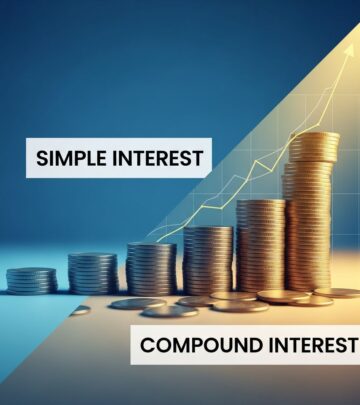
Interest on Interest: Understanding Compound Interest
Master compound interest: How your money grows exponentially through earned interest reinvestment.
Interest on Interest: The Power of Compound Growth
Interest on interest, commonly known as compound interest, represents one of the most powerful concepts in personal finance and investing. This fundamental principle describes the process by which an investment generates earnings, and those earnings subsequently generate their own earnings. Unlike simple interest, which is calculated only on the original principal amount, compound interest allows your money to grow exponentially over time. Understanding this concept is essential for anyone looking to build wealth, plan for retirement, or maximize investment returns.
The magic of compound interest lies in its recursive nature—each period’s earnings become part of the principal for calculating the next period’s interest. This creates a snowball effect where your money works harder for you as time progresses. Albert Einstein famously referred to compound interest as the eighth wonder of the world, emphasizing its transformative potential in personal wealth accumulation.
Defining Interest on Interest
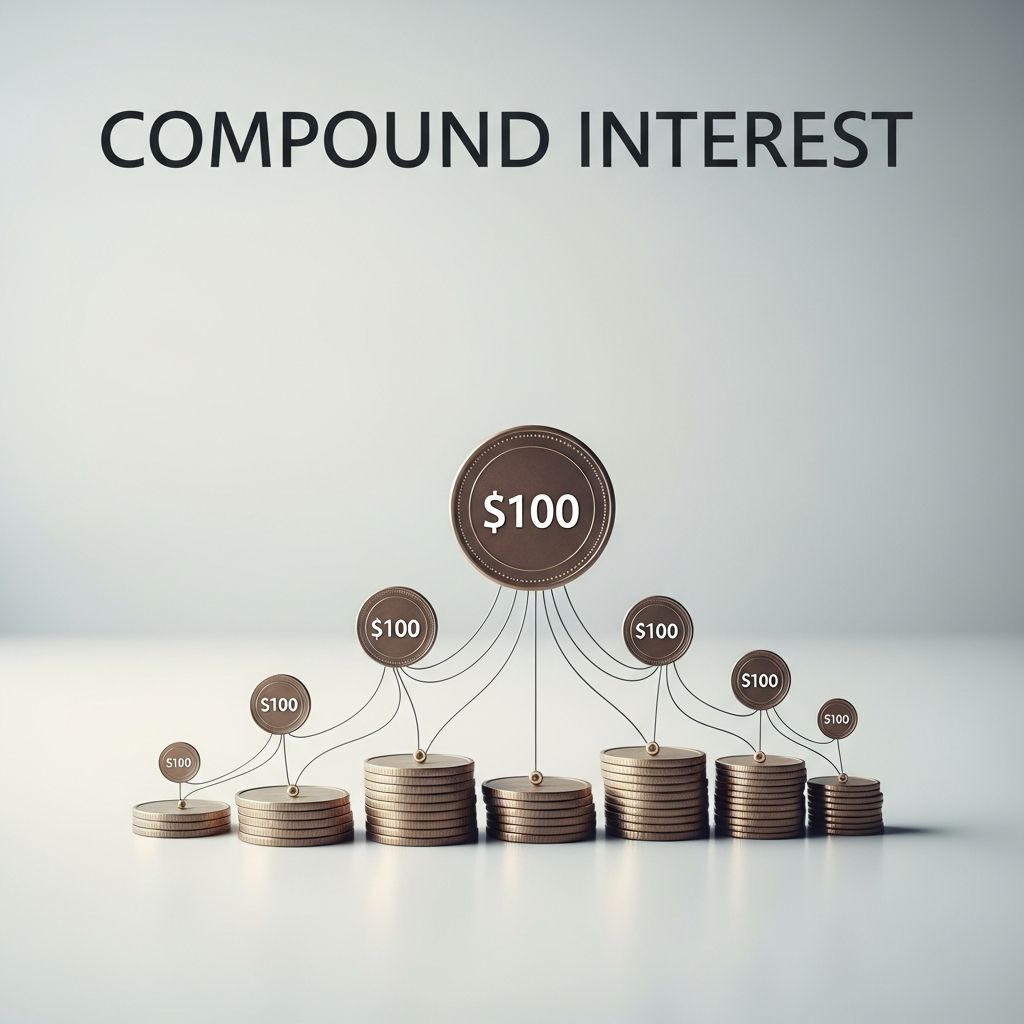
Interest on interest occurs when the interest earned on an investment is reinvested and begins earning its own interest. This is the cornerstone of compound interest calculations. In practical terms, when you earn $100 in interest during the first year, that $100 becomes part of your principal balance. In the following year, you earn interest not just on your original investment, but also on that $100 in accumulated interest.
The key distinction between simple and compound interest becomes apparent when tracking earnings over multiple periods. With simple interest, your returns remain static because interest is calculated only on the initial principal. With compound interest, returns accelerate because each calculation includes previously earned interest. This difference may seem minor in year one or two, but compounds significantly over decades.
How Interest on Interest Works: A Practical Example
To illustrate how interest on interest functions, consider a concrete example. Suppose you invest $10,000 in a savings account earning 5% annual interest, compounded annually, for three years.
Year 1: Your balance grows by 5% of $10,000, earning $500 in interest. Your new balance becomes $10,500.
Year 2: Now you earn 5% on $10,500 (not just the original $10,000). This generates $525 in interest. Your new balance becomes $11,025. Notice you earned $25 more than in year one, even though the interest rate remained constant.
Year 3: You earn 5% on $11,025, generating $551.25 in interest. Your final balance reaches $11,576.25.
Over three years, compound interest generated $1,576.25 in total earnings, compared to $1,500 with simple interest—a difference of $76.25. While this may seem modest, the advantage becomes exponentially larger across longer time periods and higher principal amounts.
The Compound Interest Formula
Financial professionals use a mathematical formula to calculate compound interest precisely. The standard formula is:
A = P(1 + r/n)nt
Where:
- A = Final amount after compound interest
- P = Principal (initial investment)
- r = Annual interest rate (expressed as a decimal)
- n = Number of times interest compounds per year
- t = Number of years the money is invested
Using our previous example with P = $10,000, r = 0.05, n = 1 (annual compounding), and t = 3 years:
A = 10,000(1 + 0.05/1)1×3 = 10,000(1.05)3 = $11,576.25
This formula demonstrates mathematically how compound interest accelerates wealth growth over time.
Compounding Frequency: How Often Interest Compounds
The frequency at which interest compounds significantly impacts your total returns. Interest can compound annually, semi-annually, quarterly, monthly, daily, or even continuously. The more frequently interest compounds, the greater your total earnings become.
| Compounding Frequency | Compounds Per Year | Effect on Returns |
|---|---|---|
| Annually | 1 | Baseline |
| Semi-Annually | 2 | Slightly higher |
| Quarterly | 4 | Moderately higher |
| Monthly | 12 | Significantly higher |
| Daily | 365 | Very substantial |
| Continuously | Infinite | Maximum possible |
For instance, $10,000 invested at 5% interest for 10 years yields different results based on compounding frequency. With annual compounding, you’d have approximately $16,288. With daily compounding, you’d have roughly $16,453. With continuous compounding, you’d reach approximately $16,487. These differences may seem small initially but compound dramatically over longer periods.
Time: The Most Powerful Factor
Time represents the most critical variable in compound interest calculations. The longer your money remains invested, the more powerful the compounding effect becomes. This is why starting early with investment accounts, retirement savings, or savings bonds provides such significant advantages.
Consider two investors: Sarah begins investing $5,000 annually at age 25 for 10 years, then stops contributing. Michael begins the same investment at age 35 and continues for 25 years, ultimately investing more total capital. Assuming an 8% annual return, Sarah’s early start yields approximately $756,000 by age 65, while Michael’s later but longer investment yields approximately $748,000. Sarah invested half as much yet accumulated more wealth, demonstrating how time multiplies the power of compound interest.
The Impact of Interest Rates
The interest rate you earn dramatically influences your compound interest results. Even seemingly small differences in rates create substantial long-term variations. A difference of just 1% annually can result in tens of thousands of dollars over several decades.
For example, $100,000 invested for 30 years at 5% annual compound interest grows to approximately $432,194. The same investment at 6% grows to approximately $574,349. The additional 1% rate of return generates an extra $142,155—more than the original principal—purely through enhanced compounding.
Applications of Interest on Interest in Real Life
Retirement Accounts: 401(k)s, IRAs, and other retirement vehicles leverage compound interest over decades. The tax-deferred status of these accounts allows all earnings to compound without annual tax drains, accelerating wealth accumulation significantly.
Savings Accounts and CDs: High-yield savings accounts and certificates of deposit provide guaranteed interest that compounds regularly, making them ideal for conservative investors seeking reliable returns.
Investment Accounts: Stock market investments benefit from compound interest when dividends are reinvested. Similarly, bond funds and other fixed-income investments leverage this principle.
Debt Accumulation: Compound interest works against borrowers as well. Credit card debt, mortgage interest, and other loans compound, which is why early repayment significantly reduces total interest paid.
Maximizing Your Compound Interest Returns
Start Early: Begin investing as soon as possible to maximize the time your money has to compound. Even small amounts invested early outpace larger amounts invested later.
Invest Regularly: Consistent contributions throughout your investing timeline accelerate wealth accumulation. Dollar-cost averaging through regular investments reduces market timing risks while maintaining consistent compounding.
Reinvest Earnings: Allow all interest, dividends, and capital gains to reinvest rather than withdrawing them. This maximizes your principal base for future compound calculations.
Seek Higher Rates: Compare investment options to find accounts offering competitive interest rates. Even modest rate differences compound significantly over time.
Minimize Taxes: Utilize tax-advantaged accounts like 401(k)s and IRAs to prevent taxes from reducing your compounding principal and earnings.
Frequently Asked Questions
Q: What is the difference between compound interest and simple interest?
A: Simple interest is calculated only on the original principal amount each period, while compound interest is calculated on the principal plus all accumulated interest. This makes compound interest grow exponentially while simple interest grows linearly.
Q: How long does it take for money to double with compound interest?
A: Using the Rule of 72, divide 72 by your annual interest rate to estimate doubling time. At 6% interest, money doubles approximately every 12 years. At 8% interest, it doubles roughly every 9 years.
Q: Can compound interest work against me?
A: Yes, compound interest applies to debt as well. Credit card balances, mortgages, and loans all compound, meaning unpaid interest accumulates and generates additional interest, increasing your total debt burden significantly.
Q: Is daily compounding significantly better than annual compounding?
A: Daily compounding provides better returns than annual compounding, but the difference diminishes as interest rates decrease. With higher rates, the improvement becomes more noticeable over extended periods.
Q: How does inflation affect compound interest returns?
A: Inflation erodes the purchasing power of your returns. If your compound interest rate equals or falls below inflation, your real returns (adjusted for inflation) may be minimal or negative despite nominal growth.
References
- What Is Compound Interest? — Investopedia. 2013. https://www.investopedia.com/terms/c/compoundinterest.asp
- Compound Interest Formula and Calculator — U.S. Securities and Exchange Commission. https://www.sec.gov/investor/pubs/assetallocation.htm
- The Power of Compound Interest — Federal Reserve Education. https://www.federalreserveeducation.org/
- Understanding Simple and Compound Interest — Consumer Financial Protection Bureau. https://www.consumerfinance.gov/
- Investment Growth Calculator — Financial Industry Regulatory Authority. https://www.finra.org/
Similar Articles








Read full bio of medha deb