Insurance Coverage: Definition, Types, and How It Works
Understand insurance coverage fundamentals, types, and essential policy components for protecting your assets.
What is Insurance Coverage?
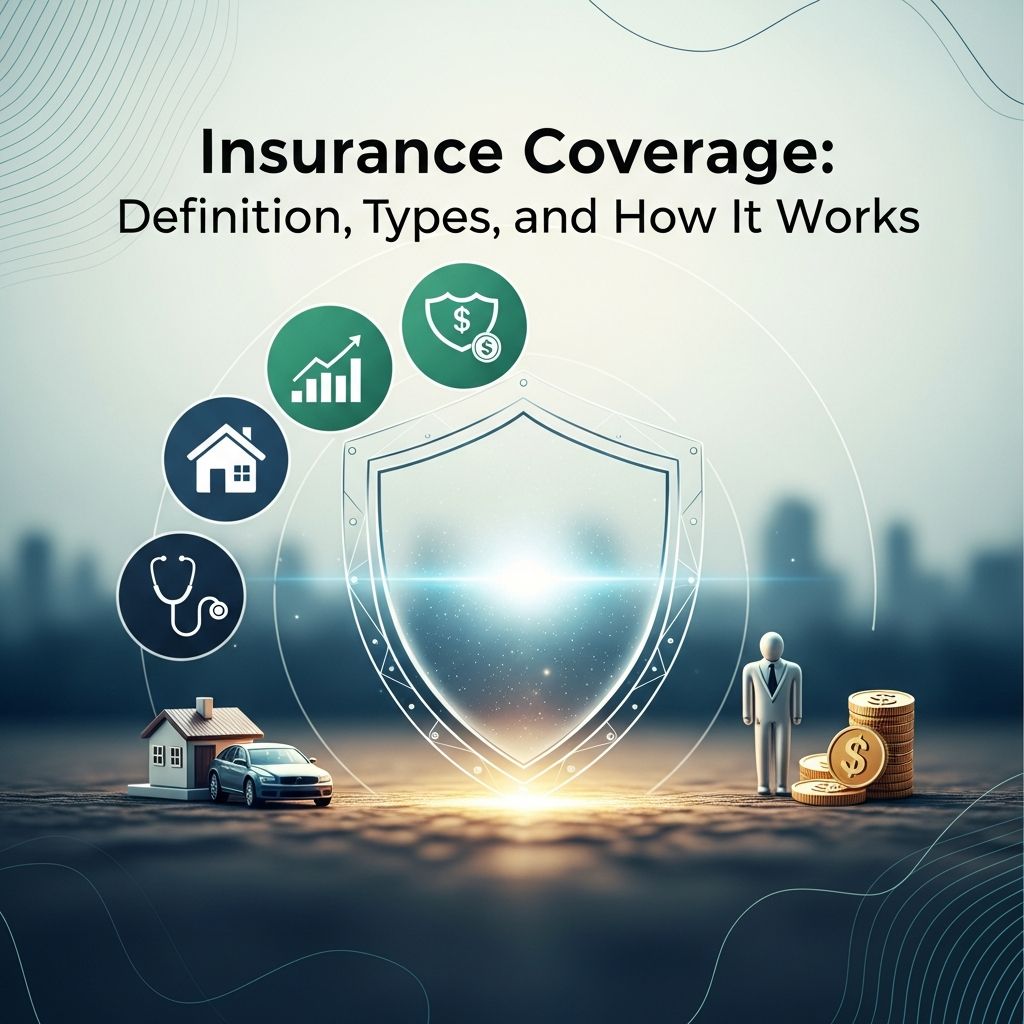
Insurance coverage refers to the extent of protection provided by an insurance policy, encompassing the risks that an insurance company agrees to compensate. When you purchase an insurance policy, you enter into a contractual agreement where the insurer promises to indemnify you against specific losses or liabilities outlined in the policy document. The scope and limits of this protection are determined by the coverage types selected, the policy limits chosen, and the terms and conditions specified in the insurance contract.
Insurance coverage serves as a financial safety net, protecting individuals and businesses from unexpected expenses that could otherwise be catastrophic. Whether you’re facing medical emergencies, property damage, liability claims, or loss of income, appropriate insurance coverage ensures that you’re not bearing the entire financial burden alone. Understanding the nuances of insurance coverage is essential for making informed decisions about your financial security and protection strategy.
Understanding the Fundamentals of Insurance Coverage
At its core, insurance coverage operates on the principle of risk transfer. Rather than bearing the full financial risk of potential losses yourself, you transfer that risk to an insurance company in exchange for regular premium payments. This arrangement allows you to protect your assets, income, and liabilities with predictable, manageable expenses rather than facing potentially unlimited financial exposure.
The effectiveness of your insurance coverage depends on several critical factors:
- Policy Limits: The maximum amount an insurer will pay for a covered loss
- Deductibles: The amount you must pay out-of-pocket before coverage begins
- Exclusions: Specific situations or items not covered by the policy
- Conditions: Requirements you must meet to maintain coverage eligibility
- Endorsements: Modifications to the standard policy that expand or restrict coverage
Types of Insurance Coverage
Auto Insurance Coverage
Auto insurance typically comprises several distinct coverage types that work together to provide comprehensive protection. Liability coverage protects you financially if you’re responsible for injuries or property damage to others. Collision coverage pays for damage to your vehicle from accidents with other vehicles or objects. Comprehensive coverage protects against non-collision incidents such as theft, vandalism, weather damage, and animal collisions. Uninsured and underinsured motorist coverage protects you if hit by a driver without adequate insurance.
Homeowners Insurance Coverage
Homeowners policies typically include dwelling coverage for the structure itself, personal property coverage for belongings, liability coverage for injuries occurring on your property, and additional living expenses coverage if your home becomes uninhabitable. Dwelling coverage is typically mandatory if you have a mortgage, as lenders require proof of protection for their collateral. The coverage amount should reflect the full replacement cost of your home, not its market value.
Health Insurance Coverage
Health insurance coverage encompasses medical, surgical, and hospital expenses. Different plans offer varying levels of coverage, from preventive care to emergency services. Most health insurance includes deductibles, copayments, and coinsurance requirements. Understanding your health plan’s coverage is crucial for managing healthcare costs and ensuring you receive necessary treatments.
Life Insurance Coverage
Life insurance provides financial protection for your beneficiaries upon your death. Term life insurance offers coverage for a specific period, typically 10 to 30 years, at lower premium rates. Whole life insurance provides permanent coverage with a cash value component and higher premiums. Universal life insurance offers flexible premiums and death benefits. The coverage amount should reflect your dependents’ financial needs, debts, and income replacement requirements.
Liability Insurance Coverage
Liability coverage protects you if you’re found legally responsible for causing injury or property damage to others. This coverage is essential for homeowners, business owners, and vehicle owners. Umbrella liability policies provide additional protection beyond standard policy limits, offering crucial safeguards against catastrophic liability claims.
Coverage Limits and Deductibles Explained
Understanding Coverage Limits
Coverage limits represent the maximum amount an insurance company will pay for a covered claim. These limits are typically expressed as single limits or split limits. A single limit applies to any covered loss, while split limits divide coverage between different types of claims. For example, auto liability insurance might have a split limit of 100/300/100, meaning $100,000 per person for bodily injury, $300,000 total per accident for bodily injury, and $100,000 for property damage.
Choosing appropriate coverage limits requires careful consideration of your assets, income, and potential liability exposure. Insufficient limits leave you vulnerable to significant personal liability, while excessive limits may result in paying unnecessary premiums. Many financial advisors recommend coverage limits substantially higher than your net worth to provide comprehensive protection.
Understanding Deductibles
A deductible is the amount you must pay out-of-pocket before your insurance coverage begins. Higher deductibles reduce your insurance premiums, as you’re assuming greater financial responsibility for losses. Lower deductibles mean higher premiums but less out-of-pocket expense when claims occur. The optimal deductible depends on your financial situation and risk tolerance.
It’s important to maintain an emergency fund equivalent to at least your largest deductible. This ensures you can cover the deductible amount without financial hardship if a claim occurs. Some insurance policies feature annual or per-incident deductibles, while others use percentage-based deductibles.
Key Coverage Components and Exclusions
What Is Typically Covered
Insurance coverage generally includes:
- Direct damage from insured perils specifically named in the policy
- Liability expenses when you’re legally responsible for others’ injuries or property damage
- Medical payments to others on your property (even if you’re not liable)
- Emergency protective measures taken to prevent further loss
- Loss of use coverage for additional temporary living expenses
Common Exclusions and Limitations
Insurance policies contain various exclusions that limit or eliminate coverage for specific situations. Understanding these exclusions prevents unpleasant surprises when filing claims. Common exclusions include damage from flood, earthquake, war, and nuclear hazard in standard homeowners policies. Health insurance often excludes cosmetic procedures, experimental treatments, and services without medical necessity. Life insurance typically excludes deaths resulting from suicide within the first two years and deaths occurring during illegal activities.
Additional exclusions may apply based on policy type and individual circumstances. Reviewing your policy exclusions carefully helps you identify coverage gaps and determine whether additional coverage is necessary. Endorsements can often be added to expand coverage for excluded perils, though this typically increases your premiums.
Choosing the Right Insurance Coverage
Assessing Your Coverage Needs
Determining appropriate insurance coverage requires evaluating several factors:
- Asset Value: Calculate the total value of property and assets requiring protection
- Liability Exposure: Consider potential liability based on your property, business, and activities
- Income Requirements: Determine how much income replacement you need if unable to work
- Dependents: Evaluate financial obligations to family members and others depending on your income
- Financial Resources: Assess your ability to handle out-of-pocket expenses through deductibles
- Risk Factors: Consider personal risk factors affecting your insurance needs
Tips for Optimizing Your Coverage
Maximizing the value of your insurance coverage involves several strategic considerations. Bundle multiple policies with one insurer to receive discount rates and simplified policy management. Increase deductibles if you have sufficient emergency savings to lower premium costs. Review your coverage annually to ensure it aligns with changes in your life circumstances, property values, and financial situation. Ask insurers about available discounts for safety features, good driving records, or loss prevention measures. Consider gap insurance for vehicles and valuable items to ensure comprehensive protection.
Frequently Asked Questions
What is the difference between insurance coverage and insurance policy?
An insurance policy is the complete contract between you and the insurance company, while insurance coverage refers specifically to the protection provided within that contract. A policy includes coverage details, limits, deductibles, exclusions, and conditions, while coverage describes what the insurer will pay for.
Can I have multiple insurance coverages for the same item?
Yes, you can carry multiple policies covering the same item, but insurance operates on an indemnification principle where you cannot profit from insurance. If you have overlapping coverage, insurers coordinate benefits to ensure you receive only the actual value of the loss, not multiple payouts.
What happens if my coverage limits are insufficient for a claim?
If your coverage limits are insufficient and the damages exceed your policy limits, you are personally responsible for the excess amount. This is why choosing appropriate coverage limits is critical. Umbrella policies can provide additional protection for liability claims exceeding standard policy limits.
How often should I review my insurance coverage?
You should review your insurance coverage annually or whenever significant life changes occur, such as marriage, home purchase, starting a business, or acquiring valuable assets. Regular reviews ensure your coverage reflects your current needs and circumstances.
Does insurance coverage include preventive measures?
Many insurance policies encourage loss prevention by offering discounts for safety features or preventive measures. Health insurance typically covers preventive care like screenings and vaccinations. However, coverage generally applies to losses that occur despite reasonable precautions, not as a reward for prevention.
What is the purpose of co-insurance?
Co-insurance is a cost-sharing mechanism where you pay a percentage of covered expenses after meeting your deductible. This arrangement encourages responsible use of coverage while sharing financial responsibility between the insurer and policyholder. It differs from a copayment, which is a fixed dollar amount you pay per service.
References
- Insurance Information Institute — Insurance Information Institute. Updated 2025. https://www.iii.org/
- National Association of Insurance Commissioners (NAIC): Consumer Information — National Association of Insurance Commissioners. 2025. https://www.naic.org/
- Understanding Health Insurance Coverage — U.S. Department of Health & Human Services. Updated 2024. https://www.healthcare.gov/
- State of Auto Insurance in America — American Property Casualty Insurance Association. 2024. https://www.apcia.org/
- Life Insurance and Long-Term Care — Society of Actuaries. 2024. https://www.soa.org/
- Fair Credit Reporting Act: Your Rights Under FCRA — Federal Trade Commission. Updated 2025. https://www.ftc.gov/
Similar Articles








Read full bio of Sneha Tete