Agent vs. Broker: Key Insurance Differences
Discover how insurance agents and brokers differ in representation, services, and benefits to choose the right professional for your coverage needs.
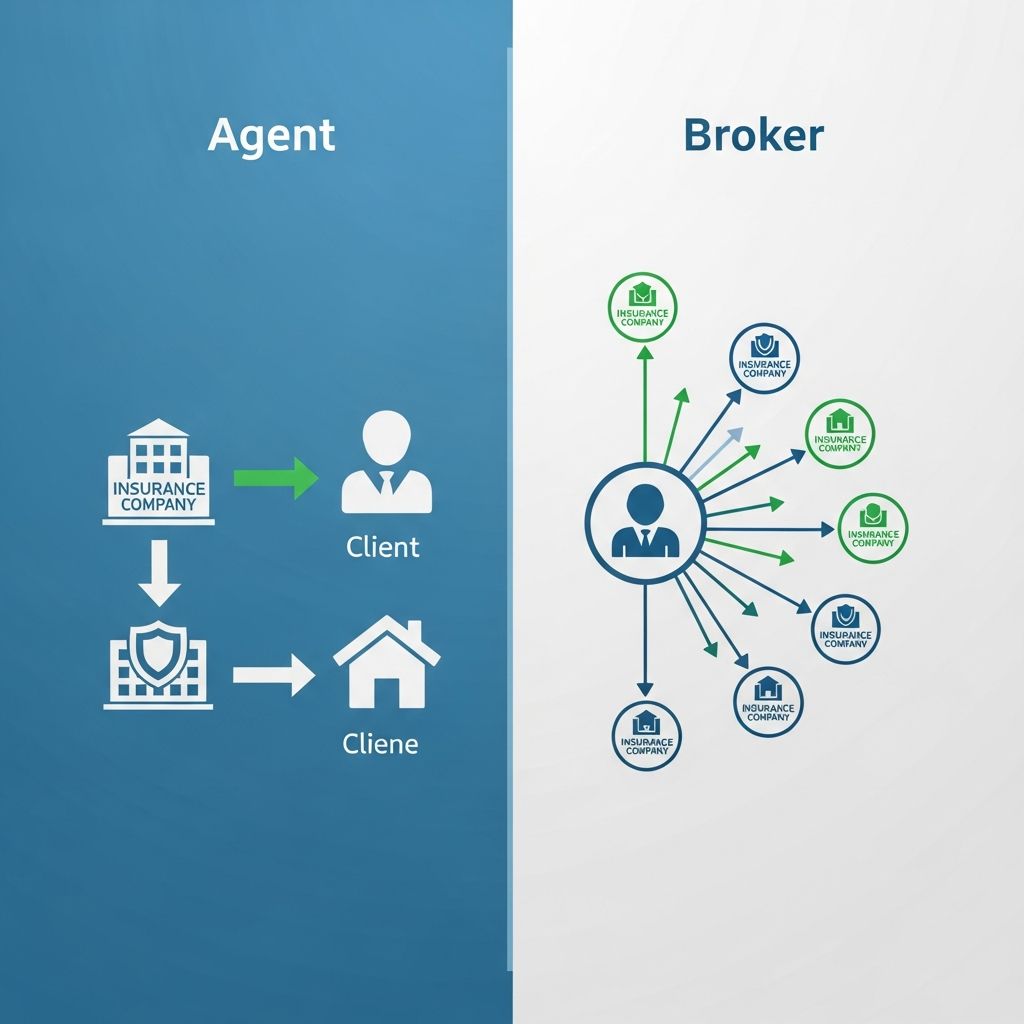
Navigating the insurance landscape requires understanding the roles of professionals who assist in securing coverage.
Insurance agents
andbrokers
both facilitate policy acquisition but operate under distinct frameworks that impact their services and loyalties. Agents typically align with specific insurers, while brokers prioritize client interests across multiple providers. This article delves into their functions, contrasts, and strategic applications to empower informed decisions.Defining the Core Roles in Insurance Intermediation
Insurance professionals act as bridges between consumers and carriers, ensuring policies meet protection needs. Each type brings unique strengths shaped by their affiliations and operational scopes.
The Role and Responsibilities of an Insurance Agent
An
insurance agent
functions as a direct extension of one or more insurance companies. Employed or contracted by insurers, they promote and transact policies from their affiliated carriers. Key duties include assessing client requirements, presenting available options within their portfolio, and finalizing sales by binding coverage immediately upon agreement. This binding authority means agents can initiate protection on the spot, accepting payments and issuing confirmations without further carrier approval.Agents provide ongoing support, such as policy adjustments, renewals, and claims assistance, leveraging direct access to insurer systems. They excel in standard scenarios where quick activation is essential, like closing on a home or vehicle purchase. Captive agents, tied to a single company, offer deep expertise in that brand’s products, while independent agents partner with several carriers for broader but still limited choices.
Understanding the Insurance Broker’s Function
In contrast, an
insurance broker
serves as an independent advocate for the policyholder. Not beholden to any single insurer, brokers evaluate client risks and scour the market from numerous providers to identify optimal matches. They compile quotes, advise on coverage adequacy, and submit applications but lack binding authority, requiring carrier underwriting for approval.Brokers shine in complex situations, such as high-risk profiles or specialized needs like commercial or high-value asset protection. Post-sale, servicing shifts to the insurer, though brokers often remain consultative for renewals or adjustments. Their market-wide access enables tailored solutions unavailable through agent-limited inventories.
Comparative Analysis: Agents and Brokers Side-by-Side
To highlight distinctions, consider this structured overview:
| Aspect | Insurance Agent | Insurance Broker |
|---|---|---|
| Primary Representation | Insurance company/carrier | Client/policyholder |
| Policy Binding | Yes, immediate coverage | No, submits for approval |
| Market Access | Limited to appointed carriers (1 or few) | Multiple carriers across the market |
| Ongoing Service | Handles servicing and claims | Carrier handles; broker advises |
| Compensation | Salary/commission from insurer | Commission from insurer or client fees |
This table underscores how agents prioritize efficiency within constraints, whereas brokers emphasize comprehensive shopping.
Compensation Structures and Cost Implications
Financial incentives influence professional behaviors. Agents receive salaries, commissions, or both from their insurers, embedded in premiums without direct client charges. This alignment motivates sales from assigned products but may limit options.
Brokers earn via insurer commissions—deducted from premiums—or direct fees, particularly for intricate placements. While generally cost-free to clients, fees arise in niche markets like excess coverage. Transparency in fee structures ensures clients understand value added through competitive sourcing.
Navigating Licensing and Regulatory Frameworks
Both professionals must hold state-specific licenses, renewed periodically with continuing education. Agents secure appointments from carriers, authorizing specific product sales. Brokers obtain licenses independently, enabling multi-carrier engagement without appointments.
Regulations mandate fiduciary duties: agents to insurers, brokers to clients. Violations invite penalties, safeguarding consumer trust. Verify credentials via state insurance departments for compliance.
Strategic Selection: When to Engage an Agent
- Urgent Coverage Needs: Agents bind policies instantly, ideal for time-sensitive events like real estate closings.
- Standard Risks: Routine auto, home, or life insurance benefits from their streamlined processes and product familiarity.
- Brand Loyalty: Preferring a known insurer? Agents provide insider knowledge and seamless servicing.
Strategic Selection: When to Choose a Broker
- Complex or Unique Risks: Businesses or individuals with atypical exposures gain from brokers’ vast networks, including surplus lines markets.
- Cost Optimization: Brokers compare extensively, potentially uncovering superior rates or terms.
- Comprehensive Advocacy: Seeking unbiased guidance across providers suits broker expertise.
Real-World Applications Across Insurance Types
Auto insurance often leverages agents for rapid quoting and binding, especially with preferred carriers. Homeowners with standard properties follow suit, while high-net-worth individuals turn to brokers for umbrella policies.
Commercial insurance favors brokers for multifaceted risks like liability or cyber threats, accessing specialized carriers. Life and health insurance sees agents dominant in employer plans, brokers in custom retiree strategies.
Potential Drawbacks and Risk Mitigation
Agents risk narrower options, potentially overlooking better deals elsewhere. Mitigate by consulting multiple agents or verifying rates online.
Brokers may delay coverage due to approval waits and less hands-on servicing. Counter by selecting experienced brokers with strong carrier ties.
Regardless, request multiple quotes, scrutinize policy details, and confirm licensing to avoid pitfalls.
Frequently Asked Questions (FAQs)
Can an insurance agent work with multiple companies?
Yes, independent agents represent several carriers, unlike captive agents limited to one, offering more flexibility while retaining binding powers.
Do brokers charge fees directly to clients?
Often commissions suffice, but complex cases may incur fees; always inquire upfront.
Who handles claims for broker-placed policies?
The insurer manages claims, though brokers assist with navigation.
Is one better than the other?
No—match to needs: agents for speed, brokers for breadth.
How do I find reputable professionals?
Use state directories, reviews, and professional associations; interview for alignment with your situation.
Empowering Your Insurance Journey
Selecting between agents and brokers hinges on urgency, complexity, and scope preferences. Agents deliver swift, focused solutions; brokers provide expansive, client-centric searches. Hybrid approaches—consulting both—often yield the best outcomes. Stay proactive: review annually, adjust for life changes, and prioritize fiduciary alignment for enduring protection.
References
- Insurance Agent vs. Insurance Broker: What’s the Difference? — Experian. 2023-10-15. https://www.experian.com/blogs/ask-experian/insurance-agent-vs-broker/
- Key differences between insurance agents vs brokers — Kin Insurance. 2024-05-22. https://www.kin.com/blog/difference-between-insurance-agent-and-broker/
- Understanding the Difference Between Insurance Brokers & Agents — Terri Yurek Insurance. 2023-11-08. https://terriyurekinsurance.com/insurance-agent-vs-broker-whats-the-difference/
- Insurance Agent vs. Insurance Broker: What’s the Difference? — AutoInsurance.com. 2024-02-14. https://www.autoinsurance.com/articles/agent-vs-broker/
- Insurance Agent vs. Broker: The Differences and How to Find the … — Insureon. 2024-01-30. https://www.insureon.com/small-business-insurance/insurance-agent-broker
Similar Articles








Read full bio of Sneha Tete