Infrastructure: Definition, Types, and Investment Guide
Complete guide to understanding infrastructure: definition, types, characteristics, and investment opportunities.
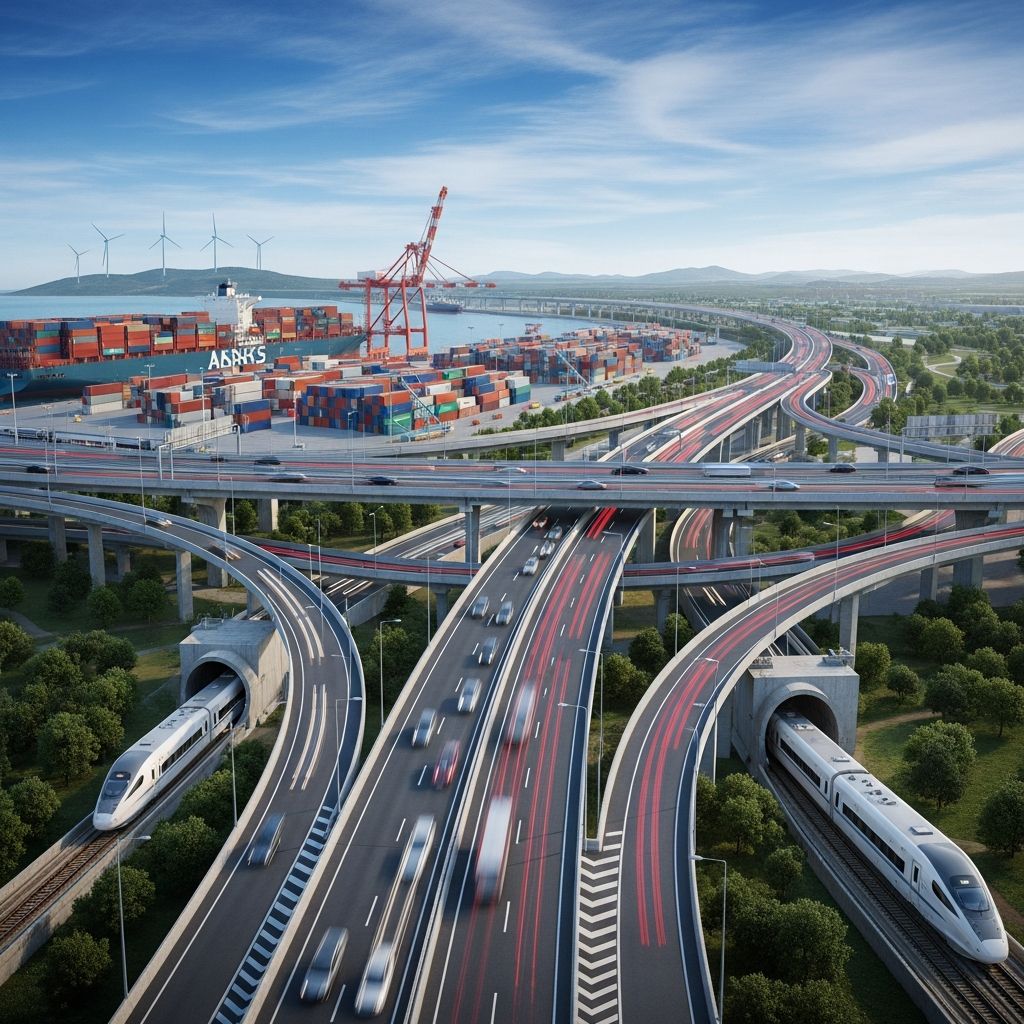
What Is Infrastructure?
Infrastructure refers to the fundamental physical and institutional systems that underpin modern society and economic development. The term derives from the Latin prefix “infra,” meaning “below,” emphasizing that these systems form the foundational layer upon which all other economic and social activity rests. Without infrastructure, the functioning of modern industrial life would be impossible. Infrastructure encompasses a wide range of systems including roads, bridges, ports, energy plants, water systems, digital networks, and communication systems that enable the daily operations of communities and commerce.
Infrastructure represents a form of real assets containing tangible physical elements that individuals interact with in everyday life. These assets are crucial to a country’s development and prosperity. The importance of infrastructure extends beyond mere physical presence; it directly influences economic productivity, quality of life, and regional resilience. Modern infrastructure is rapidly evolving to include not only traditional concrete and steel structures but also digital systems and renewable energy installations.
Types of Infrastructure
Infrastructure can be categorized into several distinct types, each serving different societal needs and economic functions:
Transportation and Logistics
Transportation infrastructure includes roads, highways, bridges, railways, ports, and airports. This category represents the largest infrastructure investment need globally, requiring approximately $36 trillion in investment across critical infrastructure sectors. Transportation systems enable the movement of goods and people, forming the backbone of global commerce and connectivity.
Energy and Power
Energy infrastructure encompasses power plants, electrical grids, renewable energy installations, and oil and gas pipelines. This sector requires significant capital investment, estimated at $23 trillion globally, and is undergoing transformation due to the shift toward renewable energy sources and electrification.
Digital Infrastructure
Modern digital infrastructure includes fiber-optic cables, 5G networks, data centers, cloud computing facilities, and smart grid systems. Representing approximately $19 trillion in required investment, digital infrastructure has become increasingly critical as societies become more dependent on connectivity and data-driven services. Data centers alone are expected to require capital expenditures surpassing $1.7 trillion by 2030.
Social Infrastructure
Social infrastructure encompasses hospitals, schools, universities, public facilities, and community centers. Requiring approximately $16 trillion in investment, this category directly impacts quality of life and human capital development.
Water and Waste Management
This category includes sewage systems, water treatment plants, water distribution networks, and waste management facilities. Requiring approximately $6 trillion in investment, these systems are essential for public health and environmental protection.
Agriculture and Defense
Agriculture infrastructure includes irrigation systems, storage facilities, and distribution networks, while defense infrastructure encompasses military installations and security systems. Combined, these sectors require approximately $7 trillion in investment.
Why Infrastructure Matters
Infrastructure investment underpins prosperity, economic resilience, and quality of life in modern societies. It enables businesses to operate efficiently, connects markets, facilitates trade, and provides essential services that support human welfare. The interconnectedness of infrastructure systems creates network effects that amplify their impact on economic development.
Global infrastructure faces unprecedented demand pressures driven by rapid population growth, technological advancement, and climate considerations. These forces are reshaping how societies conceptualize and develop infrastructure systems, moving beyond traditional definitions to encompass sustainable energy, digital connectivity, and electrified mobility solutions.
Key Characteristics of Infrastructure Investments
Infrastructure investments possess distinct financial and operational characteristics that differentiate them from traditional securities and corporate investments:
Stable and Predictable Cash Flows
One of the primary attractions of infrastructure investment is the potential for steady, predictable cash flows. Infrastructure assets typically operate under regulated and contracted revenue models. For example, a government contract to operate a sewage system for ten years provides highly predictable revenue streams. Unless the government defaults—a rare occurrence in developed markets—these cash flows remain reliable regardless of economic conditions.
Non-Cyclical Nature
Infrastructure assets demonstrate non-cyclical characteristics, meaning their demand and revenue generation remain relatively stable throughout economic cycles. While a small business might fail during economic recession, infrastructure assets such as bridges and roads remain essential to a country’s functioning regardless of the economic stage. This fundamental necessity ensures continued utilization and revenue generation.
Minimal Marginal Costs
Infrastructure operations feature extremely small marginal costs per unit of use. A bridge, for instance, incurs negligible variable costs for each additional vehicle that crosses it. This characteristic creates favorable unit economics once the asset is operational, allowing most revenue to contribute toward debt service and returns to investors.
Long Asset Life
Infrastructure assets are designed and built to last for decades or longer. Roads, bridges, and power plants often operate for 30+ years, providing extended investment horizons and predictable depreciation patterns that support long-term valuation methodologies.
Risks Associated with Infrastructure Investments
While infrastructure offers attractive characteristics, several risks warrant careful consideration:
Leverage Risk
Given the stable cash flows infrastructure generates, developers and operators frequently employ high levels of leverage to finance projects. While this amplifies returns to equity investors, it also creates substantial interest obligations. If revenue-generating capabilities decline or fail to meet interest payment requirements, significant financial distress can result. High leverage transforms infrastructure from a stable investment into a risky one if operating assumptions prove incorrect.
Environmental, Social, and Governance (ESG) Risk
Infrastructure projects often involve complex ESG considerations. Large transportation projects may disrupt social communities, construction phases generate pollution and environmental hazards, and governance structures must navigate complex stakeholder relationships. These factors can delay projects, increase costs, and create regulatory complications.
Political and Regulatory Risk
Different governments maintain varying stances on infrastructure development and regulation. Infrastructure assets in emerging markets such as Brazil or India face substantially higher political risk than comparable investments in the United States or Western Europe. Policy changes, regulatory modifications, or political instability can significantly impact asset performance and investor returns.
Construction and Execution Risk
Particularly for early-stage projects, construction delays, cost overruns (CAPEX overruns), and execution challenges pose significant risks. These risks decrease as projects advance through development stages but remain relevant throughout the construction phase.
Infrastructure Investment Stages
Infrastructure investments progress through distinct development stages, each characterized by different risk profiles and investor considerations:
Greenfield Early-Stage
Early-stage greenfield projects involve locations and concepts where developers have decided to proceed but only very basic plans exist. These projects face the largest risk concentrations, primarily related to construction, regulatory approval, and execution. Success depends heavily on establishing relationships and agreements with various stakeholders including government agencies, local communities, and service providers.
Greenfield Late-Stage
Late-stage greenfield projects represent advancement toward development completion. Comprehensive plans have been developed and confirmed with stakeholders. While construction risk and potential cost overruns remain concerns, the risk profile improves significantly compared to early-stage projects due to greater clarity and stakeholder alignment.
Brownfield Assets
Brownfield assets represent completed infrastructure already operating and generating revenue. Examples include operational bridges, functioning power plants, and established water distribution networks. These assets carry the lowest risk profile because they feature established, proven revenue streams and reduced execution uncertainty.
Valuation Methods for Infrastructure Investments
Given infrastructure’s characteristic stable cash flows, the Discounted Cash Flow (DCF) valuation method is commonly employed. However, infrastructure valuation requires specific considerations:
Discount Rate Selection
Discount rates should reflect the long lifespan of infrastructure assets. The 30-year Treasury bond rate is frequently used as a reference point, ensuring alignment between discount rate duration and asset life. Additionally, discount rates must incorporate the illiquidity risk associated with infrastructure investment, as these assets cannot be quickly sold in liquid markets.
Unlevered Free Cash Flow (UFCF)
Because most infrastructure is highly levered, valuations typically employ unlevered free cash flow to value assets. When using UFCF, the Weighted Average Cost of Capital (WACC) should serve as the discount rate to appropriately reflect both debt and equity components of the capital structure, providing a comprehensive view of project returns independent of financing structure.
The Evolution of Infrastructure
The definition and scope of infrastructure continue expanding and evolving. Traditional infrastructure—roads, ports, and bridges—remains foundational, but modern infrastructure increasingly encompasses:
- Fiber-optic and 5G communication networks
- Electric vehicle charging corridors and related power infrastructure
- Renewable energy plants and smart grid systems
- Data centers and cloud computing facilities
- Smart city systems and connected technologies
- Sustainable aviation fuel production infrastructure
Cross-Vertical Infrastructure Integration
Modern infrastructure systems are becoming increasingly interconnected across traditional category boundaries. Electric vehicle corridors require coordination between power utilities, highway authorities, and charging station payment platforms. Data centers demand significant power and water resources, creating convergence between digital, energy, and water infrastructure. Farm waste increasingly converts to renewable natural gas feeding electricity back to grids, linking agriculture, waste management, and energy sectors.
This interconnectedness creates opportunities for cross-vertical investment strategies. In 2023 and 2024, approximately 75 percent of infrastructure capital raised targeted cross-vertical strategies, reflecting investor recognition of these integrated opportunities.
Private Capital’s Role in Infrastructure
While government funding historically dominated infrastructure financing, private capital increasingly plays an important role. Private infrastructure assets under management surged from $500 billion in 2016 to $1.5 trillion in 2024, demonstrating significant capital mobilization toward infrastructure investment. This growth reflects improved policy frameworks, regulatory clarity, and investor confidence in infrastructure as an asset class.
Technology’s Impact on Infrastructure
Digital tools, particularly digital twins, are transforming infrastructure planning and execution. Digital twins create virtual replicas of physical assets integrating real-time data, simulations, and analytics to model complex infrastructure and predict outcomes. These tools enable decision-makers to test scenarios, evaluate trade-offs, and identify risks before committing substantial capital. Digital twins can improve capital and operational efficiency by up to 30 percent, helping maximize returns on limited investment budgets.
Future Infrastructure Investment Needs
Global infrastructure requires massive capital investment to meet future demand. Current estimates suggest $106 trillion in investment across seven critical infrastructure sectors over the coming decades. This unprecedented capital requirement reflects aging infrastructure requiring replacement, expanding populations demanding new services, technological transitions toward sustainability, and climate adaptation needs.
Frequently Asked Questions
Q: What exactly is considered infrastructure?
A: Infrastructure encompasses physical and institutional systems that support society, including transportation networks, energy systems, water and waste management, digital connectivity, and social facilities. The definition continues expanding to include renewable energy, EV charging networks, and data centers alongside traditional roads and bridges.
Q: Why is infrastructure considered a stable investment?
A: Infrastructure provides stable, predictable cash flows through contracted revenue models and demonstrates non-cyclical demand. Essential services like water, power, and transportation remain required regardless of economic conditions, ensuring consistent revenue generation and minimal variable costs per unit of use.
Q: What are the main risks in infrastructure investing?
A: Primary infrastructure investment risks include high leverage obligations, political and regulatory changes, ESG complications, construction delays, and execution challenges. Risk levels vary significantly based on project stage, with greenfield early-stage projects carrying substantially higher risk than operational brownfield assets.
Q: How is infrastructure typically valued?
A: Infrastructure is commonly valued using Discounted Cash Flow (DCF) analysis, employing long-duration discount rates reflecting asset lifespan (often 30-year Treasury rates) and incorporating illiquidity premiums. Analysts typically use unlevered free cash flow with WACC as the discount rate to account for the capital structure.
Q: What is driving growth in private infrastructure investment?
A: Private infrastructure investment growth is driven by improved regulatory frameworks, demonstrated stable returns, population growth increasing demand, technological transformation requiring new infrastructure types, and climate considerations necessitating renewable and sustainable systems.
Q: How do digital twins improve infrastructure projects?
A: Digital twins enable virtual modeling of infrastructure assets, allowing decision-makers to test scenarios, identify risks, and evaluate trade-offs before committing capital. This technology can improve capital and operational efficiency by up to 30 percent, maximizing returns on investment budgets.
References
- Infrastructure Investments – Overview, Characteristics, Risks — Corporate Finance Institute. 2024. https://corporatefinanceinstitute.com/resources/career-map/sell-side/capital-markets/infrastructure-investments/
- What is infrastructure? – McKinsey Explainers — McKinsey & Company. 2024. https://www.mckinsey.com/featured-insights/mckinsey-explainers/what-is-infrastructure
- What Is Infrastructure? Definition, Types and Importance — MasterClass. August 4, 2022. https://www.masterclass.com/articles/what-is-infrastructure
- Infrastructure: How to Define It and Why the Definition Matters — SSRN Research Network. 2021. https://papers.ssrn.com/sol3/papers.cfm?abstract_id=3900740
Similar Articles








Read full bio of medha deb