Inflation and the Housing Market: Impact and Outlook
Understanding how inflation shapes home prices, mortgage rates, and buyer affordability in today's market.

Inflation and the Housing Market: Understanding the Connection
Inflation has become one of the most significant forces shaping the housing market in recent years. As the cost of living rises, homebuyers face mounting challenges in affording property, while sellers benefit from historically elevated home prices. The relationship between inflation and housing is complex, involving Federal Reserve policy decisions, mortgage rate fluctuations, and supply-and-demand dynamics that continue to reshape the real estate landscape.
The housing market has experienced dramatic swings since 2020, driven largely by monetary policy responses to the pandemic and subsequent inflationary pressures. Understanding how these forces interact is essential for anyone considering buying, selling, or refinancing a home.
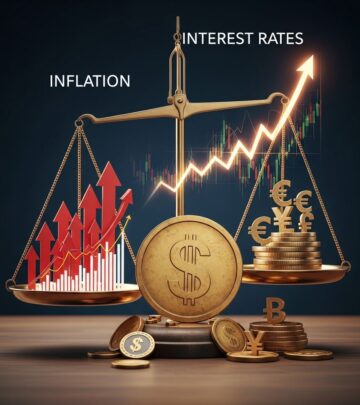
The Federal Reserve’s Role in Housing Inflation
The Federal Reserve has wielded considerable influence over the housing market through both quantitative easing programs and interest rate adjustments. During 2020 to 2022, the Fed’s aggressive monetary stimulus—including massive purchases of mortgage-backed securities totaling $1.33 trillion—fundamentally altered the housing landscape.
The Fed’s quantitative easing program was designed to lower interest rates and stimulate economic activity following the COVID-19 pandemic. However, research indicates that these MBS purchases may have contributed significantly to housing price appreciation during this period. By increasing demand for mortgages through lower rates, the Fed inadvertently encouraged more home purchases and refinancing activity, which in turn drove up prices.
Interest Rate Hikes and Market Slowdown
As inflation spiked in 2022, the Federal Reserve shifted course dramatically. The central bank enacted rate increases of as much as 0.75 percentage points as it attempted to combat rising prices. These aggressive hikes had immediate consequences for the housing market—home sales dropped sharply as higher borrowing costs made homeownership less affordable.
Interestingly, despite lower home sales, home prices continued climbing to record levels. This apparent contradiction reflects the complicated nature of housing markets, where prices are influenced by multiple factors beyond interest rates, including supply constraints, demographic shifts, and investor activity.
The Mortgage Rate Environment
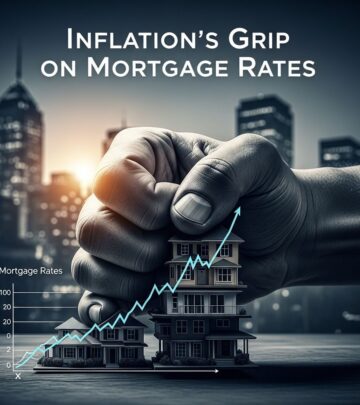
Mortgage rates have emerged as a critical factor affecting housing market dynamics. While the Federal Reserve does not directly control mortgage rates, its policy decisions significantly influence the yields on Treasury securities, which in turn affect mortgage pricing.
Current Mortgage Rate Trends
As of 2025, mortgage rates remain elevated despite the Federal Reserve’s rate cuts. Greg McBride, Bankrate’s chief financial analyst, notes that “despite interest rate cuts amounting to a full percentage point by the Federal Reserve in the latter part of 2024, mortgage rates bounded higher.” This divergence occurs because mortgage rates are also influenced by Treasury yields, which reflect inflation expectations, economic growth forecasts, and concerns about government borrowing.
The average 30-year fixed mortgage rate is expected to spend most of 2025 in the mid-to-high 6 percent range, with occasional spikes above 7 percent. For meaningful rate reductions to occur, inflation must resume its downward trajectory toward the Federal Reserve’s 2 percent target.
Impact of Rate Changes on Monthly Payments
The difference between mortgage rates may seem small, but the impact on monthly payments is substantial. Borrowing $320,000 at a 6.75 percent rate results in a monthly principal-and-interest payment of $2,076, while the same loan at 6 percent translates to a $1,919 monthly payment—a difference of $157 per month or more than $1,800 annually.
Home Prices and Affordability Challenges
Home prices have reached historic highs, creating significant affordability challenges for prospective buyers. The combination of elevated mortgage rates and steep home-price growth over recent years has crimped the ability of many households to enter the homeownership market.
Price Appreciation Patterns
Home-price growth has moderated somewhat compared to the pandemic boom. According to the Case-Shiller Index, home-price growth increased 2.7 percent in April 2025, representing a significant slowdown from the double-digit growth rates seen in previous years. The median existing-home sale price reached $422,400 in July, marking the highest July figure on record and the 25th consecutive month of year-over-year price increases.
The Affordability Crisis
With home prices historically high and mortgage rates remaining elevated, affordability has become a pressing concern. However, if mortgage rates eventually decline, affordability conditions could improve. Lower rates would directly reduce monthly mortgage payments, though they could also attract additional buyers to the market, potentially supporting further price appreciation.
The Interest Rate Lock-In Effect
One of the most significant consequences of higher mortgage rates is the “interest rate lock-in effect.” Homeowners who secured mortgages at historically low rates during 2020-2022 have little incentive to sell and refinance at higher rates. This constraint on mobility has important implications for the housing market.
Mark Hamrick, Bankrate’s senior economic analyst, describes this as “the remarkable rise in mortgage rates acting as a kind of golden handcuffs.” Higher rates are limiting both the desire and ability of people to move from their current homes, further pressuring housing inventory and compounding supply challenges.
How Rate Increases Affect Different Price Points
The interest rate lock-in effect is particularly pronounced for higher-priced homes. An increase in mortgage rates from 3 to 6 percent increases the monthly payment on a $200,000 house by $356, but increases the payment on a $300,000 house by $534 per month. This creates a more severe deterrent for selling among owners of expensive properties.
Supply Constraints and Market Dynamics
Housing inventory remains constrained, limiting the supply of available homes for purchase. The interest rate lock-in effect exacerbates this issue by discouraging homeowners from listing their properties. Additionally, higher construction costs driven by inflation have reduced new home building activity.
Construction is particularly sensitive to interest rates, with time lags between when builders need capital to begin projects and when homes can be sold. Rate cuts can accelerate construction timelines, while rate increases without a clear path to future reductions slow building activity significantly.
Inflation’s Current Status and Future Outlook
As of May 2025, the U.S. inflation rate stood at 2.4 percent, up slightly from 2.3 percent in April but still not quite at the Federal Reserve’s 2 percent target. Stubborn and elevated inflation, combined with faster-than-expected economic growth and government borrowing concerns, continues to support elevated Treasury yields and mortgage rates.
Economic Growth and Rate Expectations
Interestingly, periods of greater home price appreciation tend to coincide with periods of higher interest rates, contrary to what many might expect. This relationship exists because both high interest rates and home price appreciation correlate with strong macroeconomic growth. The Federal Reserve raises interest rates during periods of stronger economic growth, lower unemployment, and stronger wage growth.
What This Means for Homebuyers and Sellers
For Prospective Homebuyers
Prospective buyers face a challenging environment with elevated mortgage rates and high home prices. However, strategic timing remains important. As mortgage rates decline—if and when inflation moves toward the Fed’s 2 percent target—buying power will improve. The key is monitoring inflation trends and Federal Reserve communications to anticipate potential rate movements.
For Current Homeowners
The interest rate lock-in effect means that many current homeowners are financially committed to their existing mortgages. Those considering selling should carefully evaluate whether price appreciation justifies the costs of moving, particularly if they would need to refinance at substantially higher rates.
For Home Sellers
Sellers benefit from historically elevated prices, though transaction volume remains constrained. Homes that are priced competitively and well-maintained may attract motivated buyers despite the challenging affordability environment.
Federal Reserve Policy and Future Market Direction
The Federal Reserve’s policy decisions will remain crucial in shaping housing market outcomes. The central bank faces a delicate balancing act: raising rates to combat inflation while managing the impact on employment and housing affordability. After aggressive rate hikes in 2022 and 2023, the Fed began reducing rates in September 2024, followed by additional cuts through year-end 2024.
However, rate cuts alone may not substantially lower mortgage rates if inflation remains sticky or if concerns about government debt support higher Treasury yields. For meaningful improvement in housing affordability, inflation must clearly trend toward the Fed’s 2 percent target.
2025 Housing Market Outlook
The housing market in 2025 presents a more nuanced picture than the extremes of previous years. While affordability challenges persist, the rate of home price appreciation has moderated. The trajectory of inflation and Federal Reserve actions will determine whether conditions improve or deteriorate further.
Market analysts anticipate that mortgage rates will likely remain in the 6 to 7 percent range for most of 2025, with conditions gradually improving only if inflation demonstrates sustained movement toward the Fed’s target. Home price growth is expected to continue at a slower pace than recent years, reflecting both market saturation and affordability constraints.
Frequently Asked Questions
Q: How do Federal Reserve interest rate changes affect mortgage rates?
A: While the Federal Reserve doesn’t directly set mortgage rates, its policy decisions influence Treasury yields, which mortgage lenders use as a benchmark. When the Fed raises rates, mortgage rates typically increase; when it cuts rates, mortgage rates often decline, though the relationship is not always immediate or proportional.
Q: Why are home prices still rising if mortgage rates are so high?
A: Home prices are influenced by multiple factors beyond interest rates, including limited housing supply, strong demographic demand, inflation pushing construction costs higher, and wealthy investors purchasing property. The interest rate lock-in effect also reduces inventory, supporting prices despite higher borrowing costs.
Q: Could lower mortgage rates lead to higher home prices?
A: Yes. Lower rates could attract more buyers to the market, increasing demand and potentially pushing prices higher, even as monthly mortgage payments decline. This dynamic creates uncertainty about affordability improvements from rate cuts alone.
Q: When will mortgage rates return to 3 percent levels?
A: Mortgage rates are unlikely to return to the historically low 3 percent levels seen during 2020-2021 unless inflation falls significantly below the Fed’s 2 percent target, which seems unlikely in the near term. Rates in the 5.5 to 6.5 percent range may represent a more realistic expectation for improved affordability.
Q: How does quantitative easing affect housing prices?
A: Quantitative easing programs where the Fed purchases mortgage-backed securities increase MBS demand, lower mortgage rates, and stimulate home-buying demand. This increased demand leads to higher home prices. The Fed’s $1.33 trillion in MBS purchases from 2020-2022 accounted for nearly 90% of growth in MBS during that period and contributed significantly to home price appreciation.
References
- Federal Reserve Interest Rates And The Housing Market — Bankrate. 2025. https://www.bankrate.com/real-estate/how-fed-interest-rate-affects-housing-market/
- Quantitative Easing and Housing Inflation Post-COVID — Brookings Institution. Aaron Klein and Alan Cui. 2025. https://www.brookings.edu/articles/quantitative-easing-and-housing-inflation-post-covid/
- Housing Market Predictions For The Rest Of 2025 — Bankrate. 2025. https://www.bankrate.com/real-estate/housing-market-2025/
- Case-Shiller Index: Home Prices Keep Pushing Higher — Bankrate. 2025. https://www.bankrate.com/real-estate/case-shiller/
- Existing-Home Prices Rise Again, But Just Barely — Bankrate. 2025. https://www.bankrate.com/real-estate/existing-home-sales/
Similar Articles








Read full bio of medha deb