Inflation: Definition, Causes, Effects, and Economic Impact
Understanding inflation: How rising prices affect your purchasing power and economy.
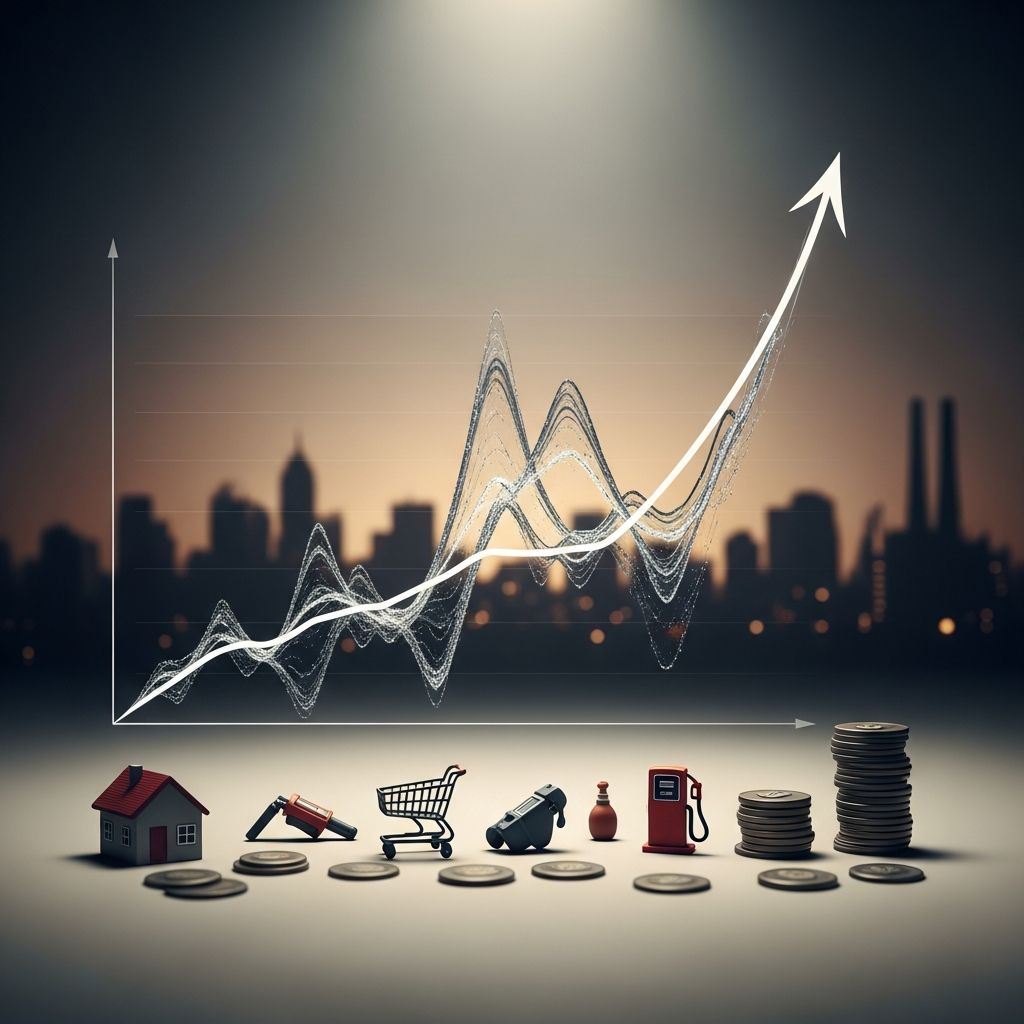
Inflation is one of the most fundamental concepts in economics, affecting everyone from individual consumers to large corporations and governments. Understanding what inflation is, how it develops, and its consequences is essential for making informed financial decisions, planning investments, and comprehending broader economic trends. This comprehensive guide explores inflation in detail, covering its definition, causes, measurement, effects, and strategies for managing it.
What is Inflation?
Inflation refers to the sustained increase in the general level of prices for goods and services in an economy over a period of time. When inflation occurs, each unit of currency buys fewer goods and services than it did previously, effectively reducing the purchasing power of money. For example, if inflation is 3% annually, an item costing $100 today would cost approximately $103 in one year, assuming the inflation rate remains constant.
The concept of inflation is closely tied to purchasing power parity, which measures the relative value of money in different economies. As inflation rises, the value of money falls, meaning consumers need more money to purchase the same quantity of goods and services they could afford before. This relationship between inflation and purchasing power is central to understanding inflation’s impact on the broader economy.
Key Characteristics of Inflation
- Continuous Price Increase: Inflation is characterized by ongoing price increases rather than one-time price adjustments.
- Widespread Effect: Inflation affects most goods and services across the economy, though different sectors may experience varying rates.
- Measured Over Time: Inflation is typically measured on a monthly, quarterly, or annual basis to track economic trends.
- Affects All Segments: Everyone from consumers to businesses to governments experiences the effects of inflation.
- Related to Money Supply: Changes in money supply often correlate with inflationary pressures in the economy.
How is Inflation Measured?
Governments and central banks employ various methods to measure inflation, with the most common being consumer price indices and producer price indices. These measurements help policymakers understand economic conditions and make decisions about monetary policy.
Consumer Price Index (CPI)
The Consumer Price Index represents the most widely used measure of inflation. It tracks price changes in a basket of consumer goods and services, including food, transportation, housing, healthcare, and entertainment. The CPI reflects the average change in prices paid by consumers over time and serves as a key indicator of inflation in the economy.
Producer Price Index (PPI)
The Producer Price Index measures price changes from the perspective of producers and sellers. It tracks prices at earlier stages of production and distribution, often serving as an early indicator of future consumer price inflation.
Personal Consumption Expenditures (PCE)
The PCE index measures the change in prices of goods and services purchased by consumers. Many central banks, including the Federal Reserve, use the PCE as their preferred inflation measure because it captures a broader range of consumer spending patterns.
Causes of Inflation
Inflation results from various economic factors and conditions. Understanding these causes helps explain why prices rise and how inflation develops in different economic environments.
Demand-Pull Inflation
Demand-pull inflation, often described as “too much money chasing too few goods,” occurs when aggregate demand exceeds aggregate supply. When consumers and businesses have more purchasing power than goods available, sellers raise prices to equilibrate supply and demand. This typically happens during economic booms or periods of strong growth.
Cost-Push Inflation
Cost-push inflation arises when production costs increase, forcing producers to raise prices to maintain profit margins. Common causes include rising wages, increased raw material costs, higher energy prices, and increased taxes. Unlike demand-pull inflation, cost-push inflation can occur during economic slowdowns, creating stagflation scenarios.
Built-in Inflation
Built-in inflation results from adaptive expectations where workers and businesses anticipate future inflation and adjust their behavior accordingly. Workers demand higher wages to maintain purchasing power, and businesses raise prices in anticipation of future cost increases, creating a self-perpetuating cycle.
Monetary Inflation
Monetary inflation occurs when the money supply grows faster than the growth of goods and services in the economy. Excessive expansion of the money supply by central banks can lead to inflation as more money circulates chasing the same amount of goods, driving prices upward.
Other Contributing Factors
- Supply chain disruptions that reduce available goods
- Natural disasters or geopolitical events that affect production
- Currency depreciation making imports more expensive
- Increased commodity prices affecting production costs
- Government spending exceeding tax revenue
Effects of Inflation
Inflation has far-reaching consequences for individuals, businesses, and the broader economy. These effects can be positive or negative depending on the inflation rate and economic context.
Effects on Consumers
Consumers face direct impacts from inflation through reduced purchasing power. Fixed incomes become less valuable as prices rise, making it harder to afford basic necessities. Savings lose real value unless earning interest rates exceeding the inflation rate. Consumers planning major purchases often accelerate timelines to avoid paying higher prices in the future.
Effects on Businesses
Businesses experience mixed effects from inflation. While rising prices can increase revenues, higher production costs may squeeze profit margins. Companies face uncertainty in planning and budgeting when prices fluctuate unpredictably. Small businesses often struggle more than large corporations with inflation because they have fewer resources to absorb cost increases or negotiate better prices.
Effects on Savers and Investors
Inflation erodes the real value of savings held in cash or low-interest accounts. Fixed-income investments like bonds suffer as inflation reduces the purchasing power of future payments. However, inflation can benefit investors in real assets, equities, and inflation-protected securities, providing opportunities for portfolio diversification and hedging strategies.
Effects on Lenders and Borrowers
Inflation benefits borrowers who repay loans with money that’s worth less than when they borrowed it. Conversely, lenders suffer as they receive repayment in depreciated currency. This dynamic influences interest rate determination, as lenders demand higher rates to compensate for anticipated inflation.
Types of Inflation
Economists classify inflation into different categories based on severity and rate of increase:
| Inflation Type | Definition | Characteristics |
|---|---|---|
| Moderate Inflation | Inflation ranging from 2-3% annually | Generally considered healthy for economic growth; encourages spending and investment |
| Rapid Inflation | Inflation exceeding 10% annually | Creates economic uncertainty; erodes savings; impacts purchasing power significantly |
| Hyperinflation | Extreme inflation, often exceeding 50% monthly | Severe economic disruption; currency becomes nearly worthless; economy often turns to barter or foreign currency |
| Deflation | Negative inflation; sustained price decreases | Consumers delay purchases; wages fall; debt burden increases; can lead to economic stagnation |
Inflation and Central Bank Policy
Central banks, such as the Federal Reserve in the United States, implement monetary policies to control inflation and achieve economic stability. These policies include adjusting interest rates, controlling money supply growth, and managing inflation expectations through forward guidance. By raising interest rates, central banks can slow inflation by reducing the money supply and discouraging borrowing and spending. Conversely, lowering rates stimulates the economy but may increase inflationary pressures if growth accelerates too rapidly.
Managing and Protecting Against Inflation
Individuals and organizations employ various strategies to manage inflation’s impact on their finances and investments:
Investment Strategies
- Real Assets: Investing in real estate, commodities, and tangible assets that often appreciate with inflation
- Inflation-Protected Securities: Treasury Inflation-Protected Securities (TIPS) adjust principal based on inflation measurements
- Equity Investments: Stocks may provide inflation protection as companies can raise prices and increase revenues
- Diversification: Spreading investments across asset classes reduces vulnerability to inflation’s effects
Personal Finance Strategies
- Negotiate Raises: Seeking wage increases aligned with inflation preserves purchasing power
- Fixed-Rate Debt: Locking in fixed interest rates before inflation rises protects borrowers
- Reduce Fixed Expenses: Minimizing fixed costs provides flexibility as prices change
- Increase Income Sources: Developing multiple income streams provides financial resilience
Frequently Asked Questions About Inflation
Q: What is considered a healthy inflation rate?
A: Most central banks target inflation rates between 1-3% annually, with the Federal Reserve specifically targeting 2%. This moderate level encourages spending and investment while minimizing the negative effects of excessive inflation or deflation.
Q: How does inflation affect real wages?
A: Real wages measure purchasing power after accounting for inflation. If inflation exceeds wage growth, real wages decline, meaning workers can afford less despite higher nominal salaries. Workers must negotiate raises matching or exceeding inflation to maintain purchasing power.
Q: Can deflation be worse than inflation?
A: Yes, deflation can be economically harmful. When prices fall, consumers delay purchases anticipating further declines, reducing spending and economic growth. Debt burden increases in real terms, and unemployment may rise as businesses struggle with lower revenues.
Q: How does inflation impact bonds?
A: Rising inflation erodes the real value of fixed-rate bond payments. Existing bonds decline in value as new bonds offer higher yields compensating for inflation. Investors holding bonds when inflation rises experience capital losses.
Q: What is hyperinflation and when does it occur?
A: Hyperinflation is extreme inflation, typically defined as monthly rates exceeding 50%. It usually occurs during severe economic crises, wars, or when governments print excessive money to finance spending without corresponding economic growth.
Q: How is inflation different from price increases?
A: Inflation represents widespread, sustained price increases across the economy measured over time. Individual price increases for specific goods are not inflation; inflation requires persistent broad-based increases affecting purchasing power.
References
- Understanding Inflation — Board of Governors of the Federal Reserve System. 2024. https://www.federalreserve.gov/faqs/economy_14400.htm
- Consumer Price Index – What Is It? — U.S. Bureau of Labor Statistics. 2024. https://www.bls.gov/cpi/questions-and-answers.htm
- Inflation: Causes and Effects — International Monetary Fund (IMF). 2023. https://www.imf.org/external/pubs/ft/fandd/2016/06/basics.htm
- The Relationship Between Inflation and Interest Rates — OECD Economics Department. 2023. https://www.oecd.org/economy/
- Monetary Policy and Inflation Control — World Bank. 2024. https://www.worldbank.org/en/topic/macroeconomics/brief/all
Similar Articles








Read full bio of Sneha Tete