Inelastic Demand: Definition, Formula, Curve & Examples
Master inelastic demand: Learn definitions, formulas, curves, and real-world examples.
Understanding Inelastic Demand
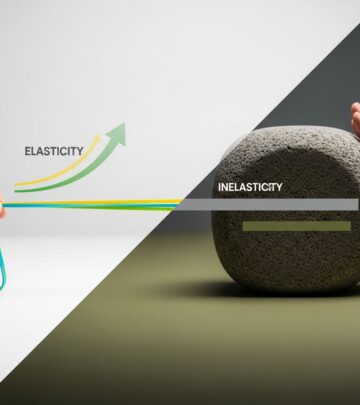
Inelastic demand is a fundamental economic concept that describes a situation where the quantity demanded of a good or service does not change significantly in response to changes in its price. In other words, when the price of a product increases or decreases, consumers continue to purchase roughly the same quantity because their need for the product remains constant. This contrasts sharply with elastic demand, where price changes result in proportionally larger changes in quantity demanded.
The concept of inelastic demand is particularly important for businesses, policymakers, and economists because it helps explain consumer behavior across different markets and industries. Understanding whether demand for a product is elastic or inelastic can inform pricing strategies, tax policies, and business revenue projections.
Definition of Inelastic Demand
Inelastic demand occurs when a buyer’s demand for a product does not change substantially as its price changes. More formally, demand is considered price inelastic when a change in price causes a smaller percentage change in quantity demanded. This is measured using the price elasticity of demand coefficient, which in inelastic situations is less than one.
For example, if the price of a product increases by 20% but demand decreases by only 1%, the demand for that product is said to be inelastic. Similarly, when prices decrease, demand does not increase substantially because consumers have limited needs for the product. This situation typically occurs with everyday household products and essential services that people need regardless of price fluctuations.
Goods that exhibit inelastic demand share common characteristics: they have few or no substitutes, are considered necessities by consumers, and are often items that consumers purchase out of habit or essential need rather than discretionary choice.
Key Characteristics of Inelastic Demand
Several defining features distinguish inelastic demand from other types of demand:
- Price Insensitivity: Consumers remain relatively insensitive to price changes. Even significant price increases may result in only minor changes in quantity demanded.
- Few or No Substitutes: Inelastic demand typically occurs when few or no alternative products are available. Consumers have limited options to switch to if prices change.
- Essential or Necessary Goods: Products associated with inelastic demand are usually necessities such as food, medications, utilities, and basic services that consumers must purchase regardless of price.
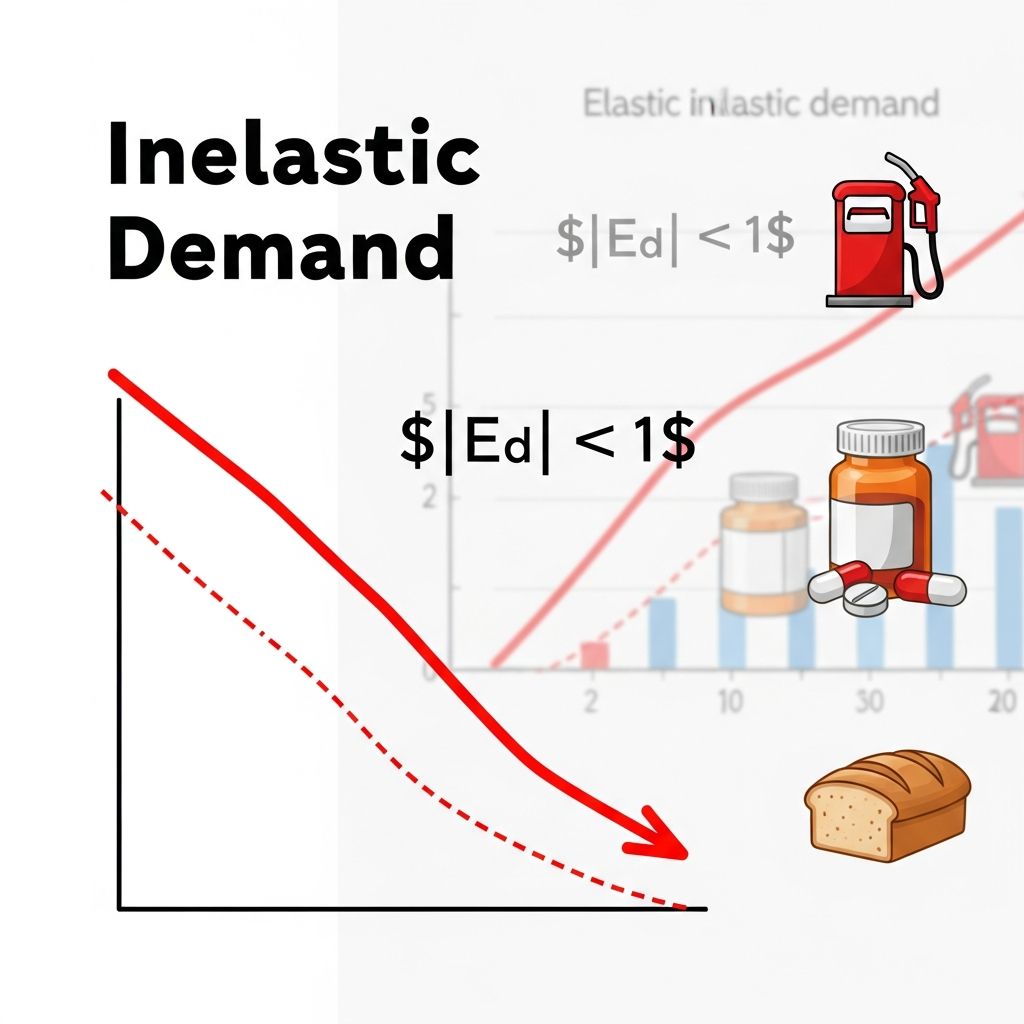
- Steep Demand Curve: When graphed, the demand curve for inelastic goods appears relatively steep, indicating that price changes lead to proportionally smaller changes in quantity demanded.
- Elasticity Coefficient Below One: The price elasticity of demand (PED) coefficient for inelastic goods is less than 1, meaning the percentage change in quantity demanded is less than the percentage change in price.
The Price Elasticity of Demand Formula
The price elasticity of demand is calculated using a specific formula that quantifies the relationship between price changes and quantity demanded changes:
Price Elasticity of Demand (PED) = Percentage Change in Quantity Demanded / Percentage Change in Price
This formula provides a numerical value that indicates how responsive consumer demand is to price changes. When the resulting coefficient is less than 1, demand is considered inelastic. When it equals 1, demand is unitary elastic. When it exceeds 1, demand is elastic.
To calculate the percentage changes, use the following approach:
- Percentage Change in Quantity = (New Quantity – Old Quantity) / Old Quantity × 100
- Percentage Change in Price = (New Price – Old Price) / Old Price × 100
For instance, if the price of a product decreased by 10% and the quantity demanded remained unchanged, the elasticity calculation would be: 0% / (-10%) = 0, indicating perfectly inelastic demand. Conversely, if the price decreased by 10% and quantity demanded increased by 5%, the calculation would be: 5% / (-10%) = -0.5, which represents inelastic demand since the coefficient is less than 1 in absolute value.
Types of Inelastic Demand
There are two primary types of inelastic demand that economists recognize:
1. Perfectly Inelastic Demand
Perfectly inelastic demand occurs when a change in price does not result in any change in the quantity demanded at all. The elasticity coefficient for perfectly inelastic demand equals zero. In real-world scenarios, perfectly inelastic demand is rare, but it serves as an important theoretical concept. Examples might include life-saving medications where consumers will purchase the same quantity regardless of price changes, or emergency services where demand remains constant irrespective of cost variations.
2. Inelastic Demand
Standard inelastic demand represents situations where price changes result in relatively smaller changes in quantity demanded, with the elasticity coefficient between 0 and 1. This is the most common form of inelastic demand observed in real markets, particularly for essential goods and services.
Inelastic Demand Curve Explained
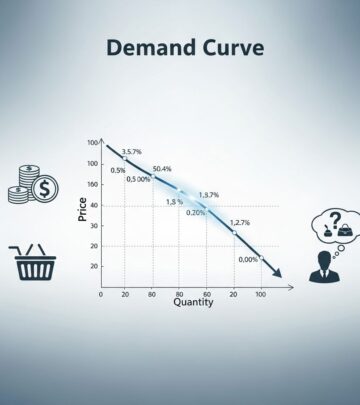
The demand curve is a graphical representation that illustrates the relationship between price and quantity demanded. For inelastic goods, this curve has distinctive characteristics that make it visually identifiable.
When graphing an inelastic demand curve, price is placed on the Y-axis (vertical) and quantity demanded is placed on the X-axis (horizontal). The resulting line appears relatively steep or vertical, indicating that changes in price lead to only small changes in quantity demanded. In contrast, elastic demand curves appear relatively flat, showing that price changes result in proportionally larger quantity changes.
For perfectly inelastic demand, the demand curve appears as a completely vertical line, demonstrating that quantity demanded remains identical regardless of price level. The steepness of the curve directly reflects the degree of price insensitivity in the market.
Real-World Examples of Inelastic Demand
Understanding inelastic demand becomes clearer when examining practical, everyday examples:
Essential Medications
Prescription medications necessary for managing chronic conditions display inelastic demand. Patients with diabetes, heart conditions, or other illnesses will purchase their medications at prescribed dosages regardless of price increases. If insulin prices double, diabetic patients cannot simply reduce their consumption by 50%; they need consistent doses for health maintenance.
Gasoline and Fuel
In the short term, demand for gasoline shows inelastic characteristics. When oil prices spike, consumers continue purchasing roughly similar amounts of fuel because commuting to work remains necessary. While extremely high prices might eventually lead to behavioral changes like carpooling or reduced driving, in the immediate term, consumption remains relatively stable.
Utilities
Electricity, water, and natural gas represent essential services with inelastic demand. Households must maintain heating, cooling, and basic appliance usage regardless of price fluctuations. While significant price increases might eventually encourage conservation measures, immediate demand remains largely unresponsive to price changes.
Basic Food Items
Staple foods like bread, rice, milk, and eggs demonstrate inelastic demand characteristics. Families need to purchase these items regularly regardless of modest price increases. People cannot substantially reduce their food consumption without impacting nutrition and health.
Factors Influencing Inelastic Demand
Several important factors determine whether a product exhibits inelastic demand characteristics:
Availability of Substitutes
Products with few or no close substitutes typically exhibit inelastic demand. When consumers cannot easily switch to alternative products, price changes have minimal impact on quantity demanded. Conversely, products with many available substitutes tend toward elastic demand.
Necessity vs. Luxury
Essential goods and services show inelastic demand, while luxury items typically demonstrate elastic demand. Consumers prioritize purchasing necessities regardless of price, but readily reduce luxury purchases when prices increase.
Time Horizon
The period following a price change affects elasticity. In the short term, consumers have limited ability to adjust their behavior, resulting in more inelastic demand. Over longer periods, consumers can find substitutes and make lifestyle adjustments, making demand more elastic.
Market Structure
Monopolistic markets tend to exhibit more inelastic demand because consumers have no alternative suppliers. In competitive markets with many producers, demand tends to be more elastic due to readily available substitutes.
Habitual Consumption
When a product becomes the default choice for consumers, they become less affected by price changes. For example, loyal coffee drinkers maintain consistent purchases despite price increases.
Peak vs. Off-Peak Demand
During peak periods when many buyers seek the product, demand tends to remain price inelastic. During off-peak seasons, demand becomes more elastic as fewer buyers are competing.
Inelastic Demand vs. Elastic Demand
Understanding the distinction between inelastic and elastic demand is crucial for economic analysis and business strategy:
| Aspect | Inelastic Demand | Elastic Demand |
|---|---|---|
| Price Sensitivity | Low; consumers are relatively insensitive to price changes | High; consumers are very responsive to price changes |
| Price Changes Effect | Smaller percentage changes in quantity demanded | Larger percentage changes in quantity demanded |
| Elasticity Coefficient | Less than 1 | Greater than 1 |
| Product Types | Necessities, essentials, few substitutes | Luxuries, non-essentials, many substitutes |
| Demand Curve Shape | Steep vertical line | Flat horizontal line |
| Consumer Behavior | Purchase same quantity regardless of price | Significantly change quantity based on price |
| Revenue Impact | Price increase raises total revenue | Price increase reduces total revenue |
Economic Implications of Inelastic Demand
The presence of inelastic demand has significant implications for various economic actors:
Producer Pricing Power
When demand is inelastic, producers have greater pricing power. They can increase prices without losing significant sales volume, allowing revenue growth. However, this must be balanced against regulatory and ethical considerations.
Tax Revenue Effects
Governments often levy taxes on inelastic goods like cigarettes, alcohol, and fuel because consumers continue purchasing despite price increases, ensuring steady tax revenue. This approach generates substantial government income while potentially achieving public health or environmental objectives.
Consumer Burden
When demand is inelastic, most of the tax burden falls on consumers rather than producers. Consumers absorb the price increase and continue purchasing similar quantities, while producers’ sales volumes remain relatively stable.
Market Stability
Inelastic demand creates more stable markets. Prices can fluctuate significantly without causing dramatic quantity changes, making markets more predictable for planning purposes.
The Five Types of Demand Elasticity
Beyond inelastic demand, economists recognize five distinct categories of demand elasticity:
- Perfectly Elastic Demand: When the elasticity coefficient is infinite, indicating consumers will purchase any quantity at a specific price but nothing at higher prices.
- Perfectly Inelastic Demand: When the elasticity coefficient equals zero, indicating quantity demanded never changes regardless of price.
- Unitary Elastic Demand: When the elasticity coefficient equals exactly one, indicating price and quantity changes are proportionally equivalent.
- Elastic Demand: When the elasticity coefficient exceeds one, indicating quantity changes are proportionally larger than price changes.
- Inelastic Demand: When the elasticity coefficient is between zero and one, indicating quantity changes are proportionally smaller than price changes.
Frequently Asked Questions About Inelastic Demand
Q: What is the primary difference between inelastic and elastic demand?
A: The main difference is price sensitivity. Inelastic demand means consumers are relatively unresponsive to price changes, while elastic demand means consumers significantly change their purchasing quantity in response to price changes. With inelastic demand, the elasticity coefficient is less than 1; with elastic demand, it exceeds 1.
Q: Can a product’s demand shift from inelastic to elastic over time?
A: Yes, demand can change its elasticity characteristics over time. In the short term, many products show inelastic demand because consumers cannot immediately adjust their behavior. As time passes and substitutes become available, demand may become more elastic. For example, high gasoline prices might lead to increased public transportation use over years, making demand more elastic.
Q: Why do governments often tax inelastic goods?
A: Governments tax inelastic goods because these taxes generate substantial revenue. Since consumers continue purchasing similar quantities despite price increases, the tax base remains stable. Additionally, governments may use such taxes to discourage consumption of harmful products like cigarettes and alcohol while generating revenue.
Q: How can businesses use inelastic demand knowledge in pricing strategies?
A: Businesses selling products with inelastic demand can implement price increases without significantly reducing sales volume, thereby increasing revenue. However, they must balance this against competitive pressures, ethical considerations, and potential regulatory scrutiny, particularly for essential goods.
Q: What is the elasticity coefficient for perfectly inelastic demand?
A: The elasticity coefficient for perfectly inelastic demand is zero (0). This indicates that quantity demanded remains completely unchanged regardless of price fluctuations, resulting in a perfectly vertical demand curve.
Q: Are all essential goods examples of inelastic demand?
A: While most essential goods exhibit inelastic demand characteristics, not all are perfectly inelastic. For example, basic food items show inelastic demand, but consumers might still reduce consumption if prices become extremely high. The degree of inelasticity varies depending on specific product characteristics and available substitutes.
References
- Inelastic Demand – Definition, Formula, Calculation — Corporate Finance Institute. 2025. https://corporatefinanceinstitute.com/resources/economics/inelastic-demand/
- Difference between Elastic and Inelastic Demand — GeeksforGeeks. July 23, 2025. https://www.geeksforgeeks.org/microeconomics/difference-between-elastic-and-inelastic-demand/
- Inelastic Demand and Taxes — Economics Help. 2025. https://www.economicshelp.org/blog/531/economics/inelastic-demand-and-taxes/
Similar Articles








Read full bio of Sneha Tete