Industrialization: Definition, History, and Economic Impact
Understanding industrialization: The transformation from agrarian to manufacturing economies and its global effects.
What Is Industrialization?
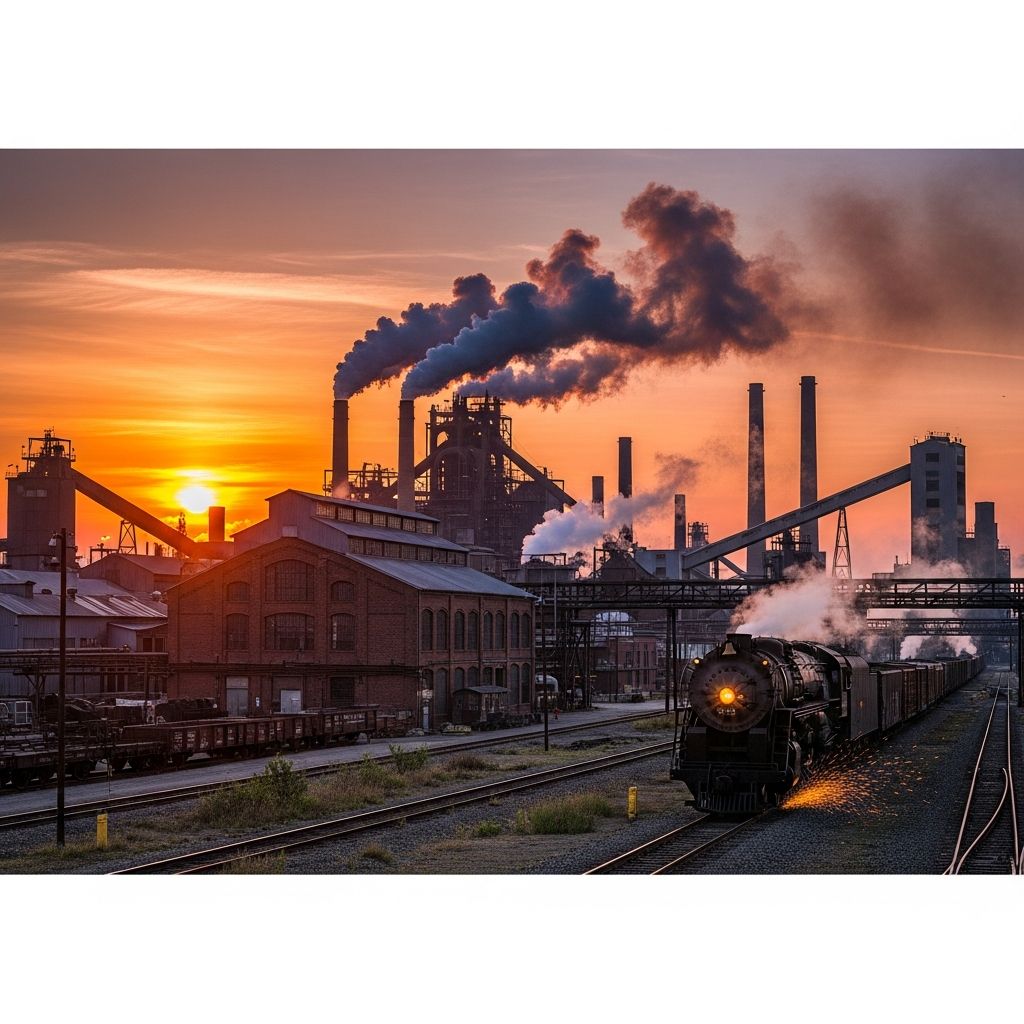
Industrialization represents a fundamental transformation of human economic and social organization, marking the transition from agrarian and handicraft-based economies to manufacturing and factory-based systems. This pivotal shift fundamentally altered the way societies produce goods, organize labor, and distribute resources. The process began in Great Britain during the late 18th century and gradually spread across Europe, North America, and eventually to the rest of the world, reshaping civilizations in profound and lasting ways.
At its core, industrialization involves the development and application of mechanical power, the establishment of factories and large-scale production facilities, and the implementation of advanced technologies to streamline manufacturing processes. This transition represents more than merely a change in production methods; it encompasses broader social, cultural, technological, and demographic transformations that continue to influence modern society.
Understanding Industrialization: Key Components
Industrialization encompasses several interconnected elements that work together to transform economies:
Mechanization and Technology
The development and adoption of mechanical innovations formed the foundation of industrialization. Steam engines, textile machinery, iron production techniques, and transportation innovations enabled manufacturers to produce goods at unprecedented scales and speeds. These technological advances dramatically increased productivity while simultaneously reducing production costs, making manufactured goods more accessible to broader populations.
Factory System Development
The factory system centralized production under single roofs, replacing cottage industries and scattered workshops. This concentration allowed for better organization, quality control, and efficiency. Workers shifted from producing goods independently to performing specialized tasks within larger production operations, fundamentally changing labor dynamics and worker-employer relationships.
Capital Accumulation
Industrialization required substantial capital investment in machinery, facilities, and infrastructure. This concentrated wealth creation among entrepreneurs and industrialists, leading to new social hierarchies and economic structures. The accumulation of capital fueled further expansion and innovation, creating a self-reinforcing cycle of industrial growth.
Resource Extraction and Transportation
Industrial economies depended heavily on raw materials—coal, iron ore, cotton, and timber. This drove expansion of mining operations, agriculture specialization, and the development of transportation networks, including railroads and canals, to move raw materials to factories and finished goods to markets.
Historical Development of Industrialization
The First Industrial Revolution (1760-1840)
Great Britain initiated industrialization during the late 18th century, driven by several convergent factors: accumulated capital from colonial trade, technological innovations, available labor, abundant coal resources, and favorable political conditions. Key inventions like the steam engine (James Watt), the spinning jenny, the power loom, and iron production advances revolutionized textile manufacturing and metal production. Britain’s dominance in global trade during this period enabled it to become the world’s first industrial powerhouse.
The Second Industrial Revolution (1870-1914)
This phase expanded industrialization beyond textiles to chemicals, steel, electricity, and petroleum. Germany, the United States, and other nations rapidly industrialized, leveraging technological advances and capital from earlier periods. The development of electricity transformed manufacturing capabilities and enabled new industries. This era witnessed intensified international competition for resources and markets, setting the stage for modern industrial economies.
Twentieth Century and Modern Industrialization
Following the World Wars, industrialization accelerated globally. Japan, South Korea, Taiwan, and later China pursued rapid industrialization strategies, transforming from agrarian societies into manufacturing powerhouses. Contemporary industrialization increasingly incorporates digital technologies, automation, artificial intelligence, and sustainable practices, representing ongoing evolution of industrial processes.
Economic Impacts of Industrialization
GDP and Economic Growth
Industrialization dramatically expanded economic output and per capita income. Nations that successfully industrialized experienced sustained economic growth, with GDP increasing exponentially compared to pre-industrial periods. This wealth creation enabled improved living standards, increased consumption, and expanded government revenues.
Trade and Specialization
Industrial economies became dominant in global trade, exporting manufactured goods in exchange for raw materials. Industrialized nations specialized in production, creating comparative advantages that structured international commerce. This trade pattern enriched industrial nations while often disadvantaging non-industrialized regions dependent on exporting raw materials at lower prices.
Employment and Labor Markets
Industrialization created new employment opportunities in factories, but also displaced agricultural workers and artisans. Initially, working conditions were harsh, with long hours, low wages, and unsafe environments. Over time, labor movements secured improved conditions, though disparities between developed and developing nations’ industrial labor standards persist today.
Infrastructure Development
Industrial economies invested heavily in infrastructure: railroads, roads, ports, and communication systems. These networks facilitated commerce, connected markets, and supported economic integration. Infrastructure development became characteristic of industrializing nations and remains essential for contemporary economic competitiveness.
Social and Demographic Consequences
Urbanization
Industrialization concentrated populations in urban centers around factories and manufacturing hubs. Rapid urbanization created opportunities but also challenges: crowded housing, inadequate sanitation, disease, and social tensions. Modern cities emerged from industrial centers, with their spatial organization reflecting manufacturing locations and transportation networks.
Class Structure and Social Hierarchy
Industrialization created new social classes: industrial capitalists, factory owners, and a large working class. Traditional agrarian hierarchies transformed, though new inequalities emerged. The middle class expanded, consisting of managers, professionals, and merchants serving industrial economies. These social transformations generated new political ideologies and movements.
Family Structure Changes
Industrialization altered family dynamics. Women and children increasingly entered factory work, changing family labor patterns. Educational systems expanded to prepare workers for industrial employment. Extended family networks weakened as people migrated to industrial centers, while nuclear families became more prevalent in urban industrial societies.
Population Growth
Industrialization coincided with population expansion in developed nations. Improved living standards, healthcare advances, and increased food production enabled larger populations. This demographic shift provided labor for industrial expansion while creating pressures on resources and environments.
Environmental and Resource Implications
Resource Consumption
Industrialization dramatically increased extraction and consumption of natural resources. Coal mining, oil drilling, timber harvesting, and metal mining accelerated to supply industrial production. This intensive resource exploitation created environmental degradation in industrial regions and contributed to global resource depletion pressures.
Pollution and Environmental Damage
Factory emissions, waste disposal, and transportation pollution created severe environmental challenges. Air pollution from coal burning damaged urban environments and human health. Water pollution from industrial waste contaminated rivers and groundwater. These environmental costs, initially externalized from market prices, have increasingly become recognized and regulated in modern industrial economies.
Climate Implications
Fossil fuel consumption during industrialization significantly increased atmospheric carbon dioxide levels, contributing to climate change. The transition from renewable energy sources (biomass) to carbon-intensive fuels (coal, oil, gas) created the foundation for contemporary climate challenges. Addressing industrialization’s climate legacy represents a central contemporary policy concern.
Technological Innovation and Progress
Continuous Innovation Cycles
Industrialization established technological innovation as a central economic driver. Competition among firms motivated continuous improvement and new inventions. This innovation cycle accelerated technological change, with innovations in one sector often generating advances in others. The pace of innovation became characteristic of industrial economies and remains fundamental to modern competitiveness.
Scientific Development
Industrial development created demand for scientific advancement. Chemistry, physics, and engineering sciences expanded to support industrial production. Universities increasingly focused on practical scientific knowledge applicable to manufacturing. Science and technology became institutionalized within industrial societies, creating self-reinforcing innovation systems.
Transportation and Communication Revolutions
Industrialization revolutionized transportation through railroads, steamships, and automobiles, enabling goods movement and market integration. Communication technologies—telegraph, telephone, radio—connected distant markets and coordinated production. Modern global supply chains emerged from these transportation and communication revolutions.
Global Spread and Contemporary Industrialization
Diffusion Patterns
Industrialization spread unevenly across the globe, following patterns of capital accumulation, technological access, and political stability. European nations industrialized first, followed by North America, then gradually spreading to Asia, Latin America, and Africa. Contemporary patterns show concentration in East Asia, with China becoming the world’s manufacturing center,,,, while newer industrial phases emerge in Southeast Asia and India.
Development Pathways
Nations have pursued varied industrialization strategies: rapid state-directed development (Soviet Union, China), export-led growth (Taiwan, South Korea), import substitution (Latin America), and gradual market-driven development (Western nations). Each pathway produced different social, environmental, and economic outcomes, with varying sustainability and equity implications.
Service Economy Transitions
Advanced industrial nations increasingly transition toward service and knowledge economies as manufacturing declines. This post-industrial shift moves employment toward finance, healthcare, education, technology, and entertainment sectors. However, manufacturing remains crucial for many developing nations pursuing industrialization strategies.
Challenges and Contemporary Issues
Labor Exploitation Concerns
Contemporary industrialization in developing nations often reproduces historical patterns of labor exploitation: low wages, hazardous conditions, child labor, and limited worker protections. Global supply chains sometimes concentrate production in nations with weak labor standards, perpetuating these challenges despite international labor organization efforts.
Sustainability and Green Industrialization
Modern industrialization increasingly incorporates environmental concerns, though application remains inconsistent globally. Green manufacturing technologies, renewable energy adoption, and circular economy principles represent efforts to decouple industrial production from environmental damage. Balancing development aspirations with sustainability requirements presents ongoing challenges for industrializing nations.
Automation and Employment Transformation
Advanced automation, robotics, and artificial intelligence reshape industrial labor. While productivity increases, employment displacement concerns intensify. Developing nations pursuing traditional industrialization strategies face uncertainty regarding labor-intensive manufacturing’s viability as automation becomes economically dominant.
Frequently Asked Questions
Q: What is the primary definition of industrialization?
A: Industrialization is the economic and social transformation from agrarian, handicraft-based economies to manufacturing-centered systems utilizing mechanical power, factories, and large-scale production technologies to produce goods efficiently.
Q: Which nation first industrialized and when?
A: Great Britain initiated industrialization during the late 18th century (approximately 1760-1840), driven by technological innovations, available capital, coal resources, and favorable political conditions. This First Industrial Revolution established the model for subsequent global industrialization.
Q: How did industrialization affect employment and labor?
A: Industrialization initially created factory employment while displacing agricultural workers and artisans. Early industrial conditions were harsh with low wages and unsafe environments. Over time, labor movements improved conditions in developed nations, though contemporary developing-nation manufacturing often reproduces historical exploitation patterns.
Q: What environmental consequences resulted from industrialization?
A: Industrialization increased resource extraction, created substantial pollution, and significantly elevated greenhouse gas emissions through fossil fuel consumption. Environmental degradation in industrial regions and contemporary climate change represent major legacies requiring ongoing mitigation and adaptation efforts.
Q: How does contemporary industrialization differ from historical patterns?
A: Modern industrialization increasingly incorporates automation, digital technologies, artificial intelligence, and environmental considerations. Contemporary challenges include labor automation displacement, supply chain complexity, sustainability integration, and ensuring equitable development in newly industrializing nations.
Q: Can industrialization be sustainable?
A: Yes, green industrialization incorporating renewable energy, circular economy principles, efficiency improvements, and environmental technologies enables manufacturing with reduced environmental impact. However, widespread implementation requires policy support, technological investment, and corporate commitment to sustainability alongside profitability.
References
- The Industrial Revolution and Its Consequences — Organisation for Economic Co-operation and Development (OECD). 2023. https://www.oecd.org/economy/
- History of Industrialization — Cambridge University Press, Department of History. 2024. https://www.cambridge.org/
- Global Manufacturing and Industrial Development Report — United Nations Industrial Development Organization (UNIDO). 2024. https://www.unido.org/
- Environmental Impacts Of Industrial Development — United Nations Environment Programme (UNEP). 2024. https://www.unep.org/
- Labor Standards and Industrial Economies — International Labour Organization (ILO). 2024. https://www.ilo.org/
- Economic Growth and Industrialization Patterns — World Bank. 2024. https://www.worldbank.org/
Similar Articles








Read full bio of Sneha Tete