Indiana Mortgage Rates: Current Trends and Refinancing Options
Explore current Indiana mortgage rates, refinancing options, and expert tips for finding the best loan for your home.
Current Indiana Mortgage Rates Overview
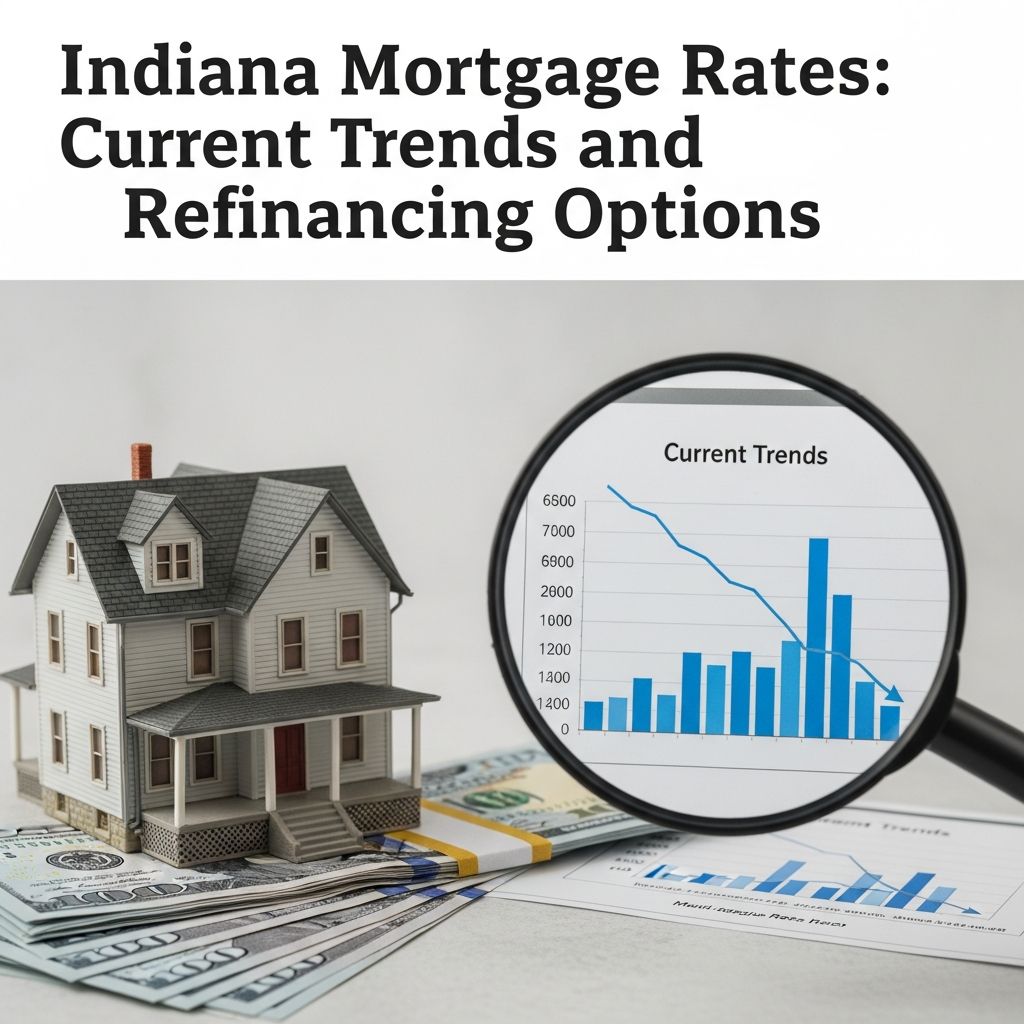
As of Saturday, November 29, 2025, mortgage rates in Indiana continue to reflect national trends, with significant activity in the lending market. The current interest rate landscape shows that a 30-year fixed mortgage in Indiana stands at approximately 6.14 percent, while the 15-year fixed mortgage rate is around 5.44 percent. These rates represent the ongoing market conditions that borrowers face when seeking to purchase or refinance properties in the state.
The mortgage market in Indiana, like the rest of the nation, has experienced substantial changes over the past two years. Rates have predominantly remained above 6 percent, with many periods seeing rates exceed 7 percent. However, recent months have brought some relief to borrowers. Starting the year around 7 percent, rates have gradually decreased due to economic concerns and inflation-related adjustments. Financial experts anticipate that rates may continue to decline slightly as the calendar turns toward the new year, though analysts consensus suggests that rates will likely maintain positions above 6 percent throughout the foreseeable future.
Understanding Indiana’s Real Estate Market
Indiana’s housing market presents unique characteristics that potential buyers and current homeowners should understand. Recent market data from August 2025 reveals important benchmarks for understanding the state’s real estate landscape:
- Median home sales price: $260,000
- Median home value: $251,050
- Median down payment: $45,250
- Median days on market: 33 days (as of September 2025)
- Percentage of homes sold above list price: 18.5 percent
- Percentage of homes with price reductions: 40.9 percent
- Homeownership rate: 73.4 percent (Q2 2025)
These metrics indicate a balanced market where buyers have some negotiating power. The fact that 40.9 percent of homes experienced price drops suggests that sellers are adjusting expectations in response to current market conditions. With homes staying on the market for approximately 33 days on average, Indiana offers reasonable timeframes for both buyers and sellers to make informed decisions.
Refinance Rates and Opportunities
Refinancing remains an important consideration for current homeowners, particularly those who obtained mortgages when rates were substantially higher. Mortgage refinance rates have declined somewhat from recent peaks, creating potential opportunities for strategic homeowners. If you secured your original mortgage when rates hovered near 8 percent, refinancing now could yield meaningful monthly savings.
However, homeowners should carefully evaluate their specific situations before refinancing. According to the Federal Reserve Bank of New York, approximately 14 million mortgages were refinanced during the pandemic. If your mortgage falls into this category, additional refinancing may not provide sufficient savings to justify the closing costs and administrative effort involved. Current refinance rates for a 30-year fixed mortgage stand at approximately 6.67 percent, which may not represent substantial savings for those who already secured favorable pandemic-era rates.
Mortgage Options Available in Indiana
Indiana borrowers have access to several mortgage products suited to different financial situations and objectives. Understanding these options helps borrowers select the most appropriate lending vehicle for their circumstances.
Conventional Mortgages
Conventional mortgages represent the most common mortgage type available to Indiana borrowers. To qualify for a conventional mortgage in Indiana, lenders typically require a minimum credit score of 620 and a debt-to-income ratio (DTI) of no more than 45 percent. Some progressive lenders may extend this to 50 percent, while others maintain stricter standards requiring a DTI of 36 percent or less. Understanding your current debt-to-income ratio is crucial before beginning the mortgage application process.
Government-Backed Loan Programs
In addition to conventional mortgages, Indiana borrowers may qualify for government-backed loan programs. Federal Housing Administration (FHA) loans offer more flexible credit requirements and lower down payment options, making them attractive to first-time homebuyers. Veterans may benefit from VA loans, which often feature competitive rates and favorable terms. The U.S. Department of Agriculture also administers USDA loans for eligible rural properties.
Indiana-Specific First-Time Homebuyer Programs
Indiana provides specialized assistance programs designed to help first-time homebuyers enter the market. These programs demonstrate the state’s commitment to expanding homeownership opportunities.
IHCDA Step Down Program
The Indiana Housing and Community Development Authority (IHCDA) offers the Step Down program, a 30-year mortgage product featuring an interest-only structure. This program serves both first-time buyers and repeat buyers seeking homes in targeted areas. The Step Down program can be structured as either an FHA or conventional mortgage, providing flexibility based on individual financial situations. The interest-only component during the initial years allows borrowers to build equity while managing monthly payment obligations.
IHCDA First Step Program
Complementing the Step Down program, the First Step program provides eligible borrowers with up to 5 percent of their home’s purchase price in down-payment assistance. Borrowers who qualify for the Step Down program automatically become eligible for First Step assistance. This combination significantly reduces the upfront capital requirements for purchasing a home in Indiana, making homeownership more accessible to qualified applicants.
National Mortgage Rate Trends
While this article focuses on Indiana, understanding national mortgage trends provides valuable context. As of Saturday, November 29, 2025, the national average 30-year fixed mortgage APR stands at 6.31 percent, with the 15-year fixed rate at 5.69 percent. Refinance rates average 6.74 percent for 30-year fixed mortgages and 6.13 percent for 15-year fixed mortgages.
| Loan Product | Interest Rate | APR |
|---|---|---|
| 30-Year Fixed Rate | 6.25% | 6.31% |
| 20-Year Fixed Rate | 5.99% | 6.08% |
| 15-Year Fixed Rate | 5.60% | 5.69% |
| 10-Year Fixed Rate | 5.63% | 5.74% |
| 30-Year FHA | 6.04% | 6.10% |
| 30-Year VA | 6.23% | 6.28% |
| 30-Year Jumbo | 6.41% | 6.44% |
Five-Step Strategy for Finding the Best Mortgage Rate in Indiana
Successfully securing an optimal mortgage rate requires strategic planning and careful execution. Follow these five essential steps to navigate the mortgage selection process effectively.
Step 1: Strengthen Your Credit Score
Before approaching mortgage lenders, conduct a comprehensive review of your financial health. If your credit score requires improvement, allocate time to strengthen it. A higher credit score typically qualifies borrowers for better interest rates, potentially saving thousands of dollars over the life of the mortgage. Request your credit reports, dispute any errors, and develop a strategy to address negative items.
Step 2: Determine Your Budget
Establishing a realistic budget is fundamental to the mortgage selection process. Calculate how much house you can afford by considering your income, existing debt obligations, down payment savings, and desired monthly payment. Many financial experts recommend that housing costs should not exceed 28 percent of gross monthly income, while total debt obligations should not surpass 36 percent.
Step 3: Know Your Mortgage Options
Your specific financial situation and long-term homeownership goals should guide your mortgage selection. Evaluate whether a conventional mortgage or government-backed loan (FHA, VA, or USDA) better suits your circumstances. Consider loan terms ranging from 15 to 30 years, understanding how term length affects monthly payments and total interest paid.
Step 4: Compare Rates and Terms from Multiple Lenders
Shopping with at least three different banks or mortgage companies is essential for finding competitive rates. Read reviews and ratings of Indiana-based lenders to create a preliminary shortlist of quality providers. Compare interest rates, APR, closing costs, and service offerings across multiple institutions. This rate-shopping approach typically takes 24 to 48 hours but can result in substantial savings.
Step 5: Obtain Mortgage Preapproval
Mortgage preapproval is the only method to receive accurate loan pricing tailored to your specific financial situation. Preapproval letters provide concrete validation of your borrowing capacity, strengthen your position when making offers, and demonstrate to sellers that you are a serious buyer capable of securing financing.
Frequently Asked Questions About Indiana Mortgages
Q: What credit score do I need to qualify for a conventional mortgage in Indiana?
A: Most lenders require a minimum credit score of 620 for conventional mortgages. However, scores of 740 or higher typically qualify for the most competitive interest rates. Consult with individual lenders, as requirements vary.
Q: Is refinancing a good option if I refinanced during the pandemic?
A: If you refinanced during the pandemic when rates were near historic lows, additional refinancing is unlikely to provide sufficient savings to justify closing costs. Evaluate your specific situation with a mortgage professional.
Q: What is the difference between an interest rate and APR?
A: The interest rate is the percentage of principal charged as interest. The APR (Annual Percentage Rate) includes the interest rate plus other costs and fees, providing a more complete picture of the loan’s true cost.
Q: Are Indiana-specific first-time buyer programs available to repeat buyers?
A: Yes, the IHCDA Step Down program serves both first-time and repeat buyers seeking properties in targeted areas. Repeat buyers should inquire about eligibility requirements.
Q: How long does the mortgage preapproval process typically take?
A: Most lenders complete preapproval within 24 to 48 hours, though some may require additional documentation that could extend the timeline to several days.
Q: What is the median home price in Indiana currently?
A: As of August 2025, the median home sales price in Indiana is $260,000, with a median home value of $251,050, providing a baseline for market expectations.
Q: What debt-to-income ratio do most Indiana lenders require?
A: Most lenders require a DTI of no more than 45 percent, though some extend to 50 percent, while others maintain stricter standards of 36 percent or less. Check with individual lenders for their specific requirements.
References
- Current Indiana Mortgage and Refinance Rates — Bankrate. 2025-11-29. https://www.bankrate.com/mortgages/mortgage-rates/indiana/
- Compare Current 30-Year Mortgage Rates Today — Bankrate. 2025-11-29. https://www.bankrate.com/mortgages/30-year-mortgage-rates/
- Compare Current 15-Year Mortgage Rates — Bankrate. 2025-11-29. https://www.bankrate.com/mortgages/15-year-mortgage-rates/
- Compare Today’s Refinance Rates — Bankrate. 2025-11-29. https://www.bankrate.com/mortgages/refinance-rates/
- 2025 Indiana Conforming and FHA Loan Limits by County — Bankrate. 2025. https://www.bankrate.com/mortgages/indiana-jumbo-loan-limits-by-county/
- Current Mortgage Interest Rates | November 2025 — MyMortgage Insider / Freddie Mac. 2025-11-29. https://mymortgageinsider.com/current-mortgage-interest-rates-today/
- What will mortgage interest rates be in 2025? Experts weigh in — CBS News. 2024. https://www.cbsnews.com/news/what-will-mortgage-interest-rates-be-in-2025-experts-weigh-in/
Similar Articles








Read full bio of medha deb