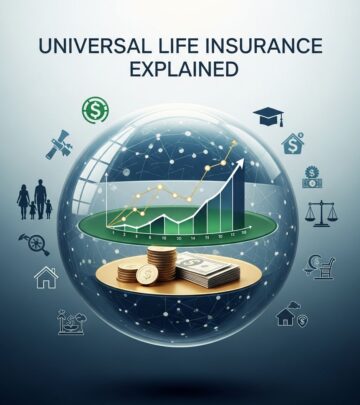
Indexed Universal Life Insurance: A Complete Guide
Understand how IUL insurance combines permanent coverage with market-linked growth potential.

Understanding Indexed Universal Life Insurance
Indexed universal life (IUL) insurance represents a modern approach to permanent life insurance that blends traditional protection with investment potential. This type of policy offers policyholders a death benefit combined with a cash value component that grows based on the performance of a selected equity index. Unlike standard universal life insurance, which typically earns a fixed interest rate, IUL policies provide the opportunity for enhanced cash value growth tied to market performance, while still offering downside protection through guaranteed minimum interest rates.
The fundamental appeal of IUL insurance lies in its flexibility and growth potential. Policyholders gain more control over how their cash value accumulates compared to whole life insurance, yet maintain the security of permanent coverage that doesn’t expire at a certain age. This balance between protection and opportunity makes IUL an attractive option for individuals seeking long-term financial security with the potential for substantial cash value accumulation.
How Indexed Universal Life Insurance Works
When you purchase an IUL policy, your premium payments are divided into several components. A portion covers the cost of the death benefit and administrative expenses, while the remaining amount flows into your cash value account. This cash value component is where IUL policies differentiate themselves from traditional life insurance products.
The cash value in an IUL policy grows in two distinct ways. A portion may be allocated to a fixed interest account that earns a guaranteed minimum rate. The remaining portion is credited with interest based on the performance of an equity index, such as the S&P 500 or Nasdaq-100. Importantly, your actual money is not directly invested in the stock market. Instead, the insurance company uses the index’s performance as a measure to determine how much interest to credit to your policy. This approach provides upside potential while limiting downside risk through a floor rate, typically zero percent, meaning your cash value cannot decline even during market downturns.
The interest crediting mechanism typically resets monthly based on the selected index’s performance. Some policies measure the index’s growth from the beginning of the month to the end, while others use different calculation methods. These variations can significantly impact the long-term growth of your cash value, making it essential to understand your specific policy’s terms.
Key Features and Components
Death Benefit
The death benefit is the guaranteed amount paid to your beneficiaries when you pass away. This benefit remains tax-free to the beneficiary and represents the primary insurance protection component of the policy. Upon your death, your beneficiary receives only the death benefit; the accumulated cash value reverts to the insurance company. This is an important distinction to understand when evaluating the true value of the policy for wealth transfer purposes.
Cash Value Account
The cash value component serves multiple functions within an IUL policy. It accumulates on a tax-deferred basis, meaning you won’t pay taxes on the growth until you withdraw funds. This tax advantage can significantly enhance long-term accumulation compared to taxable investment accounts. Additionally, the cash value can be accessed during your lifetime through policy loans or withdrawals, providing flexibility for emergencies or financial opportunities.
Index Selection and Crediting Methods
IUL policies typically offer several index options, including the S&P 500, Nasdaq-100, Russell 2000, or custom indices. Some policies even allow allocation across multiple indices. The crediting method—whether annual point-to-point, monthly average, or other variations—directly impacts how index performance translates into cash value growth. Understanding these crediting mechanisms is crucial for comparing different IUL products.
Comparing IUL to Other Life Insurance Options
| Feature | IUL | Whole Life | Universal Life | Term Life |
|---|---|---|---|---|
| Coverage Duration | Permanent (lifelong) | Permanent (lifelong) | Permanent (lifelong) | Temporary (10-30 years) |
| Premium Structure | Flexible | Fixed | Flexible | Fixed and lower |
| Cash Value Growth | Market-indexed with floor | Guaranteed fixed rate | Declared rate annually | No cash value |
| Complexity | High | Low | Medium | Very Low |
| Typical Premium Cost | Moderate to High | High | Moderate | Low |
Advantages of Indexed Universal Life Insurance
IUL policies offer several compelling benefits for the right financial situations:
Market-Linked Growth Potential: The primary advantage of IUL insurance is the opportunity to participate in equity market gains while maintaining downside protection. During strong market years, your cash value can accumulate significantly faster than whole life policies with fixed rates.
Flexibility: IUL policies offer considerable flexibility in premium payments and death benefit amounts. You can adjust your coverage and contributions based on your changing life circumstances, unlike the rigid structure of whole life insurance.
Tax-Deferred Growth: The cash value accumulates without annual tax liability, allowing for compounding growth over decades. This tax advantage can substantially increase your wealth compared to taxable investment accounts.
Access to Cash Value: You can borrow against or withdraw from your policy’s cash value during your lifetime. This provides liquidity and emergency access to funds while maintaining your death benefit coverage.
Downside Protection: The guaranteed minimum interest rate floor protects your accumulated value during market downturns. Even if the selected index declines, your cash value is credited with at least the floor rate, typically zero percent, preventing loss of premiums paid.
Disadvantages of Indexed Universal Life Insurance
Despite its advantages, IUL insurance carries several significant drawbacks to consider:
Complexity: IUL policies are substantially more complex than traditional life insurance. The interaction between index performance, interest crediting methods, caps, and expense deductions requires careful study and ongoing monitoring.
Cost: Premium costs for IUL policies typically exceed those of whole life or term life insurance. The investment component and complexity add to the overall expense, making IUL less affordable for some consumers.
Interest Rate Caps: While IUL policies provide upside participation, they typically include caps that limit how much interest can be credited during high-return years. This means you won’t fully participate in exceptional market performance.
Surrender Charges: Most IUL policies impose significant surrender charges in the early years, typically declining over 10-15 years. Early withdrawal or policy cancellation can result in substantial penalties.
Illustrated Returns Are Not Guaranteed: Sales illustrations often show returns based on historical market performance or assumed scenarios. These projections should not be viewed as guarantees, and actual results may differ substantially.
Administrative Complexity: Managing an IUL policy requires understanding index selections, monitoring policy performance, and making tactical decisions about fund allocation. This ongoing involvement differs from the passive nature of whole life insurance.
Cost Factors and Premium Determination
Several variables influence the cost of IUL insurance. Your age and health status significantly affect premiums, with younger and healthier individuals generally receiving lower rates. The death benefit amount directly impacts premiums—higher coverage amounts increase your regular payments. Your chosen index and crediting method can also affect pricing, as more flexible or aggressive options may carry different costs. Insurance companies themselves price IUL policies differently based on their underwriting standards, claims experience, and operational costs. Additionally, the chosen index, annual costs of indexing participation, and various policy fees all factor into the total cost of maintaining an IUL policy.
When IUL Insurance Makes Sense
IUL insurance may be appropriate for individuals who have substantial financial resources, understand complex financial products, have no immediate need to access the cash value, and seek higher potential cash value growth than whole life insurance provides. It works particularly well for those in higher tax brackets who benefit significantly from tax-deferred growth and for individuals with investment knowledge who can effectively monitor and manage policy performance.
Alternative Life Insurance Options
Term Life Insurance: Term life offers temporary coverage, typically 10 to 30 years, at significantly lower premiums than permanent policies. Term insurance is ideal for individuals protecting dependents or covering temporary financial obligations. It provides pure insurance protection without cash value accumulation.
Whole Life Insurance: Whole life policies offer permanent coverage with guaranteed fixed premiums and predictable cash value growth. While less complex and offering more stability than IUL, whole life typically provides lower growth potential and less flexibility.
Universal Life Insurance: Standard UL policies offer more flexibility than whole life with variable premiums and cash value growth tied to current market interest rates. UL bridges the gap between whole life simplicity and IUL complexity.
Frequently Asked Questions About IUL Insurance
Q: Is my cash value guaranteed in an IUL policy?
A: Your cash value is not fully guaranteed. While the policy includes a guaranteed minimum interest rate floor (typically zero percent), actual interest crediting depends on index performance and policy provisions including caps and floors that may limit your gains.
Q: Can I access my cash value before retirement?
A: Yes, you can borrow against or withdraw from your IUL cash value during your lifetime. However, early withdrawals in the surrender charge period may incur penalties, and loans will accrue interest that reduces your policy value and death benefit.
Q: What happens to my cash value when I die?
A: When you pass away, your beneficiary receives the death benefit. The accumulated cash value reverts to the insurance company and is not paid to your heirs.
Q: How often is my IUL cash value credited?
A: Interest crediting typically occurs monthly, though some policies may use annual or quarterly crediting methods. Your specific policy terms determine the exact crediting frequency.
Q: What is an interest rate cap in IUL policies?
A: A cap limits the maximum interest rate that can be credited to your policy in a given period, even if the index performs significantly better. This protects the insurance company while limiting your upside participation.
Q: Should I choose IUL over whole life insurance?
A: This depends on your comfort with complexity, financial situation, and goals. Whole life offers simplicity and guaranteed growth; IUL offers potential for higher growth but with more risk and complexity. Consult a financial advisor to determine which aligns with your needs.
Q: Can IUL premiums increase unexpectedly?
A: Yes, while you have flexibility in payment amounts, if you pay less than required, premiums may increase to maintain your coverage and avoid policy lapse. Always review your policy illustrations and understand the minimum payment requirements.
References
- What is Indexed Universal Life Insurance (IUL)? — Aflac. 2024. https://www.aflac.com/resources/life-insurance/what-is-indexed-universal-life-insurance.aspx
- Life Insurance Information Institute – Types of Life Insurance — Insurance Information Institute. 2024. https://www.iii.org/article/types-life-insurance
- Understanding Universal Life Insurance — U.S. Securities and Exchange Commission (SEC). 2023. https://www.investor.gov/introduction-investing/investing-basics/glossary/u/universal-life-insurance
- Tax Treatment of Life Insurance Proceeds and Cash Values — Internal Revenue Service (IRS). 2024. https://www.irs.gov/businesses/small-businesses-self-employed/life-insurance
- Indexed Universal Life Insurance: A Comprehensive Review — National Association of Insurance Commissioners (NAIC). 2023. https://www.naic.org/
Similar Articles








Read full bio of Sneha Tete