Indexed Annuity: Definition, Types, and How They Work
Understand indexed annuities: combining safety guarantees with market-linked growth potential.

What Is an Indexed Annuity?
An indexed annuity, also known as an equity-indexed annuity (EIA) or fixed-indexed annuity (FIA), is a type of insurance product designed for individuals seeking to balance market growth potential with principal protection. This hybrid investment vehicle combines the safety features of fixed annuities with the growth potential traditionally associated with variable annuities, making it an appealing option for conservative investors who still want exposure to stock market gains.
The fundamental premise of an indexed annuity is straightforward: your returns are linked to the performance of a specific market index, such as the S&P 500, while your principal is protected by a guaranteed minimum return. This structure allows investors to participate in market upswings without bearing the full downside risk of direct stock market investment.
Understanding the Core Features of Indexed Annuities
Principal Protection and Minimum Guarantees
One of the defining characteristics of indexed annuities is the minimum return guarantee. For many indexed annuities, the guaranteed minimum return is at least 87.5% of the principal, plus 1% to 3% in interest. This means that even if the market index declines significantly, your account will not fall below this guaranteed floor. This protection provides peace of mind for retirees and near-retirees who cannot afford substantial losses.
Unlike variable annuities, which offer no such guarantee, indexed annuities ensure that you will never lose money on your initial investment due to market downturns. However, it is important to understand that this guarantee typically applies only to the principal amount invested, not to accumulated earnings.
Market Index Linkage
Indexed annuities use insurance company calculations based on market index performance to determine interest rates. Common indices used include:
- S&P 500 Index (large-cap companies)
- Russell 2000 Index (small-cap companies)
- Nasdaq Index (technology-focused)
- MSCI EAFE Index (international developed markets)
- Customized indices from major financial institutions
When you purchase an indexed annuity, you select which index your annuity will track, and your returns are calculated based on that index’s performance during the measurement period.
How Indexed Annuities Calculate Returns
Participation Rates
A participation rate is a percentage that determines how much of the index’s gain you will actually receive. For example, if the market index increases by 10% and your annuity has a 60% participation rate, your credited interest would be 6% (60% of the 10% gain), before any caps are applied. This mechanism allows insurance companies to manage their risk while still providing investors with meaningful market participation.
Rate Caps
Even if the underlying index performs exceptionally well, most indexed annuities impose a cap on the maximum return you can receive in a given period. If the index increases by 10% but your annuity has a 4% cap, your credited return will be limited to 4%, regardless of the index’s actual performance. These caps are one of the primary ways that insurers limit their exposure while still offering market-linked returns.
Spreads
A spread is a fixed percentage subtracted from positive index returns. For instance, if the index return exceeds the spread amount, you receive the net return (index return minus the spread). If the index return is less than or equal to the spread, your credited interest may be zero or negative, depending on the product’s downside protection features.
Indexed Annuities vs. Other Annuity Types
| Feature | Fixed Annuity | Indexed Annuity | Variable Annuity |
|---|---|---|---|
| Guaranteed Returns | Fixed rate (typically 2-4%) | Minimum guarantee with market upside | No guarantee |
| Growth Potential | Limited | Moderate (capped) | Unlimited |
| Downside Protection | Complete | Principal protected | None |
| Market Participation | None | Partial (through caps and participation rates) | Full |
| Complexity | Simple | Complex | Moderate |
Comparison with Fixed Annuities
Fixed annuities provide predictable, guaranteed returns but typically offer limited growth potential. An indexed annuity, by contrast, provides the same principal protection while offering the possibility of higher returns when markets perform well. This makes indexed annuities attractive to investors who have outgrown the conservative returns of fixed annuities but want to maintain safety guarantees.
Comparison with Variable Annuities
Variable annuities allow you to invest in sub-accounts containing stocks, bonds, and money market funds, offering potentially higher returns but with no downside protection. The critical difference is that indexed annuities come with a minimum return guarantee, whereas variable annuities do not. While indexed annuities are often marketed as safer alternatives to variable annuities, neither is entirely risk-free. With an indexed annuity, your lowest possible return is higher than with a variable annuity, but your upside potential is also more limited due to caps and participation rates.
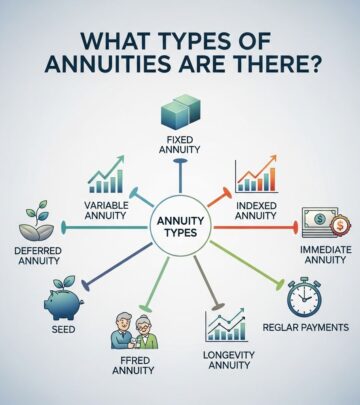
Immediate vs. Deferred Indexed Annuities
Immediate Indexed Annuities
An immediate indexed annuity begins making payments to you shortly after purchase. This option is suitable for individuals who have already retired and need current income. Payments typically begin within one year of purchase and continue for life or a specified period.
Deferred Indexed Annuities
A deferred indexed annuity grows undisturbed for a specified period of time before you begin taking withdrawals or receiving annuitized payments. This option is ideal for pre-retirees who want to accumulate retirement savings while benefiting from tax-deferred growth. The accumulation phase can last anywhere from several years to decades, depending on your needs and contract terms.
Regulatory Considerations
Unlike most investment products, indexed annuities are not regulated by the Securities and Exchange Commission (SEC) or the Financial Industry Regulatory Authority (FINRA). Instead, they are regulated by state insurance departments. This distinction is important because it means that indexed annuities follow insurance regulations rather than securities regulations, which can affect transparency, disclosure requirements, and investor protections.
Fees, Riders, and Additional Costs
Optional Riders
Many indexed annuities offer optional riders that can enhance the product’s benefits. Common riders include:
- Guaranteed lifetime income rider
- Enhanced death benefits
- Long-term care insurance
- Nursing home benefits
While these riders can add significant value to your annuity, they come with additional annual fees that reduce your overall return. Before adding any riders, carefully evaluate whether the benefits justify the additional costs.
Surrender Charges
Most indexed annuities include surrender charges that apply if you withdraw money beyond a specified annual allowance during the surrender period (typically 7-10 years). These charges can be substantial, sometimes reaching 10% or more in early years, and gradually declining as you approach the end of the surrender period.
Annual Fees and Expense Ratios
Indexed annuities typically have lower annual fees than variable annuities, but they are not fee-free. Administrative fees, mortality and expense charges, and other costs can reduce your returns. The true cost of an indexed annuity is often embedded in the participation rates, caps, and spreads rather than explicitly stated as annual fees.
Realistic Return Expectations
While indexed annuities are promoted as having no downside and only upside, this characterization is misleading. Here are several factors that limit your actual returns:
- If the index increases by 10%, you typically will not see a 10% return from your indexed annuity
- Rate caps may limit your return to a specific percentage, regardless of index performance
- Participation rates mean you receive only a percentage of the index gain
- Spreads subtract a fixed percentage from positive returns
- Optional riders and administrative fees further reduce net returns
For example, if the S&P 500 increases 10% and your annuity has a 60% participation rate with a 5% cap, your return would be limited to 5% (the lower of 6% calculated participation or the 5% cap). This is significantly lower than the index’s actual performance.
Is an Indexed Annuity Right for You?
Potential Benefits
Indexed annuities may be suitable if you want something more aggressive than a fixed annuity but prefer the safety of a minimum guarantee. They appeal to conservative investors who fear market volatility but recognize that inflation erodes fixed returns over time.
Potential Drawbacks
The hybrid annuity is significantly more complex than its fixed or variable counterparts. Limited returns, high fees, long surrender periods, and restrictive terms can make indexed annuities less attractive than simpler alternatives such as low-cost index funds or balanced mutual funds.
Key Considerations
Before purchasing an indexed annuity, consider these factors:
- Your time horizon and when you will need the money
- Your risk tolerance and need for principal protection
- Alternative investment options that might achieve your goals with lower costs
- The specific terms of the contract, including caps, participation rates, and fees
- Your tax situation and whether tax-deferred growth benefits you
- Inflation risk and whether the return will outpace inflation over your holding period
Important Contract Details to Review
If you are considering an indexed annuity, thoroughly review the following contract details:
- Minimum guaranteed return percentage and conditions
- Participation rate and how it may change
- Annual and lifetime rate caps
- Spread or fee deductions from index returns
- Surrender charge schedule and early withdrawal penalties
- Annual administrative fees and other charges
- Guarantee period length and renewal terms
- Optional rider costs and benefits
- Tax treatment and reporting requirements
Bottom Line
An indexed annuity is a hybrid product that attempts to balance the safety of fixed annuities with the growth potential of variable annuities. For some investors, particularly those nearing retirement who cannot tolerate significant losses, indexed annuities may serve a valuable role in a diversified retirement portfolio. However, returns are often limited by caps, participation rates, and various fees. The complexity of these products means that most investors should consult with a qualified financial advisor before making a purchase decision. Anyone considering an indexed annuity should carefully review all contract details to fully understand both the benefits and limitations before committing their retirement savings.
Frequently Asked Questions
Q: Can you lose money with an indexed annuity?
A: While indexed annuities provide principal protection and a minimum guaranteed return, you cannot lose your initial investment due to market downturns. However, you could lose money if you withdraw funds during the surrender period due to surrender charges.
Q: How long does the surrender period last?
A: Surrender periods typically range from 5 to 10 years, though some contracts may have longer or shorter periods. During this time, early withdrawals beyond annual allowances are subject to surrender charges.
Q: Can I access my money before maturity?
A: Most indexed annuities allow annual withdrawals of a specified percentage (often 10%) of your account value without surrender charges. Larger withdrawals may incur significant penalties during the surrender period.
Q: How do indexed annuities compare to index funds?
A: Index funds offer direct market participation with lower costs and greater liquidity, while indexed annuities provide principal protection and tax-deferred growth but with limited returns due to caps and participation rates. Your choice depends on your risk tolerance and time horizon.
Q: Are indexed annuities taxed as investments or insurance?
A: Indexed annuities grow tax-deferred, meaning you do not pay taxes on earnings until you withdraw funds. Withdrawals are taxed as ordinary income, and early withdrawals before age 59½ may incur a 10% IRS penalty.
Q: What happens if the market index declines?
A: If the market index declines, your account will not lose value because of the minimum guaranteed return. You will receive at least the guaranteed return, even if the index falls significantly.
References
- What Is an Indexed Annuity? — SmartAsset. 2024. https://smartasset.com/retirement/what-is-indexed-annuity
- What is a fixed indexed annuity? — Fidelity Investments. 2024. https://www.fidelity.com/learning-center/personal-finance/retirement/fixed-indexed-annuity
- What is a Fixed Indexed Annuity? — Nationwide. 2024. https://www.nationwide.com/lc/resources/investing-and-retirement/articles/what-is-a-fixed-indexed-annuity
Similar Articles








Read full bio of Sneha Tete