Index Vs Active Funds: A Practical Guide For Investors
Discover how index funds and actively managed funds differ in strategy, costs, performance, and suitability to build a smarter investment portfolio.
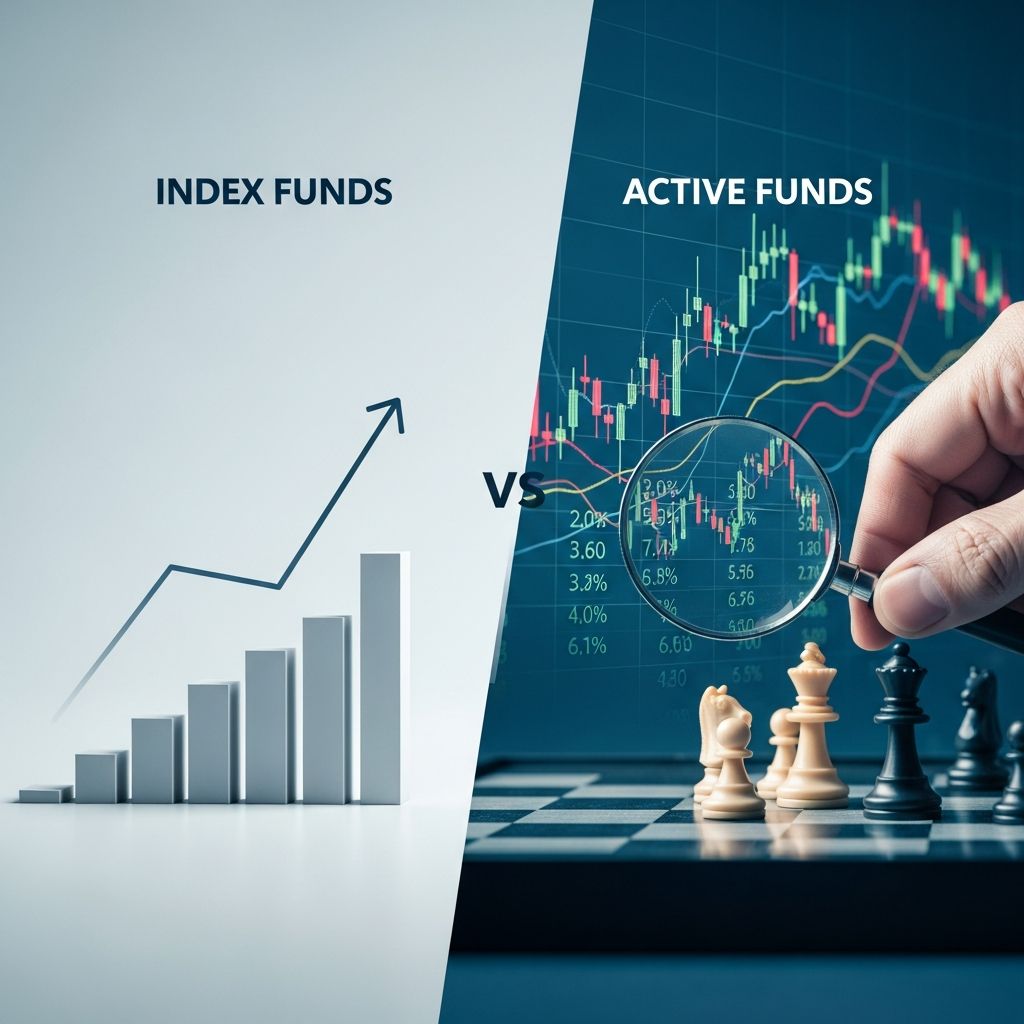
Index funds and actively managed funds represent two fundamental approaches to investing in mutual funds and ETFs. Index funds passively replicate market benchmarks, while actively managed funds seek to surpass them through expert selection. Choosing between them—or combining both—depends on your goals, risk tolerance, and cost sensitivity.
Defining the Core Approaches
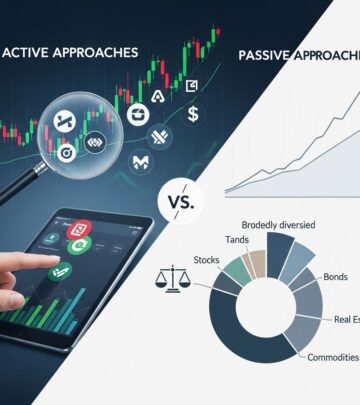
Index funds operate by mirroring a specific market index, such as the S&P 500 or a bond index. They hold securities in proportions that match the index, ensuring performance closely tracks the benchmark before fees.
Actively managed funds, by contrast, employ professional managers who research and select securities to outperform the benchmark. This hands-on strategy involves frequent adjustments based on market analysis, economic forecasts, and company fundamentals.
Strategic Differences at a Glance
| Aspect | Index Funds | Actively Managed Funds |
|---|---|---|
| Primary Goal | Match benchmark performance | Outperform benchmark |
| Management | Passive replication | Active selection and trading |
| Typical Holdings | All or sample of index components | Hand-picked securities across markets |
| Turnover Rate | Low (changes with index) | High (frequent trades) |
This table highlights how index funds prioritize alignment with market movements, reducing decision-making complexity, whereas active funds introduce manager discretion for potential alpha generation.
Cost Structures and Their Impact
Expense ratios define a major divide. Index funds maintain low fees—often 0.05% to 0.20% annually—due to minimal research and trading needs. For a $10,000 investment, this equates to $5–$20 yearly.
Actively managed funds charge higher fees, typically 0.50%–1.50%, to cover salaries for analysts, managers, and transaction costs. The same $10,000 investment could cost $50–$150 per year, compounding over time to erode returns significantly.
- Hidden Costs: Active trading incurs brokerage fees and bid-ask spreads, absent in passive strategies.
- Fee Drag: Even modest outperformance must overcome these expenses to net superior results.
Over decades, low-cost index funds often preserve more wealth through compounding savings.
Tax Efficiency Considerations
Lower turnover in index funds minimizes capital gains distributions. Managers trade only when the index rebalances, deferring taxes until investors sell shares.
Active funds’ frequent buying and selling trigger more taxable events, distributing gains to shareholders annually. This reduces after-tax returns, particularly in taxable accounts. Holding active funds in tax-advantaged vehicles like IRAs mitigates this.
In efficient markets, index funds’ tax advantages compound, enhancing net performance for long-term holders.
Performance Realities Over Time
Historical data reveals challenges for active managers. In large-cap U.S. equities, over 85% of active funds underperformed their benchmarks over 15 years, per S&P Dow Jones Indices SPIVA reports. Fees exacerbate this gap.
Index funds deliver benchmark returns minus minimal fees, providing consistency. Active funds shine sporadically—during market dislocations or in inefficient sectors like small-caps—but consistency proves elusive.
- Large-Cap Efficiency: Informationally mature markets leave slim margins for stock-picking edges.
- Mid/Small-Cap Potential: Less coverage allows skilled managers to exploit mispricings.
Risk Profiles and Volatility
Index funds inherit benchmark risks without manager error, offering predictable volatility tied to the market. Active funds add manager risk—the chance of poor decisions leading to underperformance.
Diversification benefits both: index funds spread across hundreds of holdings; active funds vary by strategy, from concentrated bets to broad allocations.
When Active Management May Excel
In volatile or niche markets, active strategies adapt dynamically. Examples include emerging markets, where local insights uncover undervalued assets, or during economic shifts when bonds require tactical adjustments.
Hybrid funds blend active and passive elements, with managers tweaking equity-debt mixes for stability.
Building a Balanced Portfolio
Many investors blend approaches: core holdings in low-cost index funds for stability, satellites in active funds targeting alpha in select areas. This “core-satellite” model balances cost efficiency with upside potential.
Asset allocation trumps fund selection—diversify across stocks, bonds, and geographies regardless of style.
Practical Factors for Investors
- Investment Horizon: Long-term favors index for compounding; short-term may suit active flexibility.
- Risk Appetite: Conservative profiles lean passive; aggressive ones explore active.
- Account Type: Taxable accounts prefer index; retirement accounts accommodate active.
Frequently Asked Questions
Are index funds always better than active funds?
No, but they often provide superior net returns due to lower costs and consistency, especially in efficient markets. Active funds can outperform in specific conditions.
Can active funds beat the market consistently?
Rarely. SPIVA data shows most fail over extended periods, though top performers exist in less efficient segments.
How do fees affect long-term outcomes?
A 1% fee difference can halve portfolio value over 30 years via compounding. Index funds minimize this drag.
Are index funds risk-free?
No, they fully expose investors to market downturns but avoid additional manager risks.
Should I mix both types?
Yes, for diversification: use index for broad exposure and active for targeted opportunities.
Investment Vehicles: Mutual Funds and ETFs
Both strategies appear in mutual funds (end-of-day pricing) and ETFs (intraday trading). ETFs enhance index appeal with liquidity and lower minimums.
Market Evolution and Future Outlook
Passive investing has surged, capturing over 50% of U.S. equity assets by 2025, driven by performance and cost data. Active persists where expertise adds value, like alternatives or ESG mandates.
Technological advances, including AI-driven analysis, may bolster active management, narrowing the gap.
References
- Actively Managed Funds vs Index Funds: Differences and Similarities — SoFi. 2023-10-15. https://www.sofi.com/learn/content/index-funds-vs-managed-funds/
- Index funds vs. actively managed funds — Vanguard Investor Resources. 2024-05-20. https://investor.vanguard.com/investor-resources-education/understanding-investment-types/index-funds-vs-actively-managed-funds
- Index Funds vs Actively Managed Funds: Which is Better? — Wright Research. 2024-08-12. https://www.wrightresearch.in/blog/index-funds-vs-actively-managed-funds/
- Mutual fund vs. index fund: What’s the difference? — Fidelity Learning Center. 2024-03-10. https://www.fidelity.com/learning-center/smart-money/mutual-fund-vs-index-fund
- Index Funds vs. Mutual Funds: The Differences That Matter — NerdWallet. 2024-07-22. https://www.nerdwallet.com/investing/learn/index-funds-vs-mutual-funds
- Active Fund Managers vs. Indexes: Analyzing SPIVA Scorecards — IFA.com. 2024-11-05. https://www.ifa.com/articles/spiva-report-active-vs-passive
- Is there any benefit to investing in active funds? — London Business School. 2023-12-18. https://www.london.edu/think/hope-active-mutual-funds
Similar Articles








Read full bio of Sneha Tete