Index Funds: Definition, Types, and Investment Benefits
Comprehensive guide to index funds: passive investing strategy for diversified portfolio growth.
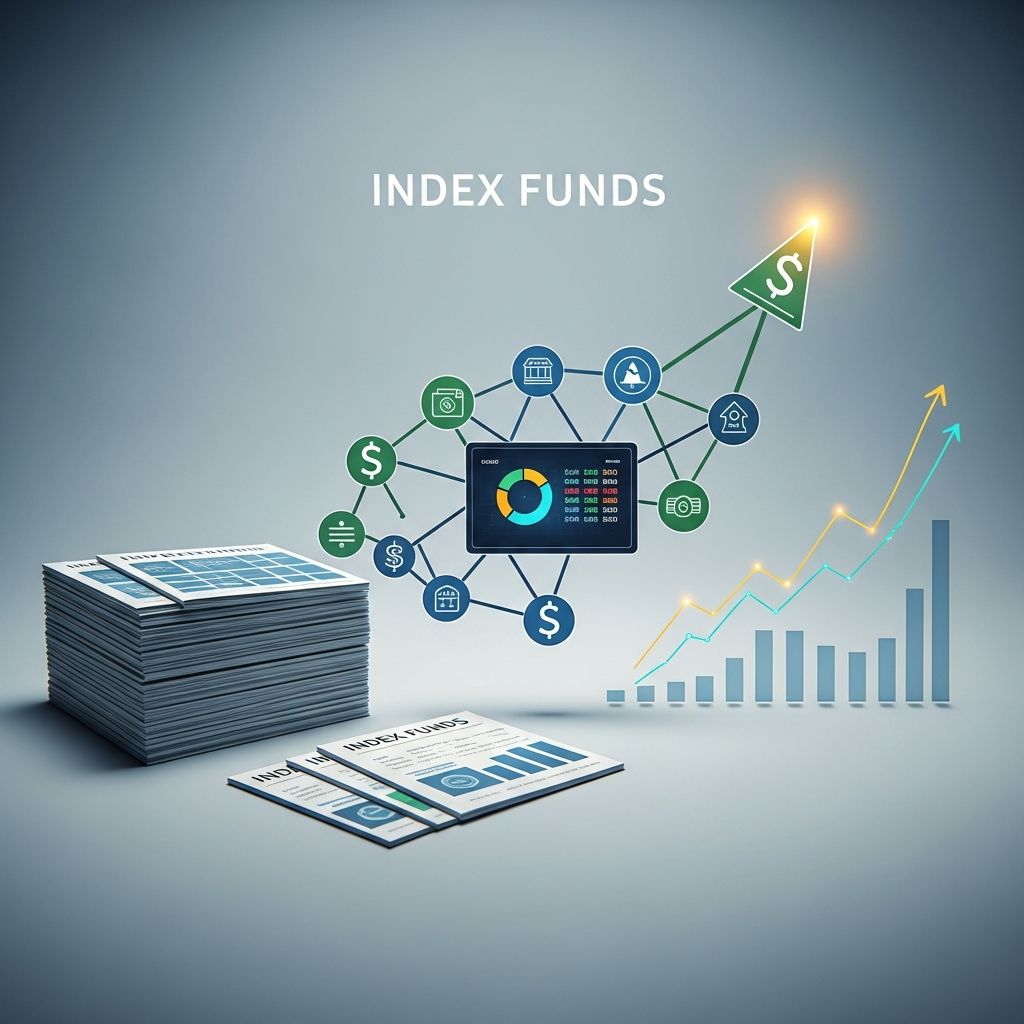
What Are Index Funds?
An index fund is a type of mutual fund or exchange-traded fund (ETF) designed to replicate the performance of a specific market index. Rather than employing active management strategies where fund managers attempt to outperform the market, index funds aim to match the returns of their underlying index by holding the same securities in the same proportions. This passive investment approach has gained significant popularity among both individual and institutional investors seeking cost-effective diversification.
Index funds track various market benchmarks, including the S&P 500, NASDAQ-100, Russell 2000, and international indexes. By investing in an index fund, shareholders gain exposure to all or most of the securities within that particular index, providing instant diversification without requiring extensive research or stock-picking expertise.
How Index Funds Work
The mechanics of index funds are straightforward and transparent. When you invest in an index fund, your money is pooled with other investors’ capital to purchase shares in the companies that make up the target index. The fund manager’s primary responsibility is ensuring that the fund’s holdings closely mirror the index’s composition.
To maintain accuracy, index funds employ one of two strategies:
- Full Replication: The fund purchases all securities included in the index in their exact weights. This approach minimizes tracking error but may be costly due to transaction fees.
- Sampling: The fund purchases a representative sample of securities from the index. This method reduces costs and trading activity while attempting to achieve similar performance to full replication.
Quarterly or annual rebalancing may occur to maintain alignment with the index as market values fluctuate. This disciplined approach ensures that the fund remains faithful to its objective of tracking the index rather than attempting to beat it.
Types of Index Funds
The index fund universe encompasses numerous varieties, each tracking different segments of the financial markets:
Stock Index Funds
- Broad Market Indexes: Track large portions of the overall stock market, such as the S&P 500, which includes 500 large-cap U.S. companies, or the total stock market index.
- Sector Indexes: Focus on specific economic sectors like technology, healthcare, energy, or financial services.
- International Indexes: Track stocks from developed and emerging markets outside the United States.
- Style Indexes: Segregate stocks by characteristics such as market capitalization (large-cap, mid-cap, small-cap) or investment style (value, growth, blend).
Bond Index Funds
These funds track various fixed-income indexes, including government bonds, corporate bonds, high-yield bonds, and international bonds. Bond index funds offer investors exposure to the debt markets with minimal management fees.
Asset Allocation Index Funds
Some index funds track asset allocation indexes that combine stocks and bonds in predetermined proportions, offering target-date funds and all-in-one portfolio solutions.
Advantages of Index Funds
Lower Costs
One of the primary benefits of index funds is their significantly lower expense ratios compared to actively managed funds. Because index funds employ a passive strategy requiring minimal research and frequent trading, management fees are substantially reduced. Expense ratios for index funds typically range from 0.03% to 0.20% annually, whereas actively managed funds often charge 0.5% to 2.0% or more.
Diversification
Index funds provide instant diversification across numerous securities. Rather than selecting individual stocks, investors gain exposure to all companies within the index, reducing the risk associated with poor individual stock selection or company-specific events.
Consistent Performance
Because index funds track established benchmarks, their performance is predictable and transparent. Investors can easily compare returns to the underlying index and understand exactly what they’re investing in. This consistency eliminates the uncertainty associated with active manager performance variation.
Tax Efficiency
The passive, buy-and-hold nature of index funds results in lower portfolio turnover, generating fewer taxable capital gains distributions. This tax efficiency is particularly valuable in taxable investment accounts.
Accessibility
Index funds democratize investing by allowing individuals to gain broad market exposure with minimal capital investment, often with initial investments as low as $100 or even through fractional shares.
Disadvantages of Index Funds
Market Risk Exposure
Index funds move in lockstep with their underlying markets. During significant market downturns, index fund investors experience corresponding losses with no opportunity for active managers to reduce risk through tactical adjustments or security selection.
Limited Upside Potential
While index funds match market returns, they cannot exceed them. Investors forego the possibility of outperformance that active managers might achieve during certain market conditions. Over time, this means index fund returns will lag the best-performing active managers in any given period.
Tracking Error
Index funds rarely perfectly replicate their benchmark due to fees, sampling variations, and timing differences in portfolio adjustments. Though typically minimal, tracking error can compound over time.
Concentration Risk with Narrow Indexes
While broad market indexes provide diversification, narrow or sector-specific index funds may concentrate risk in particular areas of the economy or market capitalizations.
Index Funds vs. Actively Managed Funds
The debate between index and actively managed funds has intensified as empirical evidence increasingly favors passive indexing. Research consistently demonstrates that the majority of actively managed funds fail to outperform their benchmarks over extended periods after accounting for fees and expenses.
| Feature | Index Funds | Actively Managed Funds |
|---|---|---|
| Management Strategy | Passive (track index) | Active (attempt to outperform) |
| Expense Ratios | 0.03% – 0.20% | 0.5% – 2.0%+ |
| Performance Predictability | Matches benchmark | Variable, manager-dependent |
| Tax Efficiency | High (low turnover) | Lower (higher turnover) |
| Upside Potential | Limited to market returns | Potential for outperformance |
| Research Required | Minimal | Extensive |
Popular Index Funds and Providers
Several major investment companies offer comprehensive index fund families:
- Vanguard: Offers one of the industry’s largest collections of low-cost index funds across all asset classes and market segments.
- Fidelity: Provides competitive index fund options with particularly low expense ratios on certain flagship indexes.
- Charles Schwab: Offers index funds with minimal fees and transparent pricing structures.
- iShares and SPDR: Leading providers of index-based exchange-traded funds with substantial assets under management.
Building a Portfolio with Index Funds
Many investors construct diversified portfolios using multiple index funds. A simple, effective approach involves combining broad market index funds with bond index funds in proportions matching the investor’s risk tolerance and time horizon. More sophisticated portfolios might include domestic stocks, international stocks, real estate indexes, and various bond categories.
Target-date index funds automatically adjust the mix of stock and bond index funds as investors approach retirement, simplifying the implementation process for passive investors seeking a hands-off approach.
Index Funds and Long-Term Investing
Index funds excel as long-term investment vehicles. The low fees compound into substantial savings over decades, and the passive approach aligns perfectly with buy-and-hold investing strategies. For individuals investing for retirement or other long-term objectives, index funds provide a proven, straightforward path to wealth accumulation.
Market timing and active trading generate taxes and fees that erode returns. Index funds encourage the disciplined, patient approach that empirical research suggests leads to superior long-term outcomes.
Frequently Asked Questions
Q: Are index funds suitable for beginner investors?
A: Yes, index funds are excellent for beginners because they provide instant diversification, low costs, and require minimal investment knowledge. They allow new investors to participate in market growth without the complexity of stock selection.
Q: Can you lose money investing in index funds?
A: Yes, index fund values fluctuate with their underlying markets. During market downturns, index fund values decline proportionally. However, historically, markets recover over time, making losses temporary for long-term investors.
Q: How often should I check my index fund performance?
A: For long-term investors, checking performance quarterly or annually is sufficient. Frequent monitoring may encourage emotional, counterproductive trading decisions. Index funds are designed for buy-and-hold strategies.
Q: Can index funds outperform the market?
A: No, by design, index funds aim to match their benchmark index returns. They may marginally trail due to fees or exceed it through sampling efficiency, but consistent outperformance is not the objective.
Q: What is the difference between index funds and ETFs?
A: Index mutual funds and index ETFs both track indexes, but ETFs trade throughout the day like stocks, while mutual funds settle once daily. ETFs typically have lower expense ratios and greater tax efficiency for taxable accounts.
Q: Should I invest in index funds or individual stocks?
A: Research suggests that most investors achieve better risk-adjusted returns with index funds than through individual stock picking. Index funds offer diversification and lower risk suitable for most investors’ objectives.
References
- Vanguard Center for Investor Research — Investment Performance Analysis — Vanguard Group. 2024. https://www.vanguard.com/
- SEC Investment Company Information — Mutual Funds and ETFs — U.S. Securities and Exchange Commission. 2024. https://www.sec.gov/investor/alerts-bulletins
- The Case for Index Fund Investing — CFA Institute Research Foundation. 2023. https://www.cfainstitute.org/
- SPDR ETF Portfolio Overview — State Street Global Advisors. 2024. https://www.spdrs.com/
- Morningstar Fund Analysis and Ratings — Morningstar, Inc. 2024. https://www.morningstar.com/
- Fidelity Index Fund Performance Data — Fidelity Investments. 2024. https://www.fidelity.com/
Similar Articles








Read full bio of medha deb