Index Funds: A Beginner’s Guide to Market-Tracking Investments
Learn how index funds offer diversified, low-cost exposure to the broader market.

Investing can seem overwhelming, especially when faced with countless options and complex strategies. However, one investment approach has gained widespread popularity among both novice and seasoned investors: index funds. These investment vehicles offer a straightforward way to build a diversified portfolio without requiring extensive market knowledge or constant monitoring. Whether you’re saving for retirement, building long-term wealth, or simply looking to grow your money, understanding index funds is a crucial step in developing a sound investment strategy.
Understanding the Fundamentals of Index Funds
At its core, an index fund is a type of mutual fund or exchange-traded fund (ETF) designed to replicate the performance of a specific market benchmark. Rather than relying on a fund manager to handpick individual securities in hopes of beating the market, index funds take a passive approach by mirroring the exact composition of their underlying index.
Common market indices that index funds track include the S&P 500, which represents 500 of the largest U.S. companies, or the Dow Jones Industrial Average. By investing in an index fund, you essentially own a proportional share of every security within that index, creating instant diversification across multiple companies and sectors.
The mechanics of index funds are relatively simple. Fund managers construct the portfolio to match the index’s composition as closely as possible, either by holding all securities in the index or by selecting a representative sample. This straightforward approach eliminates the need for active decision-making and constant portfolio adjustments that characterize traditionally managed funds.
How Index Funds Deliver Value Through Passive Management
The passive management strategy employed by index funds stands in stark contrast to the active management model used by traditional mutual funds. While actively managed funds require portfolio managers to continuously research, analyze, and trade securities in attempts to outperform the market, index funds maintain a more hands-off approach.
This fundamental difference translates into significant practical advantages. Because index fund managers make fewer trading decisions and execute fewer transactions, operational costs remain minimal. The reduced activity also means less frequent portfolio rebalancing, which occurs only when the underlying index undergoes structural changes. This efficiency not only benefits the fund’s operations but directly translates to lower expenses passed along to investors through reduced fees.
The passive strategy also promotes consistency and predictability. Rather than hoping a manager’s skill will deliver outsized returns, investors in index funds understand they are signing up to receive market returns, adjusted for minimal fees. This transparency and predictability appeal to investors seeking a clear, understandable investment approach.
The Cost Advantage: Why Expense Ratios Matter
One of the most compelling reasons investors choose index funds is their significantly lower cost structure. Index funds typically charge lower fees and expense ratios compared to actively managed funds. This cost difference may seem trivial on paper, but it compounds dramatically over decades of investing.
Because index funds don’t require extensive research teams, constant market analysis, or frequent trading, fund companies can operate them more efficiently. These savings are reflected in lower expense ratios, meaning more of your money remains invested and working for you rather than being consumed by management fees.
Consider the long-term impact: over a 30-year investment horizon, lower annual fees can translate into substantially more wealth accumulated. A 0.5% difference in annual costs might seem insignificant, but it can result in tens of thousands of dollars in additional returns for a typical investor. This cost advantage makes index funds particularly attractive for price-conscious investors and those with limited capital to invest.
Broad Diversification Within a Single Investment
Diversification is a fundamental principle of sound investing, and index funds make it remarkably simple to achieve. By investing in a single index fund, you gain exposure to hundreds or thousands of individual securities, automatically spreading your risk across multiple companies, sectors, and industries.
For example, an S&P 500 index fund provides exposure to 500 of the largest American companies spanning various industries—from technology and healthcare to finance and consumer goods. This broad exposure helps protect your portfolio against the poor performance of any single company or sector, as losses from one holding are typically offset by gains elsewhere.
This diversification extends beyond just domestic U.S. markets. International index funds allow investors to access developed and emerging markets worldwide, providing geographic diversification and exposure to global growth opportunities. Small-cap and mid-cap index funds offer exposure to smaller companies, while sector-specific index funds provide concentrated exposure to particular industry segments. This variety enables investors to customize their diversification strategy according to their financial goals and risk tolerance.
Tax Efficiency: Keeping More of What You Earn
Tax efficiency represents another significant advantage of index funds that often goes underappreciated. Index funds typically generate fewer taxable capital gains distributions compared to actively managed funds, which means a larger portion of your investment returns remain yours to keep.
This tax advantage arises from the low turnover inherent in passive management. Because index fund managers rarely buy and sell securities, they realize fewer capital gains that trigger tax liability for investors. In contrast, actively managed funds frequently trade securities to adjust positions, creating regular taxable events that increase investors’ annual tax bills.
For investors in higher tax brackets or those holding investments in taxable accounts, this tax efficiency can substantially improve after-tax returns over time. The ability to defer taxes means more money compounds within your investment, accelerating wealth accumulation. This benefit is particularly valuable for long-term investors who can leverage decades of tax-efficient compounding.
Comparing Index Funds and Actively Managed Funds
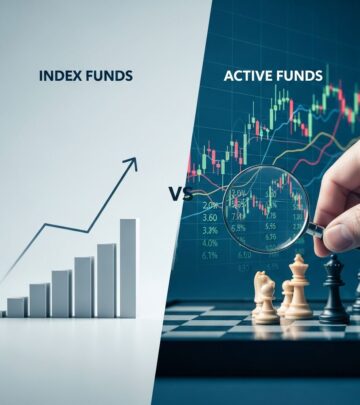
| Feature | Index Funds | Actively Managed Funds |
|---|---|---|
| Management Approach | Passive—replicates index performance | Active—seeks to beat market returns |
| Expense Ratios | Low | High (due to research and trading costs) |
| Performance Objective | Match market returns | Outperform market returns |
| Portfolio Turnover | Low—minimal buying and selling | High—frequent transactions |
| Tax Efficiency | High—minimal capital gains distributions | Lower—frequent taxable events |
| Risk Profile | Market risk of underlying index | Variable based on manager’s strategy |
| Volatility | Matches underlying index | May exceed or fall short of market volatility |
Index Fund Categories and Investment Options
The index fund universe has expanded dramatically, offering investors numerous ways to customize their exposure to different market segments. Understanding the various categories helps you build a well-rounded portfolio aligned with your objectives.
Broad Market Index Funds track comprehensive indices like the S&P 500, Russell 3000, or total market indices, providing exposure to large numbers of companies across diverse sectors. These funds serve as excellent core portfolio holdings for investors seeking maximum diversification.
Sector-Specific Index Funds focus on particular industries such as technology, healthcare, energy, or financials, allowing investors to overweight or underweight specific sectors based on their views or needs. While offering less diversification than broad market funds, these funds provide targeted exposure to industry trends.
International Index Funds track foreign stock or bond indices, covering developed markets in Europe and Asia as well as emerging markets in developing nations. These funds enable geographic diversification and exposure to international economic growth drivers.
Dividend-Focused Index Funds track indices of companies with histories of consistent dividend payments, combining potential capital appreciation with regular income. These funds appeal to investors prioritizing income generation alongside growth.
ESG Index Funds track companies demonstrating strong environmental, social, and governance practices, allowing investors to align their portfolios with personal values while potentially managing certain risks.
Ideal Candidates for Index Fund Investing
While index funds offer benefits to many investors, certain investor profiles particularly align with this investment approach. Understanding whether index funds fit your situation helps you make informed decisions about your portfolio allocation.
Passive investors who prefer a hands-off approach without engaging in stock picking or market timing benefit greatly from index funds’ simplicity and transparency. These investors appreciate the straightforward nature of owning a market segment without requiring constant attention.
Cost-conscious investors focused on minimizing expenses find index funds particularly appealing. If you’re working with limited capital or wish to maximize investment returns by minimizing fees, index funds deliver exceptional value.
Tax-sensitive investors seeking to minimize tax liabilities gain substantial advantages from index funds’ inherent tax efficiency. Higher-income individuals and those in elevated tax brackets particularly benefit from reduced capital gains distributions.
Beginning investors just entering the investment world often find index funds an ideal starting point. They provide immediate diversification, manageable complexity, and low barriers to entry, allowing new investors to begin building wealth without extensive financial knowledge.
Long-term wealth builders saving for retirement or other distant financial goals find index funds provide reliable, steady portfolio growth with minimal maintenance. The compound growth potential over decades makes index funds especially powerful for retirement planning.
Transparency and Simplicity in Your Investment Strategy
A distinctive advantage of index funds is their inherent transparency. Unlike actively managed funds where performance depends on a manager’s decisions and investment philosophy, index funds offer a clear, straightforward strategy. You know exactly what you’re investing in—the specific securities comprising your chosen index—and you understand the fund’s objective: tracking that index as closely as possible.
This transparency eliminates uncertainty about whether a fund manager’s approach aligns with your values or risk tolerance. Additionally, index funds typically feature low minimum investment requirements and are easily purchased through most brokerage accounts, removing barriers that might prevent some investors from building diversified portfolios.
Risk Considerations and Safety Assessment
While index funds offer numerous advantages, it’s important to understand their risk profile. Index funds are generally safer than individual stocks due to their diversification. By spreading investments across many companies, index funds reduce the impact of poor performance from any single holding. However, index funds remain fully exposed to overall market risks and can lose value during market downturns.
The specific risk level depends on the index being tracked. Broad market index funds typically exhibit lower volatility and risk than sector-specific index funds, which concentrate exposure in particular industries. International emerging market index funds carry higher risk and volatility than developed market funds due to political, currency, and economic uncertainties in emerging nations.
Understanding your risk tolerance and selecting index funds that align with that tolerance is essential. Younger investors with decades until retirement can typically weather market volatility, while those nearing retirement may prefer more conservative index funds focused on bonds or dividend-paying stocks.
Getting Started with Index Fund Investing
Beginning your index fund investment journey requires just a few simple steps. First, assess your financial goals, time horizon, and risk tolerance. Determine whether you’re investing for retirement, general wealth building, or specific objectives, and how many years your money will remain invested.
Next, select appropriate index funds based on your goals and risk profile. A simple diversified portfolio might include a broad U.S. market index fund and an international index fund, adjusted based on your desired geographic allocation. Younger investors might emphasize stock index funds, while those nearing retirement might incorporate bond index funds.
Finally, open a brokerage account with a reputable firm and begin investing. Most brokerages offer index funds with low or no minimum investment requirements, enabling you to start with whatever capital you have available. Setting up automatic regular contributions helps you build wealth consistently through dollar-cost averaging.
Frequently Asked Questions
Are index funds suitable for beginner investors?
Yes, index funds are often an excellent choice for beginners. They offer broad diversification, low costs, and simplicity without requiring extensive knowledge of individual securities or market timing strategies.
How do index funds compare in safety to individual stocks?
Index funds are generally considered safer than individual stocks due to diversification across many holdings. However, they remain exposed to overall market risk and can decline during market downturns, unlike some hedging strategies that provide downside protection.
What are the tax implications of index fund investing?
Index funds typically generate fewer taxable capital gains distributions due to low portfolio turnover, resulting in tax efficiency and potentially lower annual tax bills for investors.
Can index funds help build a retirement portfolio?
Yes, index funds provide an excellent foundation for retirement saving through long-term diversified growth with minimal maintenance and cost-effective exposure to market returns.
What index should I choose for my first investment?
Broad market index funds like those tracking the S&P 500 or total U.S. market indices offer excellent starting points, providing exposure to hundreds of large companies across diverse sectors.
References
- What is an Index Fund — Aditya Birla Capital. https://mutualfund.adityabirlacapital.com/blog/what-is-an-index-funds
- What are index funds? Definition and examples — StoneX. https://www.stonex.com/en/financial-glossary/index-funds/
- What is an index fund? — Vanguard. https://investor.vanguard.com/investor-resources-education/understanding-investment-types/what-is-an-index-fund
- Index Funds | Investor.gov — U.S. Securities and Exchange Commission. https://www.investor.gov/introduction-investing/investing-basics/investment-products/mutual-funds-and-exchange-traded-4
- Four reasons to invest with index funds — Vanguard. https://www.nl.vanguard.com/professional/insights/portfolio-construction/four-reasons-to-invest-with-index-funds
Similar Articles








Read full bio of Sneha Tete