Index Fund Investing: A Complete Beginner’s Guide
Learn how index funds work, why they’re popular, and how to choose the right low-cost funds to grow your wealth over time.

Index funds have become one of the most popular ways for everyday people to invest because they are simple, diversified, and low cost. Over time, research shows that broad market index funds often outperform most actively managed mutual funds after fees, especially over long horizons. If you want a straightforward, hands-off way to grow your money, learning how to invest in index funds is a powerful first step.
What Is an Index Fund?
An index fund is a type of fund (either a mutual fund or an exchange-traded fund, ETF) that aims to copy the performance of a specific market index, such as the S&P 500 or a total stock market index. Instead of trying to beat the market by picking individual stocks, the fund simply holds the same securities as the index, in the same proportions.
Key characteristics of index funds include:
- Passive strategy: The fund tracks an index instead of using a manager to choose investments.
- Broad diversification: A single fund can hold hundreds or even thousands of securities.
- Lower costs: Expense ratios tend to be much lower than those of actively managed funds.
- Transparent rules: The index methodology clearly explains what the fund will own and when it will change.
Because of this simplicity and diversification, index funds are often recommended as core building blocks of long-term investment portfolios by many financial educators and institutions.
How Do Index Funds Work?
To understand index fund investing, it helps to see how an index itself is constructed and how the fund mirrors it.
What Is a Market Index?
A market index is a rules-based basket of securities designed to represent a specific part of the financial market. Common examples include:
- S&P 500: Roughly 500 of the largest U.S. companies, representing a large share of the U.S. stock market.
- Total U.S. stock market index: Thousands of U.S. companies, from large to small caps.
- International stock index: Companies listed outside the U.S.
- Bond market index: A broad set of investment-grade bonds, such as U.S. Treasuries and corporate bonds.
The index provider (for example, S&P Dow Jones Indices for the S&P 500) sets rules for eligibility, weighting, and rebalancing. The index itself is not an investment you buy directly; instead, you invest through an index fund that tracks it.
How an Index Fund Tracks the Index
An index fund uses one of two main methods to mirror its index:
- Full replication: The fund buys all (or nearly all) securities in the index in the same weights.
- Sampling: For very large or complex indexes, the fund holds a representative sample that closely matches the index’s risk and return characteristics.
The fund manager adjusts holdings whenever the underlying index changes—such as when companies are added, removed, or reweighted. Because the process is rules-based, there is much less trading than in actively managed funds, which helps keep costs and taxes lower.
Index Funds vs. Actively Managed Funds
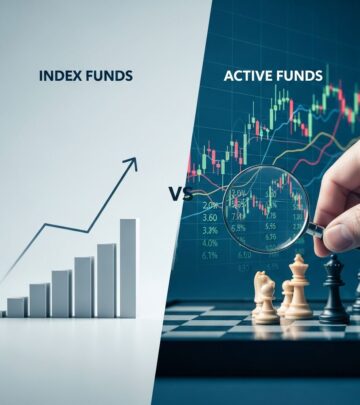
When you invest in a mutual fund or ETF, you are generally choosing between an index (passive) strategy and an active strategy. Understanding the differences helps explain why index funds are often preferred for long-term investing.
| Feature | Index Funds (Passive) | Actively Managed Funds |
|---|---|---|
| Goal | Match the performance of a benchmark index | Beat a benchmark index through security selection |
| Management style | Rules-based, minimal trading | Research-driven, frequent trading |
| Typical cost (expense ratio) | Low | Higher, due to research and trading costs |
| Diversification | Broad, across the index | Varies; can be more concentrated |
| Tax efficiency | Generally higher tax efficiency due to lower turnover | Often less tax efficient due to more trading |
Long-term evidence suggests that a majority of actively managed funds fail to beat comparable index benchmarks after costs over long periods, especially in large, efficient markets like U.S. large-cap stocks. This is a major reason why index funds are widely used for retirement and other long-term goals.
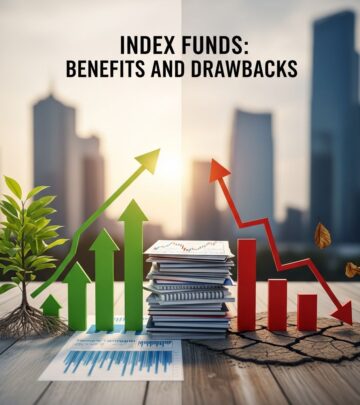
Pros and Cons of Investing in Index Funds
Benefits of Index Fund Investing
- Low fees: Because there is no expensive active management, index fund expense ratios are typically significantly lower than those of actively managed funds.
- Broad diversification: A single fund can spread your risk across many companies, sectors, or even countries.
- Transparency: You can easily see which index the fund tracks and what it holds.
- Tax efficiency: Lower trading activity tends to result in fewer taxable capital gains distributions for investors.
- Simple, hands-off strategy: You do not need to research individual companies or frequently adjust your investments.
Potential Drawbacks
- Cannot “beat” the index: By design, performance will closely match the index, minus fees.
- Market risk remains: If the market or segment tracked by the index declines, the fund’s value also falls.
- Less flexibility: The fund must follow the index rules, even if certain holdings appear overvalued or risky.
For many individual investors, the benefits—especially low cost and diversification—often outweigh these drawbacks for core, long-term holdings.
Types of Index Funds
Index funds can track many different parts of the market. Choosing among them depends on your goals, time horizon, and risk tolerance.
Stock Index Funds
Stock index funds track groups of companies and can differ by size, geography, and investment style:
- S&P 500 index funds: Focus on large U.S. companies and are often used as a benchmark for the U.S. stock market.
- Total U.S. stock market index funds: Include large-, mid-, and small-cap U.S. companies, offering wider diversification.
- International or global index funds: Provide exposure to companies outside the U.S., or a mix of U.S. and international markets.
- Style-based index funds: Track specific factors such as value, growth, or small-cap stocks.
Bond Index Funds
Bond index funds track baskets of bonds. Examples include:
- Total bond market index funds: Cover a wide range of investment-grade U.S. bonds, such as Treasuries, corporate bonds, and mortgage-backed securities.
- Government or Treasury index funds: Focus on bonds issued by the government, often with lower credit risk than corporate bonds.
- International bond index funds: Track bonds issued outside the investor’s home country.
Bond index funds can help balance risk in a portfolio built mostly from stock index funds because bond prices often behave differently from stock prices, especially in periods of market stress.
Target-Date and Asset Allocation Funds (Index-Based)
Some target-date and asset allocation funds use index funds as building blocks. A target-date fund automatically adjusts its mix of stock and bond index funds over time, becoming more conservative as the target retirement year approaches. This can be a simple way to set up a diversified, age-appropriate portfolio in one fund.
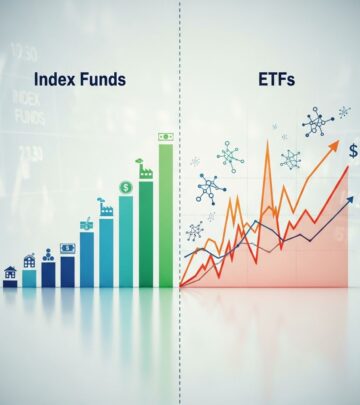
Index Funds vs. ETFs
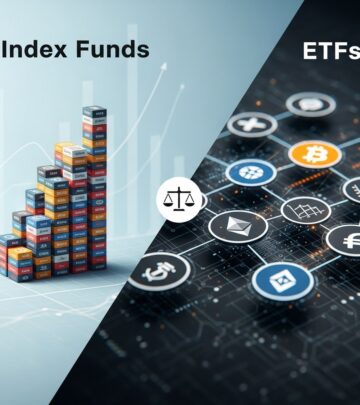
Index funds can be structured as mutual funds or as exchange-traded funds (ETFs). Many ETFs are also index funds, but the way you trade them differs:
- Mutual fund index funds: Bought and sold at the end-of-day net asset value (NAV) directly from the fund company or brokerage.
- Index ETFs: Traded throughout the day on an exchange like individual stocks, with prices that change during market hours.
Both can provide similar diversification and low costs. For long-term investors using automatic contributions inside retirement accounts, traditional mutual fund index funds are common. For those who prefer intraday trading flexibility or lower minimums, index ETFs may be appealing.
How to Choose Index Funds
When you are comparing index funds, focus on a few key factors that can have a meaningful impact on your long-term results.
1. Match the Index to Your Goal
First, decide what part of the market you want exposure to:
- Broad U.S. stock exposure: Consider a total market index fund or an S&P 500 index fund.
- Global diversification: Pair a U.S. index fund with an international index fund, or choose a global index fund.
- Stability and income: Add a total bond market or government bond index fund.
Your choice should align with your overall plan, risk tolerance, and time horizon. Long-term goals like retirement often use a higher allocation to stock index funds, while shorter-term or more conservative goals may use more bond index funds.
2. Check the Expense Ratio
The expense ratio is the annual fee charged by the fund as a percentage of your investment. Even seemingly small differences can compound over decades. Research by major investment firms has shown that lower-cost funds, on average, have tended to deliver better investor returns than higher-cost alternatives, all else equal.
When comparing two funds tracking the same index, the one with the lower expense ratio is often preferable, assuming similar tracking accuracy and structure.
3. Look at Tracking Difference and Fund Size
- Tracking difference: The gap between fund performance and index performance over time. A smaller tracking difference indicates the fund is closely following its benchmark.
- Fund size and longevity: Larger, more established funds often have tighter bid–ask spreads (for ETFs) and more predictable tracking of the index.
4. Consider Tax Efficiency and Account Type
Tax treatment depends on your country and account type. In general, index funds and ETFs tend to be more tax efficient than many actively managed funds due to lower turnover. Still, holding them inside tax-advantaged accounts (such as retirement plans) can further reduce tax drag.
How to Start Investing in Index Funds
Getting started with index fund investing can be done in a few structured steps. You do not need a large amount of money to begin.
Step 1: Clarify Your Financial Goals
Define what you are investing for and when you will likely need the money. Examples include:
- Retirement (20+ years away)
- Buying a home (5–10 years away)
- Education savings for children
Longer time horizons usually allow for more stock exposure because you have time to ride out market volatility. Shorter goals may require more conservative allocations.
Step 2: Assess Your Risk Tolerance
Your risk tolerance is your ability and willingness to handle fluctuations in your investment value. If large temporary drops in your portfolio would cause you to panic and sell, a more conservative mix of stock and bond index funds may be appropriate.
Step 3: Choose an Investment Account and Platform
Decide where to hold your index funds:
- Retirement accounts (e.g., employer-sponsored plans, IRAs, or similar): Often offer a menu of index funds with tax advantages.
- Taxable brokerage accounts: Provide flexibility for non-retirement goals.
Most major brokerages offer access to a wide range of low-cost index mutual funds and ETFs, sometimes with no trading commissions.
Step 4: Select Your Core Index Funds
Many investors build a simple, diversified portfolio using a small number of broad index funds, such as:
- One total U.S. stock market or S&P 500 index fund
- One international stock index fund
- One total bond market index fund
Your mix of these funds (your asset allocation) determines most of your portfolio’s risk and return characteristics over time.
Step 5: Automate Contributions and Stay Consistent
Consider setting up automatic monthly investments into your chosen index funds. This approach, sometimes described as a systematic investment plan, removes some of the emotion from investing and allows you to buy through different market conditions.
Over time, you can rebalance—adjusting your holdings back to your target mix—if one asset class grows faster or slower than the others.
Example: Simple Index Fund Portfolio
The table below shows an example of a basic index fund allocation for a hypothetical long-term investor comfortable with moderate risk. This is for educational illustration only and is not personalized advice.
| Asset Class | Type of Index Fund | Example Allocation | Primary Goal |
|---|---|---|---|
| U.S. stocks | Total U.S. stock market or S&P 500 index fund | 50% | Long-term growth |
| International stocks | Broad international stock index fund | 20% | Diversification outside home market |
| Bonds | Total bond market index fund | 30% | Income and risk reduction |
Investors with longer time horizons and higher risk tolerance might choose more stocks and fewer bonds, while more conservative investors might increase the bond allocation.
Frequently Asked Questions (FAQs)
Q: Are index funds good for beginners?
Index funds can be a strong option for beginners because they are diversified, relatively easy to understand, and typically have low costs, which are all important for long-term investing success.
Q: How much money do I need to start investing in index funds?
The minimum depends on the brokerage and specific fund. Some index mutual funds have minimums, while many index ETFs allow you to start with the cost of a single share or even less if your brokerage offers fractional shares.
Q: Do index funds pay dividends?
Many stock and bond index funds distribute dividends or interest income they receive from the securities they hold. You can usually choose to reinvest these automatically or take them as cash.
Q: Are index funds safe?
Index funds still carry market risk—their value can go up or down. However, their diversification helps reduce the risk associated with any single company or bond failing. They are generally considered appropriate for long-term investors who can tolerate market fluctuations.
Q: Can index funds make me rich?
No investment can guarantee wealth, but historically, broad stock market index funds held over long periods have delivered returns that, when combined with consistent investing and time, can significantly grow wealth. Your results will depend on future market performance, your contributions, and your time horizon.
References
- Vanguard Research: The Case for Index-Fund Investing — Vanguard. 2023-03-01. https://investor.vanguard.com/investor-resources-education/article/index-funds
- S&P 500® Index Fact Sheet — S&P Dow Jones Indices. 2024-01-31. https://www.spglobal.com/spdji/en/indices/equity/sp-500/
- ETFs and Taxes — U.S. Securities and Exchange Commission (SEC). 2023-05-12. https://www.sec.gov/reportspubs/investor-publications/investorpubsetf.htm
- Investing in a Total Market Index Fund — FINRA Investor Insights. 2022-09-15. https://www.finra.org/investors/insights/total-market-index-funds
- Asset Allocation — U.S. Securities and Exchange Commission (SEC). 2023-02-10. https://www.investor.gov/introduction-investing/investing-basics/how-stock-markets-work/asset-allocation
Similar Articles








Read full bio of Sneha Tete