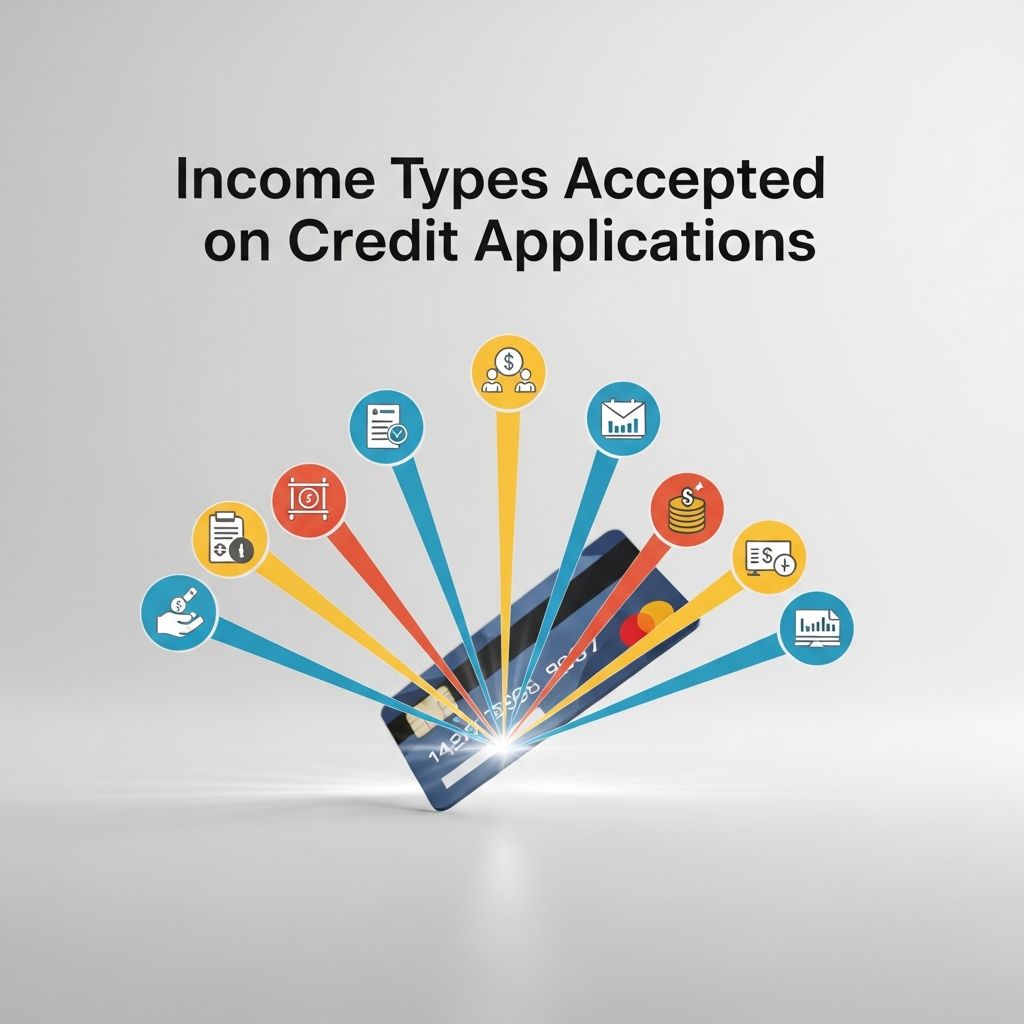
Income Types Accepted on Credit Applications
Discover which income sources qualify when applying for credit
When you apply for credit—whether a credit card, personal loan, or mortgage—lenders need to verify that you have sufficient income to manage your obligations. However, many applicants don’t realize that ”income” extends far beyond a traditional paycheck. Financial institutions evaluate a diverse range of income sources to determine whether you can afford the credit you’re requesting. Understanding which sources count can significantly improve your approval chances, particularly if your primary employment income is limited.
The Foundation: Traditional Employment Income
The most straightforward income source that lenders accept is money earned through employment. This includes wages, salaries, bonuses, commissions, and tips from full-time or part-time positions. If you receive irregular compensation like commissions or overtime pay, include these amounts if they represent a consistent pattern over time.
Self-employed individuals can also report business income. When you own your business or work as an independent contractor, lenders typically want to see documentation of your earnings, such as tax returns or profit-and-loss statements, to verify income stability and legitimacy. The key consideration for self-employment income is demonstrating that your earnings are reliable and sustainable.
Retirement and Pension Distributions
If you’re retired or nearing retirement, you have multiple income sources to declare. Social Security benefits represent a major income stream for many retirees and are fully acceptable to lenders. Pension distributions and withdrawals from retirement accounts—including IRAs and 401(k)s—also count toward your total income. These sources are particularly valuable because they demonstrate a stable, ongoing income stream that isn’t dependent on continued employment.
Additionally, annuity payments and other retirement fund disbursements qualify as reportable income. When documenting retirement income, you’ll typically provide Social Security benefit statements or retirement account statements to verify the amounts.
Government Assistance and Support Programs
Lenders recognize that government assistance programs provide legitimate income for eligible individuals. Social Security Disability Insurance (SSDI), Supplemental Security Income (SSI), and other disability-related benefits are acceptable forms of income. Housing vouchers and subsidies may be counted on mortgage applications, and unemployment benefits can occasionally be reported, depending on the lender’s policies.
Other support payments, including child support, alimony, and separate maintenance income, represent enforceable financial obligations from other parties and are recognized as reportable income sources. When reporting these forms of income, you’ll need verification documents such as court orders or benefit statements.
Insurance-Related Income Streams
Ongoing insurance payments deserve attention as a qualifying income category. If you receive long-term disability insurance payments, workers’ compensation, or other insurance-based income that provides regular, predictable payments, these amounts can be included in your income calculation. The key distinction is that the income must be recurring rather than one-time, and the policy must demonstrate ongoing coverage.
Financial Aid, Grants, and Scholarships
Students and others receiving educational support can include certain types of financial aid in their income calculations. Grants and scholarships that provide cash disbursements count as reportable income. Some student loans can also be included, though the rules vary by lender. When applying for credit as a student with limited employment income, these educational funds become particularly important for demonstrating your capacity to repay.
Household and Family Income Considerations
A significant advantage available to many applicants is the ability to report household income, particularly spousal or partner income. If you’re married or in a domestic partnership and have shared access to funds—such as a joint bank account—you can include your spouse’s or partner’s income on your application. This substantially broadens your qualifying income and can improve your approval odds, particularly for premium credit products.
Interestingly, under the updated CARD Act, applicants over 21 can list income to which they have ”reasonable expectation to access”. This interpretation allows flexibility for reporting income from other household members when you demonstrably have access to those funds, even beyond traditional spousal relationships.
Allowances, Gifts, and Other Periodic Income
Regular allowances from parents or family members can be included as reportable income. If you receive a consistent monthly stipend or allowance, this demonstrates income reliability. Gifts, particularly if they’re recurring and predictable, may occasionally be acceptable, though one-time gifts typically don’t qualify.
Less common income categories that some lenders accept include trust fund distributions, inheritance payments, investment returns, and royalty income. These sources become more significant if they represent your primary or supplementary income stream.
Income Sources That Don’t Qualify
Understanding what doesn’t count is equally important. Loans—whether personal loans, family loans, or other borrowed funds—are explicitly excluded from income calculations because they represent debt obligations rather than actual income. Similarly, your parents’ or guardians’ income cannot be reported unless you’re a dependent under specific age restrictions or can demonstrate direct access to those funds.
Non-cash assistance, such as utility subsidies or food assistance programs, doesn’t count toward income calculations. Certain types of financial aid specifically for education, rather than living expenses, may also be excluded depending on how they’re structured and the lender’s policies.
The Critical Role of Debt-to-Income Ratio
While income is essential, lenders focus on your ability to repay by calculating your debt-to-income (DTI) ratio. This metric divides your total monthly debt obligations by your gross monthly income. Consumer Financial Protection Bureau guidelines suggest maximum DTI ratios of 43% for mortgages, though recommended levels are 36% or lower for homeowners and 15-20% or lower for renters. Credit card issuers may set their own DTI limits, which directly influence approval decisions.
For auto loans, lenders may also evaluate payment-to-income (PTI) ratios, which measure what percentage of your monthly income goes toward vehicle payments and estimated insurance, typically capped at 15-20%. These ratios reveal whether your overall debt load is manageable relative to your income.
Special Considerations for Credit Card Applicants Under 21
Applicants under 21 face different income requirements under the CARD Act. These younger applicants must demonstrate independent income or have an eligible cosigner. The specific rules and acceptable income sources may vary by card issuer, but the fundamental principle remains: lenders need evidence of your ability to meet credit obligations.
Documentation Requirements and Verification
When you report income on a credit application, you may be asked to provide verification documents. Common documentation includes pay stubs, tax returns, Social Security statements, pension statements, or benefit award letters. Lenders may also use computer models to estimate income based on other application data, particularly for straightforward employment scenarios.
Accuracy is crucial because misrepresenting your income can constitute fraud. Report only income you can document or reasonably expect to receive. If you’re uncertain whether a particular income source qualifies, contact the lender directly rather than making assumptions.
Maximizing Your Income Reporting
To improve your approval odds, compile all legitimate income sources applicable to your situation. If you’re married, ensure both spouses’ income is reported if applicable. If you receive multiple income streams—such as employment plus freelance work—combine them. Include any bonuses, commissions, tips, or regular allowances that represent sustainable income.
When your debt-to-income ratio is close to a lender’s maximum, including additional income sources can make the difference between approval and rejection. However, only report income that truly reflects your financial situation and that you can substantiate if requested.
Individual Lender Requirements and Variability
It’s important to note that credit card issuers and other lenders set their own income requirements, which they typically don’t publicly disclose. Some issuers have concrete minimum income thresholds, while others focus primarily on your debt-to-income ratio. For example, certain card issuers may require that your income exceed your housing costs by a specific minimum amount.
Premium credit cards generally have higher income requirements than starter or secured cards. Before applying, review the card’s terms and conditions if available, and consider whether your reported income likely meets the issuer’s expectations for that product category.
Beyond Income: Other Approval Factors
While income matters, lenders evaluate multiple factors when deciding whether to approve your credit application. Your credit score, credit history, existing debt obligations, employment stability, and the length of time at your current address all influence approval decisions. Income provides the foundation, but a complete financial picture determines the final outcome.
Key Takeaways
- Multiple income sources qualify for credit applications beyond traditional employment, including retirement benefits, government assistance, household income, and financial aid
- Your debt-to-income ratio—comparing monthly debt obligations to monthly income—is the primary metric lenders use to assess repayment capacity
- Borrowers over 21 can report income to which they have ”reasonable expectation to access”, providing flexibility in household and family income reporting
- Loans, parental income (when you’re not a dependent), and non-cash assistance don’t count as qualifying income
- Accurate documentation and honest reporting are essential; lenders may request verification documents
- Individual lenders set their own income requirements, which vary by card type and issuer policies
Frequently Asked Questions
Can I get approved for credit without employment income?
Yes. If you have alternative income sources such as Social Security, disability benefits, retirement distributions, or household income you can access, these may qualify you for credit. The key requirement is demonstrating adequate income relative to your debt obligations, regardless of employment status.
How much income do I need to qualify for a credit card?
There’s no universal minimum. Requirements vary significantly between lenders and card types. Premium cards typically require higher income than starter or secured cards. Rather than a specific amount, lenders focus on whether your income is sufficient relative to your debts and the credit limit being offered.
Can I include my spouse’s income on my application?
Yes, if you’re married or in a recognized domestic partnership and have reasonable access to those funds. Joint bank accounts or shared financial arrangements support this inclusion. Each lender may have specific requirements about how to document spousal income.
What happens if I overstate my income?
Misrepresenting income on a credit application constitutes fraud and can result in criminal charges, fines, and civil liability. Accurate reporting is both legally required and in your best interest for long-term financial health.
References
- What Income Do You Need To Get A Credit Card? — Bankrate. 2025. https://www.bankrate.com/credit-cards/advice/credit-card-income-requirements/
- Can I Use Household Income for Credit Card Applications? — AskSebby. 2025. https://www.asksebby.com/articles/household-income-credit-card
- Understanding income requirements for credit cards — Chase Bank. 2025. https://www.chase.com/personal/credit-cards/education/basics/understanding-income-requirements-for-credit-cards
- What Counts as Income on a Credit Application? — Experian. 2025. https://www.experian.com/blogs/ask-experian/what-counts-as-income-on-credit-application/
- What Does Annual Income Mean When Applying for a Credit Card? — SoFi. 2025. https://www.sofi.com/learn/content/what-does-total-annual-income-mean/
Similar Articles








Read full bio of Sneha Tete