Income Statement: Definition, Structure, and Analysis
Master the income statement: Your guide to understanding profit, loss, and financial performance.

What Is an Income Statement?
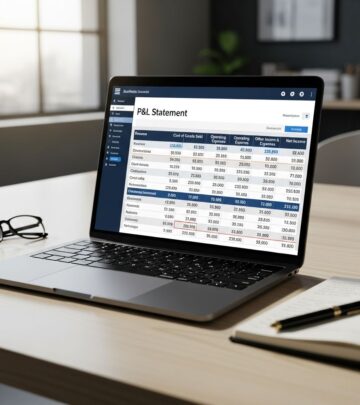
An income statement is one of the three primary financial statements used in accounting and corporate finance, serving as a comprehensive record of a company’s profitability over a specific period. Also known as a profit and loss statement (P&L), the income statement details all revenues generated by a business and all expenses incurred during operations, ultimately revealing whether the company achieved a profit or suffered a loss. This fundamental financial document provides investors, creditors, management, and other stakeholders with critical insights into how effectively a company manages its operations and generates earnings.
The income statement operates on a straightforward principle: total revenues minus total expenses equals net income or net loss. However, the structure and presentation of these figures involve several intermediate calculations that reveal different levels of profitability and operational efficiency. Understanding how to read and interpret an income statement is essential for anyone involved in business analysis, investment decisions, or financial planning.
Understanding the Purpose and Importance
The income statement serves multiple purposes in financial analysis and corporate decision-making. For investors, it demonstrates how profitable a company is and how efficiently management deploys resources to generate earnings. Creditors use income statements to assess whether a company generates sufficient cash flow to service its debt obligations. Internal management relies on income statements to evaluate departmental performance, identify cost-control opportunities, and make strategic business decisions.
The income statement is particularly valuable as a starting point in financial modeling because it requires relatively less information from other financial statements compared to balance sheets or cash flow statements. It operates independently while serving as a foundation for more complex financial analysis. The statement’s periodic nature—typically prepared monthly for internal use, quarterly for investors, and annually for comprehensive reporting—allows stakeholders to track performance trends and identify patterns over time.
Structure and Format of the Income Statement
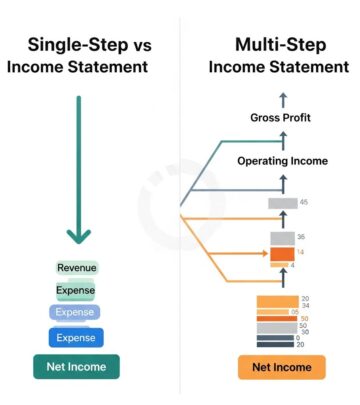
The income statement follows a logical structure that guides readers from top-line revenue through various expense categories to bottom-line net income. Most income statements maintain consistency in their layout, though specific line items may vary depending on the industry and business model. Understanding this structure is crucial for meaningful financial analysis.
Revenue Section
The income statement begins with sales revenue or operating revenue, which represents the total income generated from the company’s primary business operations. This figure appears at the very top and reflects the gross amount before any costs are deducted. Some companies with multiple revenue streams list each source separately before combining them into total revenue. Revenue recognition depends on the company’s accounting method and industry standards, but it fundamentally represents the value of goods sold or services provided during the period.
Cost of Goods Sold
Directly beneath revenue, companies list cost of goods sold (COGS), which encompasses all direct costs associated with producing goods or delivering services. This includes raw materials, direct labor, and manufacturing overhead directly tied to production. By subtracting COGS from total revenue, the company arrives at gross profit, which represents the earnings available to cover operating expenses and other obligations.
Operating Expenses
Operating expenses are the costs incurred in running the business that aren’t directly tied to production. These typically include selling, general, and administrative expenses (SG&A), which encompass salaries, marketing, rent, utilities, and depreciation. Additional operating expenses may include research and development (R&D), technology investments, stock-based compensation, and fulfillment costs. Different industries have unique expense categories relevant to their specific operations.
Key Components and Line Items
Modern income statements include several standardized and specialized line items that provide nuanced insight into financial performance:
Gross Profit
Gross profit represents the profit remaining after deducting the cost of goods sold from total revenue. This metric reveals how efficiently a company produces its products or delivers its services before considering operating expenses. A strong gross profit margin indicates effective cost management in production processes.
Operating Income (EBIT)
Operating income, also called earnings before interest and taxes (EBIT), measures profit from core business operations before accounting for financing activities and taxes. It’s calculated by subtracting all operating expenses from gross profit. This metric is particularly valuable because it isolates operational performance from financial structure and tax considerations, allowing for better comparison between companies with different capital structures or tax situations.
EBITDA
While not present in all income statements, EBITDA (earnings before interest, taxes, depreciation, and amortization) has become increasingly important in financial analysis. It’s calculated by adjusting operating income to add back depreciation and amortization expenses. Since depreciation and amortization are non-cash expenses used to spread capital asset costs over time, EBITDA provides insight into cash-generating capability from operations without the impact of accounting allocations.
Interest Expense and Non-Operating Items
Interest expense represents the cost of debt financing and appears as a separate line item to clearly delineate the impact of capital structure on profitability. Companies may also report other non-operating income or expenses, such as gains or losses from asset sales, foreign exchange impacts, investment returns, or industry-specific items. These items don’t reflect core business operations but significantly impact bottom-line profitability.
Earnings Before Taxes (EBT)
EBT, also known as pre-tax income, represents profit after all operating expenses and non-operating items but before income tax expense. This figure demonstrates how much earnings the company generated before tax obligations, which vary by jurisdiction and company circumstances.
Income Taxes
Income tax expense reflects the taxes charged on pre-tax income. This may include current taxes owed in the current period and deferred taxes reflecting future tax obligations. Understanding tax expense is important because it varies based on jurisdiction, tax rate changes, and various tax planning strategies.
Net Income
Net income represents the bottom line—the final profit or loss after all expenses, including taxes, have been deducted from revenue. This figure flows directly into the balance sheet as retained earnings (unless distributed as dividends) and serves as the basis for calculating earnings per share (EPS). Net income is the most commonly cited measure of profitability and is often the focus of investor attention.
Time Periods and Reporting Frequency
Income statements are divided into logical time periods aligned with company operations and reporting requirements. Most companies prepare monthly income statements for internal management purposes, allowing frequent monitoring of performance. These monthly statements are typically aggregated into quarterly and annual results for external reporting to investors and regulatory agencies.
Some companies use a thirteen-period accounting cycle rather than standard monthly divisions, depending on their operational patterns and industry practices. Regardless of the period selected, consistent formatting and timing enable meaningful period-to-period comparisons and trend analysis.
Variations Across Industries
While the fundamental structure remains consistent, income statements vary based on industry and business model. Technology companies typically show significant R&D expenses. Retail companies emphasize cost of goods sold and merchandising expenses. Financial institutions display interest income and expense prominently. Telecommunications companies show subscriber revenue by service type. Understanding industry norms is essential for meaningful comparative analysis.
Income Statement Analysis and Ratios
Beyond simply reading the numbers, investors and analysts calculate various ratios and metrics using income statement data to assess performance. Profit margins (gross, operating, and net) show what percentage of revenue converts to profit at different levels. Return on sales indicates operational efficiency. Earnings growth rates reveal business momentum. Comparing these metrics year-over-year and against industry peers provides context for financial performance.
Connection to Other Financial Statements
While the income statement stands alone as a powerful analytical tool, it’s interconnected with two other core financial statements: the balance sheet and the cash flow statement. In comprehensive financial modeling, the income statement serves as a predecessor to these statements, with its outputs feeding into balance sheet retained earnings and cash flow statement adjustments. Understanding these relationships is crucial for holistic financial analysis.
Earnings Per Share (EPS)
After calculating net income, companies divide this figure by the weighted average number of shares outstanding to determine earnings per share. EPS is a critical metric for stock investors because it represents the per-share portion of company profits. It directly influences stock valuation and is closely watched during earnings announcements.
Preparing and Using Income Statements
Accountants prepare income statements following generally accepted accounting principles (GAAP) in the United States or international financial reporting standards (IFRS) in many other jurisdictions. Once prepared, income statements become the foundation for financial models that forecast future performance. They provide the baseline from which analysts project revenue growth, estimate expenses, and calculate future profitability scenarios.
Frequently Asked Questions
Q: What is the difference between the income statement and the balance sheet?
A: The income statement shows profit and loss over a specific time period, while the balance sheet shows a company’s assets, liabilities, and equity at a specific point in time. The income statement is dynamic (period-based), while the balance sheet is static (point-in-time).
Q: Why is net income different from cash flow?
A: Net income uses accrual accounting principles where revenue is recognized when earned and expenses when incurred, regardless of cash movement. Cash flow reflects actual money movements. Non-cash expenses like depreciation reduce net income but don’t affect cash flow, and timing differences between sales and payment collection also create differences.
Q: How do I calculate gross profit?
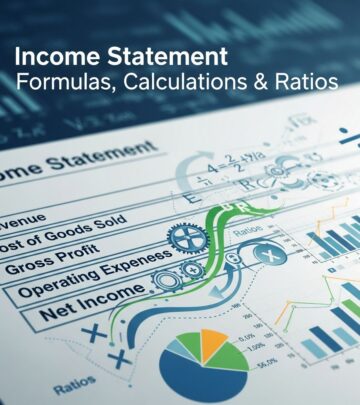
A: Gross profit is calculated by subtracting cost of goods sold (COGS) from total revenue. The formula is: Gross Profit = Total Revenue − COGS. The gross profit margin percentage is then calculated as Gross Profit ÷ Total Revenue.
Q: What does EBITDA tell us about a company?
A: EBITDA shows earnings from operations before accounting for financing decisions (interest), taxes, and non-cash charges (depreciation and amortization). It’s useful for comparing companies with different capital structures and is often used to assess operational cash-generation ability.
Q: Can a company have positive net income but negative cash flow?
A: Yes. A company can be profitable on paper (positive net income) but still have negative cash flow if significant non-cash expenses exist, inventory increases, or customers delay payment. This situation highlights why both statements are essential for complete financial analysis.
References
- Income Statement – Definition, Explanation and Examples — Corporate Finance Institute. 2025. https://corporatefinanceinstitute.com/resources/accounting/income-statement/
- Financial Accounting Standards Advisory Board (FASB) Accounting Standards Codification — U.S. Securities and Exchange Commission. 2024. https://www.sec.gov/cgi-bin/browse-edgar
- International Financial Reporting Standards (IFRS) Foundation — IFRS Standards. 2024. https://www.ifrs.org/
Similar Articles








Read full bio of medha deb