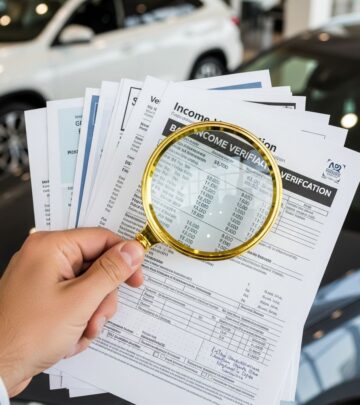
Income Requirements for Purchasing a Vehicle
Determine the right income level needed to responsibly buy your next car

One of the most important questions prospective car buyers face is whether they have sufficient income to responsibly purchase a vehicle. While there’s no universal income threshold that applies to everyone, financial experts have developed several guidelines and rules to help determine if a particular car purchase makes sense given your earnings. Understanding these frameworks can prevent you from overextending your finances and taking on debt that becomes unmanageable.
The Foundation of Car Affordability Guidelines
The relationship between income and vehicle purchase decisions has been studied extensively by financial professionals, credit unions, and automotive analysts. Rather than a fixed dollar amount, affordability depends on multiple factors including your gross income, net take-home pay, existing financial obligations, and the total cost of vehicle ownership.
Various financial institutions and automotive organizations recommend different approaches to calculating car affordability. These frameworks have evolved in response to changing vehicle prices, interest rates, and consumer economic conditions. What’s consistent across all recommendations is the principle that your vehicle expenses shouldn’t consume an excessive portion of your income, leaving insufficient funds for housing, food, healthcare, and savings.
Key Financial Rules for Vehicle Purchases
Several widely-recognized formulas help determine car affordability based on income levels:
The 20/4/10 Framework
This traditional guideline suggests that buyers should make a 20% down payment, finance the vehicle for no longer than four years, and ensure that total car-related expenses don’t exceed 10% of gross annual income. This 10% encompasses your monthly payment, insurance premiums, fuel costs, maintenance, repairs, and registration fees.
The rationale behind this approach is straightforward: keeping vehicle expenses within this band ensures you maintain adequate funds for essential needs and financial security. However, with current vehicle pricing and interest rates, this rule requires careful analysis of whether it remains practical for average earners.
The 35% Income Rule
A broader guideline suggests that the maximum price you should pay for a vehicle is 35% of your gross annual income. For someone earning $60,000 annually, this translates to a vehicle price ceiling of approximately $21,000. This rule provides flexibility but still emphasizes financial prudence by preventing excessive debt obligations.
The 25% Alternative Approach
For those prioritizing wealth-building and financial security, a more conservative 25% rule limits vehicle purchases to 25% of gross annual income. This approach is particularly useful for individuals who want to maximize savings and maintain substantial financial flexibility beyond their vehicle obligations.
Monthly Payment Percentages
Beyond total purchase price, financial advisors recommend that your monthly car payment should represent no more than 10% to 15% of your take-home pay. If you receive $3,000 monthly after taxes and deductions, your comfortable car payment range would be $300 to $450. This guideline focuses on post-tax income because that’s the actual money available for expenses.
Total Transportation Budget
When considering all vehicle-related expenses together—loan payments, insurance, fuel, maintenance, and registration—this total shouldn’t exceed 20% of your net monthly income. Some financial professionals suggest this comprehensive budget should represent between 50% to 60% of your total take-home pay when considering housing, food, utilities, and other obligations.
Real-World Income Scenarios and Affordability
Understanding these guidelines becomes clearer when examining specific income levels and what vehicle purchases make financial sense:
Lower-Income Earners
For someone earning $75,000 annually, following the strict 20/4/10 rule creates significant limitations. After accounting for standard insurance, fuel, maintenance, and registration costs (approximately $5,747 annually), only about $1,753 remains for annual financing payments—roughly $146 per month. On a four-year loan, this translates to financing approximately $5,800, which means a total vehicle price of around $7,250 after a 20% down payment.
This scenario illustrates why many moderate-income earners cannot afford new vehicles under traditional guidelines. Used vehicles or more flexible financing approaches become necessary considerations.
Middle-Income Earners
At $120,000 annual income, buyers have greater flexibility. Following the 10% guideline allows $12,000 yearly in vehicle-related expenses. After fixed costs of $5,747, approximately $6,253 remains for loan payments—about $521 monthly. This payment level supports financing significantly more vehicle value, making modest new car purchases feasible for this income bracket.
High-Income Earners
Those earning $177,830 or more can comfortably follow the 20/4/10 rule while purchasing vehicles in the $42,300 range, though naturally they may choose more expensive vehicles. However, even high earners benefit from maintaining discipline and not allowing vehicle purchases to disproportionately impact their overall financial picture.
Current Market Realities Affecting Affordability
Recent automotive market conditions have significantly altered the practical application of traditional affordability guidelines. The typical new vehicle now costs over $50,000, with average monthly payments reaching $772. Notably, 20% of new car loans carry monthly payments of $1,000 or higher, indicating substantial price inflation compared to historical standards.
These market realities mean that many Americans—approximately 88% earning less than $150,000 annually—cannot afford new vehicles while maintaining the 20/4/10 framework. This gap between guidelines and market prices has forced buyers to either accept used vehicles, larger down payments, or departure from traditional affordability rules.
Calculating Your Personal Affordability
Step One: Determine Your Take-Home Income
Begin with your monthly income after taxes, Social Security, healthcare premiums, and other payroll deductions. This amount, not your gross salary, represents what you actually have available for expenses.
Step Two: Calculate the 10% Payment Guideline
Multiply your monthly take-home by 10% to establish your maximum comfortable car payment. This provides a straightforward target for shopping and loan comparison.
Step Three: Assess Total Vehicle Expenses
Research typical insurance costs for vehicles you’re considering, estimate fuel expenses based on your driving patterns, and factor in likely maintenance costs. Add these to your projected monthly payment to ensure the total doesn’t exceed 20% of take-home income.
Step Four: Evaluate Down Payment Capacity
A larger down payment reduces monthly obligations and interest costs over the loan term. Determining how much you can allocate upfront without depleting emergency savings is crucial to responsible planning.
Income-Based Vehicle Payment Reference
The following table provides quick reference points for vehicle affordability across various income levels, using the 10% monthly payment guideline based on take-home pay assumptions:
| Annual Gross Income | Estimated Monthly Take-Home | Maximum Monthly Payment (10%) | Maximum Monthly Payment (15%) |
|---|---|---|---|
| $45,000 | $3,000 | $300 | $450 |
| $60,000 | $4,000 | $400 | $600 |
| $75,000 | $5,000 | $500 | $750 |
| $90,000 | $6,000 | $600 | $900 |
| $120,000 | $8,000 | $800 | $1,200 |
| $150,000 | $10,000 | $1,000 | $1,500 |
Factors Beyond Income Affecting Affordability
Interest Rate Environment: Your credit score and current market rates dramatically affect monthly payments. A used vehicle loan at 9.65% carries substantially different obligations than a new vehicle loan at lower rates.
Vehicle Type Costs: Luxury vehicles, larger trucks, and imported cars typically incur higher insurance premiums, maintenance costs, and fuel expenses than economy vehicles. These total ownership costs must factor into affordability calculations.
Existing Debt Obligations: Student loans, mortgages, credit card payments, and other debts reduce the income available for vehicle financing. Your overall debt-to-income ratio influences what lenders will approve and what you can responsibly manage.
Job Security and Income Stability: While income level matters, employment stability is equally important. Those in stable careers can comfortably commit to longer loan terms, while contract or seasonal workers should maintain greater financial flexibility.
Tax Considerations for Vehicle Buyers
Recent federal tax law changes provide new car buyers with valuable deductions. Qualifying new vehicle loans signed after January 1, 2025, through 2028 allow deduction of up to $10,000 annually in interest payments, regardless of itemization status. This deduction decreases for modified adjusted gross incomes exceeding $100,000 (single filers) or $200,000 (joint filers).
For example, a $35,000 vehicle with $2,800 in first-year interest could yield approximately $616 in tax savings for average taxpayers. Understanding and utilizing these deductions improves overall affordability and should factor into purchase timing decisions.
Common Mistakes in Affordability Assessment
Focusing Only on Monthly Payment: Many buyers concentrate exclusively on whether they can afford the monthly payment while ignoring insurance, maintenance, and fuel costs. This incomplete analysis leads to financial stress once total ownership expenses materialize.
Ignoring Emergency Savings: Using all available funds for a down payment leaves insufficient emergency reserves. When unexpected expenses arise—as they inevitably do—you become vulnerable to missed payments or additional debt.
Overestimating Income Stability: Committing to vehicle payments based on optimistic income projections or anticipated bonuses creates risk if circumstances change. Conservative assumptions provide financial cushion.
Neglecting Long-Term Cost Projections: Maintenance costs, insurance premiums, and fuel expenses increase over time. A vehicle affordable in year one may become burdensome by year three if these escalating costs aren’t anticipated.
Frequently Asked Questions
What is the minimum income needed to buy any car?
There’s no absolute minimum income threshold for car purchases. However, following standard guidelines (10-15% of take-home for monthly payment), someone earning $30,000 annually could potentially afford a vehicle with a $250-375 monthly payment, suggesting used vehicle purchases in the $5,000-10,000 range are realistic.
Can I buy a car if I make $50,000 per year?
Yes, absolutely. At $50,000 annual income, you likely have monthly take-home of approximately $3,300, supporting a $330-500 monthly payment. Used vehicles in the $10,000-15,000 range become affordable with appropriate down payments and loan terms.
Is the 20/4/10 rule still relevant in 2026?
While this guideline remains conceptually sound, current vehicle pricing makes it challenging for average earners to achieve all three components simultaneously. Most buyers modify the approach based on their circumstances, prioritizing the most critical elements for their situation.
How does credit score impact affordability?
Interest rates vary dramatically by credit score. Excellent credit might secure 4% rates while fair credit attracts 9-10% rates. This difference significantly affects monthly payments and total borrowing capacity.
Should I buy new or used based on income?
Lower-income earners typically benefit from used vehicles, which carry lower purchase prices and insurance costs. Higher-income earners have flexibility for new vehicles but should still apply affordability guidelines to prevent overextension.
Developing Your Vehicle Purchase Strategy
Successful vehicle purchasing begins with honest assessment of your financial situation. Calculate your actual take-home income, list existing monthly obligations, determine your emergency fund status, and realistically project future expenses. Only after completing this analysis should you apply affordability guidelines and begin vehicle shopping.
Remember that these guidelines represent maximum recommendations, not targets to reach. If a vehicle consumes less than 10% of take-home for payments or less than 20% for total transportation costs, you’re building financial security rather than constraint. The goal isn’t finding the most expensive vehicle you technically qualify for, but rather making a purchase that enhances rather than complicates your financial life.
References
- How Realistic Is The 20/4/10 Rule For Buying A New Car In 2026? — Jalopnik. 2026. https://www.jalopnik.com/2081305/how-realistic-20-4-10-rule-new-cars-2026/
- Maximize Your 2026 Tax Savings with a New Car Loan — Scenic Community Credit Union. 2026. https://www.mysccu.com/learn/the-2026-tax-deduction-for-new-cars-what-2025-and-2026-buyers-need-to-know
- Don’t Buy a Car in 2026 Until You Watch This — YouTube. 2026. https://www.youtube.com/watch?v=vesCAe7NIl0
- Car Affordability Calculator — Navy Federal Credit Union. Accessed 2026. https://www.navyfederal.org/makingcents/tools/car-affordability-calculator.html
- Car Affordability Calculator – How Much Car Can I Afford — Kelley Blue Book. Accessed 2026. https://www.kbb.com/car-affordability-calculator/
- Car Affordability Calculator: How Much Car Can I Afford? — NerdWallet. Accessed 2026. https://www.nerdwallet.com/auto-loans/learn/much-spend-car
Similar Articles








Read full bio of medha deb