Income Effect: Definition, Examples & Economic Impact
Understanding how income changes influence consumer demand and purchasing decisions.

What is the Income Effect?
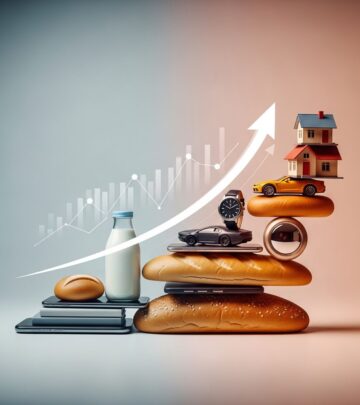
The income effect is a fundamental economic principle that describes how changes in a consumer’s income directly influence their demand for goods and services. It represents the relationship between purchasing power and consumption patterns, capturing how individuals adjust their buying behavior when their real income increases or decreases. This concept is essential for understanding consumer behavior and has significant implications for businesses, policymakers, and economists analyzing market dynamics.
In its simplest form, the income effect reflects how much more or less a consumer will purchase when their income changes, while all other factors remain constant. When a person earns more money, they typically have more disposable income available to spend on various goods and services. Conversely, when income decreases, consumers generally reduce their spending across different product categories. However, the magnitude of this change varies depending on the type of good being consumed and whether it is classified as a normal good or an inferior good.
The income effect operates at the intersection of consumer psychology and economic theory. When individuals experience a pay raise or increase in earnings, they naturally become more confident about their financial situation and feel encouraged to adjust their spending habits. This psychological dimension makes the income effect particularly important for retailers, marketers, and financial analysts who seek to predict consumer behavior trends.
Income Effect and Price: The Dual Relationship
While income is the primary driver of the income effect, price changes play an equally critical role in shaping consumer demand. When prices of goods and services change, they effectively alter a consumer’s purchasing power without any actual change in their monetary income. This relationship between price and income creates a nuanced economic phenomenon that influences market demand curves and helps explain consumer purchasing patterns.
Consider a scenario where a consumer earns a fixed monthly salary of $3,000. If the prices of all goods and services they purchase suddenly decrease by 20 percent, their real purchasing power effectively increases by approximately 25 percent. From an economic perspective, this price decrease has the same impact on consumption patterns as if their actual income had increased. Similarly, when prices rise, consumers experience a reduction in their real income, leading them to purchase fewer goods regardless of their nominal income level.
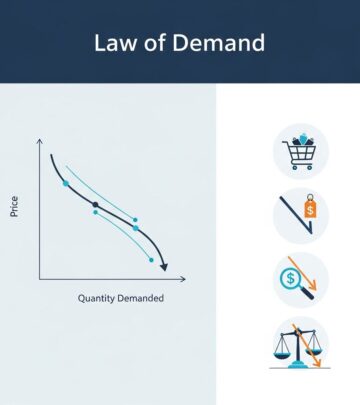
This relationship between price and income demonstrates why the demand curve typically slopes downward. As prices increase, the quantity demanded decreases because consumers’ real purchasing power is reduced. Conversely, as prices fall, consumers can afford more goods with their existing income, leading to increased demand. Understanding this dual relationship helps businesses set pricing strategies and economists forecast market behavior.
Positive Income Effect and Normal Goods
The positive income effect occurs when consumers increase their demand for a good as their real income increases. This phenomenon is most commonly observed with normal goods—products for which demand rises as consumer income rises. Normal goods represent the majority of items in typical consumer markets and include essentials like groceries, clothing, and housing, as well as discretionary items like entertainment and dining experiences.
When the price of a normal good decreases, two simultaneous economic effects occur:
- The substitution effect encourages consumers to purchase more of this now-cheaper good and less of alternative products
- The income effect increases consumers’ effective purchasing power, allowing them to buy more goods overall, including the good in question
Both effects work together to increase demand for normal goods when prices fall. For example, if a smartphone manufacturer reduces prices by 30 percent, consumers will likely purchase more smartphones for two reasons: first, the phones are now relatively cheaper compared to alternatives, and second, consumers have more effective purchasing power to allocate toward technology and other purchases.
Examples of normal goods that demonstrate positive income effects include fresh produce, restaurant meals, vacation packages, and quality household appliances. As household incomes rise, families typically increase their consumption of these items, reflecting their improved financial status and ability to afford higher-quality or premium versions of these products.
Negative Income Effect and Inferior Goods
The negative income effect applies to inferior goods—products for which demand decreases as consumer income rises. These are typically lower-quality or budget alternatives that consumers purchase primarily due to price constraints rather than preference. When consumers become wealthier, they tend to substitute these inferior goods with higher-quality alternatives.
Common examples of inferior goods include generic store-brand products, public transportation passes, and economy-class accommodations. As a consumer’s income increases, they might reduce their purchases of these items in favor of premium alternatives. A person earning $20,000 annually might regularly use public buses for transportation, but after receiving a promotion that increases their income to $60,000, they might purchase a personal vehicle instead.
Interestingly, when prices of inferior goods decrease, the income effect works opposite to the substitution effect. A lower price makes the product more affordable, but the improved purchasing power allows consumers to purchase superior alternatives instead. This creates a complex demand dynamic that requires careful analysis in economic modeling and consumer research.
The Substitution Effect vs. the Income Effect
While the income effect measures how changes in real purchasing power affect consumption, the substitution effect measures how consumers shift their purchases between goods based on relative price changes. These two effects often work simultaneously and can either reinforce or oppose each other, depending on whether the good in question is normal or inferior.
When the price of commodity A decreases relative to commodity B, the substitution effect encourages consumers to purchase more of A and less of B. Simultaneously, the income effect increases consumers’ overall purchasing power, allowing them to purchase more of both A and B. For normal goods, both effects work together, resulting in a clear increase in demand as prices fall.
For inferior goods, however, these effects work in opposite directions. The substitution effect encourages more consumption of the now-cheaper inferior good, while the income effect (from the resulting increase in real income) encourages consumers to purchase less of the inferior good and more of superior alternatives. In most practical situations, the income effect dominates, resulting in an overall decrease in demand for inferior goods as prices fall.
Real-World Examples of Income Effect
Example 1: The Recent Graduate
Consider Maria, who recently graduated and secured her first job earning $35,000 annually. During her studies, she primarily purchased budget-friendly meals from discount supermarkets and lived in shared accommodation to minimize costs. After working for three years and receiving promotions that increased her salary to $75,000, her consumption patterns changed dramatically. She now frequents higher-end restaurants, purchases organic and specialty food items, lives in a nicer apartment alone, and takes annual international vacations. These changes reflect the positive income effect on normal goods.
Example 2: Price Reduction Impact
When streaming services like Netflix reduced their subscription prices during promotional campaigns, many consumers who previously subscribed increased their consumption of premium content. Others who were considering subscribing but deemed it unaffordable at the regular price became customers. This increased demand resulted from both the substitution effect (choosing streaming over cable television) and the income effect (lower prices making more entertainment budget available for other purchases).
Example 3: Economic Recession Effects
During economic recessions when household incomes decline, demand for inferior goods like generic groceries, public transportation, and discount retailers increases significantly. Simultaneously, demand for normal goods like fine dining, luxury vehicles, and premium entertainment decreases. This negative income effect demonstrates how reduced purchasing power fundamentally alters consumer behavior across all product categories.
Income Effect in Market Behavior and Pricing Strategy
Understanding the income effect has crucial implications for business strategy and pricing decisions. Retailers frequently use income effect principles in their promotional activities. When suppliers reduce prices, they attract consumers who were previously unable or unwilling to purchase the product, thereby increasing overall market demand. This principle underlies many retail sales promotions and discount strategies employed by major retailers during seasonal sales and holiday shopping periods.
However, the effectiveness of the income effect varies significantly depending on the essential nature of the product. When the price of bread—a staple good—increases by 25 percent, the income effect may be relatively weak because consumers must purchase bread regardless of price to meet basic nutritional needs. The demand remains relatively inelastic. In contrast, when prices of luxury goods like designer clothing decrease, the income effect is typically much stronger, as consumers have discretion over whether and how much to purchase.
This relationship between product essentiality and income effect elasticity is crucial for businesses developing pricing strategies. Companies selling essential goods have less flexibility to use the income effect through pricing, while those in discretionary markets can leverage price reductions to significantly increase demand.
Income Effect and the Demand Curve
The income effect is one of the primary explanations for why demand curves slope downward. As prices increase, consumers’ real income effectively decreases, leading to reduced demand. As prices decrease, real income increases, leading to increased demand. This inverse relationship between price and quantity demanded is fundamental to microeconomic theory and market analysis.
On a standard demand curve graph, the downward slope reflects both the substitution effect and the income effect working together. For normal goods, both effects reinforce the negative relationship between price and quantity demanded. For inferior goods, the income effect is typically stronger than the substitution effect, still resulting in a downward-sloping demand curve in most market situations, though the slope may be different from that of normal goods.
Measuring and Analyzing Income Effect
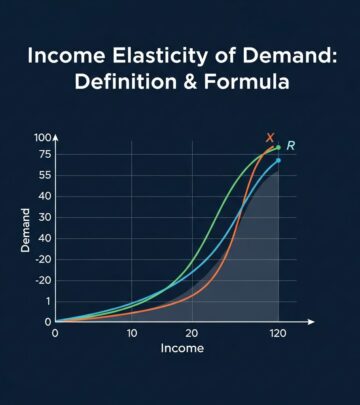
Economists measure the income effect using income elasticity of demand, which calculates the percentage change in quantity demanded divided by the percentage change in real income. A positive income elasticity indicates a normal good, while a negative income elasticity indicates an inferior good.
For example, if a 10 percent increase in consumer income leads to a 15 percent increase in the demand for restaurant meals, the income elasticity would be 1.5, indicating that restaurant meals are normal goods with relatively high income sensitivity. Conversely, if a 10 percent income increase leads to a 5 percent decrease in the demand for generic store brands, the income elasticity would be -0.5, indicating inferior goods.
Frequently Asked Questions
What is the difference between income effect and substitution effect?
The income effect measures how changes in real purchasing power affect consumption of all goods, while the substitution effect measures how consumers shift between goods based on relative price changes. For normal goods, both effects work together to increase demand as prices fall. For inferior goods, they work in opposite directions.
Can the income effect be negative?
Yes, the income effect is negative for inferior goods. When real income increases (through actual income growth or price reductions), consumers reduce their consumption of inferior goods and shift toward higher-quality alternatives.
How does inflation affect the income effect?
Inflation reduces real income by decreasing purchasing power. This negative income effect causes consumers to reduce demand for most normal goods and potentially increase consumption of inferior goods as they adjust their spending patterns to their lower real income levels.
Why do retailers use the income effect in their pricing strategies?
By reducing prices, retailers increase consumers’ effective purchasing power, which increases demand through the positive income effect. This strategy helps attract price-sensitive consumers, increase sales volume, and clear inventory.
Is the income effect stronger for necessities or luxuries?
The income effect is generally stronger for luxury goods and discretionary items than for necessities. Consumers have more flexibility in adjusting their consumption of luxuries based on income changes, while demand for necessities remains relatively stable regardless of income fluctuations.
References
- Income Effect in Economics: Definition & Examples — Study.com. 2024. https://study.com/academy/lesson/the-income-effect-in-economics-definition-example.html
- Income Effect — Corporate Finance Institute. 2024. https://corporatefinanceinstitute.com/resources/economics/income-effect/
- Income Effect — United Nations Economic and Social Commission for Western Asia (UNESCWA). https://archive.unescwa.org/income-effect
Similar Articles








Read full bio of Sneha Tete