Improved Land: Definition, Benefits, and Financing
Complete guide to improved land: what it is, why it matters, and how to finance it.
What Is Improved Land?
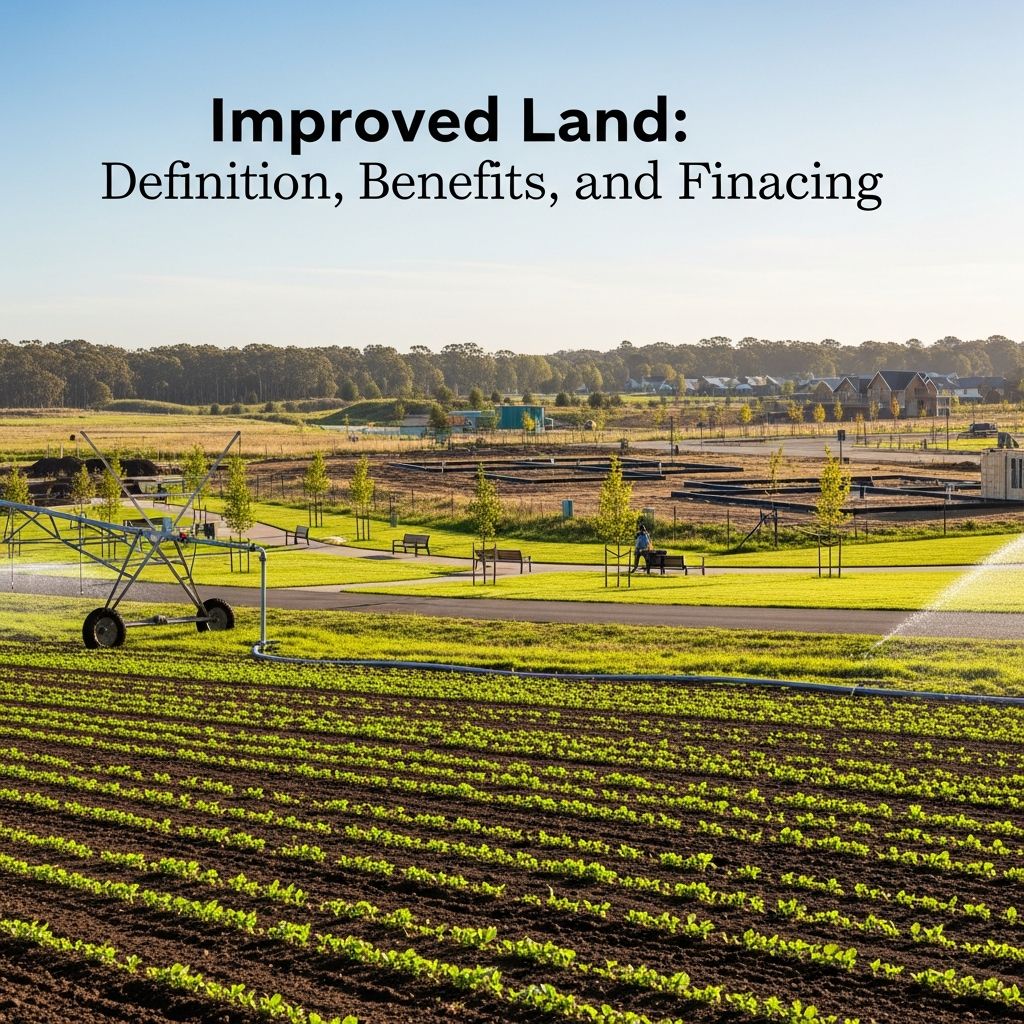
Improved land refers to property that has been developed and enhanced to make it suitable for building, agriculture, or commercial use. Unlike raw land that sits untouched in its natural state, improved land has been modified with infrastructure and utilities to increase its usability and value. These enhancements transform raw parcels into functional, investment-ready properties that can generate immediate returns or serve as platforms for development.
The term “improved land” encompasses various modifications made to increase productivity and accessibility. Property owners make improvements to prepare land for its intended use, whether residential, commercial, agricultural, or industrial. The key distinction is that improved land already provides essential services and access that raw land typically lacks.
Key Characteristics of Improved Land
Improved land possesses several defining features that set it apart from unimproved or raw alternatives:
- Utility Access: Full connection to electricity, water, gas, and sewage systems
- Road Access: Paved roads or established access routes for vehicles and emergency services
- Site Preparation: Land has been cleared, leveled, and prepared for construction or use
- Infrastructure: Drainage systems, parking areas, and other necessary facilities
- Zoning Compliance: Property complies with local zoning regulations and building codes
- Surveyed Boundaries: Official property lines and survey documentation
Types of Land Development
Raw Land
Raw land represents the starting point in property development. This unmodified land typically lacks access to utilities and may not even be accessible by road. While raw land is the most inexpensive option, financing is difficult to obtain, and development requires significant investment in infrastructure before any productive use is possible. Buyers purchasing raw land must account for costs related to clearing, grading, utility installation, and road construction.
Unimproved Land
Unimproved or undeveloped land sits between raw land and improved land on the development spectrum. This category includes properties with partial utility access—perhaps water and electricity—but may lack phone lines, gas connections, or sewage infrastructure. Obtaining financing for unimproved land is easier than for raw land but remains more challenging than securing loans for improved properties. Development costs are lower than with raw land but still substantial.
Improved Land
Improved land represents the most developed and market-ready category. Many property buyers prefer improved land because it is already developed with full utility and road access. While it commands the highest purchase price among the three categories, improved land offers the easiest financing path and the quickest route to productive use or occupancy.
Land Improvements in Accounting
From an accounting perspective, land improvements are enhancements made to a plot of land to make it more usable and functional. These improvements differ fundamentally from the land itself in accounting treatment. Unlike land, which is not depreciated because of its infinite useful life, land improvements have a limited useful life and are therefore subject to depreciation.
Capitalizing Land Improvement Costs
When accounting for land improvements, businesses must capitalize the costs associated with these enhancements. This means recording costs as a fixed asset in a separate land improvements account rather than expensing them immediately. For example, if a company spends $400,000 to pave a parking lot with an expected 20-year lifespan, the entire amount is recorded as a debit to the land improvements account with a corresponding credit to cash or accounts payable.
Depreciation of Land Improvements
Once capitalized, land improvement costs are systematically depreciated over their useful life. In the parking lot example above, the company would charge $20,000 annually to depreciation expense (calculated as $400,000 divided by 20 years) and credit accumulated depreciation. This approach spreads the cost across the asset’s useful life, matching expenses to the periods when the improvement provides value.
Distinguishing Preparatory Costs
A critical distinction exists between costs that prepare land for its intended use and those that add functionality. Costs to prepare land—such as clearing and leveling—are added to the land account and are not depreciated. However, costs that add functionality, such as installing drainage systems, fencing, or paved surfaces, are recorded in the land improvements account and subject to depreciation. This distinction ensures accurate reflection of asset values and useful lives.
Disposal of Land Improvements
When a land improvement is disposed of through sale, abandonment, or destruction, the asset’s cost and its related accumulated depreciation are removed from the company’s books. Any resulting gain or loss from the disposal is then recognized in the profit and loss statement. This accounting treatment ensures that financial statements accurately reflect changes in asset composition.
Financing Improved Land
Improved Land Loans
Improved land loans represent the most accessible financing option for property purchases. These loans allow buyers to finance the acquisition of property that already has access to electricity, water, roads, and other essential infrastructure. Of all land loan types, improved land loans offer the most streamlined path for building a home or developing commercial property, as the foundational infrastructure is already in place.
Down Payment Requirements
The Federal Deposit Insurance Corporation (FDIC) establishes minimum down payment requirements that vary by land type:
| Land Type | Minimum Down Payment |
|---|---|
| Raw Land | 35% |
| Unimproved Land | 25% |
| Improved Land | 15% |
The significantly lower down payment requirement for improved land reflects the reduced lender risk associated with developed, accessible properties. Improved land’s higher market value and easier conversion to productive use make it a more secure collateral position for financial institutions.
How Land Loans Work
In many ways, a land loan operates similarly to a traditional mortgage, though important differences exist. Land loans typically feature higher interest rates than conventional mortgages, shorter terms (often 10-15 years rather than 30), and more stringent qualification requirements. Lenders typically require proof that the borrower has funds available for construction or development, and some require that borrowers work with a builder or have a concrete development plan.
Advantages of Improved Land Financing
Improved land financing offers numerous advantages:
- Lower Interest Rates: Reduced rates compared to raw or unimproved land loans
- Easier Approval: Simpler qualification process and faster underwriting
- Longer Terms: Potentially more favorable repayment schedules
- Higher Loan-to-Value Ratios: Access to more favorable lending ratios
- Construction Readiness: Ability to begin development or building immediately
Economic Impact of Land Improvement
Value Creation Through Development
The process of transforming raw land into improved property creates substantial economic value. When rural land undergoes urban development with infrastructure installation, the per-square-meter value increases dramatically. This value creation allows original landowners to retain property of equal or greater worth while contributing portions to public purposes such as roads, schools, and parks.
Public and Private Benefits
Land improvement generates benefits extending beyond individual property owners to entire communities. Public agencies capitalize on infrastructure improvements to establish necessary services without requiring post-development taxation. The land readjustment process, practiced extensively in Germany and the Netherlands, demonstrates how improved land can efficiently serve both private development and public infrastructure needs simultaneously.
Comparing Land Types: A Quick Reference
| Factor | Raw Land | Unimproved Land | Improved Land |
|---|---|---|---|
| Purchase Price | Lowest | Moderate | Highest |
| Financing Difficulty | Most Difficult | Difficult | Easiest |
| Down Payment | 35% | 25% | 15% |
| Utility Access | None | Partial | Complete |
| Road Access | Limited/None | Some | Full |
| Time to Development | Longest | Moderate | Shortest |
| Initial Investment Cost | High | Moderate | Low |
Considerations for Improved Land Buyers
Purchasers evaluating improved land should assess several key factors:
- Zoning Compliance: Verify that property zoning aligns with intended use
- Infrastructure Quality: Evaluate the condition and capacity of utilities and roads
- Development Timeline: Confirm utilities are operational and accessible before purchase
- Future Expansion: Assess whether infrastructure can support future improvements
- Environmental Factors: Review environmental reports and hazard assessments
- Tax Implications: Understand property taxes and potential improvement-related obligations
Frequently Asked Questions
Q: What is the main difference between improved and unimproved land?
A: The primary difference is infrastructure access. Improved land has full utility access (electricity, water, gas, sewage) and road connectivity, while unimproved land may have only partial utility access and limited road development. Improved land is ready for immediate use or development, whereas unimproved land requires additional investment in infrastructure.
Q: Why is improved land more expensive than raw land?
A: Improved land commands higher prices because the seller has already invested in infrastructure development. This eliminates buyer costs and delays associated with utility installation, road construction, and site preparation. The convenience and reduced risk make improved land more valuable to most buyers.
Q: Can I get financing for raw or unimproved land?
A: Yes, but it is considerably more difficult. Raw land financing requires 35% down payments and significantly higher interest rates. Lenders view raw land as riskier because of development uncertainty and longer timelines to profitability. Unimproved land requires 25% down and faces similar but slightly less severe challenges.
Q: What costs are depreciated for land improvements?
A: Costs that add functionality to land—such as paving parking lots, installing drainage systems, or building fences—are depreciated over their useful lives. Costs that prepare land for use, such as clearing and leveling, are added to the land account and not depreciated, as the land itself has infinite useful life.
Q: Is improved land always the best investment choice?
A: Not necessarily. Improved land suits buyers seeking quick development or occupancy with minimal additional investment. However, investors with longer timelines and development expertise may find better returns in raw or unimproved land, despite higher upfront costs and financing challenges. The optimal choice depends on individual financial capacity, timeline, and development goals.
References
- Improved Land Analysis in The Wealth of Nations — LitCharts. Accessed November 2025. https://www.litcharts.com/lit/the-wealth-of-nations/terms/improved-land
- What Property Buyers Should Know About Land Loans — Bankrate. Accessed November 2025. https://www.bankrate.com/real-estate/what-property-buyers-should-know-about-land-loans/
- What Is Land Improvement In Accounting? — BusinessGuide360.com. Accessed November 2025. https://www.youtube.com/watch?v=WwCHh6FsJls
- Analyzing Land Readjustment: Economics, Law, and Collective Action — Lincoln Institute of Land Policy. Accessed November 2025. https://www.lincolninst.edu/app/uploads/legacy-files/pubfiles/analyzing-land-readjustment-full.pdf
- What Is a Land Loan? — Business Insider. Accessed November 2025. https://www.businessinsider.com/personal-finance/mortgages/land-mortgage
- Land Loans: What Buyers Need to Know — LendingTree. Accessed November 2025. https://www.lendingtree.com/home/mortgage/how-to-get-a-land-loan/
Similar Articles








Read full bio of Sneha Tete