Imports: Definition, Examples & Economic Effects
Understanding imports, their role in international trade, and their impact on the economy.
Imports: Definition, Examples, and Effect on the Economy
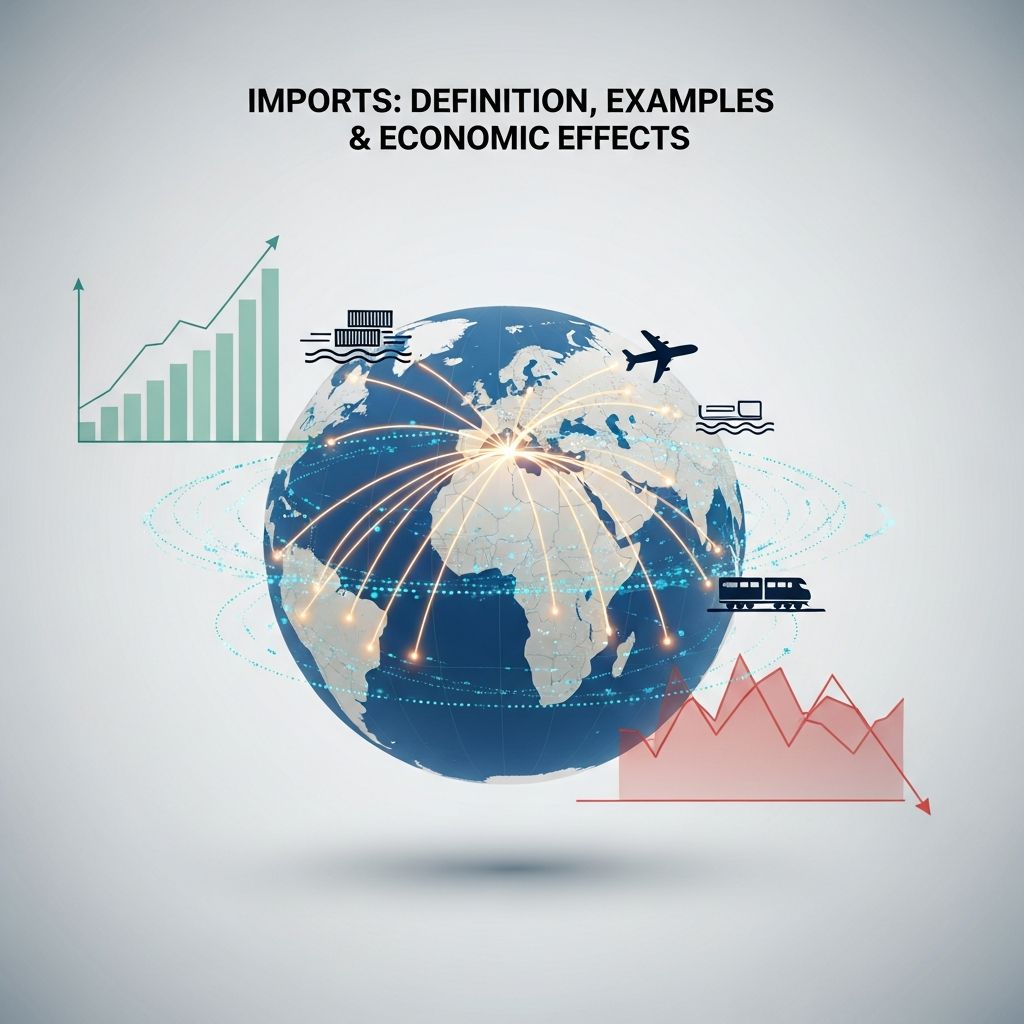
Imports are a fundamental component of international trade and economics. They represent goods and services purchased from foreign countries and brought into a domestic market for consumption, resale, or industrial use. In today’s globalized economy, imports play a crucial role in meeting consumer demand, supporting business operations, and driving economic growth. Understanding what imports are, how they function, and their broader economic implications is essential for businesses, policymakers, and informed citizens alike.
What Are Imports?
An import is defined as a good or service that is produced in one country and purchased by individuals, businesses, or governments in another country. Imports are the opposite of exports, which are goods and services produced domestically and sold to foreign buyers. When a country imports products, money flows out of that country to pay foreign suppliers, creating what economists call an outflow of funds.
In microeconomic terms, imports refer to individual companies or consumers purchasing goods from foreign markets. In macroeconomic terms, imports describe the total volume of goods and services entering a country from abroad. Imports are essential because they allow countries to access products they cannot produce efficiently, cost-effectively, or at all within their own borders.
The process of importing involves buying and transporting goods across international borders for use, sale, or distribution in the local market. This can include raw materials, finished products, capital equipment, or specialized services that enhance a country’s economic capacity and consumer choices.
Common Types of Imports
Imports manifest in various forms depending on the business model and supply chain structure. Understanding these different categories helps illustrate how imports function across different sectors of the economy.
Supply Chain Imports
Manufacturers frequently import components and materials from foreign suppliers, either from their own overseas facilities or from third-party vendors. For example, an automotive manufacturer might import specialized engine components from Germany while importing electronic systems from Japan. This allows companies to optimize production by sourcing materials from regions with competitive advantages in specific areas.
Direct Imports
Direct imports occur when entities not officially recognized by producers bring products into a country for resale. E-commerce sellers, for instance, frequently import luxury goods from Europe to sell in other markets. While producers may discourage this practice, it remains common in gray market operations. Consumers purchasing this way may not receive official warranties or support.
Consumer Imports
Individual consumers directly import goods by ordering from foreign e-commerce platforms that ship internationally. This has become increasingly prevalent with online shopping, allowing consumers worldwide to access products unavailable in their domestic markets.
Retail Imports
Retailers import finished goods from foreign producers for direct sale in physical stores. Some retailers are owned by producers and import from their own factories, while others act as distribution partners for international brands. This model supplies store shelves with diverse product selections.
Wholesale Imports
Wholesalers import goods from multiple foreign producers and distribute them to retailers and other merchants. This intermediary function helps move large quantities of imported goods efficiently through the supply chain.
Value-Added Reseller Imports
Some firms import goods, enhance them with additional services or products, and then resell them at higher value. For example, a company might import software and sell it alongside local consulting services and technical support.
Capital Equipment Imports
Businesses purchase durable capital goods from foreign suppliers through a process called capital procurement. Airlines, for instance, import aircraft from manufacturers like Boeing or Airbus because manufacturing their own aircraft would be impractical and expensive.
Service Imports
Countries import services as well as physical goods. Examples include a German consumer subscribing to a U.S.-based streaming service or a Canadian bank outsourcing technology support to an Indian firm. Service imports have grown substantially with digital technology and globalization.
Why Countries Import
Nations engage in importing for several strategic and economic reasons. Understanding these motivations clarifies why international trade is essential to modern economies.
Cost Effectiveness
Countries import goods when foreign producers can manufacture them more cheaply than domestic producers. This might be due to lower labor costs, abundant natural resources, or economies of scale. Importing cost-effective products allows countries to allocate their resources more efficiently elsewhere in their economy.
Quality and Specialization
Some regions possess specialized expertise and produce superior-quality goods in specific industries. For instance, a clothing retailer might import fine silk from China because it offers superior quality at competitive prices compared to domestic alternatives. Consumers benefit from access to the world’s best products regardless of where they’re produced.
Resource Scarcity
Many countries lack natural resources found elsewhere and must import them to meet domestic needs. Oil-dependent nations without significant petroleum reserves must import fuel. Similarly, countries without tropical climates import coffee, cocoa, and tropical fruits.
Capacity Constraints
Even when domestic production is possible, countries may not have sufficient capacity to meet total demand. Importing fills this gap, ensuring consumers have access to needed products and businesses can acquire necessary inputs.
Industrial Development
Developing nations import scarce raw materials, capital goods, and advanced technology to accelerate industrialization and economic growth. These imports provide the foundation for building domestic manufacturing capacity and technological capability.
Emergency Response
During natural disasters like droughts, floods, or earthquakes, countries import food grains and essential supplies to prevent humanitarian crises. This safety valve function of imports protects populations during emergencies.
Import Trade Terms and Conditions
When conducting international trade, specific terms define responsibility for costs and risks during transportation. Two common terms for imports from China and other countries are:
Free on Board (FOB): The seller covers transportation costs to the ship, and when goods leave the port, responsibility for costs and risks transfers to the buyer. This arrangement is common for larger shipments.
Ex-Works (EXW): The buyer assumes all costs and risks from the moment goods are handed over at the seller’s factory. The buyer must organize and pay for shipping, insurance, and all logistics. This term typically results in lower prices but places greater responsibility on the buyer.
Effects of Imports on the Economy
Imports have complex and multifaceted effects on national economies. These effects can be positive or negative depending on the type of imports, the country’s economic structure, and government policies.
Impact on GDP
Imports are deducted from a country’s Gross Domestic Product calculation. The GDP formula includes net exports (exports minus imports), meaning that high import levels reduce the GDP figure. However, this accounting treatment doesn’t necessarily indicate economic harm, particularly when imports consist of productive assets that enhance future productivity.
Capital Equipment and Productivity
Importing productive assets like machinery and equipment can strengthen an economy’s long-term growth prospects. When a U.S. paper manufacturer imports advanced machinery from Italy, that equipment may increase production efficiency and export capacity. The initial import expense translates into enhanced competitiveness and future economic benefits.
Trade Balance Effects
When a country’s imports exceed its exports in value, it experiences a trade deficit. For example, the United States has maintained a trade deficit since 1975, with the deficit reaching $576.86 billion in 2019. Conversely, if exports exceed imports, a country achieves a trade surplus, resulting in an inflow of funds. China, for instance, exported $1 trillion in goods in 2019 while importing only $200 billion, generating an $800 billion trade surplus.
Consumer Benefits
Imports expand consumer choice by making products available that domestic producers cannot supply. This competition encourages domestic producers to improve quality and lower prices. Greater variety and affordability enhance consumer welfare and standard of living.
Economic Growth Indicators
High import levels can indicate a growing economy with strong consumer demand and business investment. When businesses and consumers have confidence in the economy, they purchase more imported goods. However, distinguishing between imports of productive capital and consumer goods is important when interpreting this indicator.
Exchange Rate and Inflation Effects
Large import volumes can influence a country’s exchange rate and inflation levels. Increased demand for foreign currency to pay for imports can weaken the domestic currency’s value. Additionally, import prices affect overall inflation, particularly for goods that comprise a significant portion of the consumer price index.
Government Policies Affecting Imports
Governments employ various tools to manage import levels and protect domestic industries.
Tariffs
Tariffs are taxes imposed on imported goods that increase their price relative to domestic alternatives. By making imports more expensive, tariffs aim to encourage consumers to buy domestically produced goods and protect domestic industries from foreign competition. Tariff policies are frequently debated because while they protect some industries and workers, they often harm consumers through higher prices and reduce overall economic efficiency.
Quotas
Import quotas limit the quantity of specific goods that can be imported during a given period. By restricting supply, quotas protect domestic producers but may also lead to higher prices for consumers.
Subsidies
Governments provide subsidies to domestic businesses to reduce production costs, enabling them to offer lower prices than imported alternatives. By making domestic goods cheaper and more competitive, subsidies encourage consumers to choose local products. Interestingly, subsidies can also increase exports by making domestic goods more attractive to foreign buyers.
Free Trade Agreements
Trade agreements between nations reduce tariffs and barriers, making it cheaper to import goods. The United States’ imports grew from $580.14 billion in 1989 to $3.1 trillion in 2019, reflecting increased globalization and more free-trade agreements.
Import Statistics and Global Trade
| Metric | Value | Year |
|---|---|---|
| U.S. Trade Deficit | $576.86 billion | 2019 |
| U.S. Imports (1989) | $580.14 billion | 1989 |
| U.S. Imports (2019) | $3.1 trillion | 2019 |
| China’s Export Surplus Example | $800 billion | 2019 |
| U.S. Trade Deficit Start Year | Since 1975 | Ongoing |
The Debate Over Import Effects
Economists and policymakers continue debating whether imports have positive or negative overall effects on economies. Proponents emphasize consumer benefits, competitive pressure on domestic firms, and access to specialized goods and technologies. Critics highlight concerns about domestic job displacement, trade deficits, and the concentration of manufacturing in low-wage countries.
The reality is nuanced: imports benefit consumers and businesses seeking cost savings and product diversity, but can negatively affect workers in industries facing foreign competition. Most economists recognize that while adjustment costs exist for displaced workers, the overall economic benefits of trade typically outweigh the costs.
Frequently Asked Questions
What is the difference between imports and exports?
Imports are goods and services purchased from foreign countries, resulting in outflows of domestic funds. Exports are domestically produced goods and services sold to foreign buyers, resulting in inflows of foreign funds. Together, they form the basis of international trade.
Why do countries import goods they could produce domestically?
Countries import because foreign producers often offer lower costs, superior quality, specialized expertise, or products that domestic industries cannot efficiently produce. Importing allows countries to maximize efficiency by focusing resources on their comparative advantages.
How do tariffs affect import levels?
Tariffs increase the cost of imported goods, making domestic alternatives relatively cheaper. This typically reduces import volumes by discouraging consumers and businesses from purchasing foreign products. However, tariffs can also raise prices for consumers and harm overall economic efficiency.
Do imports harm a country’s economy?
Not necessarily. While imports reduce GDP figures and can displace workers in specific industries, they provide consumers with affordable products, competitive pressure on domestic firms, and access to specialized goods and technologies. The overall economic impact depends on the type of imports and specific economic circumstances.
What is a trade deficit?
A trade deficit occurs when a country’s imports exceed its exports in value. While often viewed negatively, trade deficits can indicate a strong domestic economy with high consumer demand. They become concerning only if they persist due to structural economic problems.
How do imports affect employment?
Imports can displace workers in domestic industries facing foreign competition. However, they also create jobs in import-related industries like shipping and retail, and lower prices benefit consumers who have more purchasing power for other goods and services.
References
- 11 Examples of Imports — Simplicable. Accessed 2025. https://simplicable.com/economics/imports
- What is import? Definition and examples of import — Bertling Group. Accessed 2025. https://www.bertling.com/news-pool/blog/what-is-import/
- Import: Definition, Example, Tips and More — Credlix. Accessed 2025. https://www.credlix.com/blogs/import-definition-example-tips-and-more
- What Are Exports and Imports? Definitions and Examples — Indeed.com. Accessed 2025. https://www.indeed.com/career-advice/career-development/what-are-exports-and-imports
- Imports and Exports – Overview, GDP Formula, Balance of Trade — Corporate Finance Institute. Accessed 2025. https://corporatefinanceinstitute.com/resources/economics/imports-and-exports/
Similar Articles








Read full bio of Sneha Tete