Implicit Cost: Definition, Examples, and Economic Impact
Understanding implicit costs and their role in calculating true business profitability and economic decisions.

Understanding Implicit Cost in Business Operations
In the world of business finance and economics, understanding the true cost of operations goes beyond simply tracking direct monetary expenses. Implicit costs, also known as imputed costs, notional costs, or opportunity costs, represent a fundamental concept that business owners, accountants, and economists must grasp to accurately evaluate profitability and make sound financial decisions. Unlike explicit costs that involve direct cash transactions, implicit costs represent the value of resources a business already owns but uses in operations, foregone for alternative uses.
The concept of implicit cost is particularly important for entrepreneurs and small business owners who often invest their own resources into their ventures. When an owner dedicates their time, property, or equipment to a business without receiving direct compensation, they are incurring implicit costs that may not appear on traditional financial statements but significantly impact the true profitability of the enterprise.
What Is Implicit Cost?
An implicit cost is fundamentally a non-monetary opportunity cost that arises when a business utilizes assets or resources it already owns rather than incurring direct monetary expenses. The implicit cost represents what the business could have earned or received had it used those resources in an alternative way. For instance, if a business owner operates their company from a building they own, the implicit cost is the rental income they could have earned by leasing that space to another tenant.
The defining characteristic of implicit costs is that they do not involve actual cash payments or monetary transfers. A business may not record these costs in its accounting books because no funds are being directly exchanged. However, this invisibility in financial records does not diminish their importance in understanding the true economic performance of a business.
Key Characteristics of Implicit Costs
Non-monetary nature: Implicit costs do not involve direct cash transactions, making them different from typical business expenses.
Opportunity-based: They represent the value of the next best alternative use of a resource.
Difficult to quantify: Unlike explicit costs, implicit costs can be challenging to measure precisely.
Often owner-contributed: For small businesses, implicit costs frequently include owner time, property, or equipment.
Invisible in accounting: These costs typically do not appear in regular accounting records or income statements.
Why Are Implicit Costs Important?
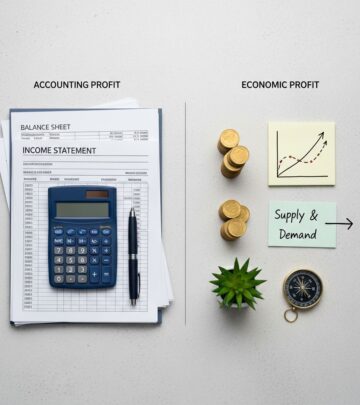
Understanding implicit costs is critical for several reasons that directly impact business success and financial decision-making. First, implicit costs help determine a company’s true economic profitability, which differs significantly from accounting profit. While accounting profit only considers explicit costs, economic profit accounts for both explicit and implicit costs, providing a more comprehensive view of business performance.
Second, implicit costs help entrepreneurs assess whether their business venture is truly worthwhile compared to alternative uses of their resources. An entrepreneur might earn more by continuing employment elsewhere than by starting their own business, and implicit costs capture this important consideration.
Third, recognizing implicit costs enables better strategic planning and resource allocation. By understanding what they are sacrificing, business owners can make more informed decisions about expansion, resource use, and business priorities.
Finally, implicit costs are essential for accurate profitability analysis. Ignoring these costs can lead to overestimating business success and making poor decisions based on incomplete financial information.
Implicit Costs vs. Explicit Costs
While both implicit and explicit costs are necessary for calculating true business profitability, they differ fundamentally in their nature and impact on financial statements.
| Aspect | Implicit Costs | Explicit Costs |
|---|---|---|
| Nature | Non-monetary opportunity costs | Direct monetary expenses |
| Cash Transfer | No direct cash involved | Involve direct cash transactions |
| Examples | Owner time, owned property, foregone wages | Salaries, rent, materials, utilities |
| Accounting Records | Not recorded in accounting books | Recorded in accounting books |
| Accounting Profit Impact | Does not affect accounting profit | Directly affects accounting profit |
| Economic Profit Impact | Affects economic profit calculation | Affects economic profit calculation |
Common Examples of Implicit Costs
Implicit costs appear in various business situations and contexts. Understanding these common examples helps business owners recognize and account for them in their operations.
Owner’s Time and Labor
When a business owner works in their business without receiving a formal salary but instead taking dividends or management fees, their labor represents an implicit cost. The implicit cost equals what they could have earned in an alternative employment situation. For example, an entrepreneur who leaves a job paying $100,000 annually to start their own business incurs an implicit cost of $100,000 annually, representing their foregone salary.
Use of Owned Property
When a company uses property it owns for business operations instead of renting it out to generate rental income, an implicit cost exists. A retail business operating from a building it owns rather than renting it to another business incurs an implicit cost equal to the foregone rental income.
Asset Depreciation
The gradual wear and tear of equipment, machinery, or other assets used in business operations represents an implicit cost. While depreciation is tracked in accounting, the economic value lost due to asset usage is an implicit cost.
Opportunity Costs of Capital
When a business uses its own capital to fund operations rather than investing in alternative ventures or earning interest, the foregone investment returns represent an implicit cost.
Employee Time in Hiring Processes
When company management dedicates time to interview job candidates, their time represents an implicit cost. The explicit costs include advertising the position or paying for candidate travel, but management time is implicit.
Practical Example: The Attorney’s Dilemma
Consider an attorney employed at a corporate law firm earning $130,000 annually. The attorney decides to open a private practice. The startup requires explicit costs of $85,000 for office setup, licensing, and marketing. The attorney projects first-year revenue of $200,000.
Accounting Profit Calculation:
Total Revenue: $200,000
Less: Explicit Costs: ($85,000)
Accounting Profit: $115,000
Based on accounting profit alone, the venture appears successful. However, implicit costs tell a different story.
Economic Profit Calculation:
Total Revenue: $200,000
Less: Explicit Costs: ($85,000)
Less: Implicit Costs (Foregone Salary): ($130,000)
Economic Profit: ($15,000)
The economic profit reveals that the attorney would actually lose $15,000 by opening the private practice, as they would earn $15,000 less than staying at the corporate firm. This calculation helps the attorney make a more informed decision about whether to pursue self-employment, considering not just accounting profit but true economic profit.
Accounting Profit vs. Economic Profit
Accounting profit represents the difference between total revenue and explicit costs only. It answers the question: “How much money did my business make after paying direct expenses?” This is the profit figure that appears on income statements and tax returns.
Economic profit represents the difference between total revenue and all costs—both explicit and implicit. It answers a more comprehensive question: “After accounting for all costs, including what I sacrificed by using resources this way, how much better off am I than if I had used my resources differently?”
A business can show positive accounting profit while having negative economic profit. This situation indicates that the owner could be better off using their resources differently, such as working for another company or investing in alternative ventures.
When Implicit Costs May Be Positive Contributors
While implicit costs often reduce economic profit, they are not necessarily negative influences on business success. In some cases, implicit costs can be strategically beneficial. For example, a business might incur an implicit cost of $10,000 by using its own resources, but by doing so, it avoids paying an external provider $15,000 for the same service. In this scenario, the decision to use internal resources is economically sound despite the implicit cost.
Additionally, implicit costs associated with owner effort and dedication can build business value over time. The implicit cost of an entrepreneur’s extra hours working to build their practice eventually translates into increased revenue and business equity, justifying the initial sacrifice.
Calculating and Identifying Implicit Costs
Successfully identifying and calculating implicit costs requires careful analysis and realistic assessment of opportunities foregone.
Steps for Identifying Implicit Costs
1. Inventory owned resources: List all assets, equipment, property, and time the business uses in operations.
2. Determine alternative uses: For each resource, identify what alternative use could generate revenue or value.
3. Estimate foregone value: Quantify the revenue or benefit that would result from the alternative use.
4. Document assumptions: Record the reasoning and market data supporting your implicit cost estimates.
5. Review periodically: As business conditions change, reassess implicit costs to ensure they remain accurate.
Frequently Asked Questions About Implicit Costs
Q: Why don’t implicit costs appear on financial statements?
A: Implicit costs do not involve direct cash transactions, so they are not recorded in standard accounting ledgers. However, they are essential for calculating economic profit and assessing true business performance.
Q: Can implicit costs ever increase economic profit?
A: Implicit costs, by definition, represent foregone opportunities and reduce economic profit. However, using internal resources instead of purchasing external services (implicit cost vs. explicit cost) may be more economical overall.
Q: How do implicit costs affect decision-making for entrepreneurs?
A: Implicit costs help entrepreneurs assess whether their business venture is worthwhile compared to alternative uses of their resources, such as employment elsewhere or different investments.
Q: Are implicit costs the same as sunk costs?
A: No. Implicit costs represent current and future opportunity costs of resource decisions. Sunk costs are past expenses that cannot be recovered and should not influence current decisions.
Q: How do businesses use implicit costs in strategic planning?
A: Businesses incorporate implicit costs into financial projections to determine true profitability, assess expansion opportunities, and decide whether to use internal resources or hire external providers.
Q: What’s the relationship between implicit costs and opportunity cost?
A: Implicit costs are a specific type of opportunity cost—the cost of resources already owned by the firm that could have been used in an alternative way.
References
- What Is Implicit Cost? (With Definition and Examples) — Indeed Career Guide. 2024. https://www.indeed.com/career-advice/career-development/what-is-implicit-cost
- Implicit Cost – Overview, Examples, Significance — Corporate Finance Institute. 2024. https://corporatefinanceinstitute.com/resources/accounting/implicit-cost/
- Explicit and Implicit Costs and Accounting and Economic Profit — Khan Academy. https://www.khanacademy.org/economics-finance-domain/microeconomics/firm-economic-profit/economic-profit-tutorial/a/explicit-and-implicit-costs-and-accounting-and-economic-profit-cnx
Similar Articles








Read full bio of Sneha Tete