Impacts Of Poor Credit Scores: 5 Proven Ways To Recover
Discover how a low credit score ripples through loans, housing, jobs, insurance, and health, plus proven strategies to rebuild your financial future.
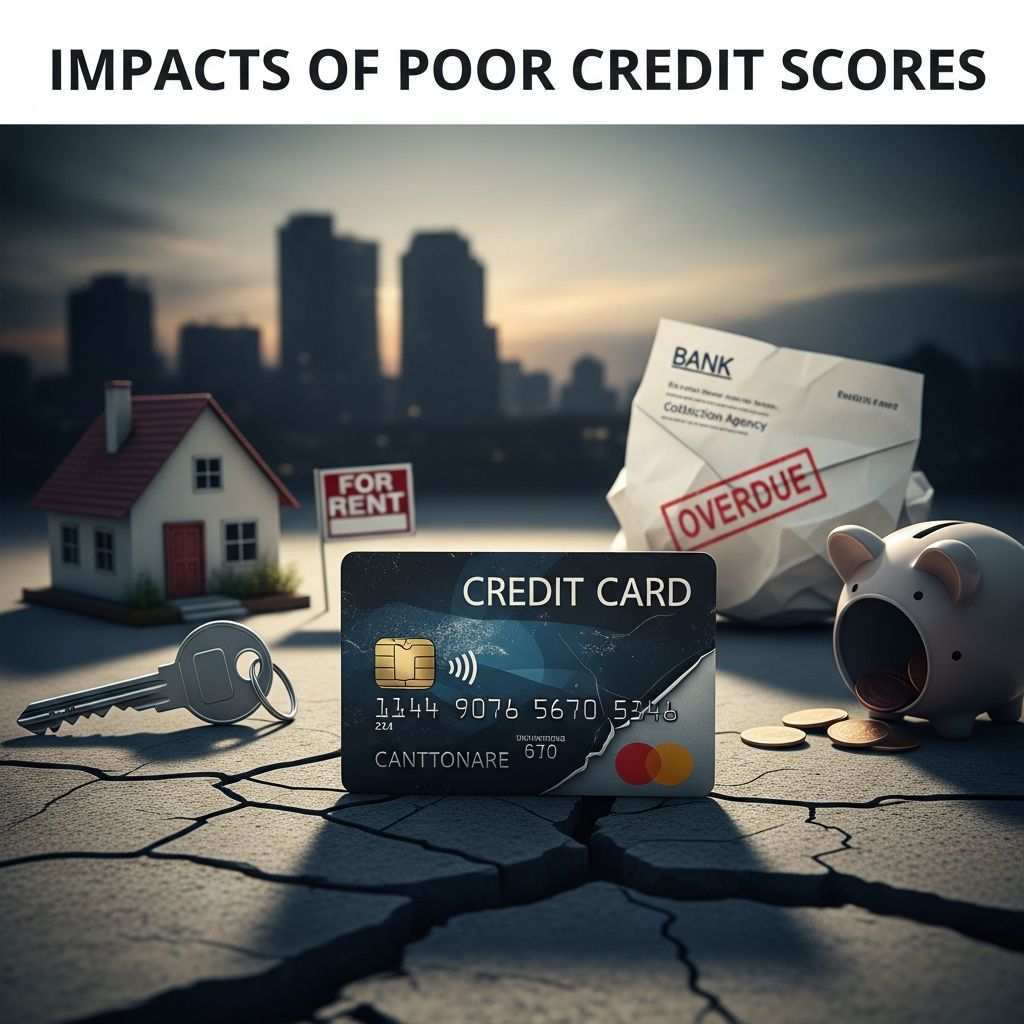
A low credit score acts as a financial barrier, influencing access to essential services and increasing everyday expenses. Lenders, landlords, employers, and insurers rely on these scores to assess risk, often penalizing individuals with histories of late payments or high debt levels.
Understanding Credit Scores and Their Benchmarks
Credit scores range from 300 to 850, with scores below 600 typically classified as bad, 600-649 as poor, 650-699 as fair, 700-749 as good, and 750+ as excellent. These ratings, calculated by models like FICO, consider payment history (35%), amounts owed (30%), length of credit history (15%), new credit (10%), and credit mix (10%). A poor score signals unreliability to creditors, triggering widespread repercussions across personal and professional life.
Challenges in Securing Loans and Mortgages
Individuals with bad credit face steep hurdles when applying for loans. Lenders view them as high-risk, often denying applications outright or offering unfavorable terms. For instance, mortgage approvals become elusive, delaying homeownership dreams as banks prioritize safer borrowers.
Higher interest rates compound the issue. A subprime borrower might pay 10% more on auto loans or mortgages compared to those with excellent credit, adding thousands in extra costs over the loan term. This cycle traps people in debt, making recovery harder.
| Credit Score Range | Average Auto Loan APR (2023 est.) | Extra Cost on $20K Loan (5 yrs) |
|---|---|---|
| 750+ | 5.5% | $1,200 |
| 600-649 | 12.5% | $3,800 |
| <600 | 18.0% | $6,200 |
Table data derived from industry averages; actual rates vary by lender and market conditions.
Housing Hurdles: Renting and Buying with Bad Credit
Rental applications routinely include credit checks. Landlords reject tenants with poor scores, fearing missed rent payments that could lead to evictions. This forces reliance on substandard housing or costly alternatives like co-signers or larger deposits.
Home buying amplifies these barriers. Beyond loan denials, low scores inflate mortgage rates, raising monthly payments significantly. For a $300,000 home, a 1% rate difference could mean $200 more per month, totaling over $70,000 extra over 30 years.
Employment Risks Tied to Credit History
Employers, especially in finance and insurance, review credit reports during hiring. While not accessing exact scores, they scrutinize delinquencies, bankruptcies, and debt levels as indicators of financial responsibility. About 1 in 10 job rejections stem from poor credit, per estimates.
- Financial sector roles demand clean records to ensure trustworthy money handling.
- Security clearances for government jobs may flag credit issues as vulnerability risks.
- Even non-finance positions increasingly check credit for executive or managerial hires.
Professor MaryAnn Monforte notes that credit management reflects job performance potential.
Escalating Costs for Insurance Coverage
Insurers use credit-based scores to set premiums, assuming poor credit correlates with higher claim risks. Auto and home insurance rates can rise 20-50% for low-score holders, based on actuarial data linking financial stress to riskier behaviors.
This practice, legal in most states, adds hundreds annually to budgets. Federal law requires disclosure if credit influences denial or rate hikes.
Unexpected Health and Wellness Connections
Emerging research links poor credit to health outcomes. Low scores predict higher disease risk, medication non-adherence, and stress-related issues, possibly due to shared factors like financial literacy or risk tolerance. Hospitalizations from acute events can tank scores via unpaid bills, creating a vicious cycle.
Breast cancer survivors with better post-treatment credit reported improved health and lower stress. Credit also affects health insurance access through employment eligibility.
Lifetime Financial Toll of Sustained Poor Credit
Over a lifetime, bad credit erodes wealth. Denied loans delay major purchases; higher rates on approved credit siphon savings. Job losses compound unemployment risks, while elevated insurance cuts disposable income.
Estimates suggest lifetime costs exceed $100,000 in extra interest, lost wages, and premiums. Early intervention is crucial to mitigate these accumulating burdens.
Proven Pathways to Credit Recovery
Rebuilding starts with on-time payments, which form 35% of FICO scores. Debt management programs and counseling provide structured repayment plans.
- Get your free reports: Annualcreditreport.com offers weekly access; review for errors.
- Reduce utilization: Keep balances under 30% of limits.
- Secure starter credit: Secured cards or credit-builder loans aid positive history.
- Address negatives: Dispute inaccuracies; negotiate with creditors.
- Build history: Avoid new inquiries; diversify responsibly.
Progress appears in months with consistency; scores can rise 100+ points in a year.
Frequently Asked Questions
What causes a bad credit score?
Late payments, high debt utilization, short credit history, new applications, and collections or bankruptcies primarily lower scores.
Can I rent with poor credit?
Possible with co-signers, higher deposits, or private landlords, but expect rejections from larger complexes.
Do all employers check credit?
No, but common in finance, government, and executive roles; laws restrict use in some states.
How does credit affect insurance?
Insurers derive scores from credit data to predict claims; poor scores raise rates.
How long until bad marks fade?
Late payments: 7 years; bankruptcies: 7-10 years; but impact diminishes over time.
Navigating Denials and Legal Protections
If denied credit or insurance due to your report, lenders must provide the credit bureau’s contact and your score if used. Federal law prohibits discrimination based on race, sex, or other protected factors. Use adverse action notices to dispute errors or improve.
References
- 5 Ways a Bad Credit Score Can Affect You — RethinkingDebt.org. 2023. https://www.rethinkingdebt.org/about/blog/5-ways-a-bad-credit-score-can-affect-you
- Using Credit Scores to Understand Predictors and Consequences of Disease — National Library of Medicine (PMC). 2018-10-18. https://pmc.ncbi.nlm.nih.gov/articles/PMC6187788/
- The Cost of a Bad Credit Score — Syracuse University Online. 2023. https://onlinegrad.syracuse.edu/blog/bad-credit-score/
- Credit Scores — Federal Trade Commission (FTC.gov). 2024. https://consumer.ftc.gov/credit-scores
- How a Bad Credit Score Can Affect You — Chase.com. 2024. https://www.chase.com/personal/credit-cards/education/build-credit/how-a-bad-credit-score-affects-you
Similar Articles








Read full bio of Sneha Tete